Blog

  • Why Your Automotive Website Isn’t Generating Leads (And How to Fix It)

    Why Your Automotive Website Isn’t Generating Leads (And How to Fix It)

    You’ve got a website. It’s been live for a couple of years. Maybe someone redid it, or maybe it came with your shop management software. Either way, the phone isn’t ringing the way it should — and you’re not sure why.

    Here’s the uncomfortable truth: most automotive websites look fine on the surface but are silently failing every single day. They’re not converting visitors into calls. They’re not showing up when local customers search. And they’re handing leads directly to your competitor down the street without you ever knowing.

    This isn’t about needing more traffic or spending more on ads. It’s about fixing the foundational problems in your automotive website design that are costing you real customers right now. By the end of this article, you’ll know exactly what’s broken — and what a high-performance fix looks like.


    Your Website Is Like a Waiting Room With No Receptionist

    Think about it this way: when a customer walks into your shop, someone greets them. They see your certifications on the wall. They know where to sit, what to ask, and that they’re in the right place.

    Most automotive websites do none of that. A customer lands on your site, can’t find your phone number, can’t tell what services you offer, and has no idea if you’re trustworthy. So they leave — and call the next shop in Google’s results.

    That moment of confusion costs you a customer every single time. And it’s happening dozens of times a day.


    Problem #1: Your Phone Number Is Hidden (Or Just Hard to Find)

    This sounds too simple to be a real issue. It is absolutely a real issue.

    On most automotive websites, the phone number lives in the footer, in small text, buried beneath a navigation menu. On mobile — where 70%+ of your customers are searching — that means they have to scroll past your entire homepage just to find out how to call you.

    The real cost: A potential customer searching “oil change near me” at 7pm has three tabs open. Whichever shop makes it easiest to call gets the booking. If that’s not you, it’s someone else.

    What a high-performance automotive website does instead: The phone number sits at the very top of every page as a clickable tap-to-call button. On mobile, it’s always visible. No scrolling. No hunting. One tap and they’re talking to you.


    Problem #2: Your Site Takes Forever to Load — and Nobody Waits

    Imagine a customer pulls into your parking lot, sits in your waiting area for 10 seconds, and then walks out. That’s what a slow website does, every single time.

    Most automotive websites load in 6 to 10 seconds. The research is clear: most people abandon a site after 3 seconds if it hasn’t loaded. That means a significant chunk of your visitors are leaving before they’ve even seen your name.

    Why it happens: Oversized images, cheap hosting, bloated code, too many plugins — all the technical stuff that gets ignored when a site is built on the cheap. None of it is visible to you. All of it is visible in your call volume.

    What Digital Trace does instead: Every automotive website we build is optimized to load in under 2 seconds — tested across real mobile devices, not just desktop. Speed isn’t an afterthought; it’s built into the foundation.


    Problem #3: Google Doesn’t Know Enough About Your Business to Trust It

    You might wonder why your competitor — with a worse-looking website — shows up before you in Google. The answer usually isn’t about their design. It’s about signals.

    Google needs specific information to confidently recommend a local business: your services, your location, your hours, your reviews, and structured data that tells Google’s systems exactly what your business does. Most automotive websites are missing most of this.

    The plain-English version: Google is like a cautious customer who only refers friends to businesses they know well. If your site doesn’t give Google enough to work with, it won’t take the risk of putting you in front of searchers — even if you’re the best shop in town.

    What this looks like in practice: Your site needs clear service pages (not just “Services” — think “Brake Repair in [City]”), a properly claimed and linked Google Business Profile, consistent contact information, and technical markup that tells Google’s crawlers what they’re reading.

    💡 Pro Tip: One of the most common mistakes automotive shops make is having a single “Services” page that lists everything in bullet points. Google rewards specificity. A dedicated page for each service — oil changes, brake repair, tire installation, AC service — not only helps Google understand your business, it also gives you a page that can rank for each individual search. It’s one of the fastest fixes that directly impacts how often you show up locally.


    Not Sure If Your Site Has These Problems?

    Digital Trace offers a free website audit for automotive businesses — no obligation, just a clear picture of what’s costing you leads. We’ll look at your speed, your mobile experience, your local SEO setup, and your conversion path, then show you exactly what’s working and what’s not.

    Claim Your Free Audit →


    Problem #4: Your Website Doesn’t Build Trust Fast Enough

    When someone’s choosing a shop to trust with their car, they’re making a judgment call in about 8 seconds. Your website either builds that trust or it doesn’t.

    Most automotive websites skip the basics: no visible reviews, no certifications displayed prominently, no photos of the actual team or shop, no guarantees. They look like a placeholder — not a professional operation.

    The real cost: Customers assume the worst. If your site looks like it hasn’t been updated since 2016, they assume your service might match.

    What builds trust fast:

    • Google and Yelp review counts displayed prominently (not buried)
    • ASE certifications or brand partnerships shown near the top
    • Real photos of your shop and team — not stock images
    • A clear service guarantee or warranty statement
    • Before/after or “what to expect” content that reduces anxiety

    These aren’t design extras. They’re conversion elements. Every one of them directly affects whether someone calls or clicks away.


    Problem #5: Your Site Wasn’t Built for the Customer Who’s Ready to Book Right Now

    There’s a big difference between someone browsing automotive content and someone who’s ready to book a service today. High-intent customers — the ones searching “brake repair near me” or “check engine light diagnosis [city]” — need a direct, frictionless path to contact.

    Most automotive websites treat every visitor the same: they show the same homepage, the same generic copy, the same buried contact form. There’s no urgency, no clear next step, no reason to act now instead of later.

    What a conversion-focused automotive website design looks like:

    • Service-specific landing pages with clear calls to action
    • Tap-to-call and online booking options visible immediately
    • Location-specific content that confirms “yes, we serve your area”
    • Trust signals (reviews, certifications) reinforced on every page, not just the homepage

    When a high-intent customer lands on a page built for them, conversion rates jump dramatically. That’s not marketing theory — that’s the practical difference between 3 calls a week and 15.


    The Real Numbers: Typical vs. High-Performance Automotive Website

    FactorTypical Automotive WebsiteHigh-Performance Automotive Website
    Calls per month3–6 (inconsistent)15–35+ (predictable)
    Page load speed6–10 secondsUnder 2 seconds
    Mobile experienceBuried phone number, hard to navigateTap-to-call, clean layout, fast booking
    Google visibilityPage 2–3, no map packPage 1, local map pack
    Trust signalsMissing or outdatedReviews, certifications, guarantees visible
    Service pagesOne generic “Services” pageIndividual pages per service, locally optimized
    Bounce rate70–85%35–50%

    The difference between these two columns isn’t a bigger marketing budget. It’s better automotive website design decisions made upfront.


    Real-World Before/After: Midwest Auto & Tire

    The situation: A family-owned tire and repair shop in Ohio had been operating for 11 years. They had a website — professionally designed three years earlier — and were running a modest Google Ads campaign. Calls were flat at 8–12 per week. The owner assumed the market was just slow.

    What the audit found: The site loaded in 8.4 seconds on mobile. The phone number was only in the footer. There were no individual service pages — just one page listing 14 services in paragraph form. Their Google Business Profile was incomplete and linked to a domain they no longer used. Reviews existed on Google but weren’t referenced anywhere on the site.

    What changed: Digital Trace rebuilt the site with speed as a priority (under 1.8 seconds load time), added tap-to-call functionality at the top of every page, created individual optimized pages for their eight core services, fixed the Google Business Profile link, and added a review widget pulling live Google ratings to the homepage.

    The result: Within 90 days, inbound calls increased from an average of 10 per week to 28 per week. The Google Ads budget stayed the same. The only difference was where those visitors landed — and what happened when they got there.


    Your Path to More Leads: 5 Steps to Start Now

    You don’t need to overhaul everything overnight. Start here:

    1. Check your site on your phone right now. Open your own website on your smartphone as if you’re a customer. Can you find the phone number in under 3 seconds? Can you tap to call? If not, that’s costing you bookings today.

    2. Google your own business. Search “[your service] near [your city].” Are you on page one? Are you in the map pack? If not, your customers aren’t finding you — they’re finding someone else.

    3. Count your service pages. If your entire service offering lives on one page, you’re invisible for most of the searches that matter. Each service deserves its own page.

    4. Check your site speed. Go to Google PageSpeed Insights and run your site. A score below 50 on mobile means you’re losing a significant percentage of visitors before they even see your content.

    5. Get a professional audit. Most of the problems listed in this article are invisible to the naked eye. They live in your site’s code, its structure, and its relationship with Google. A proper audit finds them in hours — not months.


    Ready to Find Out What’s Costing You Calls?

    Digital Trace works specifically with small business owners in the automotive industry to build websites that don’t just look good — they generate consistent, qualified inbound calls.

    The free audit covers your load speed, mobile usability, local SEO setup, conversion path, and trust signals. You’ll get a plain-English breakdown of exactly what’s working and what’s actively costing you leads.

    There’s no pitch, no pressure, and no obligation. Just a clear picture of where your website stands — and what it would take to fix it.

    Get Your Free Automotive Website Audit →

  • Why Your HVAC Website Isn’t Generating Calls (And How to Fix It)

    Why Your HVAC Website Isn’t Generating Calls (And How to Fix It)

    For most HVAC business owners, a website is often viewed as a digital brochure. You paid for it, it looks “fine,” and it lists your services. However, if your phone isn’t ringing despite having a web presence, your website isn’t an asset—it’s a liability.

    In the high-stakes US heating and cooling market, customers don’t browse; they search with urgency. If your site doesn’t load instantly, display perfectly on a smartphone, or build immediate trust, that potential customer has already clicked “back” and called your competitor.

    At Digital Trace, we see the same technical gaps across dozens of heating and cooling websites. Here is why your current site is failing and the professional benchmarks required to fix it.

    1. The Mobile-First Performance Gap

    Google transitioned to mobile-first indexing years ago. This means Google evaluates the mobile version of your site to determine your rank. If your AC repair website is a “shrunken down” version of your desktop site, you are being penalized.

    • The Fix: Your site must use responsive design, but more importantly, it must prioritize “thumb-friendly” navigation. Emergency service buttons and “Click-to-Call” icons should be persistent and reachable within a split second of landing.

    2. Speed is a Conversion Killer

    Page speed isn’t just a technical metric; it’s a psychological one. A delay of just three seconds increases bounce rates by 90%. In the HVAC industry, where users are often searching in a hot or freezing house, their patience is even lower.

    • The Business Benefit: Improving your Core Web Vitals (Google’s speed benchmarks) reduces your cost-per-lead. When you pay for Google Ads, a faster site ensures you aren’t paying for clicks that bounce before the page even loads.

    3. Lack of “Local Authority” Signals

    To rank for “hvac services near me” and local service terms, your site needs more than just a list of cities. You need localized technical SEO.

    • Schema Markup: This is code that tells search engines exactly what you do, your service area, and your ratings. Without it, you’re invisible to the “near me” searches that drive the most profitable emergency calls.
    • Trust Signals: Top HVAC websites prominently feature NATE certifications, BBB ratings, and real-time Google Reviews. If these are buried on a “Contact” page, you are losing the trust battle.

    4. ADA Compliance and Legal Liability

    In the US, website accessibility (ADA compliance) is no longer optional. Small businesses are increasingly targeted by “drive-by” lawsuits for websites that aren’t screen-reader friendly.

    • The Professional Edge: A high-end hvac web design agency ensures your site meets WCAG 2.1 standards. This doesn’t just protect you legally; it expands your market reach to all potential customers.

    Professional Agency vs. DIY/Template Sites

    FeatureDIY / Cheap TemplatesDigital Trace Professional Design
    Load SpeedBloated code; 4+ secondsOptimized assets; Under 2 seconds
    SEOBasic metadata onlyAdvanced Schema & Local SEO Silos
    ConversionPassive contact formsActive CRO & Click-to-Call
    ComplianceRarely ADA compliantFull ADA & Privacy Standard Audit
    MobileScaled-down desktopMobile-first UI/UX

    5. High-End Aesthetics Meet Technical Precision

    A great HVAC website shouldn’t just look “clean.” It should guide the user toward a single goal: booking a technician. This is where most HVAC website design companies fail—they focus on the visual but forget the “Digital Trace” left by the user.

    Professional hvac web design services analyze heatmaps to see where users click and where they drop off. We use high-fidelity imagery and clear typography to communicate authority, ensuring that your company looks like the market leader you are.

    Optimize Your Digital Trace

    Your website should be your hardest-working employee. If it isn’t generating a measurable ROI, it’s time to stop guessing and start optimizing.

    Ready to see why your competitors are outranking you?

    Visit Digital Trace today for a Free Website Audit. We’ll analyze your speed, SEO, and conversion path to show you exactly how to turn your site into a lead-generation powerhouse.

    [Get My Free HVAC Website Audit]

  • Custom Web Design vs. Templates: Which is Best for ROI?

    Custom Web Design vs. Templates: Which is Best for ROI?

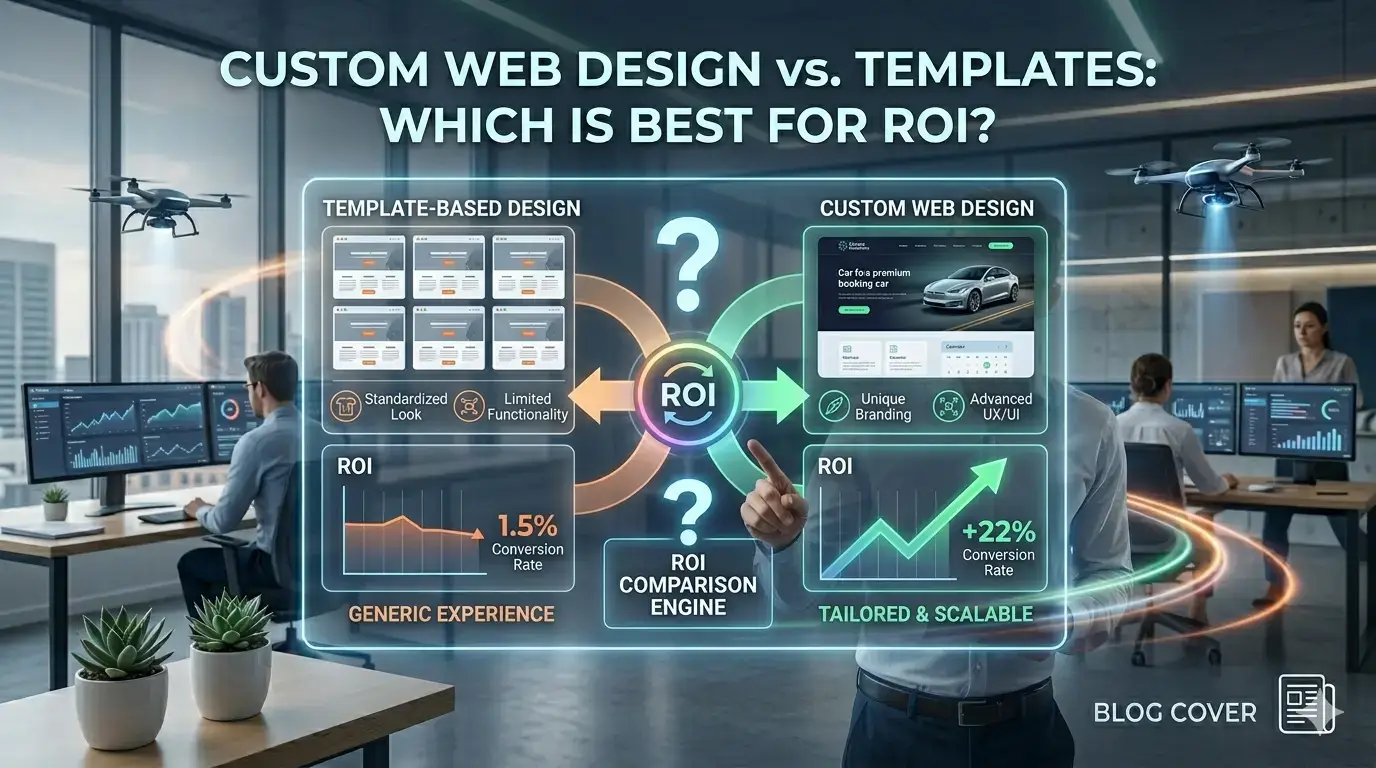
    Most US small business owners view a website as a digital business card—a static line item on a balance sheet. But in a competitive digital landscape, your website is either a high-performing sales engine or a silent leak in your marketing budget.

    The choice between a custom web design and a pre-made template isn’t just an aesthetic one; it is a financial decision that dictates your long-term Return on Investment (ROI). While templates offer a lower barrier to entry, they often carry hidden “performance taxes” that stifle growth.

    The “Template Trap”: Why Low Upfront Costs Often Lead to Low ROI

    Templates (like those found on Squarespace, Wix, or Envato) are built for the masses. To be “everything to everyone,” these themes are packed with bloated code, unnecessary features, and rigid layouts.

    • Performance Bloat: Every extra line of unused code increases your page load time. In the US market, where 53% of mobile visits are abandoned if a page takes longer than three seconds to load, a “cheap” template can cost you half your potential leads before they even see your offer.
    • The “Same-ness” Problem: If your brand looks exactly like five other competitors in your local area, you aren’t building brand equity; you’re becoming a commodity. Bespoke web design ensures your digital presence reflects your unique value proposition.
    • Scalability Ceilings: Templates often break when you try to add advanced functionality, like custom CRM integrations or complex lead-capture workflows.

    Why Custom Web Design is a Strategic Revenue Driver

    When you hire a custom website design agency, you aren’t paying for “pretty pictures.” You are investing in a technical stack optimized for conversion.

    1. Technical Performance and SEO

    Search engines, especially Google, prioritize the user experience. Custom builds allow for “clean code” architecture, which directly impacts Core Web Vitals.

    • The Business Benefit: Higher page speed isn’t just a metric; it’s a ranking factor. A faster site improves your visibility in search results, lowering your Cost Per Acquisition (CPA) from paid ads and organic search.

    2. Conversion Rate Optimization (CRO)

    A template forces your business processes into a pre-defined box. Custom design does the opposite: it maps the user journey based on how your specific customers think and act.

    • The Business Benefit: By removing friction points in the checkout or inquiry process, a custom site can significantly increase your conversion rate. A 1% increase in conversion can represent tens of thousands of dollars in annual revenue for a growing business.

    Meeting US Market Standards: Compliance and Mobile-First

    Operating in the US market requires adherence to specific technical and legal standards that generic templates often ignore.

    ADA Compliance

    The Americans with Disabilities Act (ADA) applies to digital storefronts. Many templates are not built with accessibility in mind (keyboard navigation, screen reader compatibility). For a US small business, a non-compliant site isn’t just a UX failure—it’s a legal liability. Custom design ensures compliance is baked into the foundation, protecting your business from potential litigation.

    Mobile-First Indexing

    Google primarily uses the mobile version of a site for indexing and ranking. While templates claim to be “responsive,” they often result in awkward stacking or hidden buttons on mobile devices. A custom approach utilizes a mobile-first design philosophy, ensuring that the 60%+ of users on mobile have a seamless, high-converting experience.

    Local SEO Integration

    For small businesses, local visibility is everything. A custom build allows for precise Schema markup—the “language” search engines use to understand your business’s location, services, and reviews—far more effectively than a plugin-heavy template.


    The Verdict: When to Choose Custom?

    If you are a solo practitioner testing a concept, a template is a viable starting point. However, if you are an established US small business looking to scale, a template is a bottleneck.

    Custom web design is an investment in your “digital trace”—the footprint you leave in the market. It offers:

    1. Unlimited Scalability: Your site grows with your business.
    2. Unique Brand Authority: You stand out in a crowded marketplace.
    3. Superior ROI: Higher rankings, faster speeds, and better conversion rates.

    Optimize Your Digital Trace

    Is your current website holding your business back? Don’t let a slow, outdated, or “cookie-cutter” site drain your marketing budget.

    Book a Free Website Audit with Digital Trace today. Let’s analyze your current performance and show you exactly how a professional, bespoke web design can transform your site from a digital brochure into your most productive salesperson.

  • 10 Signs Your Business Needs a Website Redesign Agency

    10 Signs Your Business Needs a Website Redesign Agency

    In the US market, your website is no longer a static digital brochure; it is your most active salesperson. However, if that salesperson is using outdated scripts, ignoring half your callers, or failing to close deals, they become a liability.

    At Digital Trace, we view your online presence as more than just code—it is the literal footprint your brand leaves in the digital landscape. If your current “digital trace” is leading customers toward your competitors, a strategic overhaul is required.

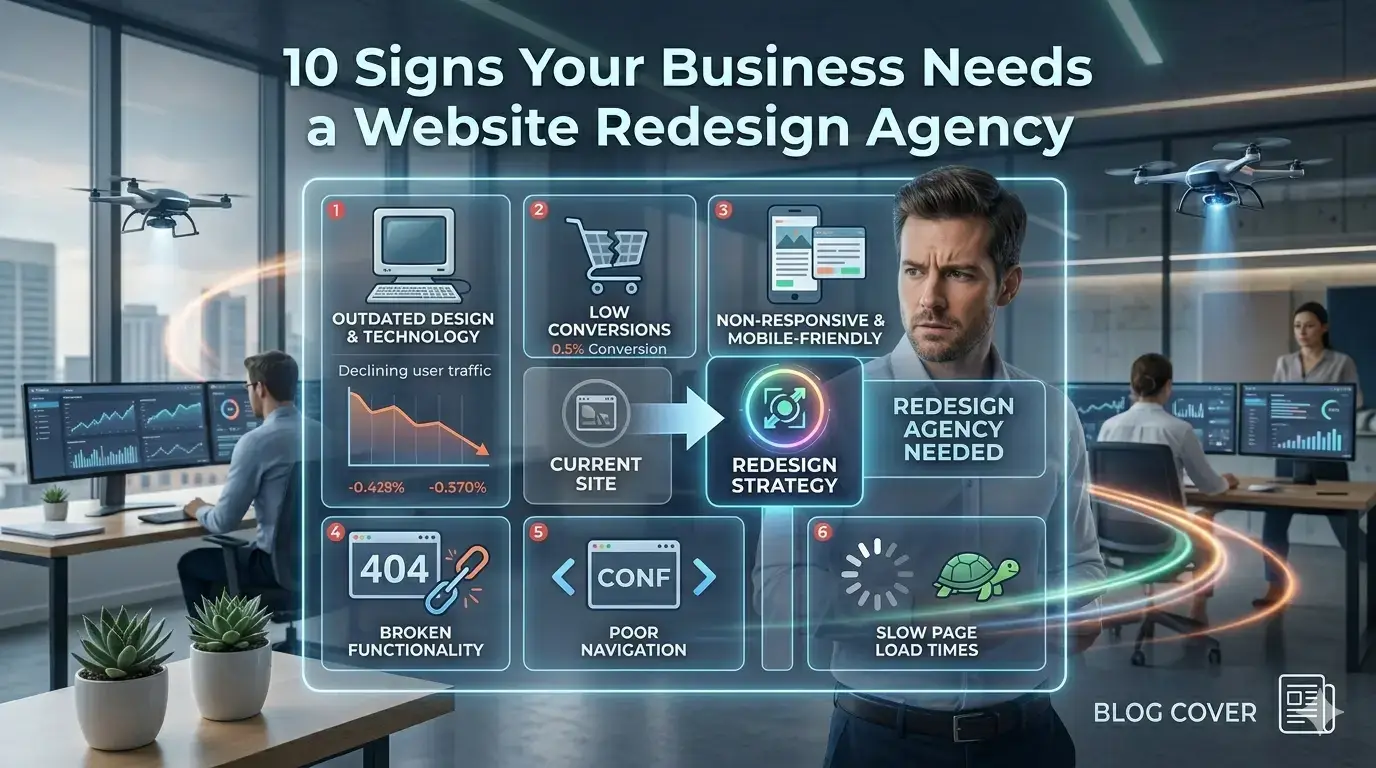
    Below are 10 critical signs that your business requires a professional website redesign agency to reclaim its market position.


    1. High Traffic, Low Conversion Rates

    If your analytics show healthy traffic but your contact forms remain empty, you have a conversion path problem. New web design isn’t just about aesthetics; it’s about strategic “User Experience” (UX). A professional redesign identifies friction points—such as confusing navigation or weak Calls to Action (CTAs)—and optimizes the journey from visitor to lead.

    2. Your Site Fails the “Mobile-First” Test

    Google now utilizes mobile-first indexing, meaning it ranks your site based on the mobile version, not the desktop. If your site is difficult to navigate on a smartphone, you aren’t just frustrating users; you are being penalized in search rankings. A modern website design for company growth must be fully responsive and optimized for touch-based interactions.

    3. Page Speed is Killing Your ROI

    Page speed is a critical ranking factor and a psychological barrier. US consumers expect a site to load in under two seconds. For every additional second of load time, conversion rates drop by an average of 7%. A redesign agency replaces bloated legacy code with streamlined frameworks and optimized asset delivery to ensure your site remains competitive.

    4. Non-Compliance with ADA Standards

    In the US, website accessibility is a legal necessity. The Americans with Disabilities Act (ADA) and WCAG guidelines require that users with visual, auditory, or cognitive impairments can navigate your site. Failing this sign not only excludes a massive audience segment but also opens your business to significant legal risks.

    5. Your Branding No Longer Reflects Your Expertise

    If your business has evolved but your website looks like it belongs in 2018, there is a “trust gap.” High-end aesthetics signal authority. If a potential client perceives your site as “cheap” or “outdated,” they will assume your services are as well. A new web design aligns your digital identity with your current professional tier.

    6. High Bounce Rates on Key Landing Pages

    A high bounce rate indicates that users are landing on your page and immediately leaving. This often stems from a “visual disconnect”—the site looks untrustworthy—or a technical failure in the layout. An agency uses heatmaps and data to restructure your layout, ensuring the most valuable information is “above the fold.”

    7. Difficult and Manual Content Updates

    Are you still calling a developer every time you need to change a price or post a blog? A modern website redesign agency implements intuitive Content Management Systems (CMS) like headless WordPress or Webflow. This empowers your team to manage the site internally without breaking the underlying technical SEO structure.

    8. You Are Invisible in Local Search

    If searching for your services in your city doesn’t bring up your site, your technical SEO is broken. Proper website design for company visibility involves integrating schema markup, local SEO signals, and optimized metadata that tells search engines exactly who and where you are.

    9. Lack of Secure Protocol (HTTPS)

    Security is a primary trust signal. If your browser displays a “Not Secure” warning, you are losing 80% of your potential traffic instantly. A professional redesign ensures your SSL certificates, security headers, and database protocols are hardened against modern cyber threats.

    10. Your Competitors Just Relaunched

    Digital Darwinism is real. If your primary competitors have invested in a high-performance website redesign agency, they are offering a better user experience, faster speeds, and clearer value propositions. You cannot win a 2026 market share with 2020 technology.


    Optimize Your Digital Trace

    Your website should be an asset, not an anchor. If your current site is exhibiting any of these signs, it is time to transition from a generic online presence to a high-performance growth engine.

    Ready to see the data? Visit Digital Trace for a Free Website Audit and discover exactly where your site is losing money—and how we can fix it.

  • What to Look for in a Professional Web Designer

    What to Look for in a Professional Web Designer

    Most small business owners view a website as a one-time expense—a digital checkbox to be ticked. However, if your current site isn’t generating leads or reflects an outdated version of your brand, it isn’t an asset; it’s a liability.

    The gap between a “pretty” website and a high-performing revenue driver is wide. To bridge it, you need more than a freelancer who can navigate a template. You need a professional web designer who understands the intersection of high-end aesthetics and technical ROI.

    1. A Focus on Performance Over Just Aesthetics

    A common mistake is hiring a designer based solely on a portfolio of “cool” visuals. While branding is vital, a professional website designer must prioritize the metrics that Google and your customers care about.

    Speed and Core Web Vitals

    Page speed is no longer just a technical metric; it’s a conversion killer. A one-second delay in mobile load times can impact conversion rates by up to 20%. Look for a partner who discusses “Core Web Vitals” and “clean code” as much as they discuss color palettes.

    Conversion Rate Optimization (CRO)

    The best website design website isn’t the one with the most animations; it’s the one that guides a user seamlessly from the landing page to the contact form. Your designer should be able to explain the “why” behind every button placement and call-to-action (CTA).

    2. Mastery of the US Digital Landscape

    The US market has specific technical and legal requirements that generic offshore services often overlook. A professional must be well-versed in these standards to protect your business and improve visibility.

    ADA Compliance

    In the US, web accessibility is a legal necessity. Failing to meet WCAG (Web Content Accessibility Guidelines) doesn’t just alienate potential customers with disabilities; it opens your business to predatory litigation.

    Mobile-First Indexing

    Google primarily uses the mobile version of your site for indexing and ranking. If your designer treats mobile as an “afterthought” or a scaled-down version of the desktop site, your local SEO will suffer.

    3. Integrated SEO Strategy

    Design and SEO are inseparable. A professional web designer ensures the site architecture is built for search engines from day one. This includes:

    • Proper Header Hierarchy (H1-H6): Ensuring content is readable for both humans and bots.
    • Schema Markup: Helping search engines understand your business type, location, and services.
    • Clean URL Structures: Avoiding “junk” URLs that confuse users and crawlers.

    4. Transparent Process and Long-Term Scalability

    Avoid designers who “black box” their process. You need a partner who provides a clear roadmap—from wireframing and UI/UX design to testing and launch.

    Furthermore, ensure the site is built on a scalable platform. You should own your assets. A professional will build your site in a way that allows you to update content without needing a developer for every minor text change.

    5. Identifying the Best Website Design Website for Your Needs

    When reviewing portfolios, don’t just look for industry fit. Look for diversity in functionality. Does the designer understand how to handle complex lead forms, e-commerce integrations, or localized landing pages? The best designers show you the “Before and After” of their clients’ traffic and lead volume, not just the screenshots.


    Optimize Your Digital Trace

    Your website should be your hardest-working employee. If it’s currently underperforming, it’s time to stop settling for “good enough” and start designing for growth.

    Is your website working for you or against you? Get a Free Website Audit from Digital Trace today. Let’s analyze your performance, SEO, and UX to turn your “digital trace” into a dominant market presence.

  • AI Web Design: The Future of Automated Website Creation

    AI Web Design: The Future of Automated Website Creation

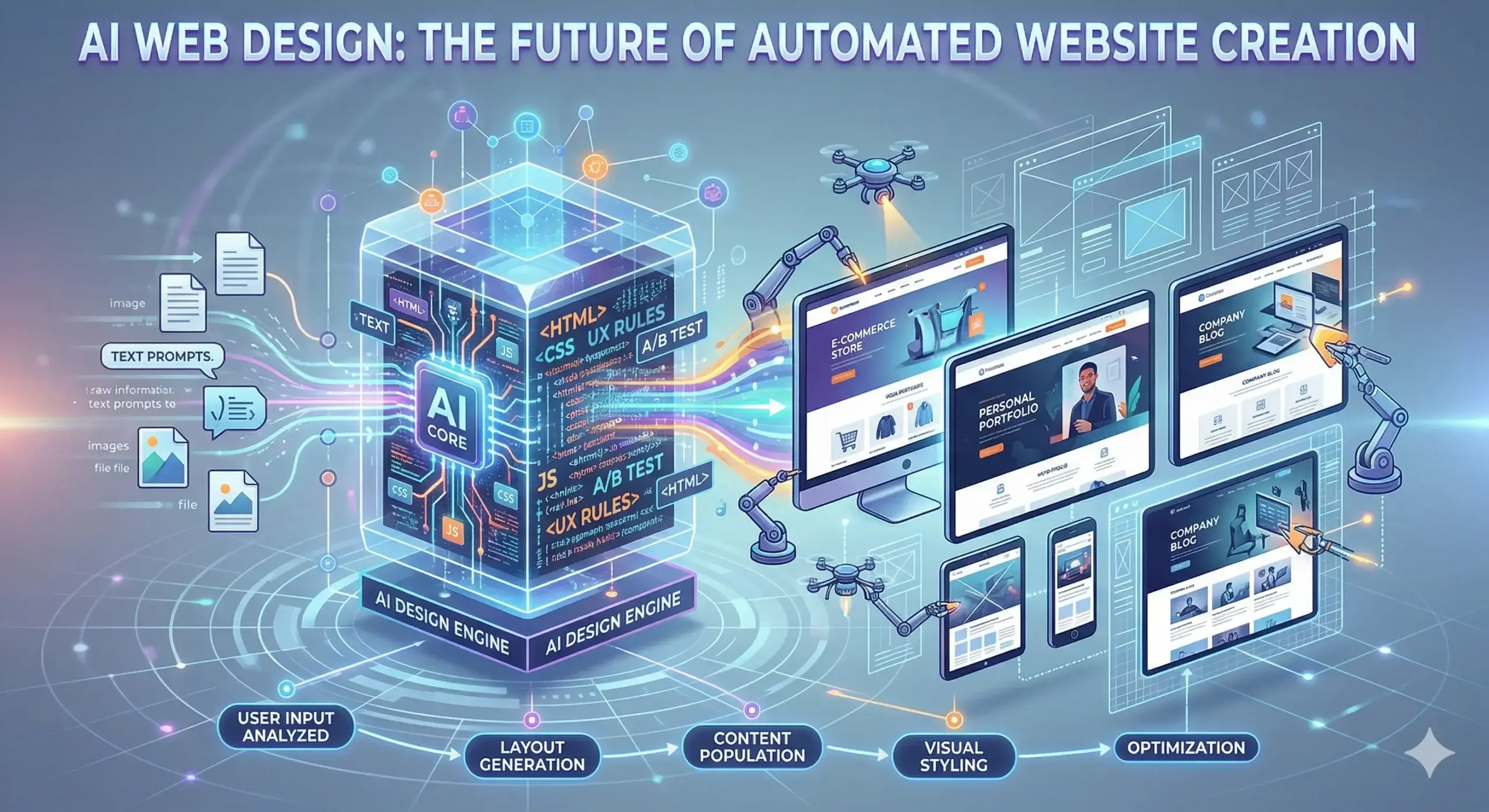
    For many US small business owners, the promise of “automated website creation” sounds like a relief. You’ve likely seen the ads: “Build a site in minutes with AI.” But for a business owner struggling with a 2% conversion rate or a site that hasn’t moved from page four of Google, speed is a dangerous metric to prioritize over performance.

    AI is no longer a futuristic concept; it is a core component of modern web development. However, the gap between a generic AI-generated template and a high-performance “digital trace” is where your ROI lives or dies.

    The Rise of AI Web Design: Efficiency vs. Strategy

    AI web design tools have democratized the ability to launch a site, but they have also flooded the market with “cookie-cutter” digital presences. While these tools can generate layouts and placeholder copy, they often lack the strategic nuance required to convert a skeptical visitor into a lead.

    The problem isn’t the AI; it’s the lack of human-led strategy behind it. At Digital Trace, we view AI as an accelerator, not a replacement. A website must do more than look modern—it must function as a high-speed sales engine.

    Why “Good Enough” is Costing Your Business Revenue

    When you rely solely on entry-level website builders companies, you often inherit technical debt that isn’t visible until your traffic plateaus.

    • Page Speed & Core Web Vitals: AI builders often inject bloated code. Page speed isn’t just a technical metric; it’s a psychological one. If your site takes longer than three seconds to load, your potential customer has already moved to a competitor.
    • The SEO Ceiling: Automated tools struggle with deep-level SEO architecture, such as proper schema markup and siloed content structures that tell Google exactly what you do and where you do it.

    The Hybrid Approach: Human Expertise + AI Precision

    Choosing a professional website creation company means moving beyond templates. It means utilizing AI for data analysis—identifying heatmaps of where users click—while using human designers to craft an aesthetic that aligns with your brand’s authority.

    Navigating US Standards: ADA Compliance and Mobile-First Indexing

    In the US market, your website faces specific legal and technical requirements that most automated builders overlook:

    1. ADA Compliance: Ensuring your site is accessible to users with disabilities isn’t just a best practice; it’s a legal necessity to avoid predatory litigation.
    2. Mobile-First Indexing: Google primarily uses the mobile version of your content for indexing and ranking. A site that “looks okay” on mobile but fails on touch-target size or layout shifts will be penalized.
    3. Local SEO Logic: For businesses serving specific US regions, your site needs localized metadata and Google Business Profile integration that AI tools often generate too generically.

    Why Technical Performance is the New Branding

    High-end aesthetics draw people in, but technical performance keeps them there. A beautiful site that is slow is like a showroom with a locked door.

    We focus on the intersection of UX (User Experience) and technical SEO. This includes:

    • Conversion Rate Optimization (CRO): Placing calls-to-action (CTAs) based on user behavior data, not guesswork.
    • Clean Code Architecture: Reducing “Total Blocking Time” to ensure a seamless experience on any device or network speed.

    Optimize Your Digital Trace

    The future of website creation isn’t just about AI; it’s about how AI is harnessed to create a superior user experience. If your current website feels like a digital brochure rather than a lead-generation tool, it’s time to move beyond the limitations of basic builders.

    Don’t let an outdated “digital trace” hold your business back. Your website should be your hardest-working employee.

    Ready to see the data behind your site’s performance? Book a Free Website Audit with Digital Trace today. Let’s analyze your speed, SEO, and conversion paths to build a strategy that scales.

  • Responsive Web Design: Why Mobile-First Matters in 2026

    Responsive Web Design: Why Mobile-First Matters in 2026

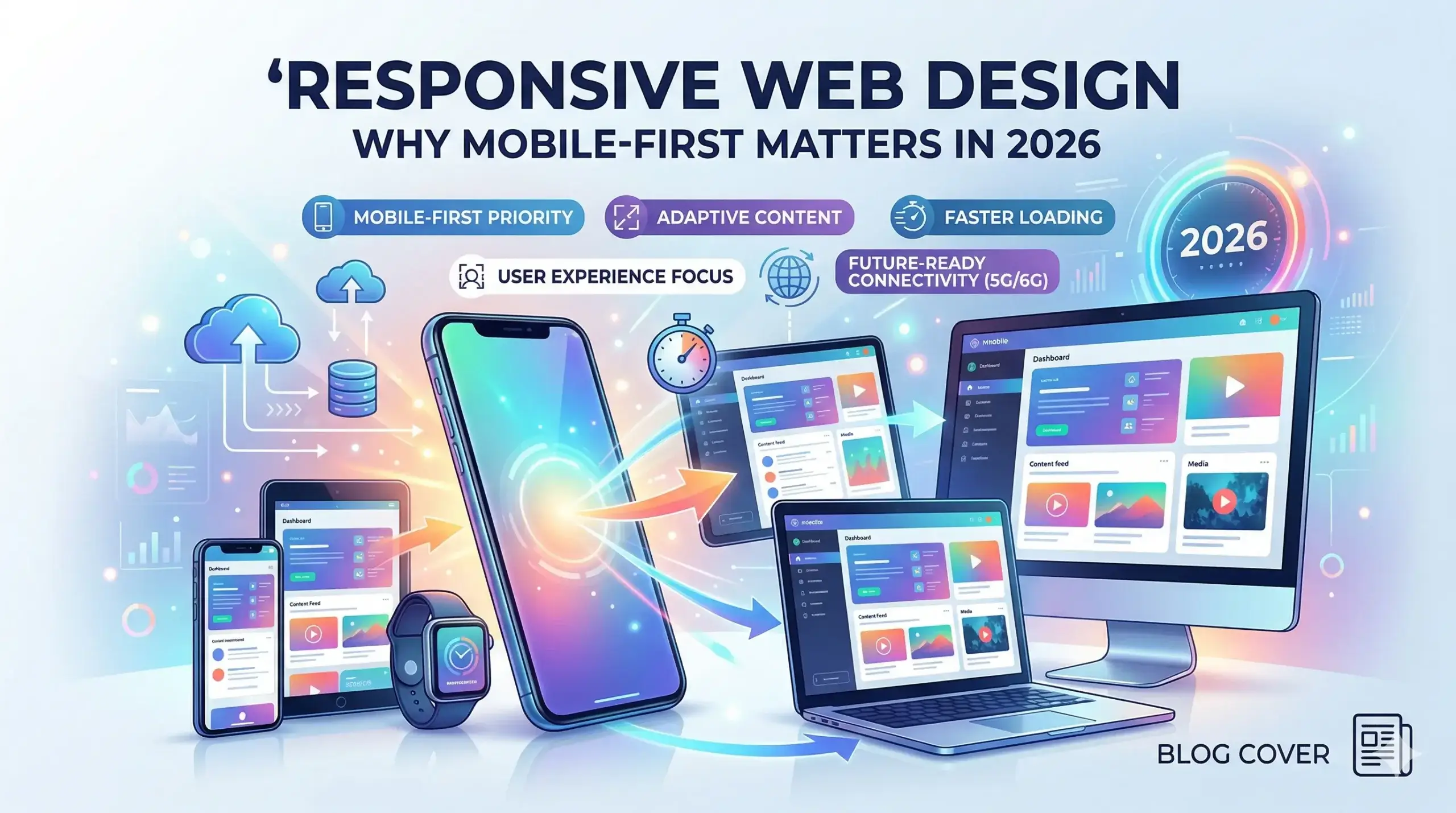
    For the modern US small business owner, a website is no longer a digital brochure; it is your primary sales engine. However, if your site was built even three years ago, it likely follows a “desktop-down” philosophy. In 2026, this approach is costing you more than just aesthetics—it is actively driving away high-intent leads and tanking your search engine visibility.

    At Digital Trace, we see it daily: brilliant businesses obscured by sluggish, non-responsive interfaces. In an era where Google’s mobile-first indexing is the absolute standard, “mobile-friendly” is no longer enough. You need mobile-excellence.

    The ROI of Mobile-First Indexing

    Google does not look at your desktop site to determine your rank; it looks at your mobile version. If your mobile web design is an afterthought, your SEO performance will reflect that.

    For small businesses, this is a local SEO crisis. Most “near me” searches occur on mobile devices while users are on the move. If your site takes more than 2.5 seconds to load or requires “pinch-to-zoom” navigation, users will bounce back to the search results and click on a competitor. Page speed and responsive fluidity aren’t just technical metrics; they are the gatekeepers of your customer’s trust.

    Technical Performance Meets High-End Aesthetics

    A common mistake is sacrificing brand identity for mobile speed. Professional responsive web design ensures that the “Digital Trace” your business leaves is one of sophistication and efficiency, regardless of the device.

    1. Fluid Grids vs. Fixed Layouts

    Generic templates often use fixed breakpoints that “break” on newer smartphone resolutions. We utilize fluid grid systems that calculate proportions dynamically. This ensures your high-resolution imagery and brand messaging look as impactful on a Foldable phone as they do on a 27-inch Studio Display.

    2. Core Web Vitals in 2026

    Google’s Core Web Vitals—specifically Interaction to Next Paint (INP)—now heavily weight how responsive your site feels to touch inputs. A site that looks good but feels “heavy” or unresponsive to the thumb will be penalized.

    Beyond the Screen: ADA Compliance and US Standards

    In the US market, accessibility is a legal and business imperative. The Americans with Disabilities Act (ADA) standards now extend deep into the digital space.

    Mobile-first design naturally aligns with accessibility:

    • Touch Targets: Ensuring buttons are large enough for all users.
    • Contrast Ratios: Making sure text is readable in outdoor lighting (high-glare environments).
    • Screen Reader Optimization: Structuring HTML so assistive technologies can navigate your site flawlessly.

    Ignoring these doesn’t just invite litigation; it excludes a significant percentage of your potential market.

    Web vs. App: Which Path Drives Growth?

    Small business owners often ask if they should bypass a website for a custom application. While we are recognized as a best mobile app development company for complex, utility-driven projects, most businesses find their highest ROI in a premium responsive website.

    A high-performance responsive site offers the “app-like” feel—smooth transitions, bottom-bar navigation, and instant loading—without requiring the user to download anything from an app store. It bridges the gap between discovery and conversion.

    The Digital Trace Edge: Why Professional Intervention is Necessary

    DIY website builders offer “responsive” toggles, but they cannot optimize the underlying code for the specific demands of your industry. Our approach at Digital Trace integrates:

    • Conversion Rate Optimization (CRO): Strategic placement of CTAs specifically for thumb-navigation.
    • Technical SEO: Clean, schema-rich code that tells search engines exactly who you are.
    • Custom Performance Layers: Cutting out the “bloat” inherent in generic templates to ensure sub-second load times.

    Your website should be your hardest-working employee. If it’s currently a liability, it’s time to modernize.

    Optimize Your Digital Trace Today

    Is your current website driving growth or stifling it? Don’t let an outdated mobile experience alienate your best customers.

    [Visit Digital Trace for a Free Website Audit] Let’s analyze your current performance, identify SEO gaps, and build a mobile-first strategy that converts.

  • Why You Should Hire a Local Web Designer Near Me

    Why You Should Hire a Local Web Designer Near Me

    For most US small business owners, a website is often viewed as a digital business card—a static placeholder that “looks okay.” However, in a competitive landscape, “looking okay” is a liability. If your current site isn’t actively generating leads or if your bounce rates are climbing, you aren’t just facing a design problem; you’re facing a technical performance gap.

    Hiring a local webdesign agency isn’t just about proximity; it’s about finding a partner who understands the specific digital standards of the US market and can translate your brand into a high-performance conversion engine.

    The Myth of the “Global” Cheap Alternative

    Low-cost, outsourced platforms often promise a functional site for a fraction of the price. The hidden cost, however, is a lack of accountability and a failure to meet critical technical benchmarks. When you search for web design companies near me, you are looking for a team that understands local SEO nuances and the legal requirements—such as ADA compliance—that can pose significant risks to US businesses if ignored.

    Performance as a Revenue Driver: The Digital Trace Strategy

    At Digital Trace, we believe aesthetics are secondary to performance. A beautiful website that takes five seconds to load is a failed investment.

    1. Mobile-First Indexing and Core Web Vitals

    Google now uses mobile-first indexing, meaning the mobile version of your site is the primary version for ranking. A local web designer near me ensures your site passes Google’s Core Web Vitals. We focus on:

    • LCP (Largest Contentful Paint): Ensuring your main content loads in under 2.5 seconds.
    • CLS (Cumulative Layout Shift): Preventing annoying visual jumps that frustrate users and drive them to competitors.

    2. ADA Compliance and Legal Security

    For US-based businesses, accessibility is no longer optional. Under the Americans with Disabilities Act (ADA), your website must be accessible to all users. Professional agencies integrate WCAG 2.1 guidelines into the code—optimizing screen reader compatibility and color contrast—to protect your business from litigation and expand your reachable audience.

    Local SEO: Dominating Your Immediate Market

    Searching for web design near me reveals a fundamental truth: your business needs to appear where your customers are looking. A local agency doesn’t just build a site; they build a local search strategy.

    Professional web design includes “Schema Markup”—a specific type of code that helps search engines understand your location, services, and reviews. This increases the likelihood of your business appearing in the “Map Pack,” the highly coveted top-three spots in local search results.

    UX vs. UI: Designing for the “Click”

    User Interface (UI) is how your site looks; User Experience (UX) is how it feels and functions. A local webdesign agency prioritizes the user journey.

    • High-End Aesthetics: Reflecting the professionalism and trust required for the US market.
    • Strategic CTAs: Placing “Call to Action” buttons where users naturally look, reducing friction in the sales funnel.
    • Technical Speed: Every millisecond shaved off your load time increases conversion rates by up to 7%.

    Why Professional Intervention is Necessary

    DIY site builders often bloat your code with unnecessary plugins, slowing down your site and tanking your SEO. Professional developers write clean, semantic code that search engines can easily crawl. This “Digital Trace” of quality is what separates a hobbyist site from a corporate asset that drives growth.

    Transform Your Digital Presence

    Your website should be your hardest-working employee. If it’s currently underperforming, it’s time to move beyond generic templates and invest in a high-performance solution tailored to the US small business landscape.

    Is your website working for you, or against you? Visit Digital Trace today for a Free Website Audit. Let’s analyze your current performance, identify SEO bottlenecks, and show you exactly how to optimize your digital trace for maximum ROI.

  • Virtual Showrooms: How 3D Walkthroughs are Replacing the Traditional Test Drive

    Virtual Showrooms: How 3D Walkthroughs are Replacing the Traditional Test Drive

    The automotive path to purchase has shifted. Today, the “first visit” doesn’t happen on your lot; it happens on a smartphone screen. For many US dealers, this is where the sale is lost. High bounce rates and low lead conversion often stem from a static, uninspired car dealer website that fails to bridge the gap between digital browsing and physical ownership.

    Generic image galleries are no longer enough. To capture the modern consumer, dealerships must transition from being online catalogs to immersive digital destinations.

    The Death of the Static Inventory Page

    The average consumer now spends over 14 hours researching vehicles online before ever stepping foot in a dealership. If your website relies on flat, 2D images, you are providing an experience that feels outdated.

    360 car photography and 3D walkthroughs solve a critical psychological barrier: trust. By allowing a user to “sit” in the driver’s seat, inspect the stitching on the leather, and toggle the infotainment system from their browser, you move them from passive observer to active participant. This immersion significantly increases “time-on-page,” a metric that signals high value to search engines.

    Technical Performance: Where Aesthetics Meet SEO

    While 3D assets are visually stunning, they are resource-heavy. A common mistake in automotive website design is prioritizing visual flair at the expense of technical performance.

    • The Speed Gap: If a 3D showroom adds three seconds to your load time, you’ve lost 40% of your mobile traffic before the page even renders. Page speed isn’t just a metric; it’s the difference between a lead and a lost opportunity.
    • Optimization Strategy: At Digital Trace, we implement advanced “Lazy Loading” and Content Delivery Networks (CDNs) to ensure that high-resolution 3D environments load near-instantaneously.
    • Mobile-First Indexing: Google primarily uses the mobile version of your site for ranking. Your virtual showroom must be as fluid on an iPhone as it is on a desktop workstation.

    Compliance and Accessibility in the US Market

    For US-based small business owners, a high-performing website must also be a compliant one. ADA (Americans with Disabilities Act) compliance is no longer optional.

    Interactive 3D elements must be accessible to users with screen readers or those who navigate via keyboard. Failing to address this doesn’t just alienate a segment of your audience; it opens your business to significant legal risk. High-end design must be inclusive design, ensuring every potential buyer can navigate your inventory without friction.

    Synergizing 360 Photography with Local SEO

    Your virtual showroom shouldn’t live in a vacuum. By integrating 360-degree views directly into your Google Business Profile, you improve your Local SEO footprint.

    When a user searches for a “car dealer near me,” Google prioritizes profiles with high engagement and rich media. Immersive content signals to the algorithm that your business is active and authoritative, directly influencing your position in the “Local Map Pack.” This creates a seamless funnel: the user finds you on Google Maps, explores the interior via a 3D walkthrough, and clicks “Book a Test Drive” with high intent.

    The ROI of Digital Immersion

    The goal of a 3D showroom isn’t just to look modern—it’s to filter for high-quality leads.

    1. Reduced Sales Friction: Customers arrive at the dealership having already “vetted” the vehicle.
    2. Higher Retention: Interactive sites see significantly higher return-visit rates.
    3. Brand Authority: A premium digital experience justifies premium pricing and builds long-term brand equity.

    In a saturated market, your “digital trace” is the most powerful tool you have to differentiate your dealership from the franchise down the street.

    Optimize Your Digital Trace

    Is your website a high-performance sales machine or a digital roadblock? A beautiful site that doesn’t rank is as useless as a fast car with no fuel.

    Visit Digital Trace today for a Free Website Audit. Let’s analyze your current performance and show you how a custom-engineered automotive platform can turn your digital presence into your most productive salesperson.

  • The Digital Mechanic: Building an Auto Repair Website That Books Appointments While You Sleep

    The Digital Mechanic: Building an Auto Repair Website That Books Appointments While You Sleep

    For most shop owners, a website is treated like a digital business card—it exists, but it isn’t actually working. While you are under the hood, your digital presence should be qualifying leads and filling your bays. If your current site is just a static gallery of your garage, you are losing market share to competitors who treat their car service website as a high-performance tool.

    In the US market, a “good enough” website is a liability. To convert modern drivers, your site needs to balance high-end aesthetics with the rigorous technical standards of Google’s mobile-first indexing.

    The Performance Gap: Why Aesthetics Alone Fail

    A beautiful auto repair website design is useless if it doesn’t load fast or rank locally. At Digital Trace, we view a website like a high-performance engine: the UI (User Interface) is the bodywork, but the technical SEO and UX (User Experience) are the internal components that actually move the vehicle.

    The 3-Second Rule and Core Web Vitals

    Google’s algorithm prioritizes page speed. If your site takes longer than three seconds to load on a mobile device, 53% of visitors will bounce. Speed isn’t just a technical metric; it is a direct influencer of your bounce rate and, ultimately, your bottom line. We optimize for “Core Web Vitals” to ensure your shop appears first when a local driver is stranded and searching for immediate help.

    Conversion Architecture: Turning Traffic into Bay Traffic

    Getting a visitor to your website for car repair is only half the battle. The other half is “Conversion Architecture”—the strategic placement of elements that guide a user from “just looking” to “booking.”

    Frictionless Appointment Scheduling

    The modern consumer avoids phone calls. If your site relies solely on a “Call Us” button, you are bleeding leads. High-converting sites integrate:

    • Live Booking Sync: Real-time calendars that allow customers to claim a time slot.
    • Urgency Triggers: “Next available slot: Today at 2:00 PM.”
    • One-Handed Navigation: Since 80% of local automotive searches happen on mobile, your “Book Now” button must be easily clickable by a thumb.

    Navigating US Standards: ADA and Local SEO

    Operating in the US market requires adherence to specific digital standards that protect your business and improve visibility.

    ADA Compliance

    The Americans with Disabilities Act (ADA) extends to the digital space. A professional website must be accessible to users with visual or auditory impairments. Failure to comply is not just bad for business—it’s a legal risk. We implement screen-reader compatibility and high-contrast modes as a standard, not an afterthought.

    Dominating the “Local Pack”

    Local SEO is the lifeblood of an auto shop. Your website must be structured to dominate the “Map Pack” (the top three local listings on Google). This requires:

    • Hyper-Local Content: Pages dedicated to specific neighborhoods or suburbs you serve.
    • Schema Markup: Specialized code that tells Google exactly what services you offer, your hours, and your physical location.

    The Digital Trace Advantage

    Generic website builders offer templates that look clean but lack the “under-the-hood” sophistication required to rank in a competitive landscape. A professional auto repair website design requires a synthesis of brand storytelling and technical precision. We don’t just build sites; we build automated sales funnels that reflect the quality of your craftsmanship.

    Is your website an asset or a liability?

    Your “digital trace” is often the first and only impression a customer gets of your shop. Don’t let an outdated site stall your growth.

    [Get Your Free Website Audit & Consultation] Visit Digital Trace today to see exactly where your site is losing money and how we can optimize your presence for 24/7 growth.