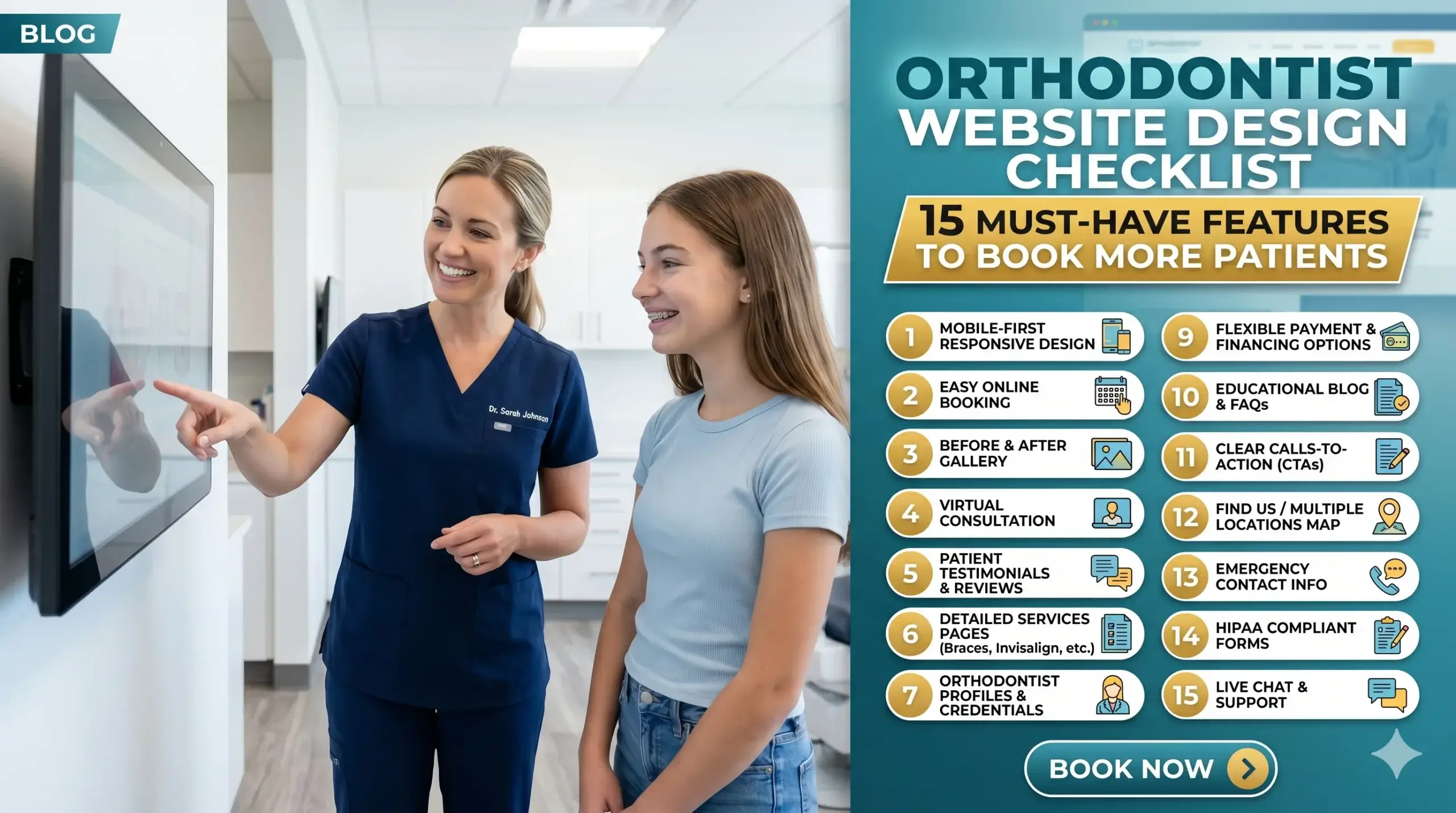
Blog

  • Construction Website Design: How to Get More Local Leads From Google in 2026

    Construction Website Design: How to Get More Local Leads From Google in 2026

    You’re busy running a construction business — managing crews, juggling bids, keeping projects on schedule. The last thing you have time to worry about is your website. But here’s the problem: your website is out there right now, either sending you leads or turning them away. And most construction company websites are doing the latter.

    The frustrating part? The owners don’t even know it.

    Most contractors assume a website just needs to exist — a few photos, a phone number, maybe a list of services. But that’s not how it works in 2026. When a homeowner or general contractor searches “roofing contractor near me” or “commercial builder in [city],” Google decides in milliseconds which businesses to show. And the companies showing up aren’t just the ones with the best crews — they’re the ones with websites built to earn Google’s trust and convert visitors into calls.

    This guide breaks down exactly why your construction website might be silently costing you jobs, and what a well-built construction website actually looks like when it’s working hard for your business.


    Why Your Construction Phone Isn’t Ringing (And Your Website Is the Reason)

    Picture this: you hand a potential client a business card that’s bent, has a typo on it, and directs them to a voicemail that’s full. That’s essentially what a slow, outdated, or poorly structured construction website does every single day.

    When someone lands on your site and it takes more than three seconds to load, most people leave — without ever seeing your services, your photos, or your phone number. They don’t call. They don’t come back. They go straight to your competitor.

    The technical term is “page load speed,” but the business impact is simple: every second of delay costs you real inquiries. A site built for construction needs fast hosting, optimized images, and lean code — things most generic website builders don’t prioritize.


    Your Site Looks Fine on a Desktop — But Your Customers Are on Their Phones

    Here’s something worth checking right now: pull up your website on your phone. Is the text tiny? Do you have to zoom in to find the phone number? Is the “Request a Quote” button buried at the bottom?

    Nearly 70% of people searching for local contractors do it on their phone. If your site doesn’t load cleanly, display your phone number prominently, and let someone tap-to-call in under five seconds — you’re losing leads on every single mobile visit.

    This isn’t just a design preference. Google penalizes sites that don’t perform well on mobile. That means a poor mobile experience doesn’t just frustrate visitors — it also pushes you lower in search results, making it harder for anyone to find you in the first place.

    The fix isn’t just making your text bigger. A properly built construction company website is designed mobile-first, meaning the phone experience is the priority, not an afterthought.


    Google Doesn’t Know Enough About Your Business to Trust It

    Think of Google like a new subcontractor you’re vetting before a big project. You want references, proof of work, credentials, and a clear scope of what they do. If the information is vague or missing, you move on to someone else.

    That’s exactly how Google treats your website. If your site doesn’t clearly tell Google:

    • Where you operate (specific cities and service areas)
    • What you do (general contracting, commercial builds, residential remodels — all clearly stated)
    • Who you are (your business name, address, phone number — consistent everywhere online)
    • What others say about you (reviews, trust signals, certifications)

    …then Google won’t feel confident showing your business to searchers. There’s a technical layer here called structured data (or schema markup) — basically a way of labeling your website’s content so Google can read it clearly. Without it, your construction firm website is speaking a language Google only half-understands.

    The result? You rank lower than competitors who have the same quality of work but a better-structured website.


    💡 Pro Tip: Your “Services” Page Is Probably Hurting You

    One of the most common mistakes construction company websites make is cramming every service onto a single page — roofing, siding, decks, additions, commercial work — all in one long list.

    Here’s the problem: if a homeowner searches “deck builder in [city]” and lands on a page that also talks about commercial roofing and foundation work, Google doesn’t see a focused, relevant match. It sees a general page that sort of applies.

    The fix is straightforward: create a dedicated page for each core service, written specifically for that service and that type of customer. A deck page for deck customers. A commercial page for commercial clients. Each one gives Google a clear, confident signal — and gives your visitor exactly what they came for. This single change often produces a meaningful lift in both rankings and conversions.


    What Happens When Everything Goes Wrong: A Before-and-After

    The situation: A mid-sized general contracting company in the Southeast — six full-time employees, strong reputation locally, good reviews on Google, and a website that had been built by a cousin seven years ago. The owner was running paid ads and getting some calls, but the cost per lead was high and organic search was essentially zero.

    The problems: The site took over eight seconds to load on mobile. The homepage mentioned the company name and city once, buried in the footer. There were no individual service pages — just a general “What We Do” section. The Google Business Profile had different contact info than the website. And there was no clear call-to-action above the fold on any page.

    What changed: A full rebuild focused on construction web design that matched how local customers actually search. Service-specific pages for residential renovations, commercial build-outs, and custom additions. Mobile load times cut to under two seconds. Consistent NAP (name, address, phone) data across the site, Google Business Profile, and key directories. A clear “Get a Free Estimate” button visible the moment someone lands on any page.

    The result: Within 90 days, the site was generating consistent organic inquiries without paid ads. The owner estimated they recovered at least three to five jobs per month that had previously been going to competitors — jobs that were there for the taking, just not visible.


    Not sure if your construction website has these problems? Get a free website audit — no pressure, just a clear, honest picture of what’s costing you leads right now.


    What a High-Converting Construction Website Actually Has

    A website built specifically for construction isn’t the same as a generic small business site with a hard-hat photo slapped on the banner. Here’s what separates a site that generates leads from one that just takes up space online:

    • Speed under two seconds on mobile — because that’s when most people decide to stay or leave
    • A tap-to-call phone number visible without scrolling — no one should have to search for how to reach you
    • Dedicated service pages — one page per core service, written for the customer searching for that specific thing
    • Real photos of your work — stock photos kill trust; your actual projects build it
    • Clear geographic signals — your city, your service areas, stated plainly and repeatedly
    • A simple, low-friction lead form — asking for name, phone, and project type is enough; a 10-field form gets abandoned
    • Social proof above the fold — star rating, number of reviews, or a short testimonial from a real client

    This is what Digital Trace builds for construction businesses — websites designed around the specific way people search for and hire contractors.


    Your Path to More Leads: 5 Steps That Actually Move the Needle

    You don’t need to become a digital marketing expert. You just need a clear picture of where the gaps are and someone who knows how to close them.

    Step 1: Audit what you have. Before changing anything, understand what’s working and what isn’t. Page speed, mobile experience, keyword visibility, and conversion paths — these all need to be assessed before you build or rebuild.

    Step 2: Fix your mobile experience. If your site is hard to use on a phone, everything else is secondary. This is where most construction websites lose the most leads — silently, every day.

    Step 3: Build service-specific pages. Stop sending every visitor to one generic page. Each core service deserves its own page, written for the specific customer who’s searching for it.

    Step 4: Make your local presence clear. Your city and service areas should be stated clearly across your site — in headings, in your content, and in your page metadata. Google needs to see it. So do your customers.

    Step 5: Make it easy to contact you. A visible phone number, a simple form, and a single strong call-to-action on every page. Remove every barrier between a visitor and a conversation with your business.


    FAQ: What Construction Business Owners Actually Ask Before Hiring a Web Agency

    Why am I not getting calls from my website?

    Usually it comes down to three things: people can’t find your site (you’re not ranking), people visit but leave before they call (bad mobile experience or slow load times), or people don’t trust what they see (weak social proof, no clear service focus). Most construction websites have at least two of these problems at once.

    How do I know if my construction website is actually working?

    If your site isn’t generating at least a few genuine inquiries per month from organic search — without paid ads — it probably isn’t pulling its weight. A good place to start is checking how many calls or form fills are coming from your website directly, not from your Google Business Profile or referrals. A free website audit can show you exactly where visitors are dropping off and what’s fixable.

    How long does it take to see results from a new website?

    A rebuilt site that’s properly optimized typically starts showing traction within 60 to 90 days — sometimes faster if the previous site was severely underperforming. You won’t dominate every keyword overnight, but consistent improvement in organic visibility and lead quality is realistic within the first quarter.

    What makes a construction website different from a regular business website?

    Construction customers search very differently from retail or service customers. They’re often looking for specific work types, in specific cities, sometimes on a tight timeline. A construction company website needs to match those search patterns precisely — with service-specific content, strong local signals, and a design that builds immediate trust (portfolio, reviews, credentials) since the jobs involved are high-stakes purchases.

    Do I really need a fast website if my customers are local?

    Yes — especially because your customers are local. When someone searches for a contractor in your city and your site loads slowly, Google notices that people leave and factors it into where you rank. Local competition is often intense, and a one-second advantage in load time can be the difference between showing on page one or page two. Most people never scroll to page two.

    I’ve hired agencies before and seen nothing. Why would this be different?

    That’s a fair and common frustration. The difference usually comes down to whether the agency builds a generic website or one built specifically for how your industry and your customers work. Construction web design isn’t a template job — it requires understanding how contractors get hired, what local search actually looks like for your services, and how to turn a website visit into an estimate request. Results should be measurable, and a good agency will show you exactly what’s changing and why.


    Ready to See What Your Website Is Actually Costing You?

    Most construction business owners are surprised to learn how much revenue their current website is leaving behind — not because their work isn’t good, but because their site isn’t built to compete.

    There’s no obligation and no sales pitch. Digital Trace will take a clear look at your website, show you exactly what’s working against you, and give you a straight answer about what it would take to fix it.

    Get your free website audit →

    If your competitors are showing up on Google and you’re not, the gap almost always starts with the website. Let’s find out what’s behind it — and close it.

  • How to Choose the Right Construction Web Design Agency (Without Getting Burned)

    How to Choose the Right Construction Web Design Agency (Without Getting Burned)

    You’ve spent years building a reputation in construction — delivering projects on time, keeping crews accountable, and earning referrals the hard way. Then you hired a web agency, paid a few thousand dollars, and… nothing changed. The phone didn’t ring more. The website looked fine but produced nothing.

    That’s not bad luck. That’s what happens when a general web agency builds a site without understanding how construction customers actually search, think, and decide who to call.

    Most construction business owners assume their website problem is about design. It’s usually not. The real problem is that your site was built to look good — not to rank on Google, load fast on a job-site phone signal, or convert a skeptical homeowner or project manager into a call.

    This guide breaks down exactly what to look for when choosing a construction web design agency — and what warning signs mean you’re about to get burned again.


    Your Website Is Like Your Work Truck — If It Can’t Perform, It’s Costing You Money

    Think of your website the way you think about your work truck. Nobody hires a contractor who shows up in a rusted-out, unreliable vehicle with no lettering on the side. First impressions matter. But more than looks, the truck has to actually run — it has to show up on time, carry the load, and get you to the job.

    A construction website works the same way. It has to show up (rank on Google), load fast (even on a phone with two bars of LTE), and carry a potential customer all the way from “I found this company” to “I’m calling them right now.”

    Most agencies build you a nice-looking truck that breaks down in the driveway.

    Here’s what actually matters — and how to tell the difference before you sign a contract.


    Red Flag #1: They’ve Never Built a Site for a Construction Company

    Generic web agencies build websites. That’s it. They’ll take your logo, write some copy about “quality craftsmanship and customer satisfaction,” throw in a stock photo of a hard hat, and call it done.

    The problem is they don’t know how construction customers actually find contractors. They don’t know that someone searching “commercial concrete contractor near me” is ready to hire — right now — while someone searching “what does a foundation repair cost” is still in research mode. Those two visitors need completely different pages.

    They don’t know that most of your traffic will come from mobile, often from someone standing in a parking lot or on a job site. They don’t know that your service area matters as much as your services. And they almost certainly don’t know how Google evaluates a construction business’s website differently than a restaurant or a law firm.

    Before you sign with any agency, ask them: Can you show me construction websites you’ve built? What happened to their leads after launch? If they fumble that answer, keep walking.


    Red Flag #2: They’re Selling You a Website — Not a Lead System

    A website that doesn’t generate calls is just an expensive business card.

    The agencies that get construction businesses real results understand that a website is a system, not a project. It has moving parts that all have to work together:

    • Speed: If your site takes more than 3 seconds to load, more than half your visitors leave before they see a single word. Not because they don’t need a contractor — because they moved on to the next result.
    • Mobile experience: Most people searching for a contractor are on their phone. If your site is hard to navigate on a phone screen, you’re losing those leads.
    • Clear calls to action: Every page needs to answer the question “what do I do next?” — with a phone number, a contact form, or a request-a-quote button that’s easy to find.
    • Local SEO: Google needs to understand exactly where you work and what you do. Without the right setup, your site might rank for your company name but not for “roofing contractor in [your city]” — which is what your customers are actually searching.

    A good construction web design agency builds all of this in from day one, not as add-ons you pay for later.


    Red Flag #3: Your Site Is Invisible on Google — and No One Told You

    Here’s a problem that’s more common than most construction owners realize: your website exists, but Google isn’t showing it to anyone who actually needs your services.

    Why does this happen? A few reasons.

    First, your pages may not be targeting the right phrases. There’s a big difference between having a page that mentions “we do roofing” and having a page built to rank for “metal roofing contractor [city].” Google reads your pages like a blueprint — if the blueprint isn’t specific, it doesn’t know what to build.

    Second, Google may not have enough information about your business to trust it. There’s a technical setup (called schema markup) that tells Google: “This is a licensed general contractor. They serve these zip codes. Here’s their phone number. Here’s what they specialize in.” Without it, Google treats your site like an unmarked truck — it doesn’t confidently recommend you.

    Third, if your site loads slowly or isn’t mobile-friendly, Google quietly pushes it down in rankings. You’ll never get a notification. You just stop showing up.


    💡 Pro Tip: Check How Your Site Loads on a Phone Before Anything Else

    Most construction business owners check their website on a desktop computer in the office. Their customers are checking it on a phone, standing in a parking lot, often on a weak signal.

    Pull out your phone right now and open your website on cellular data (turn off Wi-Fi). Time how long it takes to load. Then ask yourself: is your phone number visible without scrolling? Can someone tap to call you in under 10 seconds?

    If the answer to either question is no, you’re losing real leads every single day. A good web design agency will fix this before anything else — because no amount of design work matters if people leave before the page finishes loading.


    What a Real Before/After Looks Like

    Garcia & Sons Concrete — Dallas, TX

    Garcia & Sons had been in business for 11 years. Solid reputation, strong referral base, real project photos. Their website had been built by a local graphic designer five years earlier and hadn’t been touched since.

    The problem: they were getting fewer than 10 website visitors a week and almost no inbound calls from people who didn’t already know them. They were invisible on Google for nearly every search that mattered — “commercial concrete contractor Dallas,” “flatwork and slab installation,” “concrete driveway replacement near me.”

    The site also loaded in over 7 seconds on mobile, had no Google Business Profile integration, and was missing basic local SEO signals entirely.

    After rebuilding the site with construction-specific SEO, fast mobile performance, dedicated service area pages, and clear lead capture on every page, results shifted significantly within 90 days:

    • Organic website traffic increased by over 300%
    • Inbound calls from the website went from near-zero to 18–24 per month
    • The contact form was generating 6–10 qualified project inquiries per month

    None of their services changed. Their prices didn’t change. The only thing that changed was that the right people could finally find them — and when they landed on the site, it was built to make them call.


    Not sure if your construction website has these issues? Get a free website audit — no obligation, just a clear picture of what’s costing you leads.


    What to Actually Look for in a Construction Web Design Agency

    Now that you know what the wrong agency looks like, here’s what the right one does differently.

    They ask about your business before they talk about design. A good agency wants to know: What services make you the most money? What areas do you serve? Who are your best customers — homeowners, property managers, general contractors? The website strategy flows from those answers.

    They show you the plan, not just the portfolio. Any agency can show you screenshots. The right agency explains how the site will rank, what pages they’ll build, how they’ll handle your service areas, and what the lead flow will look like after launch.

    They build for performance, not just aesthetics. Fast load times, clean mobile experience, click-to-call buttons, real photos from your projects, and content that matches how your customers actually search — all of that has to be built in, not bolted on.

    They understand construction-specific SEO. Websites built for construction businesses need service-specific pages, location targeting, and Google Business Profile alignment. Without all three working together, you’ll rank for your company name and almost nothing else.


    Your Path to More Leads: 5 Steps That Actually Work

    Here’s a simple framework to go from invisible to consistently generating inbound construction leads:

    1. Audit what you have. Before spending money, know exactly what’s broken. Speed, mobile experience, SEO basics, and lead capture are the four areas that matter most.
    2. Build service-specific pages. Don’t put everything on one page. If you do residential roofing, commercial roofing, and storm damage repair — those are three different pages targeting three different searches.
    3. Fix your mobile experience. Your phone number should be tap-to-call, visible at the top of every page, on every device. No exceptions.
    4. Target your actual service area. If you work in 8 cities, you need content built around each of those cities — not just your headquarters location.
    5. Track what’s actually driving calls. A good agency sets up call tracking and form tracking from day one, so you’re not guessing whether the website is working.

    Frequently Asked Questions

    Why isn’t my construction website getting me any calls?

    Usually it’s one of three things: your site isn’t ranking for the searches your customers actually use, it loads too slowly on mobile so people leave before they see your number, or your pages don’t make it obvious what to do next. Most construction sites have all three problems at once. A quick audit will tell you exactly which one is costing you the most.

    How do I know if my construction website is actually working?

    If you can’t answer “how many calls came from the website this month?” — your website isn’t being tracked properly. A working construction website should have call tracking, form submission tracking, and Google Search Console set up so you can see which searches are bringing people to your site and which pages they’re landing on.

    How long does it take to see results from a new construction website?

    For most construction businesses, well-built sites start seeing measurable organic traffic growth within 60–90 days. Lead volume from the site typically builds over 3–6 months. Paid advertising can drive leads faster while organic rankings build. Either way, the results compound — the longer the site runs, the better it performs.

    What makes a construction website different from a regular business website?

    Construction customers search differently. They search by service type, location, and project type — often from a phone, often in a hurry. They want to see real photos of real work, clear service explanations, and an easy way to get a quote fast. A generic website template doesn’t account for any of that. Construction web design has to be built around how contractors actually win jobs.

    Do I really need a fast website if my customers are local?

    Yes — especially because they’re local. Local searches happen on phones. Someone searching for a contractor while standing at their property or sitting in their car needs your site to load fast and make it easy to call you immediately. A site that takes 6 seconds to load on mobile will lose that customer to the competitor who loads in 2 seconds, every single time.

    How do I know if an agency actually understands construction?

    Ask them: What service pages would you build for a general contractor? and How do you handle local SEO for businesses that serve multiple cities? If they can’t answer those specifically — or if they give you a generic answer about “SEO best practices” — they don’t have real experience in the construction industry. You want an agency that’s done this before and can show you the results. Get a free website audit to see exactly where your current site stands before talking to anyone.


    Stop Letting Your Website Cost You Jobs

    Every week your website isn’t ranking, loading fast, and converting visitors — you’re handing jobs to competitors who figured this out before you did.

    The construction businesses winning online aren’t the biggest or the oldest. They’re the ones whose websites show up when someone searches, load fast when someone clicks, and make it easy to call when someone’s ready to hire.

    If you’re not sure where your site stands, the fastest way to find out is to have someone who knows construction websites actually look at it.

    Get a free website audit from Digital Trace — no sales pitch, no pressure. Just an honest look at what’s working, what’s broken, and exactly what it would take to turn your website into a lead source you can count on.

  • 10 Must-Have Features Every Construction Company Website Needs in 2025

    10 Must-Have Features Every Construction Company Website Needs in 2025

    Your crew shows up on time. Your bids are solid. Your past projects speak for themselves. But your phone isn’t ringing the way it should — and if you’re honest, you already suspect your website might have something to do with it.

    Most construction company owners treat their website like a business card: something you print once, hand out, and forget about. The problem is, your website isn’t a business card. It’s your best salesperson — or your worst one. It’s working 24 hours a day, either convincing potential clients to call you, or quietly sending them to your competitor down the road.

    The difference between a website that sits there and one that actually generates leads comes down to a handful of specific features. Not flashy gimmicks. Not expensive redesigns for redesign’s sake. Specific things that make a visitor trust you, understand what you do, and pick up the phone.

    Here are the 10 features every construction company website needs in 2026 — and why missing even a few of them is costing you real jobs.


    1. A Load Speed That Doesn’t Drive Prospects Away

    Think about the last time you drove past a job site where the equipment was broken down and nothing was moving. That’s what a slow website feels like to a potential client. They pulled up, saw nothing happening, and left.

    If your construction firm website takes more than 3 seconds to load, most visitors are gone before they ever see your phone number. Google’s own research shows that mobile bounce rates spike dramatically as page load time increases — and most people searching for a contractor are on their phone, probably standing in their driveway.

    Slow sites usually happen because of uncompressed images, outdated hosting, or code that wasn’t built with performance in mind. It’s invisible to you but very visible to every visitor.

    What it costs you: A contractor in Phoenix recently discovered his site was averaging 8-second load times on mobile. He was spending $600/month on Google Ads, but most of that traffic was bouncing before the page finished loading. Fixing the speed issue alone cut his bounce rate significantly and more than doubled his lead conversions.

    Websites built for construction businesses are built performance-first — optimized images, fast hosting, lean code — because a slow site is a lead-killing site.


    2. A Phone Number You Can See Immediately — On Every Page

    This sounds obvious. You’d be surprised how many construction company websites bury the phone number at the bottom of a “Contact” page that requires three clicks to find.

    On mobile, your phone number should be tappable — a click-to-call link at the very top of the screen, on every single page. If someone is searching for a roofer or a general contractor at 7pm after getting a water damage estimate, they’re ready to call. The moment they have to hunt for your number, you’ve already lost half of them.

    The fix is simple: your number goes in the header, in the footer, and on a sticky bar that follows the visitor as they scroll. Make it effortless. Make it impossible to miss.


    3. Project Photos That Actually Show What You Can Do

    A construction website without strong project photos is like a contractor who shows up to bid a job without a portfolio. You might be the best in the business — but if you can’t show it, you’re just another name on a list.

    Real photos of your actual work build trust faster than any headline you could write. Before-and-after shots of remodels, structural builds in progress, finished commercial spaces — these tell the story of what it’s like to hire you.

    Stock photos of hard hats and power tools do the opposite. Visitors can spot them instantly, and they signal that you don’t have enough confidence in your own work to show it.

    • Use real job site photography when possible
    • Include captions with project type, location, and scope
    • Organize by project category so visitors can find relevant work fast

    4. Local SEO Signals That Help Google Find You

    Here’s the plain-English version of something most agencies overcomplicate: Google needs to understand where you work and what you do before it shows your business to anyone searching for it.

    If your website doesn’t clearly name the cities and regions you serve — in the content, in the page titles, in the site structure — Google genuinely doesn’t know where to rank you. Your competitor who built their site with local SEO in mind will show up every time someone in your area searches “general contractor near me.” You won’t.

    This isn’t about stuffing city names into every paragraph. It’s about building your site the right way from the start — with location-specific service pages, proper title tags, and a Google Business Profile that connects back to your site correctly.

    💡 Pro Tip: One of the most common mistakes construction businesses make is having only one generic “Services” page on their entire site. If you do roofing, framing, commercial fit-outs, and renovations, each of those should be its own page — with its own content, targeting its own search terms. A single page trying to cover everything ends up ranking for nothing. Google rewards specificity, and so do clients who want to know you specialize in exactly what they need.


    5. Trust Signals That Do the Selling Before You Pick Up the Phone

    A homeowner or project manager evaluating contractors is asking themselves one question: “Can I trust this company with my money and my property?”

    Your website needs to answer that question before they ever have to ask. Trust signals are the elements that do the convincing while you’re out on a job site:

    • Google reviews — displayed prominently, not hidden in a footer
    • Licenses and certifications — BBB accreditation, contractor license numbers, insurance badges
    • Named testimonials — real names, real projects, real results (not anonymous quotes)
    • Years in business — if you’ve been around a long time, say it clearly
    • Any press, awards, or recognitions — even local newspaper coverage counts

    The more a visitor can verify about you without having to ask, the more likely they are to call.


    6. A Clear, Specific “What We Do” Section

    Vague websites lose business. If someone lands on your homepage and can’t figure out within 10 seconds whether you do residential or commercial work, new construction or remodels, local or regional — they leave.

    Your construction firm website needs to be specific about who you serve and what you do. Not in a long block of text. In clear, scannable sections that answer the visitor’s real question: “Is this the right contractor for my project?”

    Think of it this way: a general contractor’s website that clearly says “We specialize in commercial tenant improvements in the Dallas-Fort Worth metro” will get fewer total visitors than a generic site — but the visitors it gets are the right ones, and the conversion rate will be dramatically higher.


    Proof: What Happens When You Fix These Things

    Before: A mid-size residential remodeling company in Atlanta had a website built in 2019. It looked fine on a desktop but was nearly unusable on mobile. Load times were slow, there were no project photos (just stock images), and the phone number was only on the contact page. The owner was getting maybe 2–3 web leads per month, most of them low-quality inquiries.

    After: A rebuilt construction company website with mobile-first design, real project photography, a click-to-call header, and local SEO pages for each service category in their target suburbs. Within 90 days of launch, inbound web leads climbed to 12–15 per month. More importantly, the quality improved — visitors were arriving pre-sold on the company’s work and calling with specific, serious projects.

    The revenue difference: At an average job value of $18,000, going from 2 web leads to 12 per month — even at the same close rate — represents a significant business transformation.


    Not sure if your construction website has these issues? Get a free website audit — no obligation, just a clear picture of what’s costing you leads.


    7. Mobile-First Design (Not “Mobile-Friendly” — Mobile-First)

    There’s a difference between a site that technically works on mobile and one that was actually built for it. “Mobile-friendly” often means a desktop site that shrinks down — menus get tiny, text runs together, buttons are too small to tap.

    Mobile-first means the entire experience was designed for the phone first, then expanded for desktop. That means large tap targets, readable fonts without zooming, fast-loading images, and a layout that guides a mobile visitor directly to calling you.

    More than 60% of local service searches happen on mobile devices. If your site wasn’t designed with that in mind, you’re delivering a frustrating experience to the majority of your potential clients.


    8. A Contact Form That Asks the Right Questions

    A generic “Name, Email, Message” form isn’t enough for a construction business. It invites tire-kickers and leaves you with vague inquiries that waste your time.

    A well-designed contact form for a construction website should pre-qualify the lead a little:

    • What type of project are you looking to complete?
    • What’s your approximate timeline?
    • What’s the address or city of the project?
    • How did you find us?

    These questions don’t scare away serious buyers — they actually make serious buyers more confident that you’re a professional operation. And they save you from spending 30 minutes on a phone call with someone who has a $2,000 budget for a $40,000 project.


    9. An SSL Certificate and a Secure, Professional Domain

    This one is non-negotiable and surprisingly easy to overlook. If your website shows “Not Secure” in the browser bar, you’ve already lost a portion of visitors — especially business owners and property managers who take cybersecurity seriously.

    An SSL certificate (the “https://” in your web address) is a basic trust signal. It’s also a Google ranking factor. Sites without it are actively penalized in search results.

    Beyond SSL, your domain matters too. A construction company still running on a free website builder subdomain (like yourcompany.wix.com) is signaling, whether you intend to or not, that you’re not fully established. A clean, professional domain tied to your business name costs almost nothing and makes a meaningful first impression.


    10. Google Analytics and Conversion Tracking (So You Know What’s Working)

    Most construction business owners have no idea how many people visit their website each month, where they came from, or whether any of those visitors called them. That’s like running job sites without tracking your labor hours or materials — you have no idea what’s profitable and what isn’t.

    Google Analytics, combined with call tracking software, tells you:

    • How many people visited your site this month
    • What pages they looked at
    • Whether they came from Google search, Google Maps, a referral, or an ad
    • How many called you directly from the website

    This data lets you make decisions. It tells you which service pages are pulling in traffic and which ones need work. It shows you whether your SEO is improving month over month. And when you’re ready to run paid ads, it ensures you’re not flying blind.

    How Digital Trace builds construction websites includes conversion tracking set up from day one — so you always know exactly what your site is doing for your business.


    Your Path to More Leads: 3 Steps to Start Today

    Step 1: Audit your current site honestly. Pull it up on your phone (not your desktop). Time how long it takes to load. Count how many clicks it takes to find your phone number. Look at it like a stranger would — someone who found you on Google and knows nothing about your company.

    Step 2: Identify your top 2–3 services and make sure each one has its own dedicated page with a clear description, a photo or two, and a call-to-action. If they don’t exist, that’s the first thing to build.

    Step 3: Get a professional set of eyes on it. A free audit from a team that builds construction websites specifically will find issues you can’t see yourself — and prioritize what to fix first based on actual business impact, not technical checklists.


    Frequently Asked Questions

    Why am I not getting calls from my construction website?

    The most common reasons are a slow load time, poor mobile experience, no local SEO, or a lack of trust signals like reviews and project photos. Visitors are landing on your site but leaving before they decide to call. A free audit can pinpoint exactly which of these is happening on your specific site — book one here at no cost.

    How do I know if my construction website is actually working?

    If you don’t have Google Analytics and call tracking set up, you genuinely don’t know. A working construction website should show you steady monthly traffic from local search terms, a low bounce rate (meaning visitors are staying and looking around), and a measurable number of inbound calls or form submissions tied directly to website visits.

    How long does it take to see results from a new website?

    A newly built site with proper local SEO in place typically starts seeing meaningful search traffic within 60–90 days. Lead volume usually follows within the first 3–4 months, assuming the site is built correctly from the start. Quick wins like Google Maps optimization can drive results even faster.

    What makes a construction website different from a regular business website?

    Construction buyers need to see proof before they commit — project photos, licenses, reviews, and specific service descriptions. They’re also highly local, which means local SEO structure matters far more than it would for an e-commerce brand. A good construction firm website is built around trust, proof, and frictionless contact — not generic templates designed for retail or services businesses.

    Do I really need a fast website if my customers are mostly local?

    Yes — especially if your customers are local. Local buyers searching on mobile expect fast results. Google also uses page speed as a ranking factor for local search, meaning a slow site can push you down in results for searches in your own backyard. The contractor who shows up first and loads fast wins the click, even over the one with a better reputation.

    I’ve been burned by agencies before. How is this different?

    That’s a fair concern, and it’s exactly why Digital Trace offers a free audit with no strings attached. You get a clear, honest assessment of what’s actually costing you leads — no pressure, no commitment. If you find it useful, great. If it’s not the right fit, you’ve lost nothing. Start with the free audit and judge from there.


    Ready to Find Out What Your Website Is Really Costing You?

    Every month your construction company website underperforms is a month your competitor answers the phone call you should have gotten. The jobs are out there. The searches are happening. The question is whether your website is capturing them or letting them walk.

    Digital Trace builds high-converting websites specifically for construction businesses across the US — sites that load fast, rank locally, and turn visitors into real leads.

    Get your free website audit →

    No obligation. No sales pitch. Just a clear, honest look at what’s working, what isn’t, and what it would take to start generating more leads from your website this year.

  • Local SEO for Roofers: Why Your Roofing Website Isn’t Bringing in Calls (And How to Fix It)

    Local SEO for Roofers: Why Your Roofing Website Isn’t Bringing in Calls (And How to Fix It)

    You’ve got a solid crew, good reviews, and years of experience under your belt. But when someone in your city searches for a roofer, your competitor shows up — and you don’t. Or maybe you do show up, but the phone still isn’t ringing.

    Most roofing business owners assume the problem is their Google ranking. But that’s usually not the whole story. The real issue is often the website itself — how it loads, what it says, and whether it’s built to turn visitors into calls.

    Working with the right roofing web design agency isn’t just about getting a pretty site. It’s about getting a site that actually works as your best salesperson — one that’s online 24/7, loading fast, and built to convince homeowners to pick up the phone.

    By the end of this guide, you’ll know exactly what’s costing your roofing business leads, what a high-performing roofing website actually looks like, and how to fix it.


    Why Your Phone Isn’t Ringing — Even If You’re on Page One

    Here’s something most agencies won’t tell you: ranking on Google and actually getting calls are two different things.

    You can show up on the first page and still lose the customer in the first 10 seconds. Why? Because if your website loads slowly, looks outdated on a phone, or doesn’t immediately tell visitors you serve their area — they hit the back button and call your competitor.

    Think of it like handing out your business card with a smudged phone number. You got in front of them. You just couldn’t close it.

    A roofing website needs to do three things the moment someone lands on it:

    • Load in under 3 seconds
    • Show your phone number immediately (not buried below a slideshow)
    • Make clear you serve their city or neighborhood

    If any one of those is missing, you’re paying for visibility you can’t cash in on.


    Your Website Is Probably Invisible in the Neighborhoods That Matter

    Ranking in your city is one thing. Ranking in the specific zip codes and suburbs where your customers actually live is another.

    Here’s the reality: when a homeowner in a suburb 15 miles outside your city searches “roofing contractor near me,” Google shows them businesses that have content, pages, and signals specifically tied to that area. If your site only mentions your main city once in the footer, Google isn’t confident enough to show you.

    This is called local geographic relevance, and it’s the most overlooked part of roofing SEO.

    What actually works:

    • Dedicated service area pages for each city or suburb you work in
    • Your full address, phone number, and service area mentioned clearly on every page
    • A verified and fully optimized Google Business Profile that matches your website exactly

    Without this, you’re essentially invisible to a huge chunk of the homeowners who are ready to hire someone right now.


    💡 Pro Tip: Stop Treating Your Roofing Website Like a Business Card

    The most common mistake roofing companies make online is building a site that looks nice but doesn’t do anything. It shows your logo, a few photos, and a “Contact Us” button — and then waits.

    A roofing website that actually generates leads needs to tell visitors exactly what to do the moment they arrive. That means a clickable phone number at the top, a short form for free estimates above the fold, and trust signals (like reviews and certifications) visible before anyone scrolls.

    The technical term is “conversion rate optimization,” but the business reality is simpler: if your site doesn’t give people a reason to call in the first 10 seconds, most of them won’t.


    Your Competitor’s Website Loads Faster Than Yours — And That’s Costing You Jobs

    Speed isn’t a tech problem — it’s a revenue problem.

    Studies consistently show that more than half of mobile users leave a website that takes longer than 3 seconds to load. For roofing, most searches happen on phones, often right after a storm when a homeowner is stressed and wants answers fast. If your site is slow, they’re gone before they see your number.

    Why does this happen? Usually it’s a combination of uncompressed photos (roofing sites are loaded with images), cheap shared hosting, and a website theme that wasn’t built for performance.

    What Digital Trace does differently: every roofing website design we build goes through speed optimization before it ever goes live — compressed images, fast hosting, and clean code that loads the phone number before anything else.


    Google Doesn’t Know Enough About Your Business to Rank You With Confidence

    This one is quiet but expensive.

    There’s a layer of information that helps Google understand your roofing business — your service areas, the type of work you do (residential vs. commercial, repairs vs. full replacements), your reviews, and how your business is described across the web. When that information is missing or inconsistent, Google holds back. It ranks businesses it understands more clearly.

    The fix is straightforward, but most roofing websites don’t have it:

    • Consistent NAP data (your Name, Address, Phone number) across your website, Google Business Profile, and directory listings
    • Structured data markup — code that tells Google exactly what your business does (you never see it; Google does)
    • A steady flow of genuine reviews that mention the type of work and location

    When these are in place, Google stops guessing and starts recommending you.


    What a Real Roofing Business Transformation Looks Like

    Take a roofing company out of the Dallas-Fort Worth area — a family-owned operation with 11 years in the business, strong word-of-mouth, but almost zero leads coming from their website. They were ranking on page two for their main city keyword, but their site was loading in over 6 seconds on mobile, had no suburb-specific pages, and their phone number wasn’t visible without scrolling.

    After a full rebuild focused on speed, local SEO structure, and conversion — with 8 service area pages for surrounding suburbs, a mobile-first design, and a Google Business Profile overhaul — their website traffic from local searches increased significantly within 90 days. More importantly, their inbound call volume roughly doubled compared to the same period the year before.

    The work didn’t change. The crew didn’t change. The website did.

    Not sure if your roofing website has these same issues? Get a free website audit — no obligation, just a clear picture of what’s costing you leads.


    Your Path to More Roofing Leads: 5 Steps That Actually Work

    If you’re ready to stop leaving jobs on the table, here’s what the path forward looks like:

    1. Audit what you have. Know exactly what’s broken before you try to fix it. Speed, mobile experience, local visibility, and conversion rate all need to be checked separately.
    2. Fix your Google Business Profile. This is often the fastest win. Make sure every field is filled out, your service areas are listed, and your photos are current.
    3. Build service area pages. One page per suburb or city you serve. Each one should be written for that specific location — not copied and pasted.
    4. Upgrade your website for speed and mobile. If your site takes more than 3 seconds to load on a phone, this is the single most important fix.
    5. Turn your website into a lead machine. Clear phone number at the top, a simple estimate request form, and trust signals visible before anyone scrolls.

    This is exactly what Digital Trace builds for roofing companies. See how we approach websites built specifically for roofing businesses.


    Frequently Asked Questions

    Why am I not getting calls from my website even though I have one?

    Most roofing websites are built to look good, not to convert. If your phone number isn’t immediately visible, your site loads slowly on mobile, or visitors can’t quickly tell you serve their area — they leave. Getting calls requires a site designed around those three things, not just one that looks professional.

    How do I know if my roofing website is actually working?

    If you don’t know how many calls or form submissions came directly from your website last month, it’s almost certainly not working hard enough. A working roofing site should be traceable — you should be able to see where visitors came from, how long they stayed, and whether they took action. A free website audit will show you exactly where yours stands.

    How long does it take to see results from a new roofing website?

    For speed and conversion improvements, results can show up within weeks — more calls from the same number of visitors. For local SEO rankings and organic traffic growth, expect meaningful results within 60–90 days, with continued improvement over 6 months. There’s no instant fix, but a properly built site compounds over time.

    What makes a roofing website different from a regular business website?

    Roofing customers are often in a reactive state — they’ve just spotted damage, had a storm come through, or got a surprise inspection result. A roofing website needs to meet that urgency. That means your phone number front and center, trust signals visible immediately, and fast load times on mobile. Generic website templates aren’t built for this specific buyer psychology.

    Do I really need a fast website if my customers are local?

    Especially if your customers are local. Most homeowners search for roofers on their phone — often right after checking damage on their roof. If your site takes more than a few seconds to load, they don’t wait. They hit back and call whoever loads first. Speed is one of the highest-return improvements you can make to a local roofing website.

    I’ve been burned by marketing agencies before. How is this different?

    That’s a fair concern — the industry is full of agencies that sell rankings but can’t show you a dollar of return. Digital Trace focuses specifically on roofing businesses, and every engagement starts with an honest audit of what’s actually happening on your site. No vague promises, no 12-month lock-in before you see anything. If your site has fixable problems, we’ll show you exactly what they are.


    Ready to Find Out What Your Website Is Costing You?

    Most roofing companies we talk to are losing leads they don’t even know they had. Someone searched, found your site, and left — because it loaded too slowly, didn’t show your number fast enough, or didn’t have a page for their neighborhood.

    That’s revenue you worked hard to be in position to earn — and a fixable problem.

    Get your free roofing website audit →

    No sales pitch. No obligation. Just a clear, honest look at what’s costing your roofing business leads — and what it would take to fix it.

  • Best Roofing Website Features That Generate Leads

    Best Roofing Website Features That Generate Leads

    You’re getting traffic to your roofing website. People are finding you. But the phone isn’t ringing the way it should be — and you can’t figure out why.

    Most roofing contractors assume the problem is marketing. They run more ads, post more on Facebook, or bump up their Google budget. But the real leak isn’t in your marketing. It’s in your website.

    A poorly built roofing website is like showing up to a job with a rusted-out truck and no ladder. You might get there, but you’re not closing anything. Homeowners visit your site, make a split-second decision, and either call — or click away to your competitor.

    This post breaks down the specific website features that actually generate roofing leads. Not generic design tips. The real stuff that determines whether a homeowner picks up the phone or moves on.


    Why Your Roofing Website Isn’t Generating Calls

    Here’s the honest truth most agencies won’t say: most roofing websites are built to look good in a presentation — not to win jobs.

    They have nice photos, a logo, maybe a contact form buried on page three. What they don’t have is a clear path that takes a stressed-out homeowner (who just discovered a leak after last night’s storm) and turns that urgency into a phone call or booked estimate.

    Every hour a panicked homeowner spends confused on your site is an hour they spend on a competitor’s site instead.


    Feature #1: A Phone Number That’s Always in Sight

    When a homeowner needs a roofer, they’re not browsing leisurely. They want a number. Fast.

    If your phone number isn’t visible at the top of every single page — especially on mobile — you’re losing calls before the conversation even starts. This isn’t a design opinion. It’s the single highest-impact change most roofing websites can make.

    What a strong roofing company website does instead:

    • Pins a clickable phone number to the top of the screen on mobile so it scrolls with the user
    • Uses a high-contrast color (orange, red, or bright green) so the number pops
    • Includes a “Call Now” button that one tap connects directly — no copying, no memorizing

    The goal is zero friction between “I need a roofer” and “I’m talking to one.”


    Feature #2: A Site That Loads Before They Get Impatient

    Most people give a slow website about three seconds before they leave. On mobile — which is where most of your traffic comes from — that window is even shorter.

    Think about that. You could be spending money on Google Ads, showing up in search results, and losing every single visitor because your site takes six seconds to load an image gallery from 2019.

    The business impact isn’t just annoying users. Google’s ranking algorithm now factors in speed directly. A slow site ranks lower AND converts worse — a double loss.

    What this looks like in practice:

    • Images that are properly compressed (big photos are the #1 speed killer on roofing sites)
    • A hosting plan that can actually handle traffic
    • Code that’s clean and doesn’t load unnecessary bloat

    Digital Trace builds every roofing contractor website with performance baked in from the start — not bolted on as an afterthought.


    Feature #3: A Homepage That Speaks to Stressed Homeowners — Not Search Engines

    Walk into any roofing website and you’ll see the same thing: “Quality Roofing You Can Trust.” “Serving [City] for 20 Years.” A stock photo of someone in a hard hat.

    That copy doesn’t make anyone pick up the phone. It doesn’t address what the homeowner is actually feeling: Is this company reliable? Will they show up? Are they going to rip me off?

    Your homepage needs to answer those questions in the first 10 seconds. That means:

    • A headline that names the specific problem you solve (“Storm damage? We respond same-day.”)
    • Social proof immediately visible — reviews, years in business, number of jobs completed
    • A clear, single call to action above the fold (“Get a Free Estimate” — not four different buttons)

    Every word on your homepage is either earning a call or costing you one.


    Feature #4: Reviews That Show Up Where Homeowners Are Looking

    You probably have great Google reviews. But if they’re not showing up in the right places — or not showing up at all — you’re leaving money on the table.

    Google uses review signals to decide how prominently to show your business in local search. More importantly, homeowners use reviews to decide whether to trust you before they’ve ever spoken to you.

    A high-performing roofing website pulls in live Google reviews so homeowners see them on your site — not just on your Google Business profile where competitors are also listed. It also uses structured data (the technical term is “schema markup”) so Google understands your business is a local roofing contractor with real customer feedback. In plain terms: it helps Google confidently recommend you over someone with no reviews or a thin profile.


    💡 Pro Tip: Your Contact Form Might Be Killing Conversions

    Most roofing websites have a contact form with six or more fields: name, email, phone, address, type of roof, message, preferred callback time… By field three, most homeowners have already closed the tab.

    The fix is simple: reduce your form to three fields maximum — name, phone number, and one line about their issue. Fewer fields = more submissions. A shorter form feels less like a commitment and more like a quick conversation starter. The roofing companies that make this one change alone often see a dramatic jump in form completions.


    Feature #5: Local SEO Built Into Every Page — Not Just the Homepage

    Here’s where most roofing websites fall completely flat. They optimize the homepage for “[City] Roofing” and call it done. But homeowners search for roofers in their specific neighborhood, zip code, or suburb — not just the city.

    If your site doesn’t have dedicated pages for the specific areas you serve, you’re invisible to a huge portion of your potential customers.

    Effective roofing web design services build out location-specific pages for every major service area. Each page targets the real search phrases homeowners use — “roof repair in [Neighborhood],” “emergency roofer near [Zip Code]” — and gives Google enough local context to rank you confidently.

    This is one of the biggest separators between roofing websites that generate a steady stream of leads and ones that just sit there.


    Before & After: What Happens When a Roofing Website Actually Works

    The Situation: A roofing contractor in the Midwest — 12 years in business, strong reputation, solid reviews — was getting roughly 400 website visitors a month but averaging only 6–8 contact form submissions. Their site was built by a nephew in 2017, loaded slowly on mobile, and had a contact form with nine fields.

    What Changed: A new site was built with a pinned mobile call button, fast load times, a three-field contact form, and location pages for the eight towns they actively served. Reviews were pulled in live from Google. The homepage headline was rewritten to address storm damage response directly.

    The Result: Within 90 days, form submissions jumped from 6–8 per month to over 35. Phone calls from the website more than doubled. Their cost-per-lead from Google Ads dropped because the site was converting the traffic they were already paying for.

    The leads didn’t change. The traffic didn’t change. The website changed — and the phone started ringing.


    Not sure if your roofing website has these problems? Get a free website audit — no obligation, just a clear picture of what’s costing you leads.


    Your Path to More Leads: 5 Steps to a Roofing Website That Works

    Step 1: Audit what you have. Look at your site the way a panicked homeowner would — on your phone, in 10 seconds. Can you find the phone number immediately? Is there a clear reason to call you over anyone else?

    Step 2: Fix the speed. Run your site through Google’s free PageSpeed Insights tool. If you’re scoring below 70 on mobile, your site is losing visitors before they see anything.

    Step 3: Simplify the conversion path. One headline. One call to action. One phone number. One short form. Complexity kills conversions.

    Step 4: Build out your local presence. Create dedicated pages for every area you serve. This is where the long-term lead flow comes from.

    Step 5: Let an expert handle the heavy lifting. The websites Digital Trace builds for roofing businesses are engineered from day one to generate calls — not just look professional. Speed, local SEO, conversion structure, and review integration are all built in, not added as extras.


    FAQ: Real Questions Roofing Contractors Ask Before Hiring a Web Agency

    Why am I not getting calls from my website even though people are visiting it?

    Traffic without calls almost always means a conversion problem, not a visibility problem. Your site might load slowly, have an unclear headline, bury the phone number, or make it hard to take the next step. The good news is these are fixable — usually without rebuilding the entire site.

    How do I know if my roofing website is actually working?

    If your website is working, you should be able to trace a clear percentage of your monthly calls and form submissions back to it. If you can’t — or if that number is near zero — your site is a placeholder, not a business asset. A free audit can show you exactly where visitors are dropping off.

    How long does it take to see results from a new roofing website?

    Conversion improvements (more calls from existing traffic) can show results within the first 30–60 days. Local SEO and organic ranking improvements typically build over 3–6 months. Most roofing contractors see meaningful lead increases within the first quarter after launch.

    What makes a roofing website different from a regular business website?

    Roofing customers are often in a stressful situation — they’ve just had storm damage, a leak, or a roof failure. They need to move fast and trust quickly. A roofing website has to communicate speed, credibility, and local expertise within seconds. Generic business website templates don’t account for any of that urgency.

    Do I really need a fast website if my customers are mostly local?

    Especially if they’re local. Local homeowners are searching on their phones, often while standing in a wet room or looking at a damaged roof. If your site takes more than three seconds to load on mobile, they’re already calling the next roofer. Site speed is also a direct Google ranking factor — a slow site ranks lower in local search results, which means fewer people even find you.

    I’ve been burned by agencies before. How is this different?

    That’s a fair concern — and it’s one Digital Trace hears often. The difference is accountability and specificity. A free audit shows you exactly what’s broken and what it’s costing you in concrete terms — before any money changes hands. There’s no pressure and no vague promises. Just a clear picture of where your website stands and what fixing it would actually mean for your business.


    Ready to Find Out What Your Roofing Website Is Costing You?

    Most roofing contractors don’t realize how much revenue is slipping through the cracks of a slow, confusing, or outdated website. The leads are out there — homeowners in your area searching for exactly what you do. The question is whether your website is capturing them or sending them to your competitor.

    A free website audit from Digital Trace takes a close look at your site’s speed, structure, local SEO, and conversion flow — and gives you a plain-English breakdown of what’s working, what isn’t, and what it would take to fix it.
    No hard sell. No long contracts. Just a clear, honest look at what you’re working with.

    Book your free roofing website audit →

  • Why Your Roofing Website Isn’t Getting Leads

    Why Your Roofing Website Isn’t Getting Leads

    You’re running a solid roofing business. You do good work, your customers refer you, and you’ve been in the game long enough to know your craft. But your website? It’s sitting there doing nothing — no calls coming in, no contact forms filling up, just a digital placeholder that cost you money and delivers zero return.

    Here’s what most roofing contractors get wrong: they think the problem is that not enough people are visiting their site. Usually, that’s not the issue. People are finding your site — they’re just leaving without calling. Something is breaking the connection between “I found this roofer” and “I’m going to pick up the phone.”

    This post breaks down exactly why that happens and what a real roofing web design agency does to fix it — not with buzzwords, but with changes that put actual leads in your pipeline.


    Your Site Loads Slowly — And That’s Already Cost You Calls This Week

    Think of your website like your crew showing up to a job site. If they roll up 45 minutes late, the homeowner has already started calling your competitor. Your website works the same way.

    Most roofing websites load in 5–8 seconds. The average visitor decides to stay or leave in under 3 seconds. That means a huge chunk of people who found your business — people already looking for a roofer — bounced before they ever saw your phone number or your work.

    The technical reason this happens is usually oversized images, bloated page builders, or cheap shared hosting. But you don’t need to understand the technical side — you just need to know that slow sites silently kill your lead flow every single day.

    At Digital Trace, every website we build is optimized for speed from the ground up. We test load times across mobile and desktop before a site ever goes live, because a fast site isn’t a “nice to have” — it’s the baseline for getting calls.


    Your Site Wasn’t Built for Mobile — But That’s Where Your Customers Are

    When a homeowner notices a missing shingle or a leak after a storm, they don’t walk to their desktop. They pull out their phone and search “roofing contractor near me” right then and there.

    More than 60% of local service searches happen on a mobile device. If your roofing website is hard to read on a phone — tiny text, buttons that are hard to tap, menus that don’t work right — those visitors are gone in seconds. And they’re calling someone else.

    This isn’t just about looks. A mobile-unfriendly site also gets penalized by Google, which means you rank lower in search results before a potential customer even has the chance to visit.

    The fix is a site built mobile-first — where the phone experience is designed first, not crammed in as an afterthought. That’s the standard we hold every roofing company website to.


    You’re Invisible on Google Because Your Site Doesn’t Speak Google’s Language

    Here’s a frustrating truth: you can have a perfectly decent-looking website and still be invisible in search results. That’s because Google needs signals to understand what your business is, where you operate, and why it should show you to someone searching for a roofer.

    Most roofing websites are missing those signals. No service pages targeting specific cities. No local keywords woven into the content. No structured data telling Google “this is a roofing contractor serving Dallas.” Without those signals, Google shrugs and shows your competitor instead.

    This isn’t about tricking Google — it’s about giving search engines the clear, organized information they need to confidently recommend your business. When your site has the right foundation, showing up becomes the natural result.

    💡 Pro Tip: One of the most common — and invisible — problems roofing websites have is missing location-specific service pages. If you serve five cities but your site only says “serving the surrounding area,” Google has no idea where to rank you. A page dedicated to each city you actually work in, with real content about your services there, can dramatically change who finds you and when.


    Your Site Looks Like Every Other Roofer — So No One Has a Reason to Choose You

    Walk through any neighborhood after a hailstorm. Every roofer is knocking doors, handing out the same business card, saying the same thing. Your website is doing the same thing digitally — stock photos of roofs, generic text about “quality workmanship” and “serving the community,” a phone number, and a contact form.

    That’s not a website that earns trust. That’s a website that makes your business look identical to every competitor on the page — and when you look the same, price becomes the only differentiator. That’s a race to the bottom.

    What converts visitors into callers is specificity. Real photos of your crew and your actual jobs. Reviews that mention real neighborhoods. Content that shows you understand the specific roofing challenges in your area — whether that’s hail in the Midwest, humidity in the South, or heavy snow loads in the Northeast. These details don’t just make your site look better; they make it feel like the obvious choice.


    Your Contact Options Are Making It Too Hard to Reach You

    Imagine a homeowner is ready to call. They’re on your site, they like what they see, and then — they can’t find your number without scrolling. Or your contact form has eight fields to fill out. Or there’s no option to request a quick quote.

    That friction is silently killing conversions. Most people won’t push through it. They’ll back up and click the next result.

    The best roofing contractor websites make contact frictionless:

    • Phone number visible at the top of every single page — and clickable on mobile
    • A simple form asking only what’s needed (name, service type, zip code, message)
    • A clear call-to-action on every page, not just the contact page
    • Optional text or chat options for customers who prefer not to call

    Every one of these details matters. The easier you make it to reach you, the more people actually will.


    Before & After: What Changes When a Roofing Website Is Built Right

    The situation: A family-owned roofing company in Ohio had been in business for 11 years. Strong reputation locally, solid Google reviews, and a website they’d paid a freelancer to build in 2019. The site looked “fine” — but the owner was getting almost no leads from it. Most new work still came through word of mouth.

    The problems: The site loaded in over 7 seconds. It had no mobile-optimized layout. There were no city-specific pages — just one generic “service area” paragraph. And the phone number was buried at the bottom of the page.

    What changed: Digital Trace rebuilt the site with a mobile-first design, cut load time to under 2 seconds, created individual service pages for their six target cities, and added a click-to-call button visible on every page.

    The result: Within 90 days, inbound calls from the website went from near-zero to roughly 15–20 qualified calls per month. The owner reported that several callers specifically mentioned finding them “on Google” — something that had never happened before.

    That’s not magic. It’s a website that was actually built to work.


    Not sure whether your roofing website has any of these issues? Get a free website audit — no obligation, just a clear picture of what’s costing you leads.


    Your Path to More Leads: What to Do Next

    You don’t need to understand web design to take the right steps. Here’s what the process looks like when a roofing business gets serious about their website:

    1. Audit what you have. Find out what’s actually broken — load speed, mobile experience, missing pages, contact friction. You can’t fix what you don’t know is broken.
    2. Fix the foundation first. Speed and mobile experience come before anything else. If those aren’t right, nothing else works.
    3. Build for the right keywords. Create dedicated pages for the specific cities and services you want to rank for. Generic is invisible.
    4. Make contact easy. Put your number at the top. Simplify your form. Add a strong call-to-action on every page.
    5. Let the results guide the next step. A good roofing website isn’t a one-time project — it’s a lead-generating asset that improves over time as you track what’s working.

    Frequently Asked Questions

    Why am I not getting calls from my website even though I have one?

    Having a website and having a working website are two different things. Most roofing sites that don’t generate calls are missing one or more of the basics: they load too slowly, they’re hard to use on a phone, or they don’t rank in Google for the searches that matter. Any one of those issues is enough to dry up leads completely.

    How do I know if my roofing website is actually working?

    If you’re not tracking where your calls and leads are coming from, you genuinely don’t know. A working roofing website consistently drives calls from people who found you through Google — not just from people who already knew your name. If that’s not happening, something is broken. A free website audit will show you exactly where the problem is.

    How long does it take to see results from a new roofing website?

    It depends on your market and how competitive local search is, but most roofing businesses start seeing meaningful improvement within 60–90 days of launching a properly built site. Some changes — like fixing load speed or adding a clickable phone number — produce faster results. Ranking improvements from new location pages take a little longer to build.

    What makes a roofing website different from a regular business website?

    Roofing is a local, high-ticket, trust-dependent business — and the website has to reflect that. Customers are making a significant decision about their home. They need to see real proof of your work, read reviews from people in their area, and find it easy to reach you fast. A generic business website template doesn’t do any of that well.

    Do I really need a fast website if my customers are local and not tech-savvy?

    Yes — more than ever. The speed requirement isn’t about tech-savvy customers. It’s about Google. Slow sites rank lower in local search results, which means fewer people even find you. And on mobile, a slow site feels broken to anyone, regardless of how tech-savvy they are.

    I already paid someone to build my roofing website. Is it worth rebuilding?

    Sometimes the existing site just needs targeted fixes — speed, mobile layout, contact improvements. Other times the foundation is too weak to save. The honest answer is: it depends on what’s actually wrong, which is why an audit is the right first step before spending anything.


    Ready to Find Out What Your Website Is Really Costing You?

    Every week your roofing website isn’t working, leads are landing on your competitor’s site instead. Not because they’re better at roofing — because their website is doing the job yours isn’t.

    Digital Trace specializes in building high-converting websites for roofing businesses across the US. We don’t do cookie-cutter templates or generic agency packages. We build sites that are fast, mobile-optimized, locally targeted, and built specifically to turn visitors into callers.

    The first step costs you nothing. Book your free roofing website audit and find out exactly what’s holding your site back — with a clear picture of what it would take to fix it.

    No pressure. No sales pitch. Just a straight answer about what your website is doing and what it could be doing instead.

    Get My Free Website Audit →

  • Best Roofing Web Design Companies in 2026

    Best Roofing Web Design Companies in 2026

    You’ve got a website. You’re paying for it every month. And your phone still isn’t ringing the way it should.

    That’s the situation most roofing business owners find themselves in — not because they don’t have an online presence, but because their website is doing the roofing equivalent of having a beautifully wrapped bid packet… that nobody ever sees. It’s sitting there. Looking fine. Doing nothing.

    Most roofing contractors assume their website “just needs more traffic.” But the real problem runs deeper. The site loads too slow. It doesn’t rank where local homeowners are actually searching. The phone number is buried. There’s no reason for a visitor to trust you in the first 10 seconds.

    By the end of this guide, you’ll know exactly what separates a roofing website that generates consistent leads from one that silently bleeds revenue — and what the best roofing web design companies are doing differently in 2026.


    Why Most Roofing Websites Don’t Get Calls

    Here’s a hard truth: most roofing websites weren’t built to get leads. They were built to exist.

    A web designer who doesn’t understand roofing will give you something that looks clean, passes the eye test, and does almost nothing for your business. The problem isn’t the look — it’s that the site doesn’t speak to the person who just had a storm roll through their neighborhood and is frantically searching for someone trustworthy to call right now.

    When that homeowner lands on your site and it takes more than three seconds to load, they’re gone. When they can’t find your phone number immediately, they’re gone. When the site looks identical to every other roofing contractor in town, you’ve given them zero reason to choose you.

    Every one of those moments is a lead your competitor is picking up instead.

    The best roofing web design companies understand that a roofing website isn’t a digital flyer — it’s a 24/7 sales rep who needs to know how to close. If it’s not built that way from the ground up, it’s costing you money every single day.


    Your Site Loads Too Slow — and You’re Bleeding Leads Because of It

    Most people searching for a roofer are not patient. They’re dealing with a leak, storm damage, or a deadline from an insurance adjuster. They need answers fast.

    If your website takes four, five, or six seconds to load, the majority of visitors leave before they ever see your name, your work, or your phone number. This isn’t a theory — this is how people use their phones. They tap, they wait half a second, and if nothing happens, they hit the back button.

    The technical reason this happens is usually oversized images, cheap shared hosting, or a bloated website template that wasn’t built for speed. None of that is your fault — it’s what most generalist web designers deliver without thinking about it.

    What Digital Trace does instead is build roofing websites on fast, lean infrastructure — compressed images, optimized code, performance-tested hosting — so that when a homeowner taps your site after a hailstorm, it loads instantly. That speed is often the difference between a call and a missed opportunity.


    Google Doesn’t Know Your Business Well Enough to Show It

    You might assume that because you have a website, Google knows you exist. But there’s a big difference between Google knowing you exist and Google being confident enough to show you to someone searching for a roofer in your area.

    When your website is missing certain technical signals — things like location-specific service pages, structured data that tells Google what you do and where, and consistent contact information — Google treats your business like a question mark. It won’t put a question mark in front of someone who needs a roofer right now.

    Think of it this way: Google is like a cautious homeowner’s neighbor giving referrals. If they don’t know your name, what you do, your service area, and that you’re legit, they’re not going to recommend you. They’re going to recommend the contractor whose reputation they’re confident in.

    A strong roofing website design agency fixes this by building pages that are structured specifically for local search — making it easy for Google to understand exactly what you offer, where you serve, and why you’re trustworthy. That’s what gets you visible when it counts.


    Visitors Arrive — and Leave Without Calling

    Getting someone to your website is only half the battle. The other half is what happens when they get there.

    Most roofing websites share the same fatal flaw: they make the homeowner work too hard. The phone number is in the footer. There’s no clear “free estimate” button above the fold. The homepage talks about the company’s history instead of speaking directly to the visitor’s problem. There’s no social proof — no reviews, no photos of real local jobs, no reason to trust you over the next guy.

    A homeowner looking for a roofer is already stressed. Your website’s job is to make the decision feel easy and safe. That means:

    • Phone number visible immediately on every page
    • A clear, prominent call-to-action (free estimate, free inspection)
    • Photos of real work — not stock images of people shaking hands
    • Reviews and trust signals front and center
    • A simple contact form that takes 30 seconds to fill out

    When websites built for roofing businesses are designed with conversion in mind — not just aesthetics — the difference in calls per month is dramatic.


    💡 Pro Tip

    The #1 mistake roofing contractors make with their website: using their business name as the headline.

    If someone lands on your homepage and the first thing they read is “Johnson Roofing LLC — Serving the Tri-State Area Since 2004,” you’ve already lost them.

    They don’t care about your name yet. They care about their problem. Swap that headline for something that speaks directly to them: “Fast, Reliable Roof Repairs for [City] Homeowners — Free Estimates, No Pressure.”

    That single change — leading with the customer’s need instead of your company bio — can meaningfully increase the number of people who stick around long enough to call. Technically, this is called conversion-optimized copy. Practically, it’s just knowing who you’re talking to.


    What a Real Roofing Website Transformation Looks Like

    Before: A roofing contractor in the Dallas–Fort Worth area had a website built by a local print shop a few years back. It looked dated, loaded slowly on mobile, and had no individual pages for their service areas. They were getting traffic from people searching nearby but losing them immediately — the site took over five seconds to load on a phone, the homepage had no clear call-to-action, and Google was ranking them on page two or three for most local searches. They were spending money on ads but seeing minimal return because the site wasn’t converting the clicks.

    After: After a full rebuild focused on speed, local SEO structure, and conversion design — including fast mobile load times, dedicated city-specific service pages, a prominent “Free Roof Inspection” button, and real job photos — results shifted within 60 days. Organic rankings moved to page one for key local terms. The bounce rate dropped by more than half. Calls from the website more than doubled compared to the same period the prior year. The owner reinvested what had been going to ads into additional service area pages — each one a new channel for inbound leads.

    Not sure if your roofing website has these issues? Get a free website audit — no obligation, just a clear picture of what’s costing you leads.


    Your Path to More Roofing Leads Online

    Getting your website to work for you doesn’t require a technical background. Here’s what the process actually looks like:

    1. Audit what you have. Before changing anything, understand what’s broken. Speed, rankings, contact flow, mobile experience — these are the four things that matter most. A good audit tells you exactly where leads are slipping through the cracks.
    2. Fix the foundation first. Speed and mobile experience aren’t optional extras — they’re baseline requirements in 2026. A slow site on mobile is an invisible sign that says “go elsewhere.”
    3. Build for local search. Generic pages don’t rank locally. You need service pages that are specific to your area, structured so Google understands exactly where you work and what you do.
    4. Make it easy to say yes. Every page should have one clear next step — call, request an inspection, fill out a form. Remove every obstacle between a visitor’s interest and their action.
    5. Track what’s working. A website is not a one-time project. Knowing which pages drive calls, where visitors drop off, and what’s converting lets you keep improving over time.

    Digital Trace handles all of this for roofing businesses across the US — from the initial audit through to a site that’s actively bringing in leads.


    Frequently Asked Questions

    Why am I not getting calls from my website even though I have traffic?

    Traffic without conversion is like handing out flyers with your phone number missing. If your website loads slowly, buries your call-to-action, or doesn’t immediately build trust, visitors leave before they ever contact you. The issue is almost always the site’s structure and speed — not the number of visitors.

    How do I know if my roofing website is actually working?

    If you can’t answer “how many calls came from my website last month,” your site isn’t working — or at least you have no way to know if it is. A working roofing website has trackable calls, visible rankings for local search terms, and a conversion rate you can measure. Get a free audit and we’ll show you exactly where yours stands.

    How long does it take to see results from a new roofing website?

    In most cases, technical improvements — speed, mobile experience, contact flow — produce changes in lead volume within the first 30 to 60 days. SEO results from new or restructured pages typically build over 60 to 90 days as Google re-crawls and re-ranks your content. The businesses that see the fastest results are usually the ones where the old site had the most obvious problems to fix.

    What makes a roofing website different from a regular business website?

    Roofing customers are usually searching under stress and on a short timeline — storm damage, leaks, insurance deadlines. A roofing website has to load fast, build trust immediately, and make it effortless to call or request an inspection. It also needs to rank for hyper-local searches, not just broad terms. A general business website template doesn’t account for any of that.

    Do I really need a fast website if my customers are local and mostly come from referrals?

    Referrals are valuable — but even referred customers look you up online before they call. If your site loads slowly or looks outdated on a phone, it creates doubt right at the moment they’re deciding whether to trust you. Speed and mobile performance are table stakes now, not bonuses. And for every customer who finds you through referral, there are others in your service area searching for a roofer right now who have no idea you exist.

    How much does a roofing website redesign cost, and is it worth it?

    Costs vary depending on the scope of work, but the better question is: what is your current website costing you in missed leads every month? If your site is generating two or three calls per month when it should be generating fifteen, the math on a professional rebuild pays for itself quickly. A free audit is the best starting point — it shows you what’s actually happening before you commit to anything.


    Stop Leaving Money on the Table — Get a Free Audit

    Your roofing website should be your hardest-working employee — out there 24 hours a day, finding homeowners who need your services and making it easy for them to call.

    Right now, there’s a good chance it has hidden problems that are quietly costing you leads every single week. Slow load times. Missing local signals. A contact flow that’s losing people at the last step. These are fixable — but only once you know they’re there.

    Book your free website audit and get a clear, no-jargon breakdown of exactly what’s working, what isn’t, and what it would take to turn your site into a consistent source of roofing leads. No pressure, no obligation — just the information you need to make a smart decision for your business.

  • How Much Does a Roofing Company Website Cost in 2026? (Full Breakdown)

    How Much Does a Roofing Company Website Cost in 2026? (Full Breakdown)

    You spent real money on a website. Maybe a few thousand dollars a couple of years ago, maybe more recently. And yet — the phone isn’t ringing the way it should. You check your site, it looks fine to you, so you assume the problem is somewhere else.

    Here’s the truth most roofing business owners don’t hear until it’s costing them: a website that looks decent is not the same as a website that gets you jobs. For a roofing company, where the average ticket runs $8,000 to $25,000, even one missed lead per month adds up fast.

    This guide breaks down exactly what a roofing company website costs in 2026 — not just in dollars, but in what you get (or don’t get) for that money. By the end, you’ll know what separates a site that sits there from a site that actually brings in work.


    Why Most Roofing Websites Cost Money Twice

    The first cost is obvious — what you pay to build it. The second cost is invisible — the leads that walk away because the site wasn’t built to convert them.

    Think of it like a truck wrap. You pay once for the vinyl. But if the phone number is too small to read from the road, or the design is cluttered and nobody knows what service you offer in three seconds, you’ve paid for something that isn’t working. A roofing website is the same: what it costs to build matters a lot less than whether it’s built to do the job.

    Most roofing owners end up with a site that was cheap to launch and expensive to keep — because every month it’s online without converting visitors is a month of lost estimates.


    What You’re Actually Paying For: The Real Cost Breakdown

    Here’s an honest look at what roofing website projects cost in 2026, and more importantly, what you get at each level.

    Budget Tier: $500 – $2,500

    At this range, you’re typically getting a templated build — a generic design that wasn’t made for the roofing industry. It might have your logo and some photos, but it won’t be structured to answer the specific questions a homeowner in your market types into Google before they call someone.

    These sites often load slowly on mobile (and most of your customers find you on their phones, not a desktop). They’re missing the trust signals — licensing info, local service areas, photo galleries of real work — that make a homeowner pick up the phone instead of hitting the back button.

    The hidden cost: If your site converts 1 in 100 visitors instead of 3 in 100, and you get 200 visits a month, that’s 4 estimates per month you’re losing before you even bid.

    Mid-Range: $2,500 – $6,000

    This is where most roofing companies land after their first bad experience. You get a more custom design, usually from a generalist web designer or small agency. The site looks better. It might even have some SEO basics in place.

    The gap here is industry specificity. A generalist builds websites. A roofing web design company builds websites that understand your buyer’s decision process — storm damage urgency, insurance claim guidance, local trust signals, before/after galleries, and service-area pages that show up in the towns where you actually work.

    Professional Tier: $6,000 – $15,000+

    At this level, you’re investing in a site built around your actual business goals: more booked estimates, more phone calls, more form submissions. This includes custom design, conversion strategy, technical performance, and local SEO structure baked in from day one.

    For most roofing companies doing $500K or more in annual revenue, this range represents a fraction of one job — and a site built right can generate that return in the first month.


    What Makes a Roofing Website Actually Work (vs. Just Look Good)

    A roofing website has a specific job: turn a curious homeowner into a booked estimate. Every element should serve that goal. Most don’t.

    Speed — Because Homeowners Don’t Wait

    If your site takes more than three seconds to load on a phone, the majority of visitors leave before they ever see your phone number. Not because they weren’t interested — because they ran out of patience. This is especially brutal after a storm, when a homeowner is trying to find someone fast.

    A professionally built roofing website loads in under two seconds on mobile. That’s not a luxury — it’s the baseline for competing in your market today.

    Local Signals — Because Google Has to Know Where You Work

    If you serve ten different towns but your website only mentions your business name and a general phone number, Google doesn’t have enough information to show your site when someone searches “roofing contractor near me” in those towns. There’s a straightforward fix: properly structured service-area pages and behind-the-scenes signals that tell Google exactly where you operate and what you do.

    Roofing companies who add these see measurable increases in calls from neighborhoods they’ve been servicing for years — just never ranking for.

    Trust — Because Nobody Calls a Roofer They Don’t Trust

    Homeowners handing over $10,000–$20,000 for a new roof need to believe you’re the right company. Your website either builds that confidence quickly or it doesn’t. The elements that matter most:

    • Real photos of your team and completed jobs (not stock images)
    • Visible license numbers and insurance info
    • Genuine customer reviews, not just a Google rating badge
    • A clear, local phone number above the fold — not buried at the bottom

    💡 Pro Tip: Your “Contact” Page Is Probably Killing Conversions

    Most roofing websites bury their contact form on a separate page and leave it at that. But your visitor is often a homeowner who’s stressed about damage, comparing three roofers at once, and deciding in under a minute.

    The fix: put a click-to-call button and a short, friction-free form (“Get a Free Estimate”) on every page — especially your homepage and service pages. When someone’s already decided they want a quote, don’t make them hunt for how to ask for one. This single change has helped roofing companies see significant jumps in inbound calls without changing anything else about their site.


    Real-World Example: How One Roofing Company Turned Their Site Around

    Consider a roofing company operating in a mid-sized Midwest market — 12 years in business, strong reputation, decent word-of-mouth. Their website had been up for four years and looked fine on a desktop. On mobile, it was a different story: slow to load, no click-to-call, and a service page that listed everything they did in one long paragraph.

    They were getting around 400 monthly visitors and booking maybe 6–8 estimates from the web each month.

    After a full rebuild focused on roofing-specific conversion structure — fast mobile loading, service-area pages for 14 zip codes, a visible call button on every page, before/after galleries, and proper local signals — their inbound web leads climbed to 22–28 per month within 90 days. Same market, same reputation, same ad spend. The website finally did the job it was supposed to do.


    Not sure if your roofing website has these issues? Get a free website audit — no obligation, just a clear picture of what’s costing you leads.


    Your Path to More Leads: What to Do Next

    You don’t need to overhaul everything at once. Here’s where to start:

    1. Test your site on your phone — load it fresh on mobile data (not WiFi). If it’s slow or the phone number isn’t immediately visible, that’s costing you calls right now.
    2. Check your service pages — do you have a separate page for each service you offer (roof replacement, storm damage, gutters, commercial roofing)? If everything is on one page, Google can’t send the right visitors to the right content.
    3. Count your trust signals — open your homepage and count the number of things that tell a stranger you’re a legitimate, local, experienced company. If you can count fewer than five, there’s work to do.
    4. Review your local footprint — search “[your service] + [town you work in]” and see where you appear. If competitors show up and you don’t, your site isn’t sending the right local signals.
    5. Talk to a roofing web design specialist — not a generalist agency. A team that builds websites specifically for roofing businesses will know what converts in your industry and what doesn’t.

    FAQ: Questions Roofing Owners Actually Ask Before Hiring a Web Agency

    Why am I not getting calls from my website even though I’m getting traffic?

    Traffic and conversions are two different things. If visitors are landing on your site and not calling, the site isn’t giving them a fast, clear reason to reach out — no prominent phone number, no compelling reason to choose you over the next roofer, or a design that feels untrustworthy on mobile. Traffic without conversion is just a number.

    How do I know if my roofing website is actually working?

    Look at one metric: how many calls or form submissions did you receive last month that came from your website? If you don’t know the answer, your site isn’t set up to track it — and that’s the first problem to fix. A properly built site tells you exactly where every lead came from.

    How long does it take to see results from a new website?

    For conversion improvements — more calls, more form fills — many roofing companies see results within the first 30–60 days, because the changes happen immediately. For search ranking improvements, expect 60–120 days for meaningful movement, depending on your market and how competitive your area is.

    What makes a roofing website different from a regular business website?

    Roofing buyers are often anxious (they’ve just had storm damage), making a large financial decision, and comparing multiple options simultaneously. A roofing website needs to build trust fast, answer insurance and pricing questions before the visitor asks them, and make requesting an estimate as easy as tapping a button. A generic business website template doesn’t account for any of that.

    Do I really need a fast website if my customers are mostly local?

    Especially if your customers are local. Most people searching for a roofer after a storm or noticing damage do it on their phone while standing in their driveway. If your site takes five seconds to load, they’ve already moved on to the next result. Speed matters more for mobile-first, local searches than almost any other type.

    How do I know if a web agency actually understands roofing — or is just saying they do?

    Ask them: what’s on a roofing service page that converts, versus one that doesn’t? What local SEO signals matter for a contractor serving multiple zip codes? If they can’t answer specifically, they’re a generalist. Get a free website audit from Digital Trace and see what a team that knows roofing actually looks at.


    Ready to See What Your Website Is Really Costing You?

    Most roofing websites are losing leads every single day — not because the owner isn’t good at their trade, but because the site was never built to do the job.

    A free website audit from Digital Trace gives you a clear picture of exactly where your site is falling short: what’s slowing it down, what’s driving visitors away, and what’s stopping Google from sending you more of the customers who are already searching for what you do.

    There’s no pitch, no contract, no obligation — just a direct, honest look at your site from a team that builds websites specifically for roofing companies.

    Get your free roofing website audit →

  • What Every High-Converting Electrician Website Must Have

    What Every High-Converting Electrician Website Must Have

    You’ve got the skills, the license, the truck, and the crew. You do great work — your customers say so. But your phone isn’t ringing the way it should be, and when you ask where new customers come from, the answer is almost always “word of mouth.”

    That’s a problem. Not because referrals are bad — they’re great — but because your website should be doing the same job as your best customer’s recommendation, 24 hours a day. Instead, for most electrical contractors, the website is just sitting there. Doing nothing.

    Here’s the hard truth: most electrician websites lose leads before a single person picks up the phone. Not because of bad luck, but because of specific, fixable problems that nobody ever told you about.

    By the end of this post, you’ll know exactly what those problems are, why they happen, and what a properly built electrician website design looks like when it’s actually working.


    Your Website Loads Slowly — And You’re Bleeding Leads Because of It

    Think about the last time you were standing on a job site, needed to look something up on your phone, and gave up after a few seconds because the page wouldn’t load. That’s what your potential customers are doing — right now — when they land on your site.

    Most people searching for an electrician are doing it from a phone, often in a moment of urgency: a breaker that keeps tripping, a panel that needs upgrading before a home sale closes, a new construction project starting Monday. They don’t wait. They move on to the next result.

    The real cost: If your site takes more than 3 seconds to load, studies consistently show you’ll lose more than half your visitors before they even see your phone number.

    Why it happens: Images that weren’t compressed, hosting that’s too cheap, and websites built on bloated page builders that prioritize looks over speed.

    What Digital Trace does instead: Every electrical contractor website we build is engineered for speed from the ground up — fast hosting, compressed images, clean code. The goal is simple: get your phone number in front of a potential customer before they have a reason to leave.


    You Have No Clear Reason for Someone to Call You Over the Other Guy

    Imagine two vans parked on the same street. One has a plain magnetic sign with a phone number. The other has a fully wrapped truck — licensed, insured, 5-star rated, $0 service call today, available 24/7. Which one do you call?

    Most electrician websites are the plain magnetic sign. They list services and a phone number, but they give the visitor no real reason to choose them.

    Your homepage needs to answer one question within five seconds: Why should I call this company specifically?

    What that looks like in practice:

    • A headline that names what you do and where you do it
    • Your license number displayed prominently (builds instant trust)
    • A specific guarantee or differentiator (“Same-day service for residential calls” or “Over 500 panel upgrades completed in [city]”)
    • Reviews — real ones, displayed on the page, not just linked to Google

    The problem: Most electricians think “we’re licensed and experienced” is enough. Every competitor says the same thing. Specificity wins.

    What Digital Trace does: We help you identify the thing that actually makes customers choose you — and we put it front and center on every page so it’s impossible to miss.


    Google Has No Idea What Your Business Actually Does

    Think of Google like a permit inspector. Before they’ll approve your business showing up in search results, they want to see the paperwork. If the paperwork isn’t there, you don’t get the green light.

    That “paperwork” is structured data — information built into your website that tells Google: This is an electrician. They serve this area. Here are their hours, their phone number, their reviews. Without it, Google has to guess — and guessing means your site gets buried.

    The plain-English version: You might offer panel upgrades, EV charger installations, and commercial electrical work — but if your website doesn’t clearly signal that to Google in the right format, you won’t show up when someone searches for those exact services.

    What gets fixed: A properly built electrical contractor website includes schema markup (structured data), location-specific pages or service pages, and a technically clean structure that Google can read and trust.


    💡 Pro Tip

    One of the most common mistakes on electrician websites is having only one “Services” page that lists everything — residential, commercial, panel upgrades, EV chargers, generator installs — in one big block of text.

    Google treats each search as its own question. “EV charger installation near me” is a different question than “residential electrician panel upgrade.” If you only have one page trying to answer both, you’re likely ranking for neither.

    The fix: separate service pages, each built around a specific job type, written in plain language, and structured so Google knows exactly what it’s about. It’s one of the fastest ways to start showing up for the searches that actually bring in paying customers.


    Your Contact Form Asks for Too Much — So Nobody Fills It Out

    You’ve seen them. Forms that ask for your name, email, phone number, address, type of service needed, square footage of your home, preferred appointment time, and how you heard about them.

    The visitor who was 70% ready to call you fills in three fields, gets annoyed, and closes the tab.

    The rule: Every extra field on a contact form reduces the chance someone completes it. For emergency or urgent service requests — which are common in the electrical industry — the only thing your form needs is a name and a phone number.

    What converts better:

    • A prominent phone number at the top of every page (clickable on mobile)
    • A short form: name, phone, what do you need help with
    • A “Request a Call Back” option for people who don’t want to call
    • Live chat if you have someone to manage it

    The real cost of a bad form: A homeowner is ready to hire you. They go to your contact page, see a complicated form, and call the competitor whose number was easier to find. That’s not a conversion problem. That’s a design problem.


    You’re Invisible on Mobile — Where Most of Your Customers Are Searching

    More than 60% of local service searches happen on a smartphone. For urgent services like electrical work — a tripped breaker, a flickering panel, a safety concern — that number is even higher. People aren’t sitting at a desk researching. They’re searching on the spot.

    If your website isn’t built for mobile first, you’re invisible to the majority of your potential customers. Worse, Google itself ranks websites based on their mobile experience — meaning a poor mobile site drags down your search rankings too.

    Signs your site has a mobile problem:

    • Text that’s too small to read without zooming
    • Buttons that are hard to tap
    • Phone number that isn’t clickable (so they have to copy and dial manually)
    • Images that are cut off or broken
    • Slow load time on a 4G connection

    What a properly built electrical contractor website design looks like on mobile: Fast, clean, with your phone number visible immediately and a single clear action — “Call Now” or “Request a Quote.” No clutter. No hunting.


    A Real-World Before and After: What Happens When the Website Actually Works

    The Situation: A family-owned electrical contracting company in the Midwest — two licensed electricians, doing solid residential work, mostly panel upgrades and service calls. They had a website built by a family friend five years ago. It looked okay on a desktop. On mobile, it was barely functional.

    They were getting 3–4 website-generated leads per month. Most of their work still came from referrals, but they wanted to grow.

    The Problems Found:

    • Page load time: 8.4 seconds on mobile
    • No individual service pages (everything on one page)
    • Contact form had 9 fields
    • No Google Business Profile integration
    • No license or insurance info displayed

    What Changed:

    The site was rebuilt from scratch — fast hosting, mobile-first design, five separate service pages (panel upgrades, EV chargers, residential service, commercial work, generator installs), a two-field contact form, and click-to-call on every page.

    The Result (within 90 days):

    • Mobile load time dropped to under 2 seconds
    • Website leads went from 3–4/month to 18–22/month
    • Panel upgrade inquiries specifically increased — because that page now ranked for local searches
    • Owner reported the phone “started ringing from people they’d never met” for the first time

    That’s what websites built for electrician businesses are supposed to do.


    Not sure if your electrician website has these issues? Get a free website audit — no obligation, just a clear picture of what’s costing you leads.


    Your Path to More Leads: Where to Start

    If you’re not sure where your website stands, here’s a simple way to think about it:

    1. Test your speed. Go to Google’s free PageSpeed Insights tool, type in your website address, and check the mobile score. Anything below 70 is hurting you.
    2. Check mobile on your phone. Open your website on your smartphone right now. Can you read it easily? Is your phone number easy to tap? If not, your customers are having the same experience.
    3. Count your form fields. If your contact form has more than four fields, cut it down. Name and phone number is enough to start a conversation.
    4. Look at your homepage headline. Does it say specifically what you do and where you do it? Or is it something vague like “Quality Electrical Services”? Specific always wins.
    5. Work with people who understand your industry. A general web designer can build you a site. A team that specializes in electrician website development knows what actually converts — and builds for that from day one.

    FAQ: Questions Electricians Actually Ask Before Investing in a New Website

    Why am I not getting calls from my website?

    The most common reasons: your site loads too slowly (people leave before they see your number), it’s not optimized for mobile, or it doesn’t show up in search results because Google doesn’t have enough information about your services and location. Usually it’s a combination of all three.

    How do I know if my electrician website is actually working?

    If you don’t know exactly how many calls and form submissions your website generated last month, it isn’t being tracked — and that’s the first problem. A properly set up site will show you call tracking data, form submissions, and which pages are bringing in traffic. If you’re guessing, you’re flying blind.

    How long does it take to see results from a new website?

    For a complete rebuild with proper SEO, most electrical contractors start seeing meaningful changes in organic traffic and leads within 60–90 days. Some improvements — like a faster load time and better mobile experience — translate into more conversions almost immediately, because the visitors you were already getting now have a better chance of calling.

    What makes an electrician website different from a regular business website?

    Electrician customers often need service urgently. They’re not comparing you to competitors for weeks — they’re making a decision in minutes. Your site needs to load fast, communicate trust immediately (licensing, reviews, years in business), and make it effortless to contact you. A standard template site built for a coffee shop or retail store doesn’t account for that. Get a free website audit to see how your current site stacks up.

    Do I really need a fast website if my customers are local?

    Yes — especially because they’re local. Local searches happen on mobile, often in an urgent moment. Google’s local rankings also factor in page speed and mobile experience. A slow site doesn’t just frustrate visitors — it actively drops you in local search results, putting your competitors higher than you.

    I’ve hired agencies before and didn’t see results. How is this different?

    That’s a fair skepticism. The difference is specificity: agencies that build generic websites don’t understand that an electrician’s website needs to convert emergency service searches differently than it converts planned project inquiries. A specialist in electrical contractor website design builds around your actual customer journey — from urgent search to phone call — not just around making a site that looks good in a portfolio screenshot.


    Ready to See What’s Costing You Leads?

    If your electrician website isn’t bringing in consistent, qualified leads every week, something on that site is working against you. It might be the speed, the mobile experience, the contact form, the lack of service pages — or all of the above.

    The only way to know for sure is to look.

    Book your free website audit — no pitch, no pressure. You’ll get a clear, honest picture of exactly what’s happening on your site and what it would take to fix it. Whether you work with Digital Trace or not, you’ll walk away knowing more about your website than you do right now.

    For US electricians ready to stop guessing and start growing: get your free audit here.

  • How to Turn Your Electrician Website Into a 24/7 Lead Machine

    How to Turn Your Electrician Website Into a 24/7 Lead Machine

    Your truck is wrapped. Your guys show up on time. Your work is clean. So why is your phone not ringing from your website?

    Most electricians assume the problem is that they need “more SEO” or “better marketing.” The real problem is almost always simpler — and more fixable: their website isn’t built to convert visitors into calls. It’s built to exist.

    Think of your website like your electrical panel. If it’s wired wrong, nothing works — no matter how many devices you plug in. You can drive all the traffic in the world to a site that isn’t set up correctly, and you’ll still hear crickets. This guide breaks down exactly why that happens, what it’s costing you, and what a properly built electrician website actually looks like.


    Your Phone Number Is Harder to Find Than It Should Be

    Here’s the test: pull up your website on your phone right now. Can you tap a phone number within three seconds without scrolling?

    If the answer is no — or even “maybe” — you’re losing calls every single day. Most homeowners searching for an electrician are doing it from their phone, often mid-problem. They’re not going to hunt for your contact info. They’re going to hit the back button and call whoever makes it easiest.

    The fix isn’t complicated: a click-to-call button pinned at the top of every page, visible the moment someone lands. That one change alone has helped electrical contractors see measurable jumps in inbound calls. Digital Trace builds every electrician website with this as a non-negotiable — not an afterthought.


    Your Site Loads Too Slowly — And Most People Are Already Gone

    Here’s something that stings: if your site takes more than three seconds to load, a large portion of your visitors leave before they ever see your business name. They don’t know you exist. They’re just gone.

    Slow sites are usually the result of uncompressed images, cheap hosting, or bloated website builders that weren’t designed for performance. The technical term doesn’t matter — what matters is that slow loading = fewer calls.

    Google also penalizes slow websites in search rankings, which means you’re losing twice: fewer people find you, and the ones who do leave before converting.

    Fast, lean electrician website design isn’t a luxury — it’s the baseline. Every site Digital Trace builds is optimized for speed from the ground up, not patched after the fact.


    Google Doesn’t Know Enough About Your Business to Rank It

    You might have a perfectly decent-looking website, but if Google can’t clearly understand what you do, where you do it, and who you serve — it won’t show your site to the right people.

    This happens because most electrician websites are missing the behind-the-scenes signals Google uses to categorize and rank local businesses. There’s no structured data telling Google you’re a licensed electrical contractor serving specific cities. There are no service pages that match the way real customers search (think “panel upgrade in [city]” or “24-hour electrician near me”). There’s no local SEO foundation built into the pages themselves.

    The result? Your competitor — who may do worse work than you — shows up when someone searches “electrician near me.” You don’t.

    A proper electrical contractor website design fixes this by building the right structure from day one: dedicated service pages, location signals, and the technical setup Google needs to rank you with confidence.


    You’re Not Giving Visitors a Reason to Choose You Over the Next Guy

    When a homeowner lands on your site, they’re making a split-second judgment: Can I trust this company? If your site looks outdated, has no reviews, and says nothing specific about your experience or service area — they assume the worst and move on.

    Trust signals aren’t optional on an electrician website. They include:

    • Real customer reviews pulled from Google or displayed prominently
    • Licensing and insurance information clearly stated
    • Photos of your actual crew and completed jobs — not stock images
    • Specific services listed (panel upgrades, EV charger installation, commercial work, etc.)
    • A clear service area so visitors immediately know you cover their neighborhood

    Every one of these elements keeps a visitor on your site longer and makes them more likely to call. Without them, even a well-designed page bleeds leads.


    💡 Pro Tip

    One of the most common mistakes electricians make: using a single generic “Contact Us” page as the only place someone can reach them. Every service page on your site should have its own call-to-action — ideally a phone number and a short form specific to that service. If someone lands on your “electrical panel upgrade” page, they should be able to request that service right there, without navigating anywhere else. The fewer clicks between interest and contact, the more leads you capture.


    What a Properly Built Electrician Website Actually Produces: A Real-World Example

    Before: A residential electrical contractor in the Midwest had a website built five years ago by a general web designer. The site looked fine on a desktop but was nearly unusable on mobile. Pages took six or more seconds to load. There were no service-specific pages — just one long homepage with a general “we do electrical work” description. The business was getting almost no organic traffic and relied entirely on referrals and word-of-mouth.

    After: The site was rebuilt from scratch with mobile-first electrician website design, dedicated pages for each core service (panel upgrades, generator installation, commercial work), and proper local SEO structure. Load time dropped to under two seconds. Click-to-call was placed at the top of every page.

    Result: Within 90 days, organic search traffic increased significantly, and the owner reported a consistent increase in inbound calls from new customers — people who had never heard of the business before but found it through Google. The referral pipeline stayed the same. The website became an additional channel producing leads around the clock.


    Not sure if your site has these issues? Get a free website audit — no obligation, just a clear picture of what’s costing you leads.


    Your Path to More Leads: 5 Steps That Actually Work

    You don’t need to overhaul everything overnight. Here’s a practical sequence:

    1. Fix mobile usability first. Your site needs to work perfectly on a phone — click-to-call button, readable text, fast load time. This is where most electrician websites hemorrhage leads.
    2. Build out service pages. One page per major service, written for the way customers actually search. “Panel upgrade electrician [city]” converts better than “Our Services.”
    3. Add trust signals. Real reviews, your license number, crew photos, and a clear service area. These aren’t decorative — they close the gap between “considering” and “calling.”
    4. Set up local SEO properly. Your Google Business Profile, your on-page signals, and your site structure should all be aligned. If they’re not, you’re invisible to local searches.
    5. Get a second set of eyes. Most electrician business owners can’t see their own website the way a customer does. An outside audit often reveals obvious problems that have been costing leads for months.

    FAQ: Electrician Website Questions We Hear All the Time

    Why am I not getting calls from my website even though I rank on Google?

    Ranking and converting are two different things. You can show up on page one and still get no calls if your site loads slowly, doesn’t display well on mobile, or doesn’t give visitors a clear reason to choose you. Traffic without conversion is just noise.

    How do I know if my electrician website is actually working?

    If you can’t tell exactly how many calls and form submissions came from your website last month, your site isn’t set up to be accountable. A working electrician website has call tracking, form submissions tied to a source, and basic analytics in place. Book a free audit and we’ll show you exactly what your site is — and isn’t — producing.

    How long does it take to see results from a new electrician website?

    Most electrical contractors start seeing meaningful changes within 60–90 days of launching a properly built site — especially in local search rankings. Some improvements, like mobile usability and click-to-call, produce results almost immediately because they reduce the friction between a visitor and a phone call.

    What makes an electrician website different from a regular business website?

    Electricians have a specific type of buyer: someone with an urgent need, often searching on a phone, comparing two or three options quickly. Your website needs to load fast, build trust instantly, show the right services, and make it dead-simple to call. A generic website template designed for a law firm or retail shop isn’t wired for that.

    Do I really need a fast website if my customers are local?

    Yes — especially because they’re local. Local customers search on their phones, often in the moment a problem arises. If your site takes five seconds to load, they’ve already called the next contractor on the list. Speed matters more for local service businesses, not less.

    What does electrician website design actually cost?

    The better question is what a broken website is costing you right now. If your site generates zero leads per month and a competitor’s generates 10–15, that gap represents real revenue. A professionally built electrical contractor website is an investment that pays back through consistent inbound leads — not a one-time expense with no return.


    Stop Leaving Calls on the Table

    Your website should be working while you’re on a job site, while you’re sleeping, while you’re driving to the next call. If it isn’t generating leads consistently, it’s not a website — it’s just a placeholder.

    Digital Trace specializes in electrician website development built around one goal: getting your phone to ring from people who are actively looking for what you do. No templates designed for dentists. No generic layouts. Websites built specifically for electrical contractors, with the speed, structure, and trust signals that turn visitors into customers.

    Get your free website audit — we’ll review your current site, show you exactly what’s costing you leads, and give you a clear picture of what a better-performing website looks like for your business. No hard sell, no obligation. Just answers.