Category: Roofing

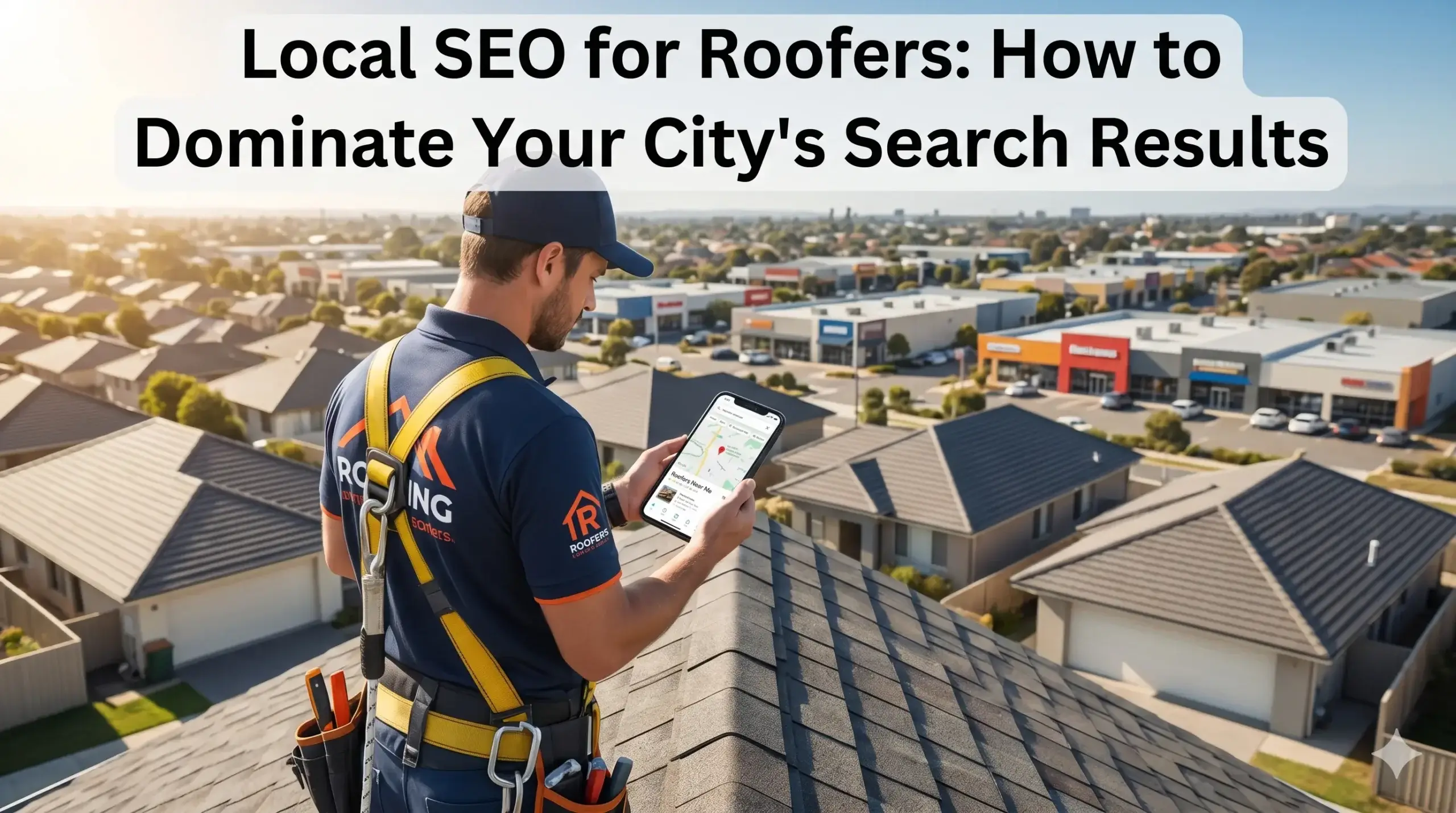
  • Local SEO for Roofers: How to Dominate Your City’s Search Results

    Local SEO for Roofers: How to Dominate Your City’s Search Results

    You’re running a solid roofing business. Your crews show up on time, your work holds up through storm season, and your past customers are happy. Yet when a homeowner a mile away Googles “roofer near me” — your competitor’s name pops up. Not yours.

    That’s not bad luck. That’s a fixable problem called roofing SEO — and most roofing business owners don’t even know it’s happening to them until they start tracking where their calls actually come from.

    Every day your website sits invisible on page two (or three, or nowhere), you’re losing jobs to competitors who aren’t necessarily better — they’re just easier to find. This guide breaks down exactly why that happens and what it takes to change it. No tech talk. No agency fluff. Just the real mechanics of how local search works for roofing companies and what separates the businesses that stay busy from the ones that wait on referrals.


    Why Your Roofing Business Is Invisible Online (Even When You Have a Website)

    Having a website is not the same as being found. Think of it this way: putting up a billboard in your warehouse isn’t marketing — nobody sees it. A website that doesn’t rank on Google is the same thing.

    Most roofing websites exist but don’t perform. They were built by someone who made it look decent, handed over the login, and moved on. Nobody told the site to tell Google what city you serve, what services you offer, or why homeowners in your area should trust you.

    Here’s what that costs you in the real world:

    • A homeowner’s roof starts leaking after a storm. They grab their phone and search “emergency roof repair [your city].”
    • Google shows three companies in a map pack at the top of the page — plus organic results below.
    • If your business isn’t in that map pack or on page one, that call goes to someone else.
    • That job is gone before you even knew it existed.

    This happens dozens of times a week in every mid-size market. The roofing businesses getting those calls aren’t spending more on ads — they’ve just invested in search engine optimization for roofing companies that makes Google trust and feature their business first.


    The Google Map Pack: The 3 Spots That Matter Most

    When someone searches “roofing company near me,” the first thing they see isn’t ads (usually) and isn’t website results. It’s a map with three business listings — the Google Map Pack.

    Those three spots get the majority of clicks. The businesses below them get the scraps.

    Getting into that map pack requires three things working together:

    • A fully optimized Google Business Profile — complete with your service area, categories, photos, and consistent business info.
    • Real reviews from real customers — volume and recency both matter. A company with 80 reviews from the past year outranks one with 200 reviews from five years ago.
    • A roofing website that supports your local presence — fast-loading, mobile-friendly, and full of location-specific content that signals to Google you serve this area.

    Most roofing contractors have a half-finished Google Business Profile and a website that hasn’t been touched in three years. That’s why they’re invisible.

    What Digital Trace builds for roofing businesses is a complete local search foundation — not just a pretty site, but a system that feeds Google the signals it needs to show your business to people actively looking to hire a roofer.


    Your Website Is Loading Too Slow — And Homeowners Are Leaving Before They See Your Number

    Here’s one most roofing business owners never think about: if your site takes more than three seconds to load on a phone, most visitors leave before your phone number even appears on screen.

    This isn’t a minor annoyance. Google measures how fast your site loads and uses it as a ranking signal. Slow sites rank lower. And when a visitor does land on a slow site, they bounce back to Google and click your competitor instead.

    The technical term is “page speed” — but the business reality is simpler: you’re paying for a website that’s driving potential customers away.

    Common causes of slow roofing websites:

    • Oversized photos uploaded directly from a phone or camera
    • Cheap hosting shared with thousands of other sites
    • Outdated website templates bloated with unnecessary code
    • No content delivery system pushing your site to users quickly

    Fixing this alone can meaningfully improve both your ranking and the percentage of visitors who actually call you. A roofing lead generation website that loads in under two seconds on mobile is a completely different business asset than one that takes six.


    💡 Pro Tip: Your Address Might Be Quietly Killing Your Local Rankings

    One of the most common and damaging mistakes in local SEO for roofing companies is inconsistent business information across the web.

    Your business name, address, and phone number (called your “NAP”) need to be identical everywhere — your website, Google Business Profile, Yelp, HomeAdvisor, the Better Business Bureau, and every directory you’ve ever been listed on. Even small differences like “St.” vs “Street” or an old phone number on a forgotten listing can confuse Google and suppress your rankings.

    Run a free check at Moz Local or BrightLocal to see how consistent your listings are. Then fix every discrepancy. It sounds minor — but it’s one of the fastest wins in roofing SEO services that most business owners overlook.


    What Actually Converts a Website Visitor Into a Roofing Lead

    Getting traffic to your site is only half the battle. The other half is making sure that when someone lands on your page, they actually pick up the phone or fill out a contact form.

    Most roofing websites fail this test completely. Here’s what a visitor usually finds:

    • A stock photo of a roof that could be anywhere in the country
    • A wall of text about the company’s history and values
    • A phone number buried in the footer
    • No clear reason to choose this company over anyone else

    Compare that to what a high-converting roofing contractor website looks like:

    • A clear headline that names the city and the service (“Roof Repair & Replacement in [City Name]”)
    • Before/after photos of actual local jobs
    • Real customer reviews with names and neighborhoods
    • A phone number displayed prominently at the top of every page on mobile
    • A simple form that takes 30 seconds to fill out

    The difference in conversion rate between these two versions of a site can be dramatic. Traffic that used to call nobody now calls you. That’s what web design for roofers actually means when it’s done right — not aesthetics, but outcomes.


    Real Roofing Business, Real Results: A Before/After Scenario

    Consider a residential roofing company operating in a mid-size Southeastern city — about 25 employees, decent reputation, 12 years in business. Their website was five years old and hadn’t been touched since. They were getting about 8–10 inbound calls per month from their site, almost all from people who already knew the company name.

    The problems found in their site audit:

    • Not appearing in the Google Map Pack for any of their core service keywords
    • Site loading in over 6 seconds on mobile
    • No location-specific landing pages for the three suburbs they served most
    • Google Business Profile missing 40% of required information
    • Fewer than 15 Google reviews, with the most recent over 14 months old

    After rebuilding the site with proper roofing website SEO, optimizing their Google Business Profile, and launching a review generation process with their past customers, the results after 90 days:

    • Map Pack appearance for 11 local roofing keywords
    • Monthly website leads increased from 8–10 calls to 35–40 calls
    • Average site load time dropped to under 2 seconds on mobile
    • Google reviews went from 14 to 61, with a 4.8-star average

    None of that required a massive ad spend. It required fixing what was broken and building a site that actually worked like a roofing lead generation website should.


    Not sure if your roofing website has these issues? Get a free website audit — no obligation, just a clear picture of what’s costing you leads.


    Your Path to More Roofing Leads: 5 Steps That Actually Work

    If you want your phone to start ringing from people actively looking to hire a roofer, here’s the realistic path to get there:

    Step 1: Fix your Google Business Profile Claim it if you haven’t. Complete every field — services, hours, service areas, photos of real jobs, and your website link. This is your most direct lever for the Map Pack.

    Step 2: Get more reviews — systematically Don’t wait and hope. Build a simple process: every completed job gets a follow-up text asking for a Google review. Forty reviews in 90 days is achievable for most roofing companies with just a little consistency.

    Step 3: Rebuild or optimize your website for speed and mobile If your site loads slowly or looks broken on a phone, fix it. Most homeowners search on mobile. A site that doesn’t work on mobile is a site that doesn’t work.

    Step 4: Create location-specific pages If you serve five suburbs, you should have five pages — each one naming the city, referencing local landmarks or neighborhoods, and targeting the specific search terms people in that area use.

    Step 5: Fix your business listings across the web Audit your NAP consistency across every directory. Close duplicate listings. Update old addresses and phone numbers. This cleanup work directly supports your Map Pack visibility.

    These steps aren’t complicated — but they take time, consistency, and knowing what actually moves the needle. That’s where having a roofing web design agency that understands the full picture makes the difference between dabbling and actually dominating your market.


    Frequently Asked Questions From Roofing Business Owners

    Why am I not getting calls from my website even though I have one?

    A website that isn’t optimized for local search is essentially invisible to the people actively looking to hire a roofer. If Google doesn’t know what city you serve, what services you offer, or that real customers trust you, it won’t show your site to searchers. Having a site is the starting point — getting it to generate calls requires roofing SEO work most agencies skip.

    How do I know if my roofing website is actually working for me?

    Track where your inbound calls are coming from. If most of your calls come from referrals or repeat customers — and almost none mention finding you on Google — your website isn’t working. A functioning roofing lead generation website should be driving 20–40% or more of your new inquiries from organic search within 6–12 months of proper optimization.

    How long does it take to see results from fixing my roofing SEO?

    Most roofing businesses start seeing meaningful changes in local visibility within 60–90 days of starting real optimization work — especially for Google Map Pack rankings. Full organic ranking growth for competitive keywords typically takes 4–6 months. The businesses that get frustrated and quit at 45 days are the ones who miss the payoff.

    What makes a roofing website different from a regular business website?

    A roofing website needs to work specifically for local search, storm season surges, and the trust signals that homeowners need before handing over a large project. That means fast load times for mobile users searching after a storm, location-specific pages for every service area, visible reviews and credentials, and a clear call to action that matches the urgency of roofing situations. Generic websites built for any industry don’t account for any of that.

    Do I really need a fast website if my customers are mostly local?

    Especially if they’re local. Local searchers are almost always on their phones, often in the middle of dealing with a roofing problem. If your site takes more than three seconds to load, they’ll hit the back button and call whoever loads faster. Google also factors speed into rankings — a slow site ranks lower, period.

    How do I know if my roofing business has hidden SEO problems I don’t know about?

    The fastest way is a professional audit. Book a free website audit with Digital Trace and you’ll get a clear breakdown of exactly what’s working, what’s broken, and what’s quietly costing you leads every week — with no obligation to do anything about it.


    Stop Leaving Jobs on the Table

    Every week your roofing website sits unoptimized, calls are going to competitors who figured this out before you. The good news: this is all fixable. The homeowners in your market are searching for roofers right now — the only question is whether they’re finding you or someone else.

    Find out exactly what’s costing you leads — get your free roofing website audit today.

    No sales pitch. No obligation. Just a straight answer on where your business stands and what it would take to start showing up where your customers are looking.

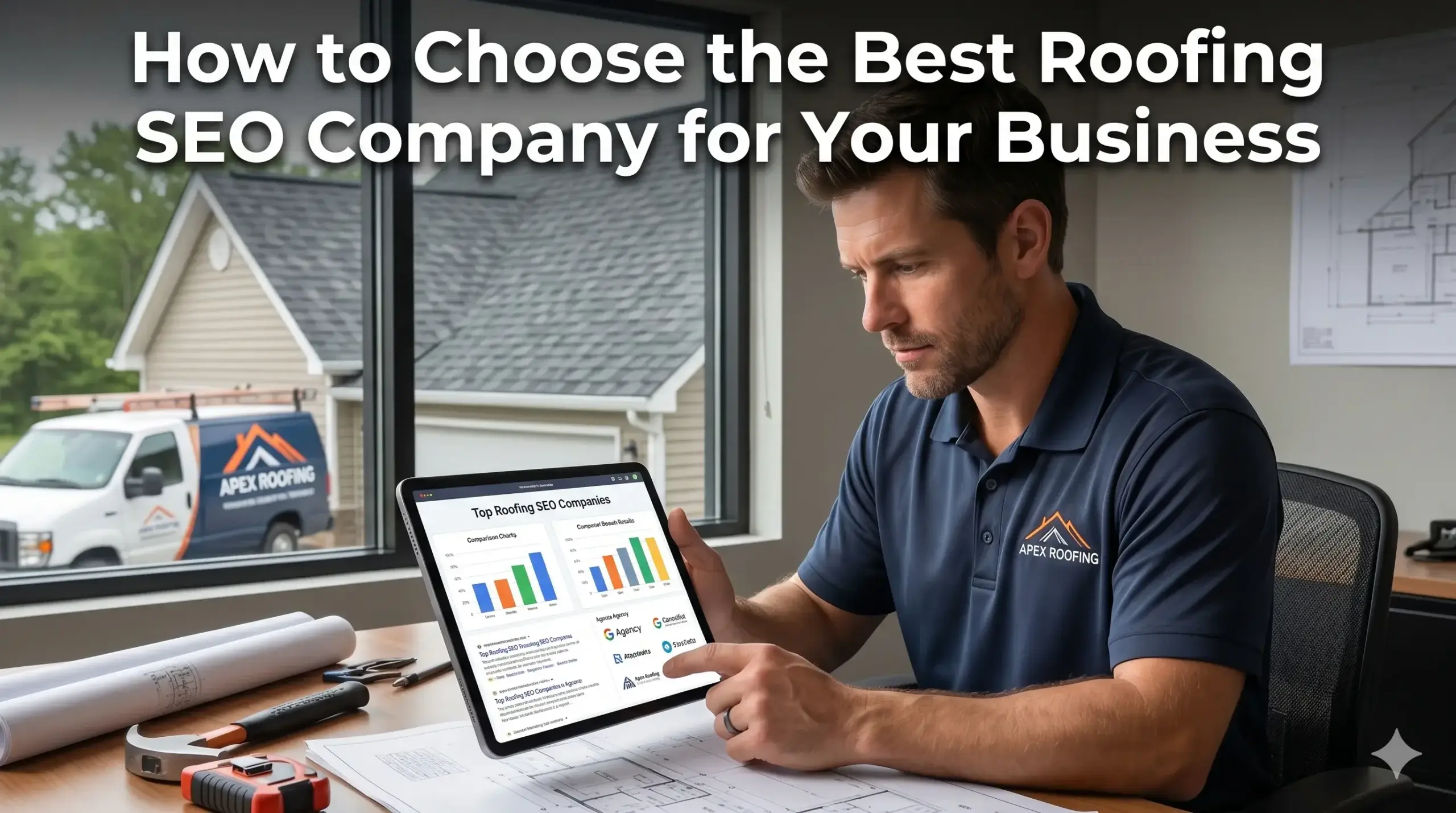
  • How to Choose the Best Roofing SEO Company for Your Business

    How to Choose the Best Roofing SEO Company for Your Business

    You built a solid roofing business — good crews, happy customers, years of experience. But when someone nearby types “roofing contractor” into Google, your competitor shows up and you don’t. Your phone should be ringing. It isn’t.

    Most roofing business owners assume the problem is their website. But the website is usually just the symptom. The real problem is that their site was built by someone who doesn’t understand roofing, doesn’t understand local markets, and has no idea what it actually takes to turn a website visitor into an inbound call.

    Choosing the wrong roofing SEO company doesn’t just waste your money — it actively costs you jobs. This guide will show you exactly what to look for, what red flags to avoid, and how to find a partner that gets you real, measurable results.


    Why Most Roofing Websites Don’t Generate Leads

    Think about your best customer referral. They called you, trusted you immediately, and hired you — because they heard it from someone they trusted. Your website needs to do the same thing.

    Right now, most roofing websites fail at the most basic job: convincing a worried homeowner to pick up the phone. They’re cluttered, slow, generic, and look exactly like every other contractor’s site. There’s no reason to call you over the next result.

    Here’s what’s actually happening when someone visits and leaves without calling:

    • Your site loads too slowly. Most people give a website about 3 seconds before they bounce. If your homepage takes 5–7 seconds to load, you’re losing potential customers before they even see your phone number — and Google penalizes slow sites in rankings.
    • Your site doesn’t speak to local homeowners. A page that says “roofing services” with no mention of your city, your neighborhoods, or your region looks generic to Google and unconvincing to a homeowner.
    • There’s no clear reason to call you right now. If a visitor can’t immediately see why you’re the trusted local roofer — reviews, credentials, photos of local work — they’ll keep scrolling to your competitor.

    A great roofing SEO company doesn’t just chase rankings. They fix the leaks in your sales funnel first.


    What “Roofing SEO” Actually Means in the Real World

    “SEO” has become a meaningless buzzword for a lot of agencies. They’ll promise “first-page rankings” and deliver a monthly report full of numbers that don’t connect to your revenue.

    Real roofing SEO is simpler than that — and more specific.

    It means showing up when local homeowners search for a roofer. Not in general. Not nationwide. In your service area, when someone types “roof repair [your city]” or “best roofing contractor near me” — you show up, you look credible, and they call.

    That requires three things working together:

    1. A fast, trust-building website — built specifically for roofing businesses, not a generic template
    2. Local SEO fundamentals — Google Business Profile optimization, local citations, and location-specific pages that tell Google exactly where you work
    3. Content that answers the questions homeowners are already asking — what a roof replacement costs, how long it takes, what to do after storm damage

    When these three things are done right, your site stops being a digital business card and becomes your best salesperson — one that works 24/7 and costs you nothing per lead.


    The 5 Things a Real Roofing SEO Company Should Do (And Most Don’t)

    Not all SEO agencies are created equal. Plenty will take your retainer, send you jargon-filled reports, and disappear when you ask why your phone still isn’t ringing. Here’s what separates a real roofing SEO partner from one just running out the clock on your contract.

    1. They Audit Your Site Before Promising Anything

    A legitimate agency starts by diagnosing your specific problems — not pitching a generic package. They’ll look at your current rankings, your site speed, your Google Business Profile, and your local citation consistency before they say a word about what it’ll cost to fix it.

    If an agency quotes you a price before they’ve even looked at your site, walk away.

    2. They Build (or Optimize) a Website Designed for Conversions — Not Just Rankings

    Traffic that doesn’t convert is just a vanity metric. A roofing website that ranks but doesn’t generate calls is like a billboard on an empty road — technically “exposure,” but zero business.

    The best roofing SEO agencies build websites built for roofing businesses with one goal: turning visitors into calls. That means clear phone numbers above the fold, trust signals like reviews and photos front and center, fast load times, and mobile-first design (because most homeowners are searching from their phones).

    3. They Do Real Local SEO — Not Just On-Page Keywords

    Local SEO for roofers isn’t about stuffing “roofing contractor [city]” into your page titles. It’s about making sure every signal Google looks at — your Google Business Profile, your NAP (name, address, phone) consistency across directories, your reviews, your local backlinks — tells the same story.

    One inconsistency across these signals can suppress your ranking. A real roofing SEO company audits all of it.

    4. They Track the Metrics That Matter to Your Business

    Monthly rank reports mean nothing if they’re not tied to calls, form fills, and revenue. Ask any agency you’re considering: “How do you measure success?” If they don’t mention phone call tracking, lead volume, and revenue impact — they’re measuring for their own benefit, not yours.

    5. They Know the Roofing Industry Specifically

    A general digital marketing agency might be great at e-commerce or restaurant marketing. Roofing is different. The buying cycle is different — homeowners don’t impulse-buy a $15,000 roof. The trust barriers are higher. Storm season changes lead volume. Insurance claims create a different kind of urgency.

    A roofing SEO company that has worked in your industry knows all of this. They write content that speaks to your customer, not a hypothetical one.


    💡 Pro Tip: Your Google Business Profile Is Your Most Underused Asset

    Most roofing contractors have a Google Business Profile that’s 40% complete — a name, phone number, and maybe a couple of photos from three years ago. That’s leaving serious money on the table.

    Google’s local “3-pack” (the map results that appear at the top of local searches) is driven heavily by your GBP signals: the completeness of your profile, the recency and volume of your reviews, and how well your business category and service areas match what someone searched. A fully optimized, actively managed GBP can move you from invisible to the top three results in your market — without any changes to your website. Any roofing SEO company worth hiring will make GBP optimization one of the first things they fix.


    Before & After: What Happens When a Roofing Company Gets This Right

    The situation: A family-owned roofing company in the Dallas-Fort Worth area had been in business for 11 years. They had strong word-of-mouth and great reviews on Facebook — but their website hadn’t been updated in four years, loaded slowly on mobile, and didn’t rank for a single local keyword. Their Google Business Profile was incomplete, and they had no location-specific service pages.

    What changed: Their new agency rebuilt their website around roofing-specific conversion principles — fast mobile load times, a prominent click-to-call button, project photo galleries by neighborhood, and individual pages for each of their service cities. Their Google Business Profile was fully optimized, reviews were solicited systematically, and local directory listings were corrected and consistent.

    The result: Within 90 days, they were ranking in the local 3-pack for their top three service cities. Within six months, inbound calls from organic search had increased enough to eliminate their dependence on paid lead services entirely — saving them thousands per month while generating warmer, higher-intent leads.

    The work they were getting before came from referrals. The work they got after also came from people who needed a roofer right now — exactly the jobs with the best margins and the least price negotiation.


    Not sure if your roofing website has these issues? Get a free website audit — no obligation, just a clear picture of what’s costing you leads.


    Your Path to More Leads: What to Do Next

    If you’re ready to stop guessing and start growing, here’s a clear, jargon-free roadmap:

    1. Audit what you have. Before spending a dollar on anything, understand what’s broken. Speed, local signals, conversion issues — know the real problems before choosing the fix.
    2. Fix your Google Business Profile first. It’s free, it’s powerful, and most roofing businesses have it half-done. Complete every field, add service areas, respond to every review, and upload fresh photos monthly.
    3. Get a website that actually converts. If your current site is slow, outdated, or was built by a general web designer who’s never heard the words “local service area page” — it’s time to replace it. See how Digital Trace builds roofing contractor websites designed specifically to generate calls.
    4. Build local authority consistently. SEO isn’t a one-time fix. Reviews, local content, and ongoing optimization compound over time. The roofing companies that dominate their markets started 12–18 months ago. The best time to start is now.
    5. Measure what matters. Set up call tracking. Know which pages generate leads. Cut what doesn’t work. Double down on what does. Any decent roofing SEO agency will set this up for you from day one.

    Frequently Asked Questions

    Why am I not getting calls from my website even though I have one?

    Having a website and having a website that generates leads are two completely different things. Most roofing websites are never optimized to rank locally, load too slowly for mobile users, or don’t give a visitor a clear reason to call. If your site isn’t structured around your service cities, doesn’t have consistent local signals, and isn’t fast on mobile — it’s essentially invisible. A simple audit will tell you exactly where the gap is.

    How do I know if my roofing website is actually working or just sitting there?

    If you can’t answer “how many calls did my website generate this month” — you don’t have the answer. A working roofing website has call tracking installed, shows up in local search for your service cities, and generates inbound leads you didn’t have to chase. If you’re unsure, get a free audit and you’ll have a clear picture within 48 hours.

    How long does it take to see results after launching a new roofing website or SEO campaign?

    Honest answer: typically 60–120 days for meaningful movement, 6 months for sustainable results. Anyone promising you page-one rankings in 30 days is selling you something. That said, Google Business Profile improvements and technical fixes can generate results faster — sometimes within weeks. The companies that get results in 90 days are the ones that fix multiple things at once, not just one piece of the puzzle.

    What makes a roofing website different from a regular business website?

    Roofing customers are making a high-stakes, high-cost decision under stress — usually after storm damage, a leak, or a failed inspection. They need to trust you immediately. That means your website needs to lead with local credibility (reviews, years in business, service areas), show proof of work (photo galleries by project type), and make it dead simple to call or request an estimate. A generic small business template doesn’t do any of that by default.

    I’ve been burned by agencies before. How do I know this is different?

    Fair question, and a common one. The difference is specificity. Generic agencies sell roofing companies the same package they sell dentists and restaurants. A real roofing SEO company shows you what they’ve fixed before, speaks in your industry’s language, and ties every deliverable to leads and revenue — not vanity metrics. Ask for examples of roofing clients specifically, ask how they track ROI, and make sure they audit before they pitch.

    Do I really need SEO if I’m already running paid ads and getting some leads?

    Paid ads stop the moment you stop paying. SEO builds compounding equity — the more you invest, the more it returns over time, and it doesn’t turn off at midnight when your budget runs out. The best-performing roofing businesses use both, but the ones that dominate their market long-term are the ones with strong organic presence. Once your SEO is established, your cost-per-lead drops significantly compared to paid.


    Ready to Find Out What’s Costing You Jobs?

    Every week your roofing website has these issues, homeowners in your service area are finding your competitor instead of you. That’s real revenue walking out the door — jobs you earned, going to someone else.

    Get your free roofing website audit — we’ll show you exactly what’s broken, what it’s costing you, and what it takes to fix it. No jargon, no obligation, no sales pressure. Just a clear picture of where you stand and what’s possible.

    Claim Your Free Audit →

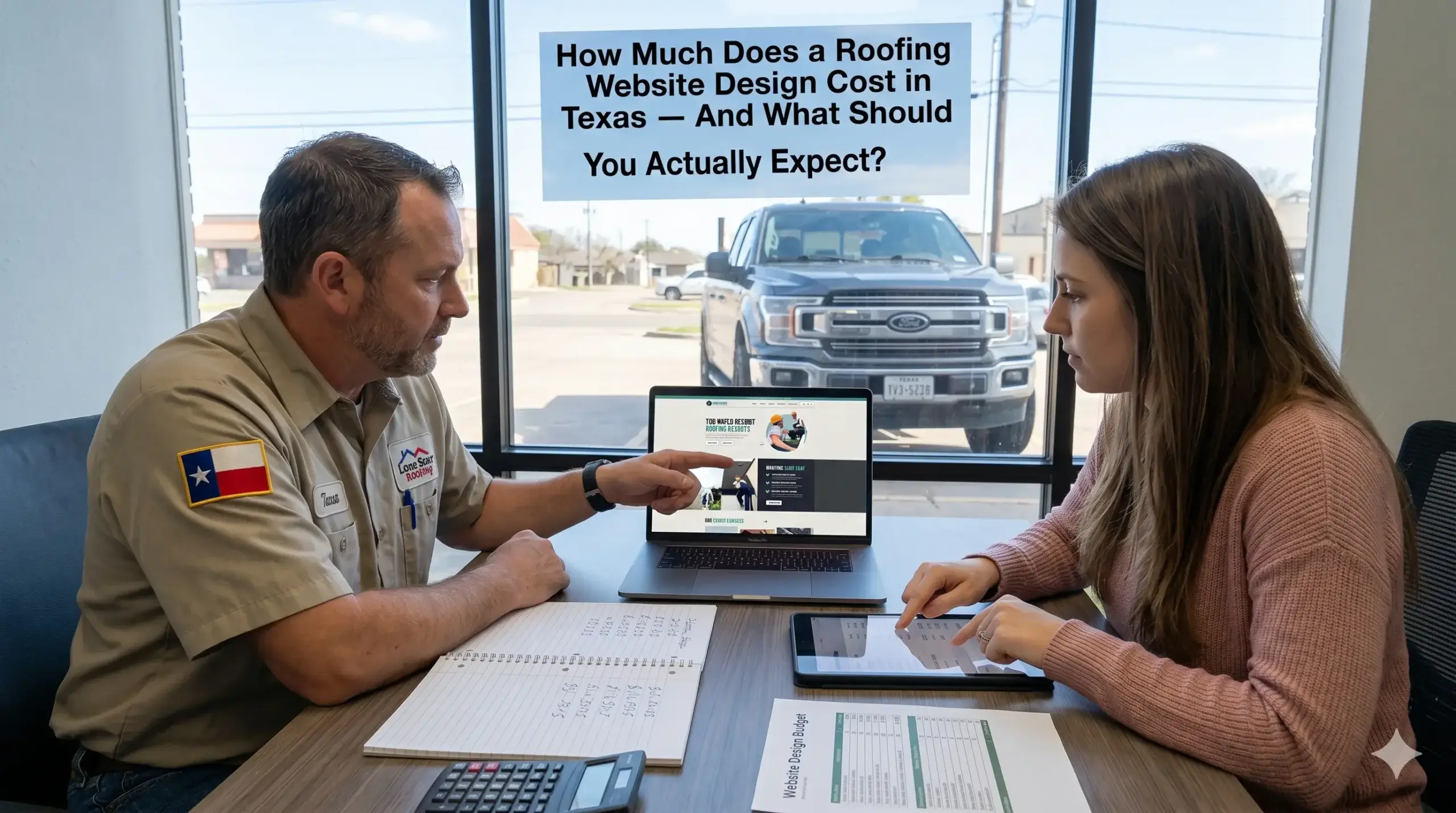
  • How Much Does a Roofing Website Design Cost in Texas — And What Should You Actually Expect?

    How Much Does a Roofing Website Design Cost in Texas — And What Should You Actually Expect?

    You’ve got a truck on the road, a crew showing up, and jobs on the calendar. But your phone isn’t ringing from the website you paid someone to build. Sound familiar?

    Most roofing contractors in Texas assume their website just needs to “look professional.” So they hire a local web designer, pay somewhere between $500 and $3,000, and wait for the leads to roll in. They don’t. Then they assume the internet just doesn’t work for roofing. It does — just not the way most websites are built.

    The real problem isn’t the design. It’s that most roofing websites are built to look good in a portfolio screenshot, not to convert a homeowner who just had hail damage and is searching for someone right now. By the end of this post, you’ll know exactly what a roofing website should cost, what it should do, and how to tell if yours is quietly bleeding leads every single day.


    Why Most Roofing Websites Don’t Generate Leads (Even the Expensive Ones)

    A roofing website that doesn’t bring in calls is like a billboard on a road that no one drives down. It might look great. But if no one sees it — or if they see it and don’t stop — it’s just money sitting there doing nothing.

    Here’s what’s actually happening:

    • Your site loads too slowly on mobile, so homeowners leave before they ever see your phone number
    • Google can’t tell what city you serve, what services you offer, or whether you’re a legitimate local business
    • Your calls-to-action are buried or generic — “Contact Us” doesn’t tell a stressed homeowner what to do next

    Most web designers aren’t roofing industry specialists. They build a site that looks decent, hand it over, and move on. No one’s thinking about the homeowner at 8pm on a Tuesday who just had wind damage and is searching “emergency roof repair [city]” on their phone.

    That’s the gap — and it costs roofing businesses real money every month.


    What Roofing Web Design in Texas Actually Costs

    Here’s the honest breakdown:

    Freelancers / Budget Builders: $300–$1,500

    Template-based, fast to deliver, and usually built without any roofing-specific strategy. These sites often look fine but don’t rank on Google, don’t load fast on mobile, and have no clear conversion path. You’ll likely get exactly what you paid for.

    Local General Web Agencies: $1,500–$5,000

    Better design, sometimes better structure — but still generalist. They don’t know how homeowners in Texas search for roofing services. They’re not building around your service areas, your key services (storm damage, roof replacement, commercial roofing), or the way Google evaluates local business credibility.

    Roofing-Specialized Web Design Agencies: $3,000–$8,000+

    This is where real ROI lives. A roofing website design agency that knows the industry builds every page around how homeowners actually search, what makes them call, and what keeps Google showing your business over your competitors.

    The question isn’t which tier is cheapest. The question is: how many jobs per month is your current site costing you?


    The 4 Things a Roofing Website Must Do to Actually Generate Leads

    If your site doesn’t do all four of these, it’s not working — no matter how much it cost.

    1. Load in under 3 seconds on mobile

    Most roofing searches happen on phones, often right after a storm. If your site takes 5–6 seconds to load, the homeowner has already clicked on your competitor. Google also ranks faster sites higher, so a slow site is losing you both traffic and conversions at the same time.

    2. Make the phone number impossible to miss

    Your number should be visible at the top of every page, clickable on mobile, and repeated near every call-to-action. Homeowners don’t scroll looking for a contact form — they want to call right now.

    3. Show Google exactly who you are and where you work

    Google needs to understand your service areas, your specific services, and that you’re a real, established roofing business. Without this, you won’t show up when people in your area search — even if you’ve been in business for 20 years.

    4. Give the visitor a clear reason to choose you right now

    Your homepage has about 5 seconds to answer: “Why should I call this company instead of the next one on the list?” Licenses, insurance, warranties, reviews, and local credibility signals need to be front and center — not buried in an “About” page no one reads.


    💡 Pro Tip: Your Contact Form Might Be Costing You Leads

    Most roofing websites have a generic contact form at the bottom of the page. The problem? Homeowners dealing with storm damage or an urgent leak don’t want to fill out a form and wait. They want to call. If your site doesn’t have a click-to-call button visible on mobile, or if calling requires more than one tap, you’re losing those leads to whoever picks up the phone first. A simple sticky header with your phone number — always visible as the user scrolls — can make a meaningful difference in how many visitors actually contact you.


    A Real-World Example: Before and After

    The situation: A residential roofing contractor in the Dallas-Fort Worth area had been in business for 11 years. They had a website built about four years ago for $1,200. It looked clean, had photos of their work, and listed their services. But organic leads from the website were nearly zero — most of their business came from referrals and door-knocking after storms.

    What was wrong:

    • The site loaded in 7+ seconds on mobile
    • They had no location-specific pages — just one generic “Service Areas” paragraph
    • Their Google Business Profile wasn’t connected properly to the site
    • There was no mention of their service radius, licensing numbers, or warranty information anywhere visible
    • The only CTA on the homepage was a small “Get a Quote” button buried below the fold

    What changed: The site was rebuilt from scratch with fast-loading mobile performance, dedicated pages for each service city, and clear trust signals (license number, insurance badge, manufacturer certifications) visible above the fold. The homepage led with a direct headline, a visible phone number, and a specific offer for storm damage inspections.

    The result: Within 90 days of the new site going live, organic call volume from Google Search increased significantly, and the contractor landed their first two commercial roofing inquiries — a segment they’d never been able to reach before through digital.


    Not sure if your roofing website has these issues? Get a free website audit — no obligation, just a clear picture of what’s costing you leads.


    Why “Roofing SEO” and Web Design Have to Work Together

    A lot of roofing contractors treat their website and their Google ranking as two separate things. They’re not.

    Your website is the foundation that SEO builds on. A fast, well-structured site with clear service pages and proper local signals makes it dramatically easier for Google to rank you. A slow, thin, generic site — no matter how much you spend on SEO — is like trying to nail shingles to rotten decking. The work doesn’t hold.

    Web design for roofers done right means building the structure, the content, and the technical performance together — so every dollar you put into marketing has something solid to land on.


    Your Path to More Leads: 5 Steps That Actually Work

    Step 1: Find out what your current site is doing wrong. Before spending money on anything new, you need an honest picture of where you stand. Speed, mobile usability, local search visibility, and conversion setup all need to be evaluated.

    Step 2: Fix the technical problems first. Slow load times, broken mobile layouts, and missing local signals are non-negotiable. These aren’t optional extras — they’re the floor.

    Step 3: Build dedicated pages for your key services and locations. “Roof Replacement in Plano” performs much better than a generic “Services” page. Homeowners search specifically, and your site needs to match that.

    Step 4: Set up clear trust signals and calls-to-action on every page. Licenses, reviews, warranties, manufacturer certifications — and a phone number that’s always visible. Every page should make it easy to call and give a reason to.

    Step 5: Track what’s working. Know which pages bring in traffic, which convert to calls, and which don’t. A roofing website should be a business tool you can measure — not a set-it-and-forget-it expense.


    FAQ: What Roofing Contractors Actually Ask Before Hiring a Web Agency

    Why am I not getting calls from my website?

    Usually, it’s one of three things: the site isn’t showing up in search because it’s not built for local SEO, it’s loading too slowly and people leave before they call, or it’s not giving visitors a clear and compelling reason to choose you. Often it’s all three at once. A quick audit can pinpoint exactly where the drop-off is happening.

    How do I know if my roofing website is actually working?

    If you can’t tell you which pages get the most visits, where your calls are coming from, or what your site’s load speed is on a mobile phone — then it’s probably not working. A website that’s working generates trackable, consistent inbound calls from people who found you through Google.

    How long does it take to see results from a new roofing website?

    Most roofing contractors start seeing measurable improvement in local rankings and call volume within 60–90 days of a properly built site going live. Some see faster movement if they’re targeting less competitive markets or if their previous site had major technical problems that the new one fixes. It’s not instant, but it compounds over time.

    What makes a roofing website different from a regular business website?

    Homeowners searching for roofing help are often in a stressful, urgent situation — storm damage, a leak, a visible problem they need solved fast. A roofing website needs to immediately communicate trust (licensed, insured, local), urgency management (fast response, emergency services), and a frictionless path to calling. Generic business websites aren’t built with that buyer psychology in mind.

    Do I really need a fast website if my customers are local?

    Yes — especially because your customers are local. Local searches happen overwhelmingly on mobile phones. If a homeowner in your city searches for “roofing contractor near me” and your site takes 6 seconds to load while your competitor’s loads in 2, they’re calling your competitor. Speed isn’t a luxury — it’s how you stay in the game.

    How do I get a sense of what’s wrong with my current site without paying for a full redesign?

    Get a free website audit from Digital Trace. It’s a no-obligation review that shows you exactly what’s hurting your rankings and your lead conversion — whether you hire us afterward or not.


    Ready to Find Out What Your Roofing Website Is Costing You?

    Your website should be your best salesperson — working around the clock, answering questions before homeowners even call, and making it obvious why they should choose you over every other roofer on the list.

    If it’s not doing that, you’re not just missing leads. You’re paying a competitor to win them.

    Book a free website audit and get a plain-English breakdown of what’s holding your site back — no jargon, no hard sell, just a clear picture of where your roofing business can win more online.

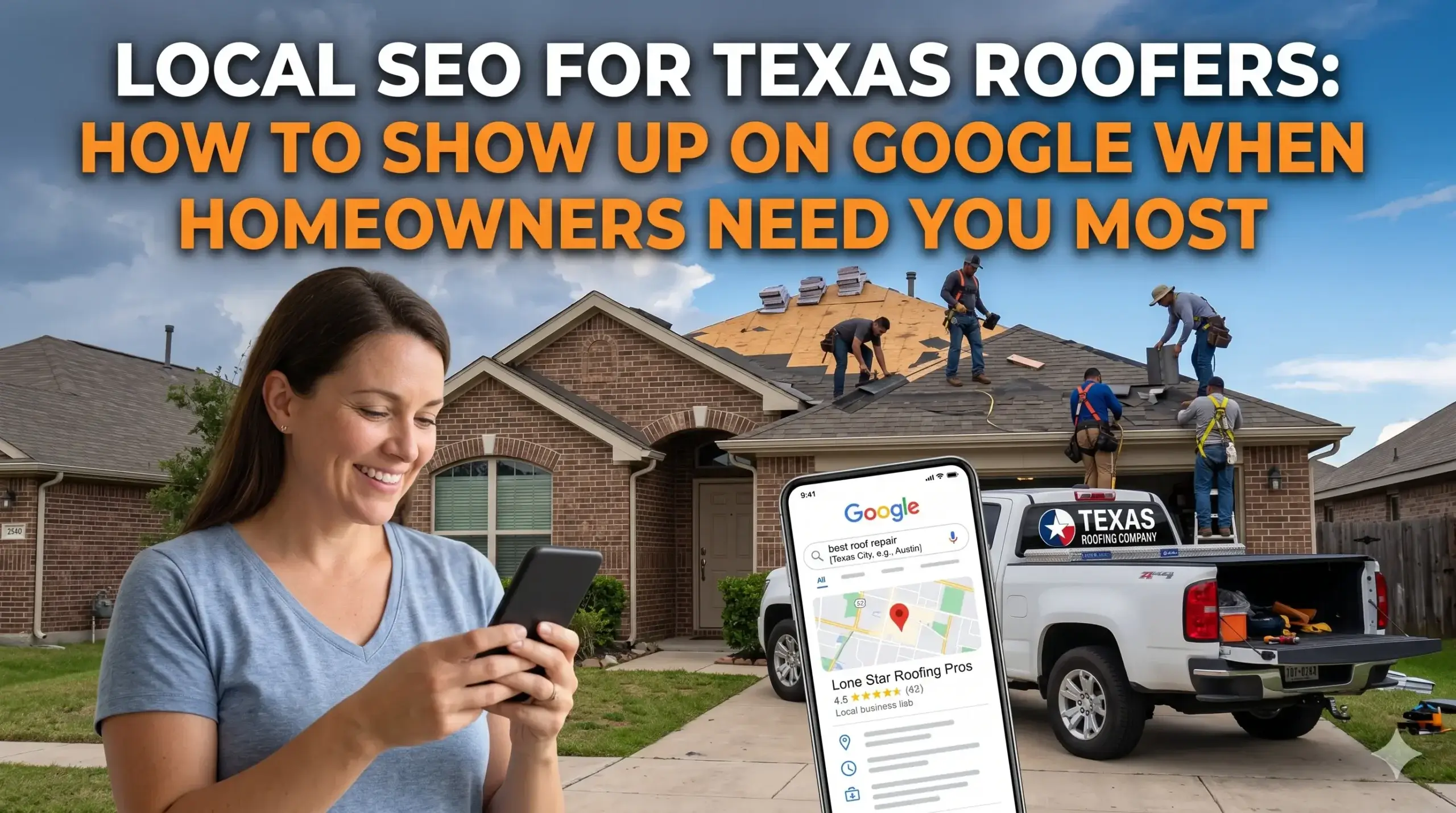
  • Local SEO for Texas Roofers: How to Show Up on Google When Homeowners Need You Most

    Local SEO for Texas Roofers: How to Show Up on Google When Homeowners Need You Most

    A storm rolls through the Dallas suburbs. Shingles are scattered across lawns. Homeowners are grabbing their phones — not to call a neighbor, not to flip through the Yellow Pages — they’re typing “emergency roofer near me” into Google. Three names pop up. Yours isn’t one of them.

    That’s the moment your roofing business either wins or loses a job worth $8,000–$15,000. And it happens dozens of times a week, all across Texas.

    Most roofing contractors assume they’re invisible on Google because they haven’t “done enough SEO.” The truth is messier: it’s usually a combination of a slow website, a neglected Google Business Profile, and pages Google simply doesn’t trust enough to show. None of these problems are obvious — you’d never know they’re bleeding you leads unless someone looked.

    This guide breaks down exactly what’s holding most Texas roofers back, what good local SEO actually looks like, and how to fix the leaks in your digital roof.


    Why Your Roofing Website Isn’t Bringing in Calls

    Your website is your best salesperson — or it should be. But most roofing websites have a problem: they’re built to look good, not to perform.

    Here’s what actually happens when a homeowner clicks on your site:

    • The page takes more than 3 seconds to load
    • They see a wall of text or a cluttered layout
    • There’s no clear phone number above the fold
    • They hit the back button and call your competitor

    Google notices this behavior. When people leave your site fast, Google interprets it as a signal that your page isn’t useful — and it quietly pushes you further down the results. Your site might look fine to you, but it’s silently costing you jobs.

    The fix isn’t just speed (though that matters enormously). It’s building a site that’s designed for one thing: turning a stressed-out homeowner into a phone call within 30 seconds of landing on your page.

    That’s exactly what websites built for roofing businesses are designed to do.


    The Google Map Pack: The 3 Spots That Control Your Local Market

    When someone searches “roofing contractor Austin” or “roof repair near me,” they don’t usually scroll down to the blue links. They look at the map — specifically the three businesses that appear in the Google Map Pack at the top of the results.

    Those three spots capture the majority of clicks. If you’re not in them, you’re fighting for scraps.

    Getting into the Map Pack comes down to three things:

    • A fully optimized Google Business Profile — photos, service areas, hours, and a consistent business name/address/phone number across every listing
    • Reviews — not just how many you have, but how recently they were posted and how well you respond to them
    • Local relevance signals — does your website mention the specific cities and neighborhoods you serve? Does Google understand your geographic footprint?

    Most roofers have a Google Business Profile that was set up once and forgotten. No updates, no new photos, outdated hours, unanswered reviews. To Google, a neglected profile looks like a neglected business.


    Why Your Competitor Shows Up and You Don’t

    It’s a specific kind of frustration — you know you do better work, but the guy down the road keeps getting the calls. Here’s why it’s probably happening.

    Think of Google like a building inspector reviewing a new construction project. Before they approve the build, they want to see proper permits, documented materials, and verified contractors. If the paperwork’s incomplete or inconsistent, the project gets flagged — or ignored entirely.

    Your website is the same. Google needs consistent, verifiable signals that say: “This is a real, trustworthy roofing company that serves this specific area.”

    Those signals include:

    • Citations — your business name, address, and phone number listed identically across Yelp, Angi, BBB, and other directories
    • Structured data — technical code on your website that tells Google exactly who you are, what you do, and where you operate
    • Location-specific pages — not one generic “Service Area” page, but dedicated pages for Dallas, Fort Worth, Plano, or wherever you actually work
    • Backlinks — other credible local websites linking to yours

    When your competitor has these and you don’t, Google sends them the traffic. It’s not personal — it’s signals.


    💡 Pro Tip: Your City Pages Are Probably Wrong (or Missing)

    Many roofers have one page that lists ten cities they serve. That’s not a local SEO strategy — it’s a list. Google needs each city to have its own dedicated page with original content, local context, and a clear service focus. A single “Service Areas” page with bullet points tells Google almost nothing. Ten separate, well-written city pages tell Google everything. If you’re targeting Dallas, Fort Worth, and San Antonio, each one deserves its own page built around what homeowners in that area actually search for — hail damage, wind damage, flat roofs, tile roofs, and so on. This single change has moved roofing companies from page 3 to page 1 in specific markets.


    What Good Roofing SEO Actually Looks Like: A Real-World Example

    Consider a mid-size roofing company in the Dallas–Fort Worth area. They’d been in business for eleven years, had solid reviews from happy customers, and did reliable work. But their website was built in 2018, loaded slowly on mobile, had no dedicated city pages, and their Google Business Profile hadn’t been touched in two years.

    Before: They were getting 3–5 inbound calls a month from Google. Most of their work came from referrals and door-knocking after storms.

    After a focused local SEO overhaul — new mobile-first website, optimized GBP, five city-specific service pages, citation cleanup, and a review generation system — they began ranking in the Map Pack for their top three target cities within four months.

    The result: Inbound calls from Google climbed to 25–35 per month. Their close rate stayed the same — they just had far more qualified leads to work with. They stopped door-knocking entirely within six months.

    The work was the same. The visibility was completely different.


    Not sure if your roofing website has these problems? Get a free website audit — no obligation, just a clear picture of what’s costing you leads.


    Mobile Speed Is Not Optional — It’s Your First Impression

    More than 70% of homeowners searching for a roofer are doing it on their phone — often in the driveway, looking up at damaged shingles. If your site takes five seconds to load on a phone, they’re gone before they ever see your phone number.

    Google also uses mobile loading speed as a ranking factor. A slow mobile site gets pushed down in results, meaning you’re invisible at the exact moment someone needs you most.

    Most roofing websites are slow because they’re loaded with oversized images, outdated code, or cheap hosting that can’t handle traffic spikes after a major storm — which is precisely when you need it most.

    A properly built roofing contractor website loads in under two seconds on mobile, keeps the phone number front and center, and makes it dead simple for a homeowner to request an estimate with one tap.


    Your Path to More Roofing Leads from Google

    Here’s what a focused local SEO effort looks like for a Texas roofing company:

    1. Fix your website foundation first. Speed, mobile usability, and clear calls-to-action come before anything else. A slow site that ranks will still fail to convert.
    2. Claim and fully optimize your Google Business Profile. Add photos, respond to every review, list your exact service areas, and keep your hours accurate.
    3. Build city-specific pages for every market you serve. Each page should speak directly to what homeowners in that city search for — storm damage, insurance claims, specific roofing materials.
    4. Clean up your citations. Your business name, address, and phone number need to be consistent across every directory online. Inconsistencies confuse Google and erode trust.
    5. Build a review system. A steady flow of recent reviews is one of the strongest local ranking signals available. Make requesting reviews part of every completed job.

    Frequently Asked Questions

    Why am I not getting calls from my website even though I’m getting traffic?

    Traffic without calls usually means one of three things: your site loads too slowly and people leave before they act, your contact information isn’t obvious enough on mobile, or the visitors landing on your site aren’t the right ones — you’re attracting general browsers instead of homeowners actively ready to hire. A proper audit will show you exactly where the drop-off is happening.

    How do I know if my roofing website is actually working for me?

    If you can’t tell you how many calls and form submissions came from your website last month, your website isn’t working for you — it’s just sitting there. A functioning roofing website has call tracking, form submission tracking, and clear data showing which pages drive real leads. Get a free website audit to see where yours stands.

    How long does it take to see results after fixing my website or doing SEO?

    For local SEO, most roofing businesses start seeing meaningful movement in the Google Map Pack within 60–120 days of a focused effort. A new website with proper optimization typically shows results faster than trying to fix an old, slow one. SEO is not instant, but the leads it generates are significantly cheaper — and more consistent — than paid ads over time.

    What makes a roofing website different from a regular business website?

    A roofing website needs to convert under pressure — when a homeowner just dealt with storm damage, they’re emotional and they want answers fast. That means a visible phone number the moment the page loads, clear proof of local credibility (reviews, service areas, years in business), and pages designed around what Texas homeowners actually search for — not what looks good in a design portfolio. Generic web designers build websites. Specialists build tools that bring in roofing jobs.

    Do I really need a fast website if my customers are mostly local and find me by word of mouth?

    Referrals are great, but they have a ceiling. The customers who find you on Google are often higher-intent and ready to hire — they’re not comparing you to three cousins’ recommendations, they need a roofer now. And even referral customers will Google you before they call. A slow, outdated site can kill a warm referral just as fast as it kills a cold lead. Your website is your reputation online. It needs to hold up.

    I’ve worked with marketing agencies before and got nothing. Why would this be different?

    That’s a fair concern, and an honest one. Most agencies sell roofing companies generic SEO packages that treat every industry the same. Roofing has specific seasonality, storm-driven demand cycles, insurance claim processes, and local market dynamics that a generalist agency simply doesn’t account for. The right partner understands the roofing business — not just the marketing tactics.


    Stop Leaving Roofing Jobs on the Table

    Every week your website isn’t optimized, you’re handing calls to a competitor. The homeowners searching for roofers in your area right now will call someone — the only question is whether it’s you.

    A free website audit from Digital Trace will show you exactly what’s costing you leads: your site speed, your Google Business Profile gaps, your missing city pages, and the quick wins that could move the needle fastest.

    There’s no pitch, no pressure, and no obligation — just a clear look at what’s working and what isn’t.

    See what’s costing you leads — get your free website audit today.

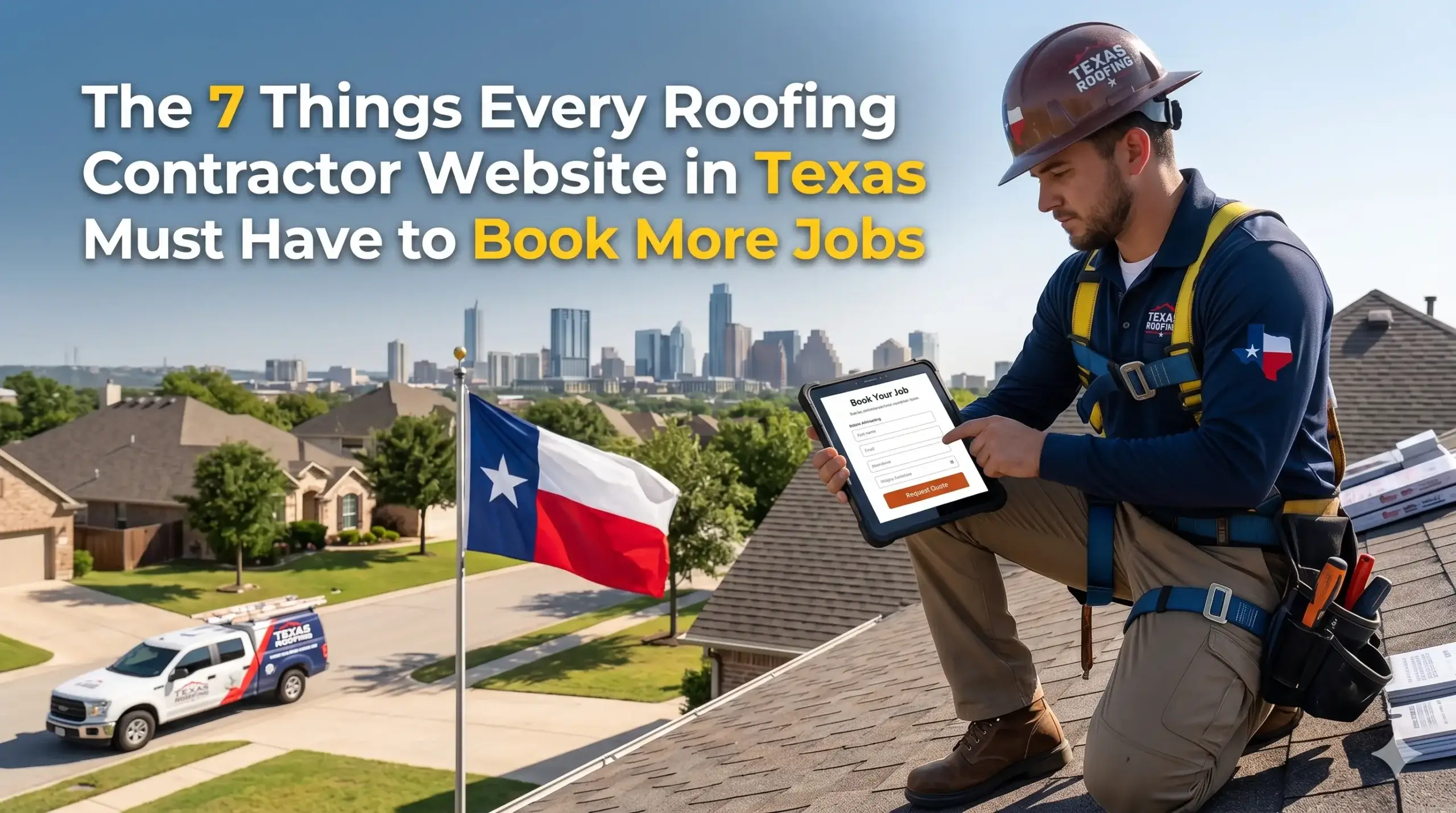
  • The 7 Things Every Roofing Contractor Website in Texas Must Have to Book More Jobs

    The 7 Things Every Roofing Contractor Website in Texas Must Have to Book More Jobs

    You put your number on the truck. You wrapped the trailer. You’ve been doing this work for years — and you’re good at it. But your phone isn’t ringing the way it should be, and somewhere in the back of your mind you know it’s the website.

    Here’s the thing most roofing contractors in Texas get wrong: they think having a website is the same as having one that works. It isn’t. A website that doesn’t convert visitors into calls is basically a digital business card collecting dust in a drawer. Nobody sees it, and it does nothing for your bottom line.

    This post breaks down the 7 things every roofing contractor website in Texas actually needs — in plain English, no tech speak — so you can figure out exactly where yours is leaking leads and what to do about it.


    1. Your Site Has to Load Before the Customer Gives Up

    Imagine a homeowner spots storm damage on their roof on a Saturday afternoon. They grab their phone, search for a roofer, and tap on your listing. If your site takes more than three seconds to load, they’re already hitting the back button and calling your competitor.

    That’s not an exaggeration — that’s just how people behave on mobile in 2025.

    Most roofing websites are slow because they’re loaded with oversized images, bloated plugins, or cheap shared hosting that can’t handle real traffic. The business owner never sees this happening. They just wonder why the phone isn’t ringing.

    What fast actually means for your business:

    • Visitors stay long enough to read your offer
    • Google rewards faster sites with higher rankings
    • More people reach your phone number and actually call

    When Digital Trace builds websites for roofing businesses, page speed is one of the first things we engineer — not an afterthought. A half-second improvement can be the difference between a lead and a bounce.


    2. Your Phone Number Has to Be Impossible to Miss

    A homeowner lands on your site. They want to call you. They scroll. They squint. They can’t find a number that’s easy to tap.

    They leave.

    This sounds too simple to be a real problem, but it’s one of the most common issues on roofing contractor websites. The phone number is buried in the footer, or it’s a tiny font at the top that doesn’t click-to-call on mobile.

    On mobile — where most of your local traffic is coming from — your number needs to:

    • Appear at the top of every page
    • Be large enough to read without zooming
    • Be a clickable link that opens the dialer automatically

    If someone has to work to contact you, most of them won’t bother. Make it effortless.


    3. Reviews Have to Show Up the Moment Someone Lands

    When a Texas homeowner is deciding between three roofers, they’re not reading your “About Us” page. They’re looking for proof that other people trusted you and didn’t regret it.

    A roofing website without visible reviews is like a crew showing up to a job with no truck lettering and no shirts. You might be the best in the business — but the customer has no way to know that before they call.

    Reviews that actually convert include:

    • The reviewer’s first name and neighborhood or city
    • A specific detail about the job (not just “Great service!”)
    • A star rating displayed visually, not just in text
    • A Google Reviews widget or embedded feed so they feel real

    Don’t hide your reviews on a separate page. Put them on your homepage, above the fold if you can. That social proof is doing heavy lifting for you before you ever answer the phone.


    4. Your Site Needs to Tell Google Exactly Who You Are

    Here’s a problem that’s invisible to you but very visible to Google: your website may not be giving Google enough information to confidently show your business in local search results.

    Google doesn’t just look at your website — it reads it. And if the signals are unclear or missing, Google will show a competitor who made it easier to understand.

    Think of it like this: if you bid on a job but gave the homeowner a vague proposal with no company name, no license number, and no service area listed — they’d pass. That’s what a poorly structured website does to Google’s algorithm.

    What Google needs to know about your roofing business:

    • Your exact service areas (cities and counties, not just “Texas”)
    • Your business name, address, and phone number — consistently, on every page
    • The specific services you offer (roof replacement, storm damage repair, commercial roofing, etc.)
    • Structured data markup that speaks Google’s language behind the scenes

    This last one — structured data — is the technical piece. You don’t need to understand how it works. You just need someone to build it in correctly. It’s one of the most overlooked elements in roofing website design, and it’s something Digital Trace builds into every roofing site from day one.


    5. A Clear “What We Do and Where We Do It” Section

    If someone lands on your homepage and can’t tell within five seconds what you do, where you work, and who you do it for — you’ve lost them.

    Most roofing websites are vague. “Quality roofing services for residential and commercial clients.” That sentence tells the homeowner in Katy, Texas almost nothing useful.

    Your homepage needs to answer three questions immediately:

    1. What do you do? (Roof replacement, storm damage, new construction, gutters — be specific)
    2. Where do you work? (List your cities and counties — not just the state)
    3. Who do you help? (Homeowners, property managers, general contractors?)

    When those answers are clear and front-and-center, visitors convert faster because they don’t have to dig. And Google rewards it too — specific, location-tied content is exactly what ranks for searches like “roofing contractor in [city].”


    💡 Pro Tip: Your Contact Form Is Probably Losing You Leads

    A lot of roofing websites have a contact form that asks for too much — name, address, roof type, square footage, how they heard about you, preferred callback time. By the fourth field, most people close the tab.

    The fix is simple: ask for three things only — name, phone number, and a one-line description of what they need. You can get the rest when you call them back. Shorter forms get filled out. Long forms get abandoned. If your form has more than four fields, cut it down this week.


    6. Before-and-After Photos That Do the Selling for You

    Roofing is a visual trade. A homeowner looking at damage on their roof wants to see what their roof could look like after you’ve worked on it. Words can describe your quality — photos prove it.

    A roofing website without strong project photos is like a contractor showing up to bid a job without a portfolio. The question in the customer’s mind goes from “how much?” to “can I trust this person?”

    Photos that convert have these qualities:

    • Real jobs in your service area (not stock photos from a manufacturer)
    • Clear before-and-after pairs, not just finished shots
    • Captions that include the city, the problem, and the solution
    • Mobile-optimized so they load fast and look sharp on a phone screen

    If you don’t have a gallery yet, start simple: photograph your next five jobs. Before you pull off the old material, take a photo. After the new roof is done, take another. That’s content that builds trust faster than anything you could write.


    7. A Reason to Call Now — Not Later

    People procrastinate. A homeowner might visit your site, think “yeah, I should probably deal with that,” and close the tab. Unless you give them a reason to act immediately.

    This isn’t about pressure tactics. It’s about reducing friction and making the next step obvious.

    Elements that push a visitor from “interested” to “calling”:

    • A clear, specific offer: “Free roof inspection for storm-damaged homes”
    • A deadline or seasonal hook: “Spring storm season is here — book before we’re full”
    • A single, prominent call-to-action button — not three or four competing ones
    • A short headline on every service page that speaks to the specific problem they have

    The roofing websites that generate consistent calls don’t leave the next step to chance. They make it obvious, easy, and time-relevant.


    What a Better Website Actually Changes: A Real-World Example

    Take a roofing company in the Dallas–Fort Worth area — family-owned, doing solid work, had a website they built themselves five years ago. Traffic was coming in from Google, but calls were sparse. They figured it was just a slow season.

    When they dug into the data, here’s what they found:

    • 78% of visitors were on mobile, but the site wasn’t built for mobile — text was small, the phone number wasn’t clickable, and the contact form broke on certain Android browsers
    • Their homepage took 7.4 seconds to load on an average mobile connection
    • No reviews were visible anywhere on the site — just a link to Google that most visitors never clicked
    • They were ranking for “roofing company [city]” but dropping calls because the site couldn’t close

    After a rebuild focused on speed, mobile experience, clear CTAs, and embedded reviews — calls from the website increased significantly within 60 days. Not because they changed their pricing or ran ads. Because the website finally did what it was supposed to do.


    Not sure if your roofing website has these issues? Get a free website audit — no obligation, just a clear picture of what’s costing you leads.


    Your Path to More Leads: 5 Steps to Take Right Now

    If your roofing website isn’t performing, here’s a simple roadmap to get it there:

    1. Test your load speed. Go to Google’s PageSpeed Insights (free tool), type in your URL, and see your score. Anything under 70 on mobile is hurting you.
    2. Pull up your homepage on your phone. Can you find your phone number in under two seconds? Can you tap it to call? If not, that’s a fix to make this week.
    3. Count your visible reviews. Open your homepage — how many reviews can a visitor see without clicking anywhere? If the answer is zero, that’s a gap.
    4. Read your homepage like a stranger. Does it tell someone in 5 seconds what you do, where, and how to contact you? If you have to think about it, it doesn’t.
    5. Get an expert to look at the full picture. Speed, SEO signals, mobile experience, conversion elements — there are a lot of moving parts. A professional audit finds the issues you can’t see yourself.

    Frequently Asked Questions

    Why am I not getting calls from my website even though I’m getting traffic?

    Traffic without calls usually means something is breaking the conversion — slow load time, unclear messaging, no visible reviews, or a contact form that’s too complicated. Getting visitors is only half the job. The site has to turn those visitors into calls, and most roofing websites aren’t built to do that. An audit will show you exactly where you’re losing people.

    How do I know if my roofing website is actually working?

    If you can’t answer “how many leads did my website generate this month?”, you don’t have enough data to know. A working website has call tracking, form submission tracking, and Google Analytics set up so you can see real numbers — not just traffic. Book a free website audit and we’ll show you what your site is actually doing (or not doing).

    How long does it take to see results from a new roofing website?

    For paid traffic or local map pack visibility, improvements can show up within 30–60 days. For organic search rankings on competitive terms, expect 3–6 months of consistent work. That said, a faster site and a better-converting homepage can increase calls from your existing traffic almost immediately — often within the first few weeks after launch.

    What makes a roofing website different from a regular business website?

    Roofing customers make urgent, high-stakes decisions — often right after a storm or when they notice damage. That means your site has to build trust fast, load fast, and make it easy to call fast. It also needs to rank for hyper-local terms like “[city] storm damage roof repair” — not just generic roofing keywords. A generic website template doesn’t account for any of that. Roofing website design requires knowing the industry and how your customers think.

    Do I really need a fast website if my customers are mostly local?

    Yes — especially because they’re local. Most homeowners in your area are searching on their phones while standing in their driveway looking at hail damage. If your site takes more than 3 seconds to load on a mobile connection, a significant portion of those visitors leave before they even see your business name. Speed matters even more for local service businesses, not less.

    I’ve worked with web agencies before and nothing happened. Why would this be different?

    Most agencies build websites that look good in a browser and then hand them over. They don’t think about how fast it loads on a phone in a Texas suburb, whether Google can read the service areas correctly, or whether the contact form is losing leads. The difference is in what gets measured after launch. A site that just looks good isn’t the goal — a site that books jobs is.


    Ready to See What Your Website Is Actually Costing You?

    Most roofing businesses have no idea how many leads their website is losing every week. A slow page here, a missing review there, a phone number that doesn’t click-to-call — each one chips away at jobs that should have been yours.

    Digital Trace works specifically with roofing contractors to build fast, high-converting websites that rank and generate real calls. No fluff, no vague promises — just a clear look at what’s wrong and what it’ll take to fix it.

    Get your free roofing website audit →

    No obligation. No sales pressure. Just an honest assessment of what your website is doing — and what it’s costing you.

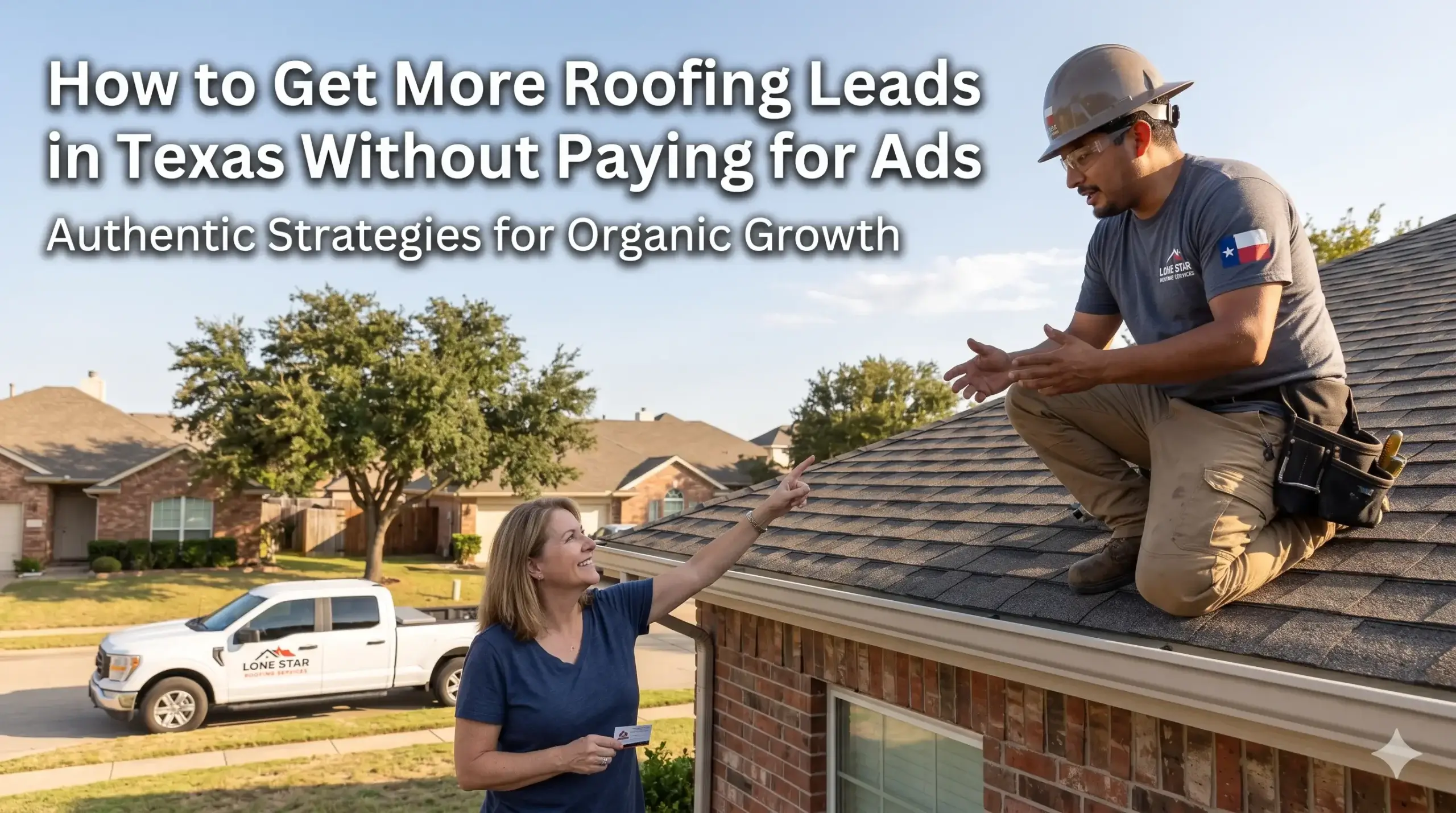
  • How to Get More Roofing Leads in Texas Without Paying for Ads

    How to Get More Roofing Leads in Texas Without Paying for Ads

    You built a real roofing business — crews, trucks, insurance, reviews. But when a homeowner in your area types “roofing company near me” into Google, your competitor shows up and you don’t. Or worse: they land on your site, look around for five seconds, and call someone else.

    That’s not a budget problem. That’s a website problem.

    Most Texas roofing contractors assume they need to run Google Ads to compete online. And yes — ads can work. But they stop the second you stop paying. What actually builds a consistent pipeline is a website that does the selling for you: one that loads fast, shows up in search, and turns visitors into calls.

    This guide breaks down exactly why your site might be quietly costing you jobs — and what a properly built roofing website design in Texas actually looks like when it’s working.


    Why Your Phone Isn’t Ringing (Even When People Find You)

    Picture this: a homeowner in Round Rock spots storm damage on a Saturday. They grab their phone and search “roof repair Round Rock TX.” Your site comes up on page one — great. They click it. The page takes seven seconds to load. They hit the back button and call your competitor.

    You never knew that lead existed.

    This happens dozens of times a month for most roofing businesses. The problem isn’t visibility — it’s speed and first impressions.

    Here’s the plain-English version of what’s happening:

    • Most people decide whether to stay on a site within 3 seconds of clicking
    • If your site loads slowly on a phone (and most homeowners are searching on their phones), they’re gone
    • Google also penalizes slow sites in rankings — so the same issue hurts both your conversions and your position in search results

    Digital Trace builds roofing contractor websites that load in under 2 seconds on mobile. Not because it sounds impressive — because that’s what keeps a lead from leaving before they ever see your phone number.


    Your Website Looks Like Every Other Roofer’s — And That’s a Problem

    Walk down any street with three competing roofing companies in the same market. Their websites look identical: a stock photo of a roof, a phone number in the header, a list of services, and a contact form nobody fills out.

    When everything looks the same, homeowners default to price — or whoever calls back first.

    A roofing website needs to do one job: make a stranger trust you enough to call. That means showing real photos of your work, real reviews from real neighborhoods, and clear answers to the questions every homeowner is thinking:

    • Are you licensed and insured in Texas?
    • Do you work with insurance claims?
    • How fast can you get out here?
    • Have you done roofs like mine?

    What most roofing sites get wrong: They talk about themselves. What they should do is talk to the homeowner — in plain language, answering the exact concerns that make someone hesitate before calling.

    The best roofing websites are built around conversion, not aesthetics. Every element — from the headline to the button color — is designed to move a visitor toward picking up the phone.


    Google Doesn’t Know Enough About Your Business to Show It

    Here’s something most roofing business owners never hear: Google isn’t just reading your website. It’s making a judgment call about whether your business is trustworthy enough to recommend.

    If your site is missing the right signals — things like your service area, business category, customer reviews, and structured data — Google quietly deprioritizes you, even for searches in your own backyard.

    What this means in real terms:

    • A homeowner in Pflugerville searches “roofing company Pflugerville TX”
    • Your competitor, who serves the same area, has a site that clearly tells Google: “We’re a licensed roofing company serving Pflugerville, Round Rock, and Cedar Park”
    • Google shows them. Not you. Even if your work is better.

    This isn’t complicated to fix — but it requires knowing what signals Google is actually looking for. It’s not just keywords stuffed into a page. It’s how your site is structured, how fast it loads, how many quality sites link to it, and whether your Google Business Profile matches your website.

    Roofing SEO isn’t a separate thing you layer on later. It’s baked into how the site is built from day one.


    💡 Pro Tip: Your Contact Form Might Be Killing Your Lead Rate

    Most roofing websites put a generic “Contact Us” form at the bottom of the page and call it a day. The problem? Homeowners with storm damage or an active leak don’t want to fill out a form and wait. They want to call — right now.

    If your phone number isn’t visible above the fold on mobile (meaning, without scrolling), you’re losing calls every single day. The fix is simple: make your number large, tappable, and front-and-center on every page. Add a click-to-call button. Then keep the form for less urgent inquiries. One small change can meaningfully increase the number of calls you get from the traffic you already have.


    The Hidden Cost of a Website That “Works Fine”

    A lot of roofing contractors say their website “works fine” — meaning it’s live, it has their phone number, and it doesn’t crash. That’s a very low bar.

    Here’s a more useful question: how many leads did your website generate last month?

    If the answer is vague, or you’re not sure, that’s the problem. A website that “works fine” but generates no leads isn’t a marketing asset — it’s a digital business card that nobody’s reading.

    Think of it this way: a truck that starts every morning “works fine” too. But if it can’t carry a full crew, has no ladder rack, and the AC breaks down in August, it’s costing you money even when it runs.

    Your website is the same. It needs to do actual work — pulling in search traffic, building trust, and moving homeowners from “just browsing” to “calling right now.”


    Before & After: What Happens When a Roofing Website Actually Works

    The situation: A family-owned roofing company in the Dallas-Fort Worth area had been in business for 11 years. Solid reviews, experienced crews, competitive pricing. Their website had been built by a cousin around 2018 — it had pictures, a phone number, and a short “About Us” page.

    They were running $1,200/month in Google Ads to stay competitive. The leads came in, but margins were thin. When they paused the ads for a month, the phone nearly went silent.

    What changed: Digital Trace rebuilt their site from scratch with roofing-specific design — fast load times, mobile-first layout, service area pages for each of their core suburbs, a clear trust section showing licenses and reviews, and proper SEO structure so Google understood exactly who they were and where they worked.

    The result: Within four months, their organic search traffic tripled. They were generating 20–30 inbound leads per month without ads — from homeowners in neighborhoods they’d served for years but never appeared for in search. They still run ads occasionally for surge periods, but they no longer depend on them to keep the pipeline full.


    Not sure if your roofing website has these issues? Get a free website audit — no obligation, just a clear picture of what’s costing you leads.


    Your Path to More Leads: What Actually Needs to Happen

    Getting consistent organic leads from your roofing website isn’t magic. It’s a sequence of things that all need to be in place at once. Here’s what that looks like:

    1. Start with speed. Your site needs to load in under 3 seconds on a phone. If it doesn’t, everything else is undermined.
    2. Make it easy to call. Your phone number should be visible and tappable on every page, especially on mobile. Don’t make anyone hunt for it.
    3. Tell Google where you work. Create pages (or at minimum, clear content) for every city and suburb you serve. Generic service area descriptions don’t cut it.
    4. Show social proof in the right places. Real reviews — not buried on a testimonials page, but visible near the top of your homepage and service pages — reduce hesitation and build trust fast.
    5. Fix the foundation. Make sure Google can read, understand, and trust your site. This means proper structure, accurate business information, and content that matches what homeowners in your area are actually searching for.

    None of these steps are optional. A site that does four out of five will still underperform. That’s why a proper audit matters before rebuilding anything — you need to know which pieces are missing and which are actively working against you.


    FAQ: What Texas Roofers Ask Before Working With a Web Agency

    Why am I not getting calls from my website even though I have one?

    Having a website and having a website that generates leads are two completely different things. Most roofing websites aren’t built to rank in local search or convert visitors into callers — they’re built to exist. If your site isn’t fast, mobile-friendly, and structured so Google understands your service area, it won’t show up when the people who need you are searching.

    How do I know if my roofing website is actually working?

    Ask yourself: do you know how many people visited your site last month, and how many of them called you? If you can’t answer that, you have no way to tell if your site is working. A properly set up site should have call tracking and analytics so you can see exactly where leads are coming from and what’s not converting.

    How long does it take to see results from a new roofing website?

    Realistically, 3–6 months to see meaningful organic results — though some improvements (like fixing mobile speed and adding a clear call to action) can start moving the needle within weeks. The timeline depends on how competitive your local market is and how optimized the new site is from day one.

    What makes a roofing website different from a generic business website?

    A roofing-specific website is built around how homeowners actually shop for contractors — which means urgency (storm damage, active leaks), trust signals (license numbers, insurance proof, local reviews), and service area clarity. A generic website template doesn’t account for any of that. It’s the difference between a work truck and a passenger car — both have four wheels, but only one does the job.

    Do I really need a fast website if my customers are local?

    Especially if your customers are local. Most homeowners search for roofing help on their phones — often right after noticing damage. If your site takes more than 3 seconds to load on mobile, most of them leave before they ever see your number. Google also uses site speed as a ranking factor, so a slow site hurts your visibility and your conversion rate at the same time.

    How do I know if my current site has these problems without paying anyone?

    Request a free audit from Digital Trace — there’s no cost and no commitment. You’ll get a clear breakdown of what’s working, what’s missing, and what’s likely costing you leads right now. Most roofing business owners walk away knowing exactly what to fix, whether or not they hire us.


    Stop Leaving Leads on the Table

    Every month your website sits underperforming is a month of roofing jobs going to a competitor — sometimes one with a smaller crew, fewer reviews, and less experience than you.

    The good news: most of these problems are fixable. And once they’re fixed, the leads keep coming without you running an ad or posting on social media.

    Digital Trace specializes in web design for roofing companies across Texas — sites built specifically to rank in local search, load fast on mobile, and turn visitors into calls. No guesswork, no generic templates, no results you can’t measure.

    Ready to see exactly what your site is missing?

    Get your free roofing website audit — no cost, no pressure, just a straight answer about what’s costing you leads and what it would take to fix it.

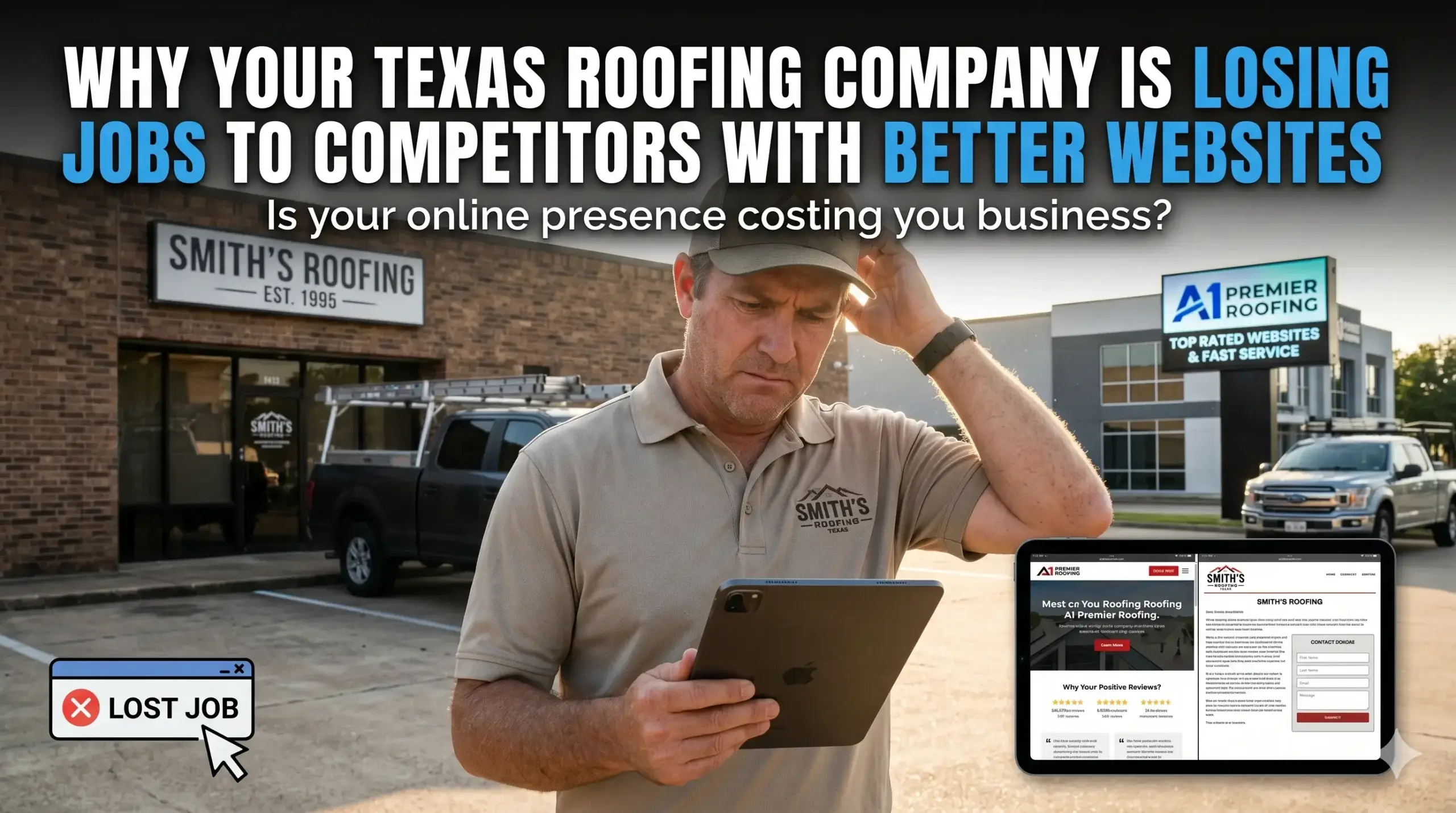
  • Why Your Texas Roofing Company Is Losing Jobs to Competitors With Better Websites

    Why Your Texas Roofing Company Is Losing Jobs to Competitors With Better Websites

    You just finished a five-star job — clean install, happy homeowner, crew out before noon. But when that homeowner’s neighbor searches for a roofer the next day, your company doesn’t come up. Someone else does. And that someone else gets the call, the estimate, and the check.

    That’s not bad luck. That’s a website problem.

    Most Texas roofing companies assume their website is “fine.” It loads, it has a phone number, it lists their services. But fine doesn’t win jobs anymore. The roofing market has gotten competitive enough that the contractor with the best-performing website is capturing leads that should be yours — every single day — while you have no idea it’s happening.

    This post will show you exactly what’s going wrong, what your competitors are doing differently, and what it actually takes to turn your website into your best salesperson.


    Your Website Is Working Against You — And You Can’t See It Happening

    Think of your website like your service truck. If the engine is misfiring, the truck still moves — but it’s burning fuel, losing power, and eventually going to leave you stranded on the side of the road.

    That’s most roofing websites. They look functional on the outside, but underneath, they’re hemorrhaging leads every hour.

    Here’s what’s usually going wrong:

    • The site loads slowly on mobile, and 70%+ of homeowners searching for roofers are on their phones
    • The contact form doesn’t work properly on certain devices
    • There’s no clear, visible phone number above the fold
    • The pages aren’t structured in a way Google recognizes as relevant for roofing searches in your area

    None of these show up when you look at the site yourself. But they show up in your phone not ringing.


    Speed Isn’t a “Tech Thing” — It’s a Revenue Thing

    Here’s something that surprises most roofers: a website that takes more than 3 seconds to load loses more than half its visitors before they ever see your phone number.

    A homeowner’s shingles are missing after last week’s storm. They Google “roofing company near me,” click your site, and stare at a loading screen. They hit the back button and click your competitor. Done. You never had a chance to pitch them — your website ended the conversation before it started.

    The technical reason this happens is usually a combination of oversized images, a bloated website theme, or cheap hosting that can’t handle traffic spikes. But the business reality is simple: slow sites don’t get calls.

    At Digital Trace, every roofing website is built with speed as a foundation — not an afterthought. Pages load fast on every device, especially the phones your potential customers are using from their driveway after a hailstorm.


    Google Doesn’t Know Your Business Well Enough to Recommend It

    When someone types “roofing company in Dallas” or “roof replacement McKinney TX,” Google makes a split-second decision about which businesses are most relevant and trustworthy. If your website doesn’t give Google the right signals, you simply don’t appear — no matter how good your work is.

    This isn’t about stuffing your site with keywords. It’s about structure. Google needs to clearly understand:

    • What services you offer (and in which cities)
    • That you’re a legitimate, established roofing business
    • That your site matches what the searcher is actually looking for

    Many roofing sites have one generic “Services” page. The contractors showing up on the first page of Google have individual pages for roof replacement, roof repair, storm damage, commercial roofing, and each service area they cover. That’s not an accident — it’s a deliberate strategy built around roofing website design that targets how homeowners actually search.


    Your Competitor Isn’t Better Than You — Their Website Just Says They Are

    This one stings a little, but it’s true: a homeowner comparing two roofing companies they’ve never heard of is making their decision based almost entirely on first impressions. Your website is that first impression.

    If a competitor’s site shows:

    • Professional photos of completed jobs
    • Real reviews with specific details (“replaced our entire roof in one day, cleaned up everything”)
    • Clear pricing information or a straightforward estimate process
    • A phone number that’s impossible to miss

    …and your site shows a stock photo of a house and a contact form buried at the bottom of the page — they win the job. Not because they’re better roofers. Because their website does a better job of building trust in 30 seconds.

    Homeowners aren’t roofing experts. They can’t evaluate your flashing technique or underlayment choices. They’re evaluating how professional you look, how easy you are to contact, and whether other people seem to trust you. Your website either makes that case or it doesn’t.


    💡 Pro Tip: Your “Contact Us” Page Is Probably Killing Your Conversions

    Most roofing websites send every visitor to a basic contact form and call it a day. But a homeowner who needs an emergency repair and a homeowner pricing out a new roof have completely different needs — and the same generic form doesn’t serve either of them well.

    The fix: create separate entry points. A “Request Emergency Inspection” button for storm damage leads. A “Get a Free Estimate” form for planned replacements. Even small changes like this — matched with a visible phone number that auto-dials on mobile — can dramatically increase how many visitors actually reach out.


    Before & After: What a Better Website Actually Does for a Roofing Business

    The Situation: A family-owned roofing company in the Dallas-Fort Worth area had been in business for 11 years. Strong reputation, consistent referrals, good reviews on Google — but their website was built in 2017 and hadn’t been touched since. They were running Google Ads but paying for clicks that weren’t converting. They assumed the ads were the problem.

    What the Audit Found: The site took 8+ seconds to load on mobile. There was no dedicated page for storm damage repair — their biggest revenue driver — just a mention of it buried in a paragraph. The phone number wasn’t clickable on phones. And their Google Business Profile wasn’t connected properly to the site, so local search rankings were weak.

    What Changed: A new site built specifically around roofing web design best practices — fast load times, individual pages for each service and service area, a prominent call-to-action above the fold, and properly structured local SEO signals. No new ad spend.

    The Result: Within 90 days, organic calls increased noticeably. Their storm damage page started ranking in the top 3 for several area searches. The cost-per-lead from Google Ads dropped significantly because the same ad budget was now sending traffic to a site that actually converted. They stopped losing jobs to companies they knew were less experienced — because their website finally reflected the business they’d spent 11 years building.


    Not sure if your roofing website has these issues? Get a free website audit — no obligation, just a clear picture of what’s costing you leads.


    Your Path to More Leads: What Actually Needs to Happen

    You don’t need to understand web development to fix this. Here’s what the process looks like in plain terms:

    1. Find out what’s broken. A proper audit tells you exactly where your site is losing visitors — speed issues, missing pages, weak local SEO signals. You can’t fix what you haven’t identified.
    2. Build pages that match how homeowners search. Each service you offer and each city you work in should have its own page. That’s how you show up when people search for exactly what you do.
    3. Make it dead simple to contact you. Visible phone number. Fast-loading pages. A form that works on every phone. Remove every barrier between a visitor and a conversation.
    4. Show proof you’re the right choice. Real photos of your work, real reviews with real specifics, and a clear explanation of your process. Trust is earned fast or lost fast online.
    5. Let it run while you work. A properly built roofing website generates leads around the clock — while you’re on a job, while you’re sleeping, while your competitors are scrambling for referrals.

    Frequently Asked Questions

    Why am I not getting calls from my website even though I’m getting traffic?

    Traffic and leads are two completely different things. Visitors land on your site and leave without calling for a reason — usually a slow load time, a confusing layout, or no obvious way to reach you on mobile. If your phone number isn’t visible the second someone lands on your page, most people won’t hunt for it. They’ll just go back to Google and call whoever is next.

    How do I know if my roofing website is actually working?

    The honest answer: if you don’t know, it probably isn’t. A working roofing website produces a steady stream of inbound calls and form submissions from people you didn’t already know. If most of your leads still come from referrals or word of mouth, your website is a placeholder — not a sales tool. Get a free audit to see exactly how your site is performing and where it’s falling short.

    How long does it take to see results from a new website?

    A faster, better-structured site can start showing improvements within 30–60 days as Google recrawls and re-ranks your pages. More competitive search terms in larger metros typically take 90–120 days to move significantly. Paid traffic (Google Ads) converts better immediately because the landing page improves right away. SEO results build over time and compound — a well-built site keeps getting stronger month after month.

    What makes a roofing website different from a regular business website?

    Roofing is a high-trust, high-urgency purchase. Homeowners aren’t browsing casually — they have a problem and they need to feel confident, fast. That means your site needs to immediately communicate credibility (reviews, photos, years in business), serve people searching from their phones after a storm, and have clear pathways for different types of jobs (emergency repairs vs. full replacements vs. insurance claims). A generic business website template doesn’t account for any of that.

    Do I really need a fast website if all my customers are local?

    Yes — especially because your customers are local. Local homeowners are searching on their phones, often right after a weather event when cell service is already stressed. If your site loads slowly, they’re gone before they see your name. Google also uses site speed as a ranking factor for local search results, so a slow site doesn’t just lose visitors — it loses ranking positions, which means fewer visitors in the first place.

    I’ve hired marketing companies before and got burned. Why would this be different?

    That’s a fair concern, and it’s one we hear constantly from roofing contractors. The difference usually comes down to whether the agency actually understands your industry and is accountable to real business outcomes — not just traffic reports. A good starting point is a free audit that shows you exactly what’s wrong before you spend a dollar. If the problems are real and the fixes are clear, the conversation is worth having. If not, you’ve lost nothing.


    Stop Leaving Jobs on the Table

    Every day your website underperforms, a competitor is getting the call that should have been yours. The homeowner two streets over who needed a new roof. The property manager who Googled “commercial roofer” and clicked the first site that loaded fast and looked professional. The storm damage job that went to someone with a contact button that actually worked on mobile.

    You’ve built a real roofing business. Your website should reflect that — and work as hard as you do.

    Book a free website audit with Digital Trace. We’ll show you exactly what’s costing you leads, what it takes to fix it, and what a roofing website designed to actually convert looks like. No pressure, no jargon — just a straight answer about where your business stands online.

    Get Your Free Roofing Website Audit →

  • How to Choose the Best Roofing SEO Company for Your Business

    How to Choose the Best Roofing SEO Company for Your Business

    You’ve got a crew, trucks, and years of experience under your belt — but your phone isn’t ringing the way it should be. You’ve tried putting up a website, maybe even paid someone to “do the SEO,” and you’re still watching competitors you know are less experienced land jobs that should be yours.

    Here’s the hard truth: most roofing companies don’t have a visibility problem — they have the wrong people in charge of their visibility. The roofing SEO company you choose will either make your phone ring every week or quietly drain your budget while nothing changes.

    This guide breaks down exactly what to look for, what to avoid, and why the difference between a great roofing SEO agency and a generic one is the difference between a truck that stays busy and one that sits in the driveway.


    Why Your Roofing Website Isn’t Bringing In Calls

    Your website is like a truck you never drive. It’s sitting there — technically it exists — but it’s not out on the road doing any work. A website that isn’t optimized for local search isn’t just neutral; it’s actively costing you money, because every day a homeowner in your area searches “roof replacement near me” and finds your competitor instead of you.

    The issue usually isn’t that your website looks bad. It’s that Google doesn’t trust it enough to show it. A roofing SEO company worth hiring will look at your site and immediately spot why Google is passing you over — slow load times, missing location signals, no structured data, thin page content — and fix those problems before they cost you another season of weak leads.

    What good roofing SEO looks like in practice:

    • Your business shows up in Google’s map pack when homeowners in your service area search for roofers
    • Your website ranks for terms like “roof repair [city name]” and “roofing contractor near me”
    • Visitors land on your pages and call — not bounce and go to a competitor

    The Difference Between a Generic Agency and a Real Roofing SEO Expert

    Most marketing agencies know SEO in a general sense. They can set up a Google Business Profile, write some blog posts, build a few links. What they can’t do is think like a roofing contractor — and that matters more than you’d expect.

    A roofing business has specific seasonal demand, geographic targeting needs, and customer psychology that’s completely different from a restaurant or an e-commerce store. When a storm rolls through your city, you need to show up immediately for emergency roof repair searches. When spring hits, homeowners start thinking about roof inspections and replacements — and you need to be right there when they go looking.

    A roofing SEO agency that specializes in your industry knows this. They build content and local SEO strategies that anticipate your customers’ timing, not just their keywords.

    Ask any agency you’re considering:

    • Do you work with roofing contractors specifically?
    • Can you show me roofing clients who improved their lead volume?
    • How do you handle seasonal search spikes?

    If they give you vague answers, walk away.


    What a High-Converting Roofing Website Actually Looks Like

    Here’s a mistake roofing companies make constantly: they treat their website like a business card instead of a 24/7 salesperson. A business card just shows your name and number. A great roofing lead generation website answers every question a nervous homeowner has, earns their trust, and makes it dead simple to call or request a quote.

    Most roofing websites fail at the basics:

    • They load too slowly. A site that takes more than 3 seconds to load loses most visitors before they even see your phone number. Google also penalizes slow sites in rankings — so you lose on both ends.
    • They don’t show proof. Homeowners hiring a roofer are making a $10,000–$20,000+ decision. If your site doesn’t have photos, reviews, and credentials front and center, they move on.
    • They aren’t built for mobile. More than 60% of local searches happen on phones. If your site is hard to navigate on a smartphone, you’re handing leads directly to whoever comes up next.

    At Digital Trace, websites built for roofing businesses are built to convert — fast-loading, mobile-first, and structured to turn a skeptical homeowner into a booked appointment.


    💡 Pro Tip

    The #1 mistake roofing companies make with local SEO: They optimize their website for their city but forget about the surrounding towns they actually service. If you serve five towns but your website only mentions your home city, Google thinks you only work in one place — and you’re invisible everywhere else. The fix is straightforward: create dedicated service area pages for each town you work in, with real content about the roofing services you offer there. This alone can double your local search footprint.


    What Real Results Look Like: A Roofing Company Case Study

    Before: A residential roofing contractor in the Midwest was getting roughly 8–10 inbound calls per month from their website. Their site was five years old, loaded slowly on mobile, and hadn’t been touched in two years. They were spending money on occasional Google Ads but getting inconsistent results. Their Google Business Profile had 11 reviews and rarely showed up in the map pack for their primary service keywords.

    What changed: A full roofing website redesign with speed optimization and mobile-first structure. Local SEO work on their Google Business Profile, including consistent NAP data across directories and a review generation system. New service area pages for four surrounding towns. Targeted keyword content covering roof repair, roof replacement, and storm damage — the three highest-intent searches in their market.

    After: Within five months, inbound calls from organic search climbed to 35–45 per month. Their Google Business Profile began appearing in the top 3 map results for “roofing contractor [city]” and two neighboring towns. Review count grew to 47, with an average rating above 4.8 stars. They reduced their Google Ads spend by 40% while generating more total leads.

    The work wasn’t magic. It was the right strategy, applied consistently, by a team that understood the roofing business specifically.


    Not sure if your roofing website has these issues? Get a free website audit — no obligation, just a clear picture of what’s costing you leads.


    Red Flags to Watch for When Hiring a Roofing SEO Company

    The roofing space attracts a lot of agencies making big promises. Here’s how to spot the ones that will waste your money:

    • They guarantee a #1 ranking. No one can guarantee a specific Google ranking. Anyone who says otherwise is lying.
    • They won’t tell you what they’re doing. Good SEO is transparent. If an agency can’t explain their work in plain English, that’s a problem.
    • They lock you into long contracts immediately. Legitimate agencies earn your continued business with results. Be wary of anyone pushing 12-month lock-ins before you’ve seen a single outcome.
    • They use the same strategy for every client. A bakery and a roofing contractor need completely different approaches. If an agency treats you like a template, they’re not doing the work your business needs.
    • They only talk about traffic, not leads. Traffic is vanity. Calls, quotes, and booked jobs are what pay your crew. Any roofing SEO expert worth hiring measures success in revenue, not just website visits.

    Your Path to More Leads: A Simple Roadmap

    Getting your roofing business generating consistent leads online doesn’t require understanding every corner of digital marketing. It requires hitting these five fundamentals correctly:

    1. Fix your website foundation. Speed, mobile experience, and clear calls-to-action come first. A great SEO strategy built on a broken website won’t work.
    2. Own your local presence. Your Google Business Profile, online directories, and review count are what drive map pack rankings. Keep them accurate and active.
    3. Build service area pages. Every town you work in deserves its own page. This is the fastest way to expand your local search footprint without paying for ads.
    4. Get consistent reviews. Reviews are social proof and a ranking signal at the same time. Build a simple system for asking satisfied customers to leave one.
    5. Create content your customers are already searching for. Storm damage FAQs, roof lifespan guides, insurance claim tips — content like this earns rankings and trust simultaneously.

    See how Digital Trace builds roofing websites and SEO programs designed specifically for contractors who want real lead volume, not just a prettier website.


    Frequently Asked Questions

    Why am I not getting calls even though my website is live?

    Having a live website and having a website that generates leads are two very different things. Most roofing websites are never properly set up for local search — they’re missing location signals, have thin content, and load too slowly to rank well. If Google can’t confidently understand where you work and what you do, it won’t show you to the homeowners searching for a roofer in your area.

    How do I know if my roofing website is actually working for my business?

    The clearest sign is simple: are you getting calls from people who found you online? Beyond that, you can check your Google Business Profile insights to see how many people are clicking your phone number or requesting directions. If those numbers are near zero, your website and local SEO need attention. A free audit from Digital Trace will show you exactly where you stand and what’s costing you leads.

    How long does it take to see results from roofing SEO?

    Most roofing businesses start seeing measurable improvement — more Google Business Profile views, better local rankings, increased call volume — within 3 to 5 months of consistent work. The timeline depends on how competitive your local market is and how much foundational work needs to be done upfront. SEO is not instant, but the results compound over time in a way that paid ads never do.

    What makes a roofing website different from a regular business website?

    A roofing website has to do specific things a general business site doesn’t. It needs to rank for hyper-local searches across multiple service towns. It needs to convert homeowners who are stressed, spending a lot of money, and need to trust you quickly — which means reviews, photos of real work, and clear credentials need to be prominent. It also needs to handle seasonal demand spikes, particularly after storm events, when search volume can spike overnight.

    Do I really need a fast website if my customers are mostly local and older?

    Yes — and this surprises a lot of roofing contractors. Even homeowners in their 50s and 60s are searching for roofers on their smartphones now. A site that takes more than a few seconds to load on a phone gets abandoned. Google also ranks faster sites higher, which means a slow site hurts your visibility before a single visitor even finds you. Speed isn’t a nice-to-have; it’s a ranking factor and a conversion factor at the same time.

    Can I just run Google Ads instead of doing SEO?

    Ads can generate calls quickly, which has its place — especially during storm season or a slow period. But the moment you stop paying, the calls stop. Roofing SEO builds an asset that keeps generating leads whether or not you’re running a campaign. The contractors who win long-term typically use both: ads for immediate demand, SEO for consistent, lower-cost leads over time.


    Ready to Find Out What’s Costing Your Roofing Business Leads?

    Most roofing companies are losing calls every single week to competitors who are showing up online — not because those competitors are better roofers, but because their digital presence is set up correctly.

    A free audit from Digital Trace will show you exactly what’s holding your business back: why you’re not showing up in local searches, what’s making visitors leave without calling, and what a realistic path to more booked jobs looks like for your specific market.

    There’s no obligation and no hard sell — just a clear, honest picture of where you stand.

    Get your free roofing website audit →

  • Roofing Website Design: What Makes Customers Trust You Instantly

    Roofing Website Design: What Makes Customers Trust You Instantly

    You’ve got a website. You spent money on it. And yet the phone isn’t ringing the way it should.

    Most roofing business owners assume the problem is advertising budget or word-of-mouth slowing down. But the real issue is usually sitting right there on their website — silently costing them calls every single day.

    Here’s the uncomfortable truth: a homeowner who needs a new roof after a storm isn’t browsing casually. They’re scared, they’re in a hurry, and they’re trying to figure out who they can actually trust — in about 10 seconds. If your website doesn’t answer that question immediately, they hit the back button and call your competitor.

    This article breaks down exactly what separates a roofing website that generates real leads from one that just exists. By the end, you’ll know what’s likely broken on your site — and what to do about it.


    Your Website Is Your Estimate, Before You Ever Show Up

    Think about it this way: before you arrive at a job site, a homeowner has already formed an opinion about you. They’ve looked you up. They’ve clicked around. They’ve decided whether you seem like someone they can trust with a $15,000 roof replacement.

    That first impression happens entirely on your website — and most roofing websites fail it.

    They’re slow to load, hard to navigate on a phone, and full of vague language like “quality roofing services” that tells a nervous homeowner absolutely nothing. There’s no proof, no clear process, and no obvious reason to pick up the phone.

    The best roofing websites don’t just look professional — they’re built to answer the exact questions running through a homeowner’s head:

    • Are these guys licensed and insured?
    • Have they done work in my area?
    • What do other customers say about them?
    • How do I get a quote — and how fast will they respond?

    If your site doesn’t answer those questions within seconds, you’re losing the job before you ever get a chance to bid.


    The First 3 Seconds Are the Only Seconds That Matter

    Here’s something most roofing contractors don’t realize: the average person decides whether to stay on a website or leave in under 3 seconds. Not 30. Not 10. Three.

    If your site takes 4 or 5 seconds to load, the majority of visitors are already gone — before they’ve even seen your phone number. And on mobile (where most local searches happen), slow load times are even more punishing.

    This isn’t just a tech problem. It’s a revenue problem.

    Every slow-loading page is a homeowner who found your competitor’s site instead. The fix isn’t complicated — it’s about how your site is built and hosted — but it requires someone who knows what they’re doing.

    At Digital Trace, every roofing website is built for speed from the ground up. That means fast hosting, compressed images, clean code, and performance that holds up on any device — including the phone a homeowner is holding in their driveway after a storm.

    Three things a slow site costs you:

    • Homeowners who left before they even saw your services
    • Lower rankings in Google search results (Google penalizes slow sites)
    • A reputation for being “hard to work with” before the first conversation even happens

    Why “Nice-Looking” Isn’t the Same as “Trust-Building”

    A lot of roofing websites look decent. Decent doesn’t win jobs.

    What actually builds trust — fast — is specific, verifiable proof that you are who you say you are. Generic photos of roofs and stock images of smiling contractors don’t do that. Real photos of your team, your trucks, and your actual completed projects do.

    Here’s what trust signals look like on a high-performing roofing contractor website:

    • Real customer reviews — not hidden in a footer, but prominently displayed with names and locations your potential customer might recognize
    • Before-and-after project photos — with details like the neighborhood, the roofing material, and the scope of work
    • Licenses and certifications — visible, not buried in an “About” page that nobody reads
    • A named owner or team — homeowners trust people, not faceless companies
    • A clear service area — because “we serve your area” means nothing; “we’ve completed 200+ roofs in [City]” means everything

    The difference between a roofing website that converts and one that doesn’t usually comes down to one thing: specificity. Vague claims raise suspicion. Specific proof builds confidence.


    💡 Pro Tip: Google Can’t Read What It Can’t Find

    One of the most common problems on roofing websites is something called missing structured data — and no, you don’t need to know what that means technically. Here’s the plain-English version:

    Google is trying to figure out who you are, where you serve, what services you offer, and how legitimate your business is. If your website doesn’t tell Google those things in a way it can understand, Google puts a competitor in front of your potential customers instead of you.

    The fix: make sure your website has properly formatted business information — your name, address, phone number, service area, and business category — embedded in a way Google can read automatically. A good roofing web design company sets this up from the start so Google has no reason to overlook you.


    If Customers Can’t Find You, Everything Else Is Irrelevant

    You could have the most trust-building, fast-loading, beautifully designed roofing website on the internet — and it won’t matter if nobody can find it.

    Roofing SEO isn’t about stuffing your website with keywords until it sounds robotic. It’s about making sure that when someone in your area searches “roof replacement near me” or “emergency roofing contractor [city],” your business comes up — not your competitor’s.

    The most common reasons roofing businesses don’t show up in local search results:

    • No location-specific content — your site says “we serve the area” but never actually names the cities and neighborhoods you work in
    • Weak or missing Google Business Profile — if this isn’t optimized and linked properly to your website, you’re invisible on the map
    • No consistent local citations — your name, address, and phone number need to match across every directory and listing online
    • Thin content — Google rewards websites that actually answer questions; a five-page brochure site isn’t enough anymore

    Search engine optimization for roofing companies isn’t a mystery. It’s a checklist — and most roofing websites are missing half of it.


    Before & After: What a Real Website Overhaul Looks Like

    The Situation: A family-owned roofing contractor in the Midwest had been in business for 11 years. They had a website, a decent reputation, and a Google Business Profile — but leads had been inconsistent for two years. They were getting traffic but almost no calls from it.

    The Problems Found:

    • The site loaded in 7+ seconds on mobile
    • There were no real customer reviews displayed on the site itself
    • They were ranking on page 2 and 3 for their most important local search terms
    • Their service pages had no city-specific content — just generic descriptions
    • Their contact form was broken and had been for months

    What Changed: A full rebuild focused on speed, trust, and local SEO. Real project photos replaced stock images. Reviews were pulled in prominently. City-specific landing pages were created for every major town in their service area. The contact form was fixed and tested. Google Business Profile was fully optimized.

    The Result: Within 90 days, organic search traffic increased by over 60%. Average monthly leads from the website went from 3–4 per month to 18–22. The phone started ringing — and the owner stopped wondering whether the website was “working.”


    Not sure if your roofing website has these same issues? Get a free website audit — no obligation, just a clear picture of what’s costing you leads right now.


    Your Path to More Leads: 5 Steps That Actually Work

    You don’t need to understand web design to act on this. Here’s the short version of what a high-performing roofing website needs — and what to do about each one:

    1. Fix your load speed. If your site takes more than 3 seconds to load on a phone, you’re losing leads daily. Get it tested, get it fixed.
    2. Put real proof front and center. Actual photos of your work, real reviews with names, your license info, your team. Homeowners trust what they can verify.
    3. Tell Google exactly who you are and where you work. Make sure your business information is consistent everywhere — your website, Google Business Profile, and every online directory.
    4. Create content for your actual service area. Generic pages don’t rank locally. You need content that specifically mentions the cities, counties, and neighborhoods you serve.
    5. Make it stupidly easy to contact you. One clear phone number at the top of every page. A working contact form. A response time promise. Remove every possible reason for a homeowner to hesitate.

    Frequently Asked Questions

    Why am I getting website traffic but no calls?

    Traffic without calls usually means one of three things: visitors don’t trust what they see, the site is hard to navigate on mobile, or there’s no clear and obvious way to contact you. Getting people to your site and getting them to call are two different problems — and both have to be solved.

    How do I know if my roofing website is actually working?

    If you can’t tell you where your leads are coming from, your website isn’t working hard enough. A properly set up site tracks where visitors come from, what pages they view, and where they drop off. If that data isn’t available to you right now, that’s the first problem to fix.

    How long does it take to see results from a new website?

    Realistically, 60–90 days for meaningful SEO movement, sometimes faster if your previous site had serious technical problems holding you back. Design and trust improvements — better load speed, clearer layout, real reviews — can start generating more calls almost immediately.

    What makes a roofing website different from a regular business website?

    Roofing is a high-stakes, high-trust purchase. Homeowners aren’t buying a $50 product — they’re handing over $10,000–$30,000 and trusting someone to protect their family’s home. A roofing website has to do much more heavy lifting around credibility, local presence, and urgency than a typical service business site.

    Do I really need a fast website if my customers are local?

    Yes — especially because they’re local. Local searches happen mostly on phones, often in the moment (right after a storm, after spotting a leak). If your site doesn’t load fast on mobile, you’re losing the most motivated customers at the exact moment they’re ready to call someone.

    How do I know if my website is hurting my Google rankings?

    There are a few common signs: you’re not showing up on the first page for searches like “[your city] roofing contractor,” your competitors are showing up in the local map pack and you’re not, or your traffic has been flat or declining for months. Get a free audit and you’ll know exactly where you stand within 24 hours — no guesswork.


    Stop Leaving Leads on the Table

    Every day your roofing website has slow load speeds, missing trust signals, or weak local SEO is another day a competitor is getting the call that should have been yours.

    This isn’t complicated — but it does require someone who builds websites specifically for roofing businesses, not just any business.

    Digital Trace specializes in roofing website design and local SEO — and we build sites that are engineered to rank, load fast, and convert visitors into calls.

    Claim your free website audit →

    We’ll review your current site, identify exactly what’s costing you leads, and show you what a better-performing roofing website looks like for your specific market. No pressure. No jargon. Just a straight answer about where your site stands — and what it would take to fix it.

  • The Ultimate Guide to Roofing SEO: Get Found Before Your Competitors

    The Ultimate Guide to Roofing SEO: Get Found Before Your Competitors

    You’re a roofer. You do solid work, your customers love you, and you’ve been in the game long enough to know how to close a job. But lately, the phone isn’t ringing the way it used to — and when you Google your own business, a competitor you’ve never heard of shows up ahead of you.

    That’s not a coincidence. And it’s not luck favoring them over you.

    The roofing industry is one of the most competitive local markets in the US. Every roofer in your area is fighting for the same clicks, the same calls, the same storm-chasing leads. The ones winning aren’t necessarily better at roofing — they just have a website and an SEO strategy built to win. This guide breaks down exactly why your phone isn’t ringing, what’s actually causing it, and what a real fix looks like for a roofing business like yours.


    Why Google Ignores Most Roofing Websites

    Think about how a roof works. A contractor does a proper inspection, lays down solid underlayment, uses the right materials — everything in the right order. Skip a step, and the whole system fails, even if it looks fine from the street.

    Your website works the same way. Google runs its own inspection before deciding whether to show your site to homeowners searching for a roofer. It looks at your site speed, your content, your local signals, your structure. If anything critical is missing, it moves on to the next roofer in line — one of your competitors.

    The good news: these problems are fixable. The bad news: most roofing websites have more than one.


    Your Website Loads Too Slow — And Homeowners Aren’t Waiting

    Here’s what actually happens when a homeowner Googles “roof repair near me” at 7pm after a storm: they tap the first result, wait two seconds, and if nothing loads — they’re already on the next result. Your competitor just got that call.

    Most homeowners search on their phones. If your roofing website takes more than three seconds to load, you’re losing a significant chunk of visitors before they ever see your phone number. They don’t know your site is slow. They just assume you’re not the right fit and move on.

    Why it happens: Websites built on cheap page builders, loaded with giant images, or running outdated hosting are chronically slow on mobile. Nobody notices until the leads stop coming.

    What the fix looks like:

    • Images compressed and properly formatted for mobile
    • Hosting that doesn’t throttle your load time
    • A site built lean — no bloated plugins or unnecessary code

    Digital Trace builds roofing websites that are engineered for speed from the ground up, not patched after the fact.


    Google Doesn’t Know Enough About Your Business to Show It

    You’ve probably heard the term “local SEO” thrown around. Here’s what it actually means in roofing terms: Google needs to be confident that you’re a legitimate, local roofing business before it shows your name to homeowners nearby. If your online presence is thin or inconsistent, Google treats you like an unknown contractor — and unknown contractors don’t get calls.

    The signals Google looks for:

    • A fully optimized Google Business Profile with real photos, services, and up-to-date info
    • Consistent business name, address, and phone number across every online directory
    • Location-specific pages that tell Google exactly which cities and zip codes you serve
    • Reviews — lots of them, and recent ones

    The real-world cost: If your Google Business Profile is half-finished or your name appears differently across Yelp, Angi, and your website, Google loses confidence in your business. A competitor with a cleaner online footprint gets the spot you should have.

    Local SEO for roofers isn’t complicated, but it does require attention to detail. Every inconsistency is a small signal telling Google you might not be the most reliable option.


    Your Website Looks Like a Flyer, Not a Lead Machine

    Here’s a question: when a homeowner lands on your website, what do they see? If the answer is a logo, some photos of roofs, a list of services, and a phone number buried at the bottom — you’re leaving a lot of money on the table.

    A roofing website isn’t just a business card. It’s the thing standing between a worried homeowner and a phone call to your company. It needs to answer the questions they’re already asking:

    • Are you licensed and insured?
    • Do you work in my area?
    • How fast can you come out?
    • Can I trust you?

    What losing websites do: They list services without speaking to the homeowner’s actual concern. A storm just hit their neighborhood. They’re stressed. They need to know you handle exactly this situation, quickly and professionally.

    What winning websites do: They speak directly to what the homeowner is experiencing — then make it dead simple to call or request a quote. Clear phone number above the fold. A strong call to action on every page. Proof of work (photos, reviews, certifications) visible without scrolling.

    💡 Pro Tip: One of the most common — and costly — mistakes roofing websites make is having a single generic “Services” page instead of individual pages for each service and service area. Google can’t rank a page for “roof repair in Austin” if you’ve never written one. A separate, well-written page for each major service and city you serve is one of the highest-ROI moves in roofing SEO. It’s not glamorous, but it’s how roofing contractors quietly dominate their local markets.


    Real-World Example: From Invisible to Booked Out

    A residential roofing company in the Dallas-Fort Worth area had been in business for nine years. They had a website — built by a nephew a few years back — and a Google Business Profile they’d set up but never really touched. They were getting maybe two or three website leads per month, mostly from people who already knew them.

    After a full SEO audit, the issues were clear:

    • The website was loading in over six seconds on mobile
    • Their Google Business Profile was missing 60% of its key information
    • They had zero location-specific pages — just one page covering “the DFW area”
    • Their business name was listed four different ways across online directories
    • They had 11 Google reviews, with the most recent one being 14 months old

    After rebuilding their website for speed and conversion, creating individual pages for each of the eight cities they served, cleaning up their local directory listings, and launching a review generation process — the results shifted within 90 days.

    Monthly website leads went from 2–3 to 18–22. Their Google Business Profile calls nearly doubled. By month four, they had to hire a second crew to keep up with the volume.

    The roofing was always good. The visibility wasn’t.


    Not sure if your website has these issues? Get a free website audit — no obligation, just a clear picture of what’s costing you leads.


    Your Path to More Roofing Leads

    You don’t need to become an SEO expert. You just need a website and a strategy that actually works for a roofing business. Here’s how to think about it:

    1. Start with speed. If your website loads slowly on a phone, nothing else matters. Fix that first.
    2. Lock down your local presence. Claim and fully complete your Google Business Profile. Make sure your business info is consistent everywhere it appears online.
    3. Build pages for what homeowners are actually searching. Roof repair, roof replacement, storm damage, gutters — each service and each city deserves its own page.
    4. Make your site easy to trust. Photos of real jobs, licenses and insurance displayed prominently, and a steady stream of fresh reviews all signal to homeowners (and Google) that you’re the real deal.
    5. Get a second opinion on what you have now. Most roofing websites have issues the owner has no idea about. A professional audit takes the guesswork out of where to focus.

    Frequently Asked Questions

    Why am I not getting calls from my website even though I’m paying for it?

    Having a website and having a website that generates leads are two different things. If your site loads slowly, doesn’t rank for local searches, or doesn’t give homeowners a clear reason to call you over the next roofer, it won’t produce leads — no matter how much you paid to build it. The problem usually isn’t the website’s appearance; it’s the underlying structure, speed, and SEO.

    How do I know if my roofing website is actually working?

    The simplest test: search for “roof repair [your city]” on your phone and see where you land. If you’re not on the first page, most homeowners will never find you. Beyond that, look at whether your site is generating calls and form submissions consistently. If it isn’t, something’s broken. A free website audit can pinpoint exactly what’s missing.

    How long does it take to see results from roofing SEO?

    Realistically, expect to see meaningful movement in 60–90 days, with stronger results building from months three through six. Some quick wins — like optimizing your Google Business Profile — can show results within weeks. SEO is not a switch you flip; it’s a foundation you build. But once it works, it keeps generating leads without the ongoing cost of paid ads.

    What makes a roofing website different from a regular business website?

    Roofing homeowners are often stressed, dealing with damage, and making a fast decision under pressure. Your website needs to immediately communicate that you’re local, trustworthy, licensed, and fast to respond. It also needs to be built for local search — which means location-specific pages, roofing-specific content, and technical SEO signals that tell Google exactly what you do and where you do it. A generic website template doesn’t cut it.

    Do I really need a fast website if my customers are mostly local?

    Especially if your customers are local. Local homeowners are searching on their phones, often right after damage occurs or during a storm. If your site takes five seconds to load, they’ve already called your competitor before your page finishes loading. Mobile speed is not a nice-to-have for roofing companies — it’s the difference between getting the call and not.

    What does it actually cost to fix these problems?

    It depends on how much work is needed. Some roofing companies just need a few specific fixes; others need a full rebuild. The right first step is understanding what’s broken before spending anything. Start with an audit, get a clear picture of what’s costing you leads, and make a decision from there.


    Stop Losing Leads to Competitors Who Aren’t Better Than You

    Every day your website underperforms, a homeowner who would have called you is calling someone else. Not because that other roofer does better work — but because they showed up first and made it easy to say yes.

    The hidden cost of a broken website isn’t just lost traffic. It’s every job you should have gotten but didn’t, every storm season that passed without your phone ringing the way it should, every repeat customer who found you through referral but couldn’t find you online.

    Digital Trace specializes in building high-converting websites and SEO strategies specifically for roofing contractors across the US. We don’t do generic. We build for your market, your services, and the homeowners in your area who are actively searching for what you offer.

    Book your free website audit today — no pitch, no pressure, just a clear look at what your website is and isn’t doing for your business. Most roofing companies find at least two or three significant issues they didn’t know existed. Now you can know exactly what to fix — and what it’s worth to fix it.