Category: Roofing

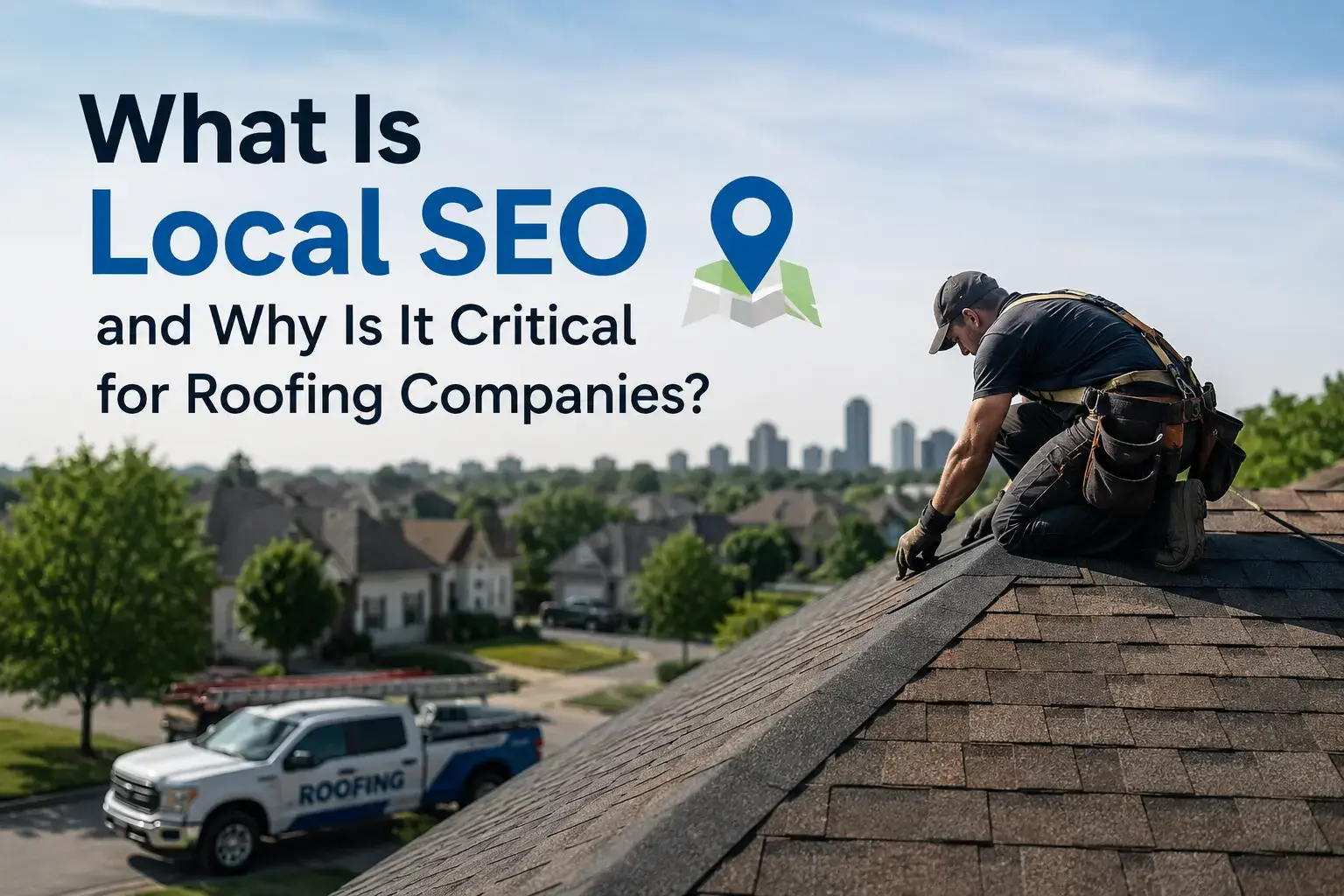
  • What Is Local SEO and Why Is It Critical for Roofing Companies?

    What Is Local SEO and Why Is It Critical for Roofing Companies?

    You’ve got a solid crew, good reviews, and years of experience — but your phone isn’t ringing like it used to. Meanwhile, a competitor you’ve never heard of keeps showing up at the top of Google every time someone nearby searches for a roofer. That’s not luck, and it’s not because they’re better than you.

    Most roofing business owners assume their website is “good enough” as long as it has their phone number and some photos. But a website that just exists online is like a truck wrapped in your logo sitting in a locked garage — nobody sees it, nobody calls.

    Roofing local SEO is the system that gets your truck out on the road and in front of the right people at the exact moment they need a roofer. This article breaks down what it actually means, why it matters more than most agencies will tell you, and what you can do right now to stop losing leads to competitors.


    Why Your Competitor Shows Up and You Don’t

    When someone in your area types “roofer near me” or “roof repair [your city]” into Google, three or four businesses appear at the very top — above the rest of the results — in what’s called the Local Pack.

    Those spots get the most clicks. The most calls. The most jobs.

    The businesses that show up there haven’t just paid more for advertising. They’ve built something called local SEO authority — a combination of signals that tell Google: this roofing company is real, trusted, and relevant to people searching in this area.

    Here’s what determines whether you show up or get buried:

    • Your Google Business Profile — Is it fully filled out, with accurate hours, services, photos, and the right categories? An incomplete profile tells Google you’re not serious.
    • Online reviews — Not just the number of reviews, but how recent they are and how you respond to them. Google rewards active businesses.
    • Your website’s relevance — Does your site actually mention the cities and neighborhoods you serve? A vague “serving the tri-state area” isn’t enough.
    • Local citations — Are your business name, address, and phone number listed consistently across directories like Yelp, HomeAdvisor, and Angi? Inconsistencies confuse Google and hurt your ranking.

    Fix these, and you become a credible option. Ignore them, and you stay invisible.


    Your Website Is Probably Sending Customers Away Before They Even Call

    Picture this: a homeowner spots a water stain on their ceiling after a storm. They pull out their phone, search for a roofer, and land on your website. If that page takes more than a few seconds to load, they’ve already hit the back button and called your competitor.

    This isn’t a theory — it’s what happens across thousands of roofing websites every day.

    Most roofing business owners don’t realize that a slow website doesn’t just annoy visitors. It actively tanks your Google ranking. Google uses page speed as a direct ranking factor, so a sluggish site drags you down in search results before a single person ever tries to visit it.

    The same goes for mobile performance. The majority of people searching for roofers are on their phones — often standing in their backyard staring at storm damage. If your website is hard to navigate on a phone, doesn’t have a tap-to-call button front and center, or forces someone to pinch and scroll to find your number, you’ve already lost the job.

    Websites built for roofing businesses by Digital Trace are built to load fast, display perfectly on any device, and make it effortless for a stressed homeowner to call you in under 10 seconds.


    Google Doesn’t Fully Trust Your Business Yet — Here’s Why

    Even if your website looks professional, there may be invisible technical gaps that prevent Google from confidently recommending your business in search results.

    One of the most common is missing structured data. Think of it this way: Google is like an insurance adjuster going through paperwork. If the paperwork is clear and complete, they sign off fast. If information is missing or ambiguous, they put it in a pile to deal with later — and later never comes.

    Without proper structured data on your site, Google doesn’t clearly know your business type, your service area, your hours, or what kind of roofing work you actually do. That uncertainty means Google shows someone else instead.

    Another common culprit: your site only mentions your main city but you actually serve a dozen surrounding towns. If those towns aren’t built into your site correctly — with dedicated pages or properly structured service area content — you’re invisible to anyone searching from those neighborhoods, even if you’ve done roofing work there for years.

    💡 Pro Tip

    One of the most overlooked issues we see on roofing websites is mismatched business information. If your address on Google shows “Suite 100” but your website says “Ste. 100” and your Yelp listing says nothing at all — Google sees three different businesses. Fix every listing so your Name, Address, and Phone number are identical everywhere. It’s a small detail that has an outsized impact on your local ranking.


    What Roofing Local SEO Actually Looks Like in Practice

    Here’s a realistic picture of what changes when a roofing company gets serious about local SEO.

    A residential roofing contractor in the Midwest had been in business for 11 years. They had a website, a Facebook page, and a Google Business Profile they’d set up years ago and mostly forgotten. They were getting a handful of leads a month from word of mouth, but online they were nearly invisible — ranking on page three or four for their core search terms.

    After a full audit, the problems were clear:

    • Their Google Business Profile was only 60% complete, with no service descriptions and photos that were four years old.
    • Their website loaded in over six seconds on mobile — well above the threshold where most users leave.
    • They had zero location pages for the eight surrounding towns they actually served.
    • Their business information was listed differently across 14 different directories.

    After rebuilding their site on a fast, mobile-first foundation, cleaning up every listing, building out location pages for each service area, and optimizing their Google Business Profile, their results shifted within 90 days. They went from ranking on page three to appearing in the Local Pack for their primary city. Inbound calls from the website more than doubled. Two surrounding towns they’d served for years but never ranked for started generating consistent new inquiries on their own.

    The work was real, and the results followed.


    Not sure if your roofing website has these issues?

    Get a free website audit — no obligation, just a clear picture of what’s costing you leads.


    Your Path to More Leads: What to Do Next

    You don’t need to become a marketing expert. You need a clear starting point. Here are the five things that move the needle most for roofing businesses:

    • Claim and complete your Google Business Profile. Add every service you offer, upload recent photos of your work, and make sure your hours and contact information are accurate. If you haven’t touched it in over a year, it needs attention.
    • Fix your citations. Search for your business name on Google and check how your information appears across directories. Your name, address, and phone number should be identical everywhere. Even minor inconsistencies add up.
    • Get your website on a faster foundation. If you don’t know how fast your site loads, Google’s free PageSpeed Insights tool will tell you in under a minute. Anything below a score of 70 on mobile is hurting your ranking.
    • Build pages for every city and town you serve. A single generic homepage isn’t enough. Each area you work in deserves its own page that tells Google — and the homeowners searching there — that you’re the local expert.
    • Ask for reviews consistently. One of the highest-impact things you can do is make it easy for happy customers to leave a Google review. A simple follow-up text with a direct link takes seconds to send and builds credibility over time.

    If this list feels like a lot to tackle on top of running a roofing crew, that’s exactly the kind of work Digital Trace handles for roofing businesses — start to finish.


    Frequently Asked Questions

    Why am I not getting calls from my website?

    The most common reasons are slow load speed, missing location signals, and a design that makes it hard for mobile users to act quickly. If your site doesn’t load in under three seconds and put your phone number in front of someone immediately, you’re losing calls every day — even if your traffic looks fine on paper.

    How do I know if my roofing website is actually working for me?

    Look at two numbers: how many people visit your site from Google each month, and how many of those visits turn into a phone call or form submission. Most roofing websites convert at a fraction of what they should. A free website audit will tell you exactly where the gaps are and what they’re costing you in real leads.

    How long does it take to see results from improving my local SEO?

    For most roofing businesses, foundational fixes — cleaning up your Google Business Profile, fixing citations, and improving site speed — show measurable movement in 60 to 90 days. Building out location pages and earning more reviews compounds over time. This isn’t overnight, but the results stick long after you’d stop paying for ads.

    What makes a roofing website different from a regular business website?

    A roofing website has to work under pressure — literally. Most roofing inquiries happen right after a storm, when a homeowner is anxious, searching on a phone, and ready to call the first business they can reach. Your site needs to load instantly, make the phone number impossible to miss, and build immediate trust with photos of real local work. A generic business template doesn’t account for any of that.

    Do I really need local SEO if I already run Google Ads?

    Paid ads stop the moment you stop paying. Local SEO builds ranking authority that stays in place and compounds. The strongest roofing businesses use both — ads for immediate visibility while SEO builds long-term, organic lead flow. If you’re only doing ads, you’re renting attention rather than owning it.

    How do I find a roofing SEO company that won’t waste my money?

    Ask them specifically what they’ve done for other roofing businesses and what changed in the rankings as a result. Ask to see the before-and-after on real accounts — not vague claims about “increased traffic.” A good agency will show you a clear audit of your current site before asking you to commit to anything.


    Stop Leaving Leads on the Table

    Every day your website sits invisible on page two or three, a homeowner in your area is calling someone else. Not because that company is better — because they showed up and you didn’t.

    The hidden revenue sitting in your local search ranking isn’t theoretical. It’s real jobs, real calls, and real revenue going to a competitor who invested in getting found.

    Book a free website audit and find out exactly what’s holding your roofing business back. No sales pitch, no obligation — just a straight answer on what’s costing you leads and what it would take to fix it.
  • How to Get Your Roofing Company to the Top of Google

    How to Get Your Roofing Company to the Top of Google

    You do great work. Your crew shows up on time, your installs are clean, and your customers are happy. So why is your phone not ringing from new customers finding you online?

    The hard truth: most roofing companies are invisible on Google — not because they’re bad at roofing, but because their website is working against them. Meanwhile, a competitor across town with a faster site and a smarter roofing SEO setup is getting every call you should be getting.

    This guide breaks down exactly why that happens and what you can do about it — in plain language, no tech degree required.

    Your Website Is the Foundation (And Most Roofing Sites Have Cracks)

    Think of your website like a roof estimate. If it looks sloppy, takes too long, or doesn’t tell the customer what they need to know up front — they’re calling someone else.

    Google works the same way. It sends a crawler to “inspect” your site, and if the site is slow, confusing, or missing key information, Google doesn’t trust it enough to show it to homeowners searching for roofers nearby.

    The result? You’re not even in the running before the phone ever rings.

    A proper roofing website design isn’t just about looking professional. It’s about loading fast, being easy to navigate on a phone, and giving Google every signal it needs to rank you above your competition.

    Why Your Roofing Site Loads Slow (And Why That Costs You Calls)

    Most people searching for a roofer are on their phone, standing in their driveway, staring at water damage or missing shingles. They’re not patient. If your site takes more than 3 seconds to load, most of them are already gone — and they’ve moved on to the next result.

    Slow sites usually come down to a few fixable issues:

    • Images that were never compressed before being uploaded
    • A cheap hosting plan that can’t handle real traffic
    • Too many unnecessary plugins or scripts running in the background
    • No caching setup, so every visitor waits for the whole page to rebuild from scratch

    The fix isn’t complicated, but it requires someone who knows what they’re doing. At Digital Trace, every roofing company website we build is optimized for speed from day one — not patched later.

    Google Doesn’t Know Who You Are (Yet)

    Here’s something most roofing business owners don’t realize: Google isn’t automatically watching your business and deciding to rank it. You have to actively tell Google who you are, where you work, what services you offer, and why you should be trusted.

    When that information is missing or inconsistent, Google gets uncertain — and uncertain businesses don’t rank.

    This is what roofing SEO is really about at its core. It’s not magic. It’s giving Google the right signals in the right format so it confidently shows your business to homeowners searching for roofers in your area.

    The key signals Google looks for include:

    • A fully optimized Google Business Profile with accurate service areas and current photos
    • Consistent business name, address, and phone number across every listing on the web
    • Pages on your website dedicated to the specific services you offer (roof repair, roof replacement, storm damage, etc.)
    • Genuine customer reviews that mention your location and services

    💡 Pro Tip

    One of the most common and costly mistakes roofing companies make is having mismatched contact information scattered across the web — different phone numbers on Yelp, Angi, and their own site. Google sees that inconsistency as a red flag, and it quietly drags your rankings down. Audit every listing where your business appears and make sure the name, address, and phone number are exactly identical everywhere. It’s a small fix with a surprisingly big impact on local roofing SEO.

    Local SEO for Roofers: Why “Near Me” Searches Are Your Goldmine

    When a homeowner searches “roofing contractor near me” or “roof repair in [city],” they’re not browsing. They’re ready to call. These are the highest-value searches in your market — and local SEO for roofers is the strategy that gets you in front of them.

    Local SEO goes beyond just having a website. It means your Google Business Profile is fully built out, your service areas are clearly defined, and your site has pages that specifically target the towns and neighborhoods you serve.

    It also means earning reviews consistently. Roofing companies with 50+ recent reviews and a 4.5-star average dominate the map pack — the box of three local results that appears at the top of Google searches. If you’re not in that box, you’re not getting the call.

    The roofers winning in local search aren’t doing anything mysterious. They’re just doing the fundamentals right, consistently, with a website built to support it.

    What a Real Roofing Business Transformation Looks Like

    A residential roofing contractor in the Southeast was getting decent word-of-mouth work but almost nothing from the internet. Their site was built years ago by a friend of the owner, it loaded slowly on phones, and their Google Business Profile had only 6 reviews.

    They were showing up on page 3 for their most important search terms. The phone stayed quiet.

    After a full website rebuild with proper on-page roofing SEO, local content targeting their service area, and an active review generation process, the picture changed. Within five months, they were ranking in the top 3 results for their primary city — and several surrounding towns. Inbound calls from Google increased by more than 60%. They added two crews to keep up with demand.

    The work itself hadn’t changed. The visibility had.

    See what’s costing you leads — get a free website audit

    Your Path to More Leads: What This Actually Looks Like

    Getting to the top of Google isn’t a single move. It’s a clear sequence of steps — and none of them require you to become a tech expert.

    Here’s how it breaks down in plain terms:

    • Start with your website foundation. If your site is slow, hard to use on a phone, or missing pages about your services, nothing else will work. This comes first.
    • Claim and complete your Google Business Profile. Make sure every section is filled out, your service areas are listed, and your photos are current. This is free and has a direct impact on how you show up in local search.
    • Get consistent reviews. Ask every satisfied customer to leave a Google review right after the job is done. Make it easy by sending them a direct link. This is one of the highest-leverage things you can do for local roofing SEO.
    • Build content around what your customers search for. Pages targeting “roof repair in [city]” or “emergency roof replacement [county]” help Google connect you to the exact searches that matter in your market.
    • Stay consistent over time. SEO isn’t a one-and-done task. The roofers who win on Google are the ones who treat it like maintenance — steady attention, not a one-time fix.

    Frequently Asked Questions

    Why am I not getting calls even though I have a website?

    Having a website and being found on Google are two completely different things. If your site isn’t optimized for roofing SEO, loads slowly on phones, or isn’t connected to a strong Google Business Profile, it’s essentially invisible to new customers. Most roofing sites we audit have at least three or four fixable issues that are silently costing the owner leads every single week.

    How do I know if my roofing website is actually working?

    If you can’t name exactly how many phone calls came directly from Google last month, your website isn’t working hard enough for you. A properly set up site includes call tracking and analytics so you know precisely where your leads are coming from. If that’s not in place, you’re flying blind.

    How long does it take to see results from roofing SEO?

    Honest answer: most roofing businesses start seeing meaningful movement in their local rankings within 60 to 90 days of focused work. Hitting the top positions in competitive markets can take 4 to 6 months. The timeline depends on how much competition you’re up against and how solid your starting point is. You can get a free audit at digitaltrace.agency/contact-us to understand where you stand before investing anything.

    What makes a roofing website different from a regular business website?

    A roofing website needs to do things a generic business site doesn’t — load fast on the phones people use during weather emergencies, clearly show your service areas, highlight financing options, make it dead simple to request an estimate, and be structured so Google understands exactly what services you offer and where. A general web design agency typically won’t know any of that. Agencies that specialize in web design for roofers understand the buying behavior and build accordingly.

    Do I really need a fast website if my customers are mostly local?

    Yes — maybe more than anyone. Local customers searching on their phones during a leak or storm damage situation have zero patience for a slow site. Google also uses page speed as a direct ranking factor, meaning a slow site hurts your visibility in local search results even before a potential customer gets a chance to see it. Speed isn’t a luxury; it’s table stakes.

    I’ve paid for SEO before and got nothing. Why would this be different?

    Most roofing companies that have been burned by SEO agencies paid for generic services that had no industry focus and no real accountability. Effective roofing SEO is specific — it targets the exact searches your customers make, builds content around your actual service area, and connects every piece back to lead generation. If the agency you hired couldn’t show you exactly what changed and why, that’s the problem.

    Ready to See What’s Holding You Back?

    Most roofing companies we talk to are losing leads every day from problems they don’t even know exist — a slow-loading page, a Google Business Profile missing key details, or a competitor quietly outranking them for the searches that matter most.

    You don’t have to guess. A free audit from Digital Trace gives you a clear, specific picture of exactly what’s costing you leads — no obligation, no sales pressure, just straight answers.

    Get your free website audit and find out where you stand before your competition does.

  • The Anatomy of a High-Converting Roofing Company Website

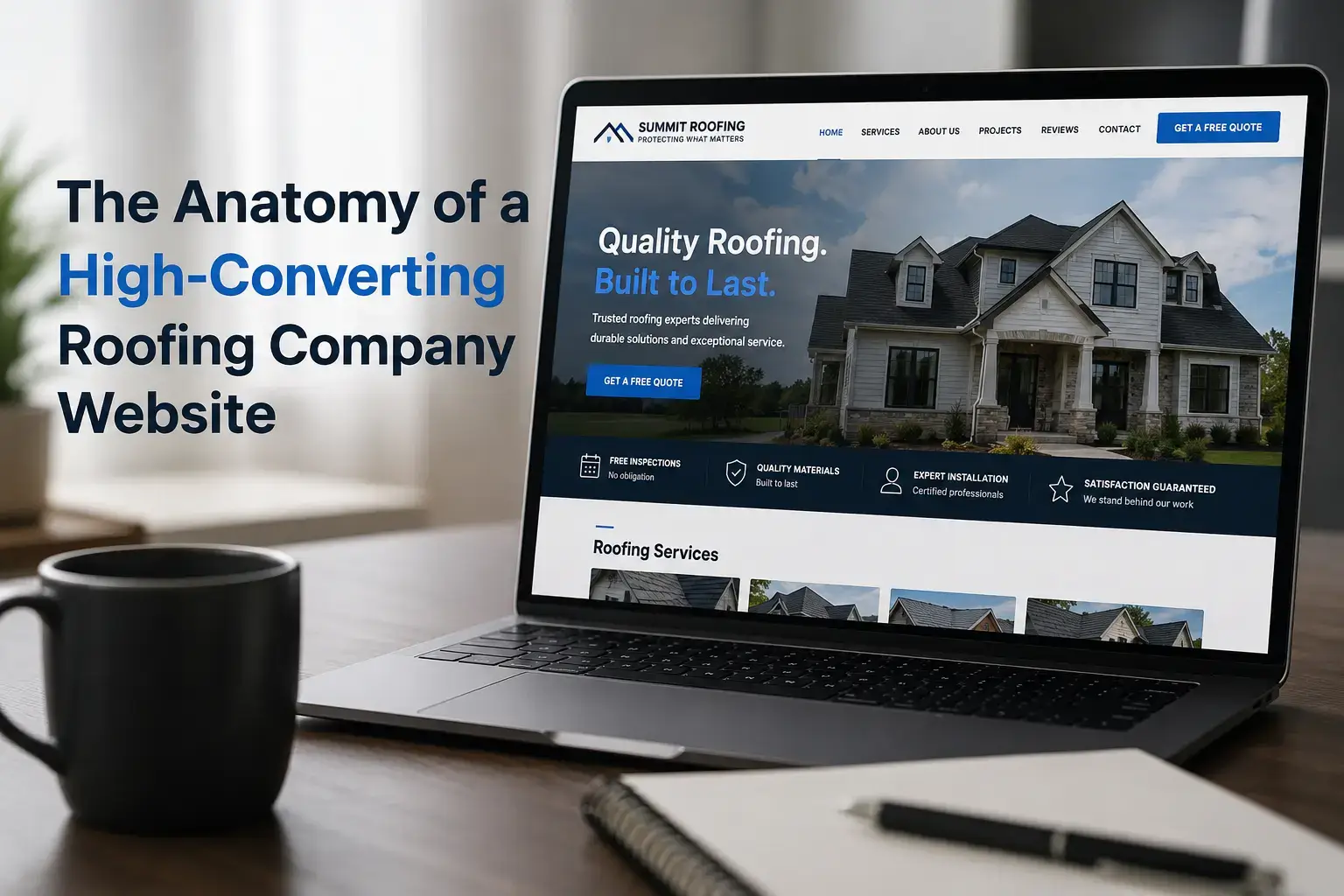
    The Anatomy of a High-Converting Roofing Company Website

    Your roofing crews show up on time. Your work is solid. You have reviews that back it up. So why is your phone quiet while another roofing company in your area stays booked three weeks out?

    The answer is almost never your reputation — it’s your website. Most roofing business owners think of their website as a digital business card: something that just sits there looking decent. But the highest-performing roofing websites work like a tireless salesperson, fielding calls at 2 a.m. and turning strangers into paying customers before you even pick up the phone.

    This guide breaks down — piece by piece — what separates a roofing website that generates leads from one that quietly bleeds revenue every single day. If you work with a skilled roofing website design agency, these are the exact elements they’ll build into your site from day one.

    The First 5 Seconds Decide Everything

    When a homeowner finds your site after a storm or a leak, they’re anxious and making a fast decision. If your site takes more than three seconds to load, most of them are already gone — they’ve tapped the back button and called your competitor.

    This isn’t theory. It’s how people actually behave on mobile phones, which is where the majority of roofing searches now happen. A slow site isn’t a tech problem; it’s a missed call.

    The technical reason this happens: most roofing websites are built on bloated templates loaded with unnecessary code, oversized images, and plugins that fight each other for processing time. A properly built roofing website strips all that out, compresses every image, and loads the most important content — your phone number, your headline, your call-to-action — within the first second.

    What a high-converting roofing website does instead:

    • Loads the core content in under 2 seconds on a mobile connection
    • Places the phone number in the very first visible block — no scrolling required
    • Uses a single, clear headline that tells visitors exactly who you serve and where

    Your Homepage Is Failing to Answer One Question

    Every visitor who lands on your roofing website is asking themselves a single, silent question: “Is this company right for me?” If your homepage doesn’t answer that in about four seconds, they assume the answer is no.

    Think of it like a roof estimate. If a homeowner calls and your crew shows up with no business cards, no truck branding, no uniform — they’re going to feel uneasy before you even get on the ladder. Your website is that first impression before the estimate.

    Most roofing websites pile on generic language: “Quality you can trust.” “Professional roofers.” “Serving your community.” This means nothing to someone who just had a branch punch through their shingles. What they want to see is: what you fix, where you work, and what makes you different from the three other roofing companies in the next tab over.

    A homepage that converts should make three things instantly clear:

    • What you do (residential repair, commercial roofing, storm damage, full replacements — be specific)
    • Where you do it (your actual service cities or counties, not just “local area”)
    • Why you over the next guy (licensed, insured, specific experience, real reviews with names and photos)

    Missing Trust Signals Are Costing You Calls You Never Knew You Lost

    Here’s something most roofing business owners don’t realize: people don’t call roofing companies they don’t trust. And trust on a website is built through very specific signals — most of which are missing from the average roofing site.

    A homeowner handing over thousands of dollars for a new roof is taking a real risk. They’ve heard the horror stories — deposits taken, work left unfinished, fly-by-night contractors. Your website has about thirty seconds to convince them you’re not that.

    Trust signals aren’t complicated, but they have to be visible without scrolling. Buried reviews and certifications in the footer don’t build confidence — they’re invisible.

    Trust signals that actually move the needle for roofing businesses:

    • Google reviews displayed directly on the site (not just a link to your Google profile)
    • Photos of your actual crews and completed jobs — not stock photography
    • Visible license numbers and insurance badges for every state you operate in
    • A physical address (even a service area map builds credibility)
    • Before-and-after job photos with brief captions about the specific problem solved

    💡 Pro Tip

    One of the most common mistakes roofing websites make is using stock photos of smiling homeowners or generic rooftops. Homeowners can spot these instantly, and they quietly signal that you’re hiding something. Replace every stock image with a real photo from a real job — even a smartphone photo of a finished ridge line tells more truth than a staged studio shot. Real photos build the kind of trust no template can manufacture.

    Why Your Roofing Website Doesn’t Show Up When People Search

    You can have the best-designed roofing website in your city, and it still won’t ring your phone if Google doesn’t know you exist. This is where roofing SEO comes in — and where most roofing business owners have been burned by agencies who promised rankings and delivered nothing.

    Here’s the honest version: Google decides which roofing companies to show based on dozens of signals. Location. Reviews. How fast your site loads. Whether the words on your site match what people are actually searching for. Whether other websites link to yours. If any of those signals are weak, a competitor with a worse website can outrank you just because their digital foundation is stronger.

    The most common SEO problem for roofing websites is this: the site uses the same vague language for every city. A page titled “Roofing Services” with no mention of your specific service area tells Google almost nothing. Compare that to a page specifically built around “roof replacement in [City, State]” that answers exactly the questions homeowners in that city are typing — that page wins.

    What effective search engine optimization for roofing companies actually involves:

    • Separate, well-written pages for each major service city (not just a list of cities in your footer)
    • Your business name, address, and phone number consistent across your site and every online directory
    • Optimized Google Business Profile that matches your website’s service areas exactly
    • Clear page titles that include what you do and where — not just your company name

    A Real Roofing Business, Before and After

    Before: A family-owned roofing company operating in the Dallas-Fort Worth area had been in business for eleven years. Their website was built by a friend’s nephew in 2019. It loaded slowly, used the same generic headline as every other roofing site, and wasn’t showing up in local searches at all. The owner knew his reviews were good, but he couldn’t figure out why new customers said they’d “heard about him through a friend” — never from a Google search. He was running a six-person crew entirely on referrals, with zero leads coming in online.

    After: The site was rebuilt from scratch with fast load times, city-specific service pages for every major metro area they covered, real job photos throughout, and trust signals placed above the fold. Within ninety days of the new site going live, organic search traffic was climbing. Within five months, the phone was ringing from Google searches — something that had never happened in eleven years. The owner added two new crews to handle the volume.

    This isn’t a miracle. It’s what happens when a roofing website is built to actually work.

    Not sure if your roofing website has these issues?

    Get a free website audit — see exactly what’s costing you leads →

    Your Path to More Leads

    Getting your roofing website right doesn’t require a massive overhaul overnight. It requires hitting the right elements in the right order.

    Step 1: Audit what you have. Before spending a dollar, find out what’s actually broken. Speed, trust signals, SEO — most roofing websites have problems in all three areas, but some are worse than others. Fix the most damaging ones first.

    Step 2: Fix your mobile experience. More than half of roofing searches happen on a phone. If your site is hard to navigate on a small screen, hard to read, or forces someone to pinch-zoom to find your phone number, you’re losing jobs before they even call.

    Step 3: Build pages for every city you actually want to work in. If you want jobs in five cities, you need at least five pages that specifically talk about roofing in those cities. Generic “service area” pages don’t rank. Specific, well-written city pages do.

    Step 4: Put real proof front and center. Move your best reviews, your best job photos, and your credentials above the fold. Stop hiding them at the bottom of the page where no one scrolls.

    Step 5: Make it easy to contact you in every possible way. Phone number at the top. A contact form that actually works. A “Request a Free Estimate” button that’s visible on every page. The fewer clicks between interest and contact, the more leads you capture.

    Frequently Asked Questions

    Why am I not getting calls from my website even though it looks fine?

    Looking fine and performing well are two completely different things. A website can look polished and still load slowly, rank nowhere in Google, and fail to give visitors a reason to trust you over a competitor. The most common culprit is a combination of slow load speed and missing SEO — both invisible to the business owner but obvious to Google and to impatient homeowners.

    How do I know if my roofing website is actually working?

    The simplest test: search for “roofing company [your city]” on your phone — not while logged into Google — and see if your site appears in the first five results. Then visit your own site on mobile and time how long it takes to load. If you can’t find yourself in search results and your site takes longer than three seconds, you’re losing leads daily. A free website audit will give you a complete picture without the guesswork.

    How long does it take to see results after a new roofing website launches?

    It depends on how competitive your market is, but most roofing businesses see meaningful movement in organic search within sixty to ninety days of launching a properly built site with solid SEO. Some see calls within the first month. The key is launching with everything in place — fast load times, city-specific pages, optimized Google Business Profile — rather than making changes piecemeal.

    What makes a roofing website different from a regular small business website?

    Roofing is a high-trust, high-ticket, often-urgent purchase. A homeowner dealing with storm damage isn’t browsing casually — they’re panicked, comparing three companies at once, and ready to call the first one that feels credible and local. Roofing websites need trust signals that other small businesses can get away without: license badges, real job photos, visible reviews, and hyper-local content that shows you actually know their neighborhood.

    Do I really need a fast website if most of my customers are local?

    Yes — especially because they’re local. Local customers search on their phones, often in the moment a problem happens. If your site loads in five or six seconds, they’re already looking at your competitor’s site. Google also uses page speed as a ranking factor, which means a slow site doesn’t just frustrate visitors — it actively prevents you from showing up in the searches that would bring them to you in the first place.

    How much does a roofing website actually cost, and is it worth it?

    A properly built roofing website — fast, SEO-optimized, conversion-focused — is an investment, not an expense. The right question isn’t what it costs; it’s what a single roofing job is worth to you. If one new roof replacement is worth $8,000 to $15,000, and a well-built website generates two or three of those per month from organic search alone, the math answers itself. The websites that don’t pay off are the ones built cheap, with no SEO, and no strategy behind them.

    Ready to Stop Guessing and Start Growing?

    Your roofing business does great work. The problem is that nobody searching for a roofer online can tell that from your current website.

    A high-converting roofing website isn’t about having a site that looks impressive — it’s about having one that loads fast, shows up in search, earns trust in seconds, and gives people a clear reason to call you instead of the next name on the list.

    If you’re not sure whether your site is working or quietly losing you business, the first step is finding out for free.

    Ready to find out what’s costing your roofing business leads?

    Get a free website audit →

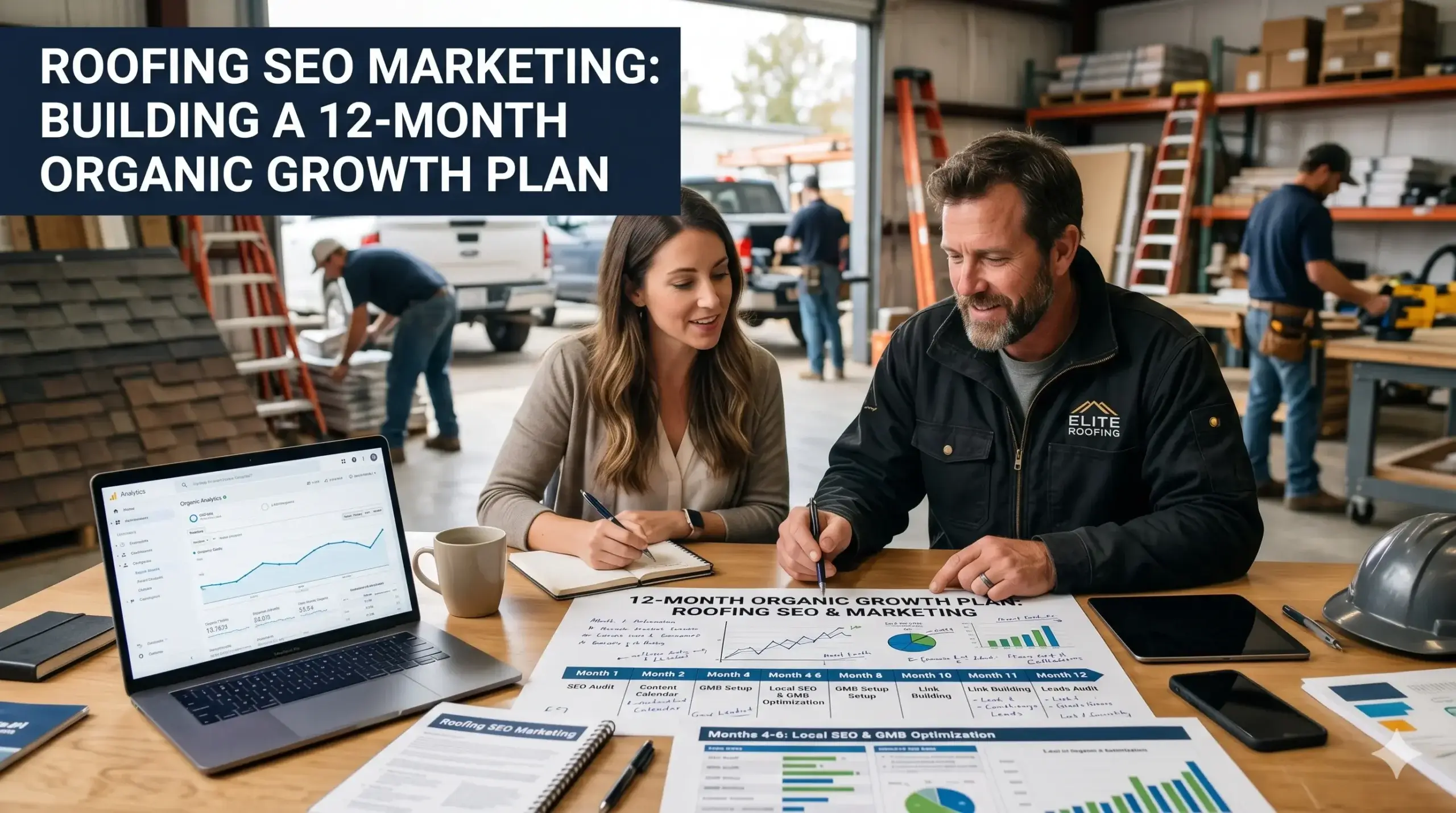
  • Roofing SEO Marketing: Building a 12-Month Organic Growth Plan

    Roofing SEO Marketing: Building a 12-Month Organic Growth Plan

    Your truck is wrapped. Your work is good. Your customers refer you. So why does your competitor — the one you know does mediocre work — keep showing up on Google while you don’t?

    Most roofing business owners assume it’s about spending more on ads. But the real problem is usually something quieter: your website isn’t built to earn trust from Google, and it isn’t built to convert the homeowners who do find it.

    Roofing SEO isn’t about gaming an algorithm. It’s about making sure that when a homeowner in your service area types “roof repair near me” at 7pm after a hailstorm, your name is the one they see — and your website is the one that makes them pick up the phone.

    This guide lays out a realistic, 12-month approach to organic growth that roofing companies across the US can follow — step by step, no technical degree required.

    Why Your Phone Isn’t Ringing (Even When You’re “On Google”)

    A lot of roofers have a Google Business Profile. Some even have a website. But showing up somewhere on page two for your town’s name isn’t the same as being found.

    Here’s the reality: most homeowners never scroll past the first three results. If you’re not in that pack — or in the map results above it — you’re invisible to the people who are ready to buy right now.

    The gap between “being on Google” and “getting calls from Google” comes down to how well your entire digital presence is optimized — your website speed, your local signals, your content, and your reputation online. Most roofing websites are missing at least two or three of these.

    Month 1–2: Your Website Is Either a Sales Tool or a Dead End

    Think of your website like a roofing estimate. A homeowner gets three quotes. Two contractors show up with a clean proposal, clear pricing breakdown, photos of past work, and a professional vibe. The third hands over a wrinkled piece of paper with a number on it.

    Your website is that estimate. First impressions happen in under three seconds.

    If your site takes more than three seconds to load, most visitors leave before they ever see your phone number. This isn’t a design opinion — it’s how people actually behave on mobile, where most roofing searches happen.

    What a high-converting roofing website needs:

    • A phone number visible above the fold on every page, especially on mobile
    • Clear service areas listed (not just your city — surrounding towns too)
    • Before/after project photos that load quickly and look professional
    • A simple contact form that works on every device
    • A page for each major service (roof replacement, storm damage, gutters, etc.)

    At Digital Trace, websites built for roofing businesses are built around these conversion principles from the ground up — not as an afterthought.

    Month 2–4: Google Needs to Know Exactly Where You Work

    Google is essentially a matchmaker. It wants to connect homeowners with the best local roofer for their specific area. But if your website only mentions your city name once — buried in the footer — Google isn’t confident enough in the match to show you prominently.

    This is where local SEO comes in, and it’s one of the highest-leverage things a roofing company can fix.

    The foundation of local roofing SEO:

    • A fully completed Google Business Profile with real photos, updated hours, and accurate service areas
    • Your business name, address, and phone number matching exactly across your website, Google, Yelp, HomeAdvisor, and every other directory
    • Dedicated pages on your website for each town or county you serve — not just one generic “service area” page
    • Consistent reviews coming in over time (not a one-time surge)

    The reason your competitor shows up ahead of you isn’t always because they have a better website. Often it’s because their local signals are cleaner and more complete than yours.

    💡 Pro Tip

    One of the most common mistakes roofing companies make is inconsistent business information across the web. If your address is listed as “Suite 100” on your website but “Ste. 100” on Yelp and missing entirely on HomeAdvisor, Google sees three different businesses — and trusts none of them fully. A quick audit of your directory listings can uncover this invisible problem and fix it fast.

    Month 4–6: Content That Answers What Homeowners Are Actually Asking

    Homeowners don’t search “roofing SEO.” They search “how long does a roof replacement take” or “does homeowner’s insurance cover storm damage repair” or “best roofing company in [their town].”

    If your website has no answers to these questions, you have no reason to show up when they ask.

    Creating content isn’t about blogging for the sake of it. Every page or article you publish is a chance to appear in front of a homeowner at the exact moment they need a roofer.

    High-value content topics for roofing companies:

    • “How to file a roof damage claim after a storm” (high intent, high trust)
    • “Signs you need a full roof replacement vs. a repair”
    • “What to expect during a roof inspection”
    • “How long does a new roof install take?”

    Each of these pulls in homeowners who are actively researching — which means they’re close to hiring someone. Being the company that answered their question builds trust before they even call you.

    Month 6–9: What Google Sees That You Don’t

    There are signals Google uses to rank websites that you’d never notice just by looking at a page. These are behind-the-scenes factors that, when missing, quietly cost you position after position in the rankings.

    Two of the most common ones for roofing sites:

    Your site isn’t telling Google enough about your business. There’s a simple piece of structured data (called schema markup) that you can add to your site which tells Google that you’re a local roofing business, where you’re located, what your hours are, and what services you offer. Without it, Google is guessing. With it, you often see star ratings, phone numbers, and business hours appear directly in search results — which dramatically increases clicks.

    Your site isn’t earning trust from other websites. When reputable local sites — the Chamber of Commerce, local news outlets, supplier directories — link to your website, Google counts those as votes of confidence. Most roofing websites have almost none. Building even a handful of quality local links can move the needle significantly over six to nine months.

    Month 9–12: Reviews, Reputation, and Ranking Together

    Reviews aren’t just social proof for homeowners. They’re a ranking signal for Google.

    A roofing company with 85 reviews and a 4.8 average will outrank a competitor with 12 reviews — even if the competitor’s website is technically better. Google treats review volume and recency as a signal that a business is active and trusted by real customers.

    The mistake most roofing companies make is hoping reviews happen on their own. They don’t — at least not consistently enough to build momentum.

    A simple review system that works:

    • Ask every customer for a review immediately after job completion, while satisfaction is highest
    • Send a direct link to your Google Business Profile review page via text (not email — open rates are much higher)
    • Respond to every review, positive or negative — this signals to Google that you’re active and engaged

    A roofing company with a growing stream of real reviews is building a compounding asset. Every new review makes the next lead a little more likely to call.

    A Before/After: What This Looks Like in the Real World

    A mid-size roofing company based in the Dallas-Fort Worth area came to Digital Trace with a familiar problem. They’d been in business for nine years, had great word-of-mouth, and a website they’d paid $1,500 for back in 2018. Their Google Business Profile existed but hadn’t been updated in two years.

    They were generating most of their leads through referrals and a few expensive paid ads — but organic traffic was essentially zero.

    Within the first 90 days, Digital Trace rebuilt their site with fast load times, clear service pages for each of their six service counties, and a mobile-first design built around conversion. Their Google Business Profile was fully built out, directory listings were cleaned up, and five new service area pages went live.

    By month six, they were ranking in the local map pack for eleven target keywords across three counties. By month nine, inbound calls from organic search had gone from near zero to roughly 25–35 per month — without any paid ads running.

    The referrals kept coming. But now organic search was working alongside them.


    Not sure if your roofing website has these issues? Get a free website audit — no obligation, just a clear picture of what’s costing you leads.


    Your Path to More Roofing Leads: 5 Steps That Actually Move the Needle

    Step 1: Fix your website’s foundation. Speed, mobile usability, and a visible phone number aren’t optional — they’re the baseline. If your site is slow or hard to navigate on a phone, no amount of SEO will save it.

    Step 2: Lock down your local presence. Clean up your Google Business Profile, make sure your information is consistent across every directory, and start asking every happy customer for a review.

    Step 3: Create a page for every service area you work in. One city page isn’t enough. Every town you serve regularly deserves its own page with localized content.

    Step 4: Publish content that answers real homeowner questions. You don’t need to blog every week. Even four to six well-written pages per year targeting common questions can generate consistent traffic over time.

    Step 5: Track what’s working and double down. Use Google Search Console (it’s free) to see which searches are bringing people to your site. Double down on what’s gaining traction and keep building from there.

    Frequently Asked Questions

    Why am I not getting calls from my website even though I get some traffic?

    Traffic and calls are two completely different things. A site can get visitors and still fail to convert them if the phone number isn’t prominent, the page loads slowly, or the site doesn’t clearly communicate what you do and where you work. The goal isn’t more traffic — it’s more qualified visitors who take action when they land.

    How do I know if my roofing website is actually working for me?

    If you don’t know where your last ten leads came from, your website isn’t being tracked properly. At minimum, you should have Google Analytics and Google Search Console set up so you can see how many people are finding your site, what they searched, and what they do when they arrive. Get a free website audit and we’ll show you exactly where your site stands.

    How long does it take to see results from roofing SEO?

    Honestly — it depends on where you’re starting. If your site is new and your local presence is thin, expect three to six months before you see meaningful movement. If your foundation is solid and you’re in a mid-size market, some wins can come faster. The key is that roofing SEO compounds over time. Month twelve looks very different from month one.

    What makes a roofing website different from a regular business website?

    Roofing is a local, high-trust purchase. Homeowners are making a $10,000–$20,000 decision after a stressful event like storm damage. Your website needs to communicate credibility fast — licenses, insurance, service areas, real project photos, and reviews. A generic template built for “small businesses” doesn’t account for any of that.

    Do I really need fast website speeds if my customers are mostly local?

    Yes — more than most industries. Over 70% of roofing searches happen on mobile, often right after a weather event when homeowners are stressed and moving fast. If your site takes five seconds to load on a phone, most people bounce before they see a single word. Speed isn’t a technical luxury; it’s directly tied to how many calls you get.

    I’ve hired agencies before and nothing happened. Why would this be different?

    That’s a fair question, and a common experience. Most agencies sell SEO as a generic service — the same playbook for a dentist, a plumber, and a roofer. How Digital Trace builds roofing websites is different because we work exclusively in the home services space and understand what drives calls for roofing companies specifically. The audit we offer isn’t a sales pitch — it’s a real look at what’s working, what isn’t, and what we’d do about it.


    Ready to Find Out What’s Costing You Leads?

    Most roofing companies have at least two or three fixable problems that are quietly draining calls every week — a slow site, inconsistent local listings, missing service area pages, or reviews that stopped coming in six months ago.

    The audit is free. The call is short. And you’ll walk away with a clear picture of where your biggest opportunities are — no obligation to do anything about it.

    See what’s costing you leads — and let’s build something that actually works for your roofing business.

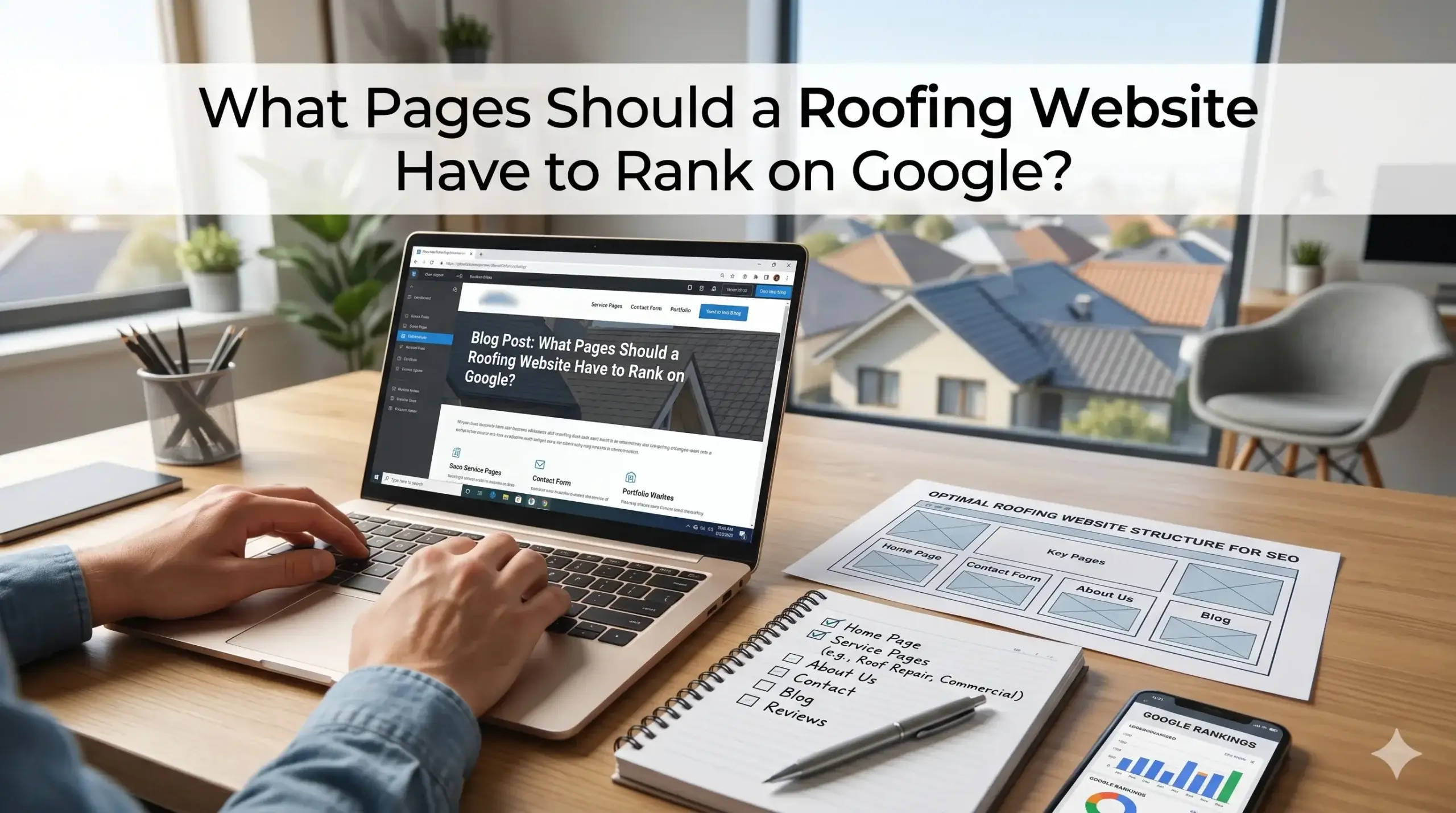
  • What Pages Should a Roofing Website Have to Rank on Google?

    What Pages Should a Roofing Website Have to Rank on Google?

    Most roofing websites have a homepage, a contact form, and maybe a gallery. That’s not a website that ranks — that’s a digital business card. The difference between a roofing contractor who gets 30 inbound calls a month from Google and one who gets three usually comes down to page structure, not ad spend. Here’s exactly what pages your site needs, why they matter, and how to build them right.


    Your Homepage Is Not Your Ranking Strategy

    Your homepage should convert — not rank. Trying to target every keyword from your homepage (“asphalt shingle roofing, metal roofing, flat roof repair, storm damage, emergency tarping…”) dilutes everything and ranks for nothing. Google rewards pages that are about one thing.

    Your homepage should clearly state what you do, where you do it, and who you are. A GAF Master Elite certification badge, an Owens Corning Preferred Contractor logo, or a BBB accreditation seal should be visible above the fold. These aren’t just trust signals for visitors — they’re relevance signals for Google.

    What your homepage shouldn’t do: try to rank for “roofing contractor [city].” That’s what your location page is for.


    Every Service Needs Its Own Dedicated Page

    The most common structural mistake roofing websites make is listing all services on one page. Asphalt shingle replacement, TPO flat roofing, metal roofing installation, storm damage repair, and emergency tarping are not the same service — and Google doesn’t treat them as such.

    A dedicated page for each service lets you:

    • Target the specific search terms homeowners use (“TPO flat roof replacement” vs. “asphalt roof repair”)
    • Include relevant content about that service — material options, typical costs, what the process looks like
    • Capture different intent stages (someone searching “how long does a metal roof last” is earlier in the buying process than someone searching “metal roof installation quote”)

    A roofing company in Columbus, Ohio — call them Ridge Line Roofing — built individual pages for asphalt shingles, metal roofing, and TPO commercial flat roofing. Within four months, their TPO page was ranking on page one for “commercial flat roof replacement Columbus” — a search their homepage had never appeared in. That page alone brought in two commercial jobs in one quarter.

    Each service page should be 500–800 words. It should include the service process, materials, typical project scenarios, and one or two trust signals relevant to that service.


    Do You Have a Page for Every City or Town You Serve?

    The short answer is: yes — and it’s the highest-leverage SEO move most roofers aren’t making.

    Google’s local search algorithm heavily weights geographic relevance. A single “Service Areas” page that lists 12 cities doesn’t rank for any of them. A dedicated page for each location — “Roofing Contractor in Westerville, OH,” “Roofing Services in Dublin, OH” — gives Google a page to associate with that specific geography.

    Each location page needs to be genuinely unique. Thin pages that just swap out the city name get filtered out of rankings. What makes a location page rank:

    • A unique opening that references something real about that area (hailstorm history, common roof types in the neighborhood, proximity to your shop)
    • A list of services you offer in that location
    • At least one local trust element (a review from someone in that town, a project photo from a job in that area)
    • A clear call to action with a local phone number if possible

    Sites with dedicated service area pages rank in 2.3x more local searches than those relying on a single combined page, according to aggregated data from local SEO studies across contractor industries. For a roofing company serving 10 towns, that means 10 chances to appear on page one — instead of one.


    A Storm Damage and Insurance Claim Page Is Not Optional

    After a significant hailstorm or wind event, homeowners don’t search for “roofing contractor.” They search for “storm damage roof repair,” “hail damage roof insurance claim,” and “does my insurance cover roof replacement.” These are high-intent searches — people who are actively trying to solve a problem right now.

    If your site doesn’t have a page dedicated to storm damage and insurance claims, you are invisible during the most profitable window of the year.

    This page should cover:

    • What roof storm damage looks like (granule loss, dents in flashing, cracked shingles)
    • How the insurance claims process works, step by step
    • What your role is as the contractor — documentation, adjuster meetings, supplement requests
    • Why working with a local, licensed and insured contractor matters for claims

    This is also the page where your certifications matter most. An Owens Corning Preferred Contractor or GAF Master Elite designation carries real weight with homeowners navigating a stressful insurance process for the first time.


    A Comparison Table: Pages That Drive Leads vs. Pages That Don’t

    Page TypeRanking PotentialLead GenerationRequired?
    HomepageLow — too broadHigh (converts traffic)Yes
    Individual service pagesHigh — specific intentHighYes
    Location/city pagesVery high — local searchHighYes
    Storm damage / insuranceHigh — seasonal surgeVery highYes
    Gallery / project photosLowMedium (trust signal)Recommended
    About pageLowMedium (trust signal)Yes
    Blog / resource articlesMedium — informationalLow-mediumOptional
    Generic “Services” pageVery lowLowNo — replace with individual pages

    What an About Page Actually Does for Your Rankings

    About pages don’t rank for high-value terms. That’s not why you need one. You need it because Google’s E-E-A-T framework (Experience, Expertise, Authoritativeness, Trustworthiness) evaluates the people behind a business.

    A strong About page for a roofing contractor includes:

    • How long you’ve been in business and roughly how many roofs you’ve replaced
    • Certifications and manufacturer credentials (these should link to the actual manufacturer certification pages — those are quality backlinks in reverse)
    • Real photos of the owner, crew, and trucks — not stock photography
    • A short story about why you started the company or what separates you from larger crews

    This content doesn’t move rankings directly, but it reduces bounce rates, increases time on site, and signals legitimacy to both visitors and Google’s quality raters.


    Frequently Asked Questions

    How many pages does a roofing website need to rank on Google? There’s no magic number, but a roofing site with fewer than 10–15 pages is almost certainly leaving local search traffic on the table. The minimum effective structure is: homepage, one page per major service (typically 4–6 pages), one page per service area (at least 3–5 for most contractors), a storm damage page, an about page, and a contact page. That gets you to 15–20 pages, which is enough to build real topical authority in a local market.

    Does a roofing website need a blog to rank on Google? Not necessarily. Blogs help with informational searches (“how much does a new roof cost,” “how long does a metal roof last”) but the highest-value local SEO ranking comes from service pages and location pages — not blog posts. If you have limited time, build out your core service and location pages first. Add a blog only when those are solid.

    What’s the difference between a service page and a location page for roofing SEO? A service page targets a roofing type or job category — “TPO Flat Roof Installation” or “Storm Damage Roof Repair.” A location page targets a geography — “Roofing Contractor in Naperville, IL.” You need both. A location page with no services doesn’t convert; a service page with no geography doesn’t rank locally. The most effective structure combines them: a primary service page plus location-specific variants that mention that service in the context of each city.

    Should every roofing service have its own page, even if the services are similar? Yes. Even closely related services benefit from separation. “Asphalt shingle repair” and “asphalt shingle replacement” attract different searchers with different intentions and budgets. A homeowner with a few missing shingles after a windstorm searches differently than someone whose roof is 22 years old and failing. Separate pages let you address each scenario specifically — and give Google two pages to rank instead of one.


    The One Thing to Take Away

    Page structure is your roofing website’s foundation. A well-designed site with the wrong page structure will still underperform a plain-looking site that has a dedicated page for every service, every city, and every high-intent moment like storm season. Build the structure first. Everything else — design, photos, reviews — amplifies it.

    If you want to see how your current site’s structure compares to what’s actually driving leads in your market, Digital Trace Agency builds websites exclusively for roofing contractors — or start by running your numbers through the free Roofing Lead Loss Calculator to see what your site might be costing you.

  • Why Digital Trace Agency Is the Last Roofing SEO Partner You’ll Ever Need

    Why Digital Trace Agency Is the Last Roofing SEO Partner You’ll Ever Need

    You do great work. Your crews show up on time, your installs are clean, and your customers refer their neighbors. But when someone in your area types “roofing contractor near me” into Google, your competitor’s name shows up — not yours.

    That’s not a craftsmanship problem. That’s a roofing SEO problem.

    Most roofing businesses waste thousands of dollars on agencies that talk about “impressions” and “keyword density” instead of phone calls and booked jobs. This article breaks down exactly why your website isn’t generating the leads you deserve — and what a real roofing SEO partner actually does to fix it.


    Your Website Looks Fine — So Why Isn’t the Phone Ringing?A lot of roofing contractors have a website. Some of them even look decent. But looking decent and performing are two completely different things.

    Think of your website like a truck with a dead battery. It looks the part sitting in the driveway, but it won’t get you anywhere when it counts. A site that isn’t built for search and conversion is exactly that — a good-looking truck that won’t start.

    Here’s what’s actually happening when visitors land on your site and leave without calling:

    • The page loads too slowly. Most people on a phone will leave in under three seconds if a site is sluggish. If your site isn’t loading fast on mobile, you’re losing leads before they even see your phone number.
    • There’s no clear reason to call you specifically. Visitors want to know you serve their area, you’re licensed, and you won’t leave them with a leak. If that’s buried or missing, they go back to Google and call someone else.
    • Google doesn’t fully trust your site yet. Without the right signals — service area pages, local business information, and proper technical setup — Google won’t show your site to people ready to hire.

    The good news: every one of these problems is fixable. The right roofing SEO company doesn’t just guess at what’s wrong — they find it, show it to you, and fix it systematically.


    Why Your Competitor Ranks Above You (Even If You’re Better)

    This one stings. You know your work is better. But ranking on Google isn’t a vote on quality — it’s a score based on how well your website communicates trust signals to a search engine.

    Your competitor might be winning because their site has more location-specific pages, faster load times, or more consistent business listings across the web. None of that has anything to do with the quality of their installs.

    Here’s what Google is actually looking for:

    • Relevance — Does your site clearly describe what you do and where you do it?
    • Authority — Do other websites link to yours? Do your reviews show up consistently?
    • Experience — Does your site load fast, work well on phones, and give visitors what they need quickly?

    When Digital Trace builds websites built for roofing businesses, these three pillars are built in from day one — not bolted on as an afterthought.


    The Hidden Cost of a Weak Roofing Website

    Here’s a number worth sitting with: if your site is getting even 200 visitors a month and converting at 1% instead of 4%, you’re losing roughly six potential customers every single month. At an average roofing job value of $8,000–$12,000, that’s real money walking out the door.

    Most roofing business owners don’t see this because the loss is invisible. Nobody calls to say “I almost hired you but your site was slow.” They just hire someone else.

    This is where local SEO for roofers becomes a revenue conversation, not a marketing conversation. Every month you operate with a weak website is a month your competitor books jobs that should have been yours.

    💡 Pro Tip

    One of the most common roofing website mistakes is having a single generic “Services” page instead of separate pages for each service — roof replacement, roof repair, storm damage, gutters, and so on. Google treats each of those as a different search intent. A homeowner searching “roof repair after hail” and one searching “full roof replacement cost” are two different customers. If you only have one page, you’re invisible to half your market. Digital Trace builds individual service pages targeting the specific searches your customers actually use.


    What Real Roofing SEO Actually Looks Like

    A lot of agencies sell roofing SEO as a monthly report full of charts. Real roofing SEO means your phone rings more next quarter than it did this one.

    Here’s what the work actually involves:

    • Local SEO foundation — Your Google Business Profile is fully optimized, your service areas are clearly defined on your site, and your business name, address, and phone number are consistent everywhere they appear online.
    • Content that matches real searches — Pages written around the exact words homeowners type when they need a roofer: “emergency roof repair [city],” “how much does a new roof cost,” “best roofing company near me.”
    • A website that converts, not just ranks — Getting traffic is only half the job. If visitors land on a slow, confusing site without a clear call to action, the traffic is worthless. How Digital Trace builds roofing websites ensures design and SEO work together.
    • Ongoing visibility work — SEO isn’t a one-time setup. Rankings shift, competitors invest, and Google updates its standards. A real roofing SEO agency monitors this and adjusts consistently.

    Before & After: What Changes When You Get This Right

    The situation: A mid-sized roofing contractor in the Southeast — 12 years in business, strong word-of-mouth, but almost no organic web leads. Their site was built five years ago, loaded poorly on phones, and had one generic “Services” page covering everything from repairs to commercial flat roofing. They ranked on page three for their city name plus “roofer” and barely appeared in the local map pack.

    What changed: A rebuilt website with individual service and city pages, a fully optimized Google Business Profile, corrected business listings across the major directories, and a content strategy targeting storm damage repair searches (a high-intent, high-value segment in their region).

    The result: Within five months, they moved to the top three in the local map pack for their primary city. Organic contact form submissions went from roughly two per month to over twenty. One storm season later, they had to bring on two additional crews to keep up with inbound demand — work they didn’t have to chase.

    That’s what happens when roofing SEO is treated as a business growth tool instead of a marketing checkbox.


    Not sure if your roofing website has these issues?

    Get a free website audit — no obligation, just a clear picture of what’s costing you leads.


    Your Path to More Roofing Leads

    If you want your phone ringing from people who found you on Google, here’s what the path forward looks like:

    • Step 1: Find out what’s actually broken. Most roofing business owners don’t know what’s wrong with their site — they just know it isn’t working. A proper audit identifies the specific issues costing you leads right now.
    • Step 2: Fix the foundation first. Speed, mobile performance, and local business information need to be correct before anything else matters. This is non-negotiable for ranking.
    • Step 3: Build pages around real searches. Each service, each city, each common customer question deserves its own page. This is how you expand your footprint in Google without running more ads.
    • Step 4: Make it easy to contact you. Phone numbers prominent on every page. A form that actually works. Clear trust signals — license numbers, years in business, reviews — visible above the fold.
    • Step 5: Stay consistent over time. The roofing businesses that dominate local search didn’t get there overnight. They invested consistently and kept the pressure on. A partner who tracks results and keeps improving is worth more than one who sets it and forgets it.

    Frequently Asked Questions

    Why am I not getting calls even though I have a website?

    Having a website and having a working website are very different things. If your site is slow, isn’t showing up in local searches, or doesn’t give visitors a reason to call you over a competitor, it’s not doing its job. A proper roofing SEO audit will tell you exactly which of these is happening.

    How do I know if my roofing website is actually working?

    If you’re not tracking where your phone calls come from, you genuinely don’t know. A healthy roofing website generates consistent inbound leads from organic search — not just referrals and repeat customers. If your site isn’t regularly producing new contacts, something is broken.

    How long does it take to see results from roofing SEO?

    Honest answer: meaningful results typically start showing up in three to five months for local searches, depending on how competitive your market is and how much foundational work needs to be done. Some wins happen faster — Google Business Profile improvements can affect local rankings in weeks. This is a build-it-right-and-it-pays-you-back investment, not an overnight fix.

    What makes a roofing website different from a regular business website?

    Roofing customers are often in a stressful, urgent situation — a leak, storm damage, or a roof that failed inspection during a home sale. They need to trust you fast. A roofing website needs to convey credibility immediately: licenses, reviews, photos of real work, and a clear way to reach you. Generic business websites don’t do this — and they definitely don’t rank for the location-specific searches your customers use.

    Do I really need a fast website if my customers are local?

    Yes — especially because they’re local. Most homeowners searching for a roofer are on their phones, often outside or dealing with an active problem. If your site takes four seconds to load, they’ve already called someone else. Google also uses page speed as a ranking factor, so a slow site hurts you twice: it loses the visitor and it buries you in search results.

    How do I know if Digital Trace is the right fit before committing?

    Start with a free audit. There’s no pitch pressure and no obligation — just a clear breakdown of what’s working, what isn’t, and what it would take to fix it. Book your free review here and see exactly where your leads are going right now.


    Ready to Stop Losing Leads to Competitors?

    Every week your website sits underperforming is a week your competitors are booking jobs that should be yours. The roofing businesses winning in local search right now aren’t lucky — they’re set up correctly.

    Digital Trace works exclusively with home service and trade businesses. We know what a high-converting roofing website looks like, we know which searches your customers are using, and we know how to get you in front of them before your competitors do.

    There’s no risk and no obligation. Just a straight answer about what’s costing you leads and what it takes to fix it.

    Get your free website audit today — and find out exactly what’s standing between you and a full schedule.

  • How Losing 3 Leads Weekly Costs You $27,000 in Revenue

    How Losing 3 Leads Weekly Costs You $27,000 in Revenue

    Your phone is silent during storm season while competitors thrive. You’re spending on ads, yet your return is abysmal. Customers are finding others instead of you — each missed lead can cost thousands. It’s time to address what’s really happening with your roofing website and fix it before it’s too late.

    The real financial cost of an underperforming roofing website

    Your roofing website isn’t just a digital business card; it’s a critical revenue generator. If you’re missing out on three leads each week because your website fails to convert, you could be handing over $27,000 a year to competitors. Think about it: the typical roofing contractor handles about 10 leads weekly, with an average job value of $9,000. If your site is slow, clunky, or lacks essential information, potential clients will bounce before they ever reach out. It’s not merely an issue of aesthetics; it’s costing you real money every single day.

    Every week that your website underperforms, you’re risking the fallout from competitors who understand the stakes of an excellent online presence. It’s not merely having a site—it’s about ensuring it works for you 24/7 to attract and convert leads. A well-optimized website not only showcases your expertise in roofing and storm damage but also builds trust through essential details like customer testimonials and certification badges. When homeowners are searching for contractors, they want an experience that feels professional. If that’s not what they find, it’s a lost job.

    Recovery from this revenue loss starts with identifying what’s wrong with your website. Use tools like our Roofing Website Lead Loss Calculator to pinpoint how many leads and dollars you’re bleeding each week. Understanding the financial impact of underperformance is the first step towards turning your site into a lead-conversion powerhouse.

    The digital landscape for roofers is cutthroat. Homeowners are more likely to shop online after a storm and want reliable contractors ready to address their needs. If your website isn’t up to par, you’re going to miss out. A contractor who’s slow in responding or whose website fails to load quickly can lose leads to those who prioritize website performance. The average homeowner won’t wait; 53% of mobile site visits are abandoned if a page takes over 3 seconds to load according to Google PageSpeed Insights.

    Making your website work for you isn’t optional—it’s essential. Investing in a professional roofing website design company can be the difference between landing high-value jobs or watching them slip through your fingers. Your bottom line deserves a site that drives conversions, not losses.

    Specific website failures causing those losses

    You’re losing leads because your roofing website isn’t optimized for a few key areas that are essential for the industry. Let’s cut to the chase: if your site doesn’t effectively display your expertise with insurance claims for storm damage, you’re throwing away potential jobs that could easily earn you $10,000–$15,000 each. It happens more than you might think. Homeowners facing storm damage look for local experts who can navigate insurance—if they land on a site that lacks clarity in your services or fails to highlight your credentials, they’ll look elsewhere.

    Rapid loading times are non-negotiable. A slow website can cost you leads as users bounce before your homepage even loads. Research shows that over 70% of consumers expect a site to load in under 3 seconds. If your site takes longer, you’re in trouble.

    Mobile responsiveness is another critical factor. More than half of web traffic comes from mobile devices, and if your site isn’t easily navigable on a smartphone, you’re losing those potential clients. Homeowners searching for roofing services are often on the go, and a frustrating mobile experience pushes them to your competitors.

    Lastly, if your site doesn’t feature compelling visuals—like before-and-after photos of successful projects—you won’t stand out. High-quality images can showcase your work, build trust, and convert leads. Features like project galleries and testimonials make a significant difference, so don’t overlook them.

    To help you identify exactly how many leads and dollars your website costs you every week, use this free tool. It’s straightforward: plug in your numbers and see the true cost of your site’s shortcomings. This information isn’t just useful; it’s critical for making an informed decision about your online presence. The longer you wait to address these failures, the more revenue you’ll lose to competitors with better websites.

    Identifying these weaknesses is essential. Take action now to ensure your site reflects your competence and meets customer expectations. Get ready to reclaim your revenue by employing a strategy that prioritizes design, speed, and user experience. Don’t let your website be the reason you miss out on high-value contracts.

    What Google actually rewards in 2025 for local service businesses

    User experience metrics like Core Web Vitals will be at the forefront of Google’s ranking criteria for local service businesses in 2025. If you’re a roofing contractor, this means your website must not only load quickly but also provide a seamless navigation experience. These metrics measure how real users experience your site and include loading performance, interactivity, and visual stability. A roofing business that fails to optimize for these metrics risks being buried in search results. This is crucial because potential clients won’t wait around for slow sites—they’ll click on competitors with better-performing sites.

    Getting listed in Google Local Services Ads is another way to enhance your visibility. Prospective clients searching for “roofing near me” need to see you as a top option. Local SEO strategies must be part of your game plan. High-quality, SEO-friendly content demonstrating your expertise, coupled with before-and-after project images, can significantly influence your local rankings. If your website isn’t showcasing insurance claim handling or roofing certifications, you might as well be invisible.

    Notably, roofing contractors need to leverage positive customer reviews as social proof. According to the BrightLocal Local Consumer Review Survey, 87% of customers read online reviews for local businesses, making it imperative to gather and display testimonials prominently on your site. Otherwise, while you’re missing leads, your competitors are closing contracts that could have been yours.

    Lastly, the importance of a responsive design cannot be overstated. Given that over half of all web traffic now comes from mobile devices (Pew Research Center), your website needs to provide a stellar experience regardless of device. Whether a homeowner’s looking for emergency repairs or planning a long-term roof replacement, their experience during their initial search will either draw them to you or push them to your competitors.

    Need to know how many potential leads you’re losing each week? Check out the Roofing Website Lead Loss Calculator, a free tool to calculate exactly how many leads and dollars your website is costing you every week. Don’t let your online presence leave money on the table.

    What a high-converting roofing website looks like in practice

    A high-converting roofing website should prioritize both lead capture and conversion. It must visually showcase completed projects, utilizing high-quality before-and-after photos of roof replacements to demonstrate your expertise. People want to see proof before they commit; images work more effectively than any text can convey. Don’t overlook testimonials from satisfied customers—these aren’t just fluff. They build instant trust and provide social proof that you deliver on your promises. Real homeowners vouching for your work can tip the scales when decision-making time comes.

    User experience is crucial. A professionally built roofing website design company ensures seamless navigation, guiding potential clients smoothly toward inquiry forms or call buttons. Every click should feel effortless, leading potential clients directly to your contact information. If your site isn’t optimized for mobile use, you could be missing out. With over 50% of searches done on smartphones, a responsive design increases your chances of conversions significantly by delivering a solid experience no matter the device.

    Make your branding clear and compelling. A cohesive online presence reinforces what you stand for and makes it easier for clients to remember you when they need roofing services. Use actionable, persuasive calls-to-action to lead visitors where you want them to go. Each detail counts—if a visitor feels compelled to fill out your contact form, make sure it’s easy and quick to do so.

    Take a moment to think about how many leads you’re losing weekly because your website fails to engage effectively. A single insurance claim job missed due to a poor user experience can lead to a revenue loss of $10,000–$15,000. Implement these strategies to turn your roofing website into a lead-generating machine. It starts with understanding what clients expect and making sure your site meets those demands head-on. If you’re ready to take the next step, consider a free roofing website audit. Don’t wait for leads to slip through your fingers due to an underperforming site.

    Exact next steps the reader must take today

    Evaluate your website today. An underperforming roofing site isn’t just a missed opportunity; it’s an ongoing cost to your bottom line. Start by assessing three key areas: design, speed, and user experience. If your site looks outdated or isn’t mobile-responsive, potential clients will bounce before they even consider filling out a contact form. Google data shows that sites taking longer than 3 seconds to load can lose over 50% of visitors. Understand that every second matters.

    Next, ensure that you have defined conversion paths. Is your contact information easy to find? Are your calls-to-action compelling enough to drive engagement? High-quality content is essential as well—make sure your site showcases successful roofing projects, complete with before-and-after photos and customer testimonials. Potential clients need to see others’ positive experiences before trusting you with their roofs.

    To gauge exactly what your site is costing you, check out the Roofing Website Lead Loss Calculator, a free tool that will show you the true financial impact of lost leads. Don’t wait to take action. The first step today is to secure a free roofing website audit. It’s a zero-risk next step that can illuminate issues you didn’t even know existed and keep those leads from slipping away.

    By taking these steps, you’re not just improving your website; you’re actively securing your future revenue. Every day you wait is another week of lost leads. Act now and ensure that your system is optimized to convert inquiries into booked jobs. Don’t let another valuable opportunity slip through your fingers.

    Conclusions

    At an average roofing job value of $9,000, losing 3 leads a week means $27,000 in monthly revenue going straight to your competitor. Don’t let another month pass by. Start with a free roofing website audit — zero risk, immediate clarity on what’s costing you leads.

  • How 3 Digital Mistakes Cost Your Roofing Business $27K Annually

    How 3 Digital Mistakes Cost Your Roofing Business $27K Annually

    The phone is silent while your competitors scoop up the leads you should be getting. Every hour your roofing website underperforms is potential revenue slipping away, especially during storm season when demand spikes. You need clarity on what’s causing these frustrations before another job goes to your competition.

    The real financial cost of an underperforming roofing website

    An underperforming roofing website isn’t just a missed opportunity; it’s a crisis. You’re losing potential leads and, consequently, revenue. Think about it: if 75% of users never scroll past the first page of search results, and you’re absent from that prime real estate, you’re handing leads straight to your competitors. A single roofing contract averages around $9,000. If you miss just a few leads each week, you could be losing over $25,000 annually. That’s the financial reality of not prioritizing your website’s performance.

    It’s not just visibility; your site acts as your digital storefront. Without proper SEO and conversion tactics, you’re driving traffic to a dead-end. Lost leads are lost dollars. A roofing business that fails to address its online presence risks becoming obsolete as more customers turn to Google for solutions after storm damage or roofing issues. Don’t let your website cost you money. You can assess your losses right now using a free tool to calculate exactly how many leads and dollars your website is costing you every week. Take that first step to reclaiming your revenue.

    Specific website failures causing those losses

    Your roofing website is likely riddled with issues that silently siphon off leads and revenue. Primarily, the speed of your site matters. Studies show that page load times over three seconds result in higher bounce rates, meaning potential clients won’t wait and will walk away before your content even loads. This frustration can directly translate into losses that pile up over the year.

    Equally crucial is mobile optimization. Pew Research Center notes around 60% of all web searches are done via mobile devices. If your site isn’t mobile-friendly, you’re turning away a significant portion of your prospects. A non-responsive site doesn’t just hinder user experience; it also tarnishes your search rankings on Google. If your website struggles to meet both user and search engine expectations, it’s time to reevaluate your strategy.

    Want to quantify your losses? Use our Roofing Website Lead Loss Calculator — a free tool to calculate exactly how many leads and dollars your website is costing you every week. Fixing these mistakes isn’t just an option; it’s a necessity for survival in this competitive landscape.

    What Google actually rewards in 2025 for local service businesses

    Google will reward roofing companies in 2025 that deliver a stellar user experience on their websites. Speed matters—site loading times need to be under three seconds to keep potential clients engaged; anything longer results in a drastic drop-off in leads. Mobile optimization is non-negotiable, especially since over half of searches occur on smartphones. Fail to adapt, and you’ll get left behind. Use high-quality images that showcase your roofing projects; visuals capture attention and build trust instantly. Also, ensure your content speaks the local language. Incorporate region-specific keywords to ensure Google recognizes your relevance to local searches.

    Utilizing Google Local Services Ads is a game changer. Not only do these ads put you directly in front of homeowners actively seeking roofing services, but they also improve your site’s visibility in search results. Combine this with a well-optimized site, and you can expect a boost in calls and inquiries. To see how much you might be losing, use the Roofing Website Lead Loss Calculator—it’s a free tool that reveals how many leads and dollars your site could be costing you weekly.

    What a high-converting roofing website looks like in practice

    A high-converting roofing website serves as your best asset, transcending a mere digital brochure to become a real conversion machine. It starts with mobile responsiveness, because today’s homeowner is searching for roofing solutions on their phones. If your site doesn’t load in under two seconds, you’re losing potential clients. Navigation must be intuitive to avoid frustrating users who lack the time to figure out your layout.

    Call-to-action buttons should be strategically placed and compelling—tell them exactly what to do next, whether that’s to contact you or book a free estimate. Including a gallery showcasing before-and-after photos is vital; it captures attention and demonstrates your craftsmanship effectively.

    Additionally, implementing industry best practices, such as SEO for roofing and local keywords, can dramatically increase your site’s visibility. In working with a roofing website design company, you ensure that these elements are not just considerations, but integral features of your site that drive conversions. Don’t let a poorly designed site cost you leads; take action now.

    Exact next steps the reader must take today

    You need to stop bleeding cash and reclaim your leads. Start today by conducting a thorough audit of your roofing website. This isn’t just a suggestion; it’s your chance to pinpoint exact performance issues that are costing you money. You should look for critical factors like site speed, mobile responsiveness, and overall user experience. In roofing, a slow-loading site can cost you potential clients—each extra second can result in lost leads, especially when you’re competing with faster-loading competitor sites.

    Optimizing your website for mobile is crucial; over 50% of web traffic comes from smartphones, and if your site isn’t up to par, you’ll lose out. Check your load times using tools like Google PageSpeed Insights and address any significant issues. Once you know where you stand, implement the necessary changes to convert more visitors into paying customers. For those unsure where to start, a zero-risk next step is to grab a free roofing website audit. This simple action can uncover hidden revenue opportunities—don’t let another year go by with wasted potential.

    Conclusions

    At an average roofing job value of $9,000, losing 3 leads a week means $27,000 in monthly revenue going straight to your competitor. Don’t wait any longer for clarity on these issues. Start with a free roofing website audit — zero risk, immediate clarity on what’s costing you leads.

  • 3 Costly Mistakes in Florida Roofing Website Design You Must Avoid

    3 Costly Mistakes in Florida Roofing Website Design You Must Avoid

    Are you tired of watching competitors thrive while your phone stays silent during storm season? Your roofing website might be the issue, siphoning leads and revenue without you even knowing. It’s time to uncover the hidden costs of an underperforming digital presence tailored for the Florida market.

    The real financial cost of an underperforming roofing website

    Every day your roofing website is underperforming, you’re throwing away potential revenue. If your site isn’t converting visitors to leads effectively, you could be missing out on substantial income from an average roofing job in Florida. 71% of roofing contractors have confirmed that their website directly affects their sales, according to the National Roofing Contractors Association. Think about it — if your site isn’t performing, you’re likely watching your competitors rack up leads while you stand still.

    During peak seasons, like after storms, homeowners are actively searching for reliable roofing services. An optimized website grabs those leads. If you’re unsure how many leads you’re missing each week, use a free tool to calculate exactly how many leads and dollars your website is costing you every week. Simple mistakes — from slow loading times to unclear calls to action — can scare away potential customers. You simply can’t afford to ignore your website’s performance; it’s time to address the gaps before they cost you even more.

    Specific website failures causing those losses

    A slow-loading website can be a silent killer for your roofing business. Every second your site takes to load, you’re pushing potential customers toward your competitors. A study by Google shows that 53% of mobile users will bounce if a page takes longer than three seconds to load. In Florida, this matters even more. During storm season, homeowners are desperate for quick repairs, and they won’t wait around for your slow website. Check your page speed now—if it’s lacking, you could be losing thousands in potential roofing jobs.

    Mobile optimization is crucial. You’re not just designing for desktops anymore. Smartphones account for about 54% of online traffic, and if your site isn’t mobile-friendly, you’re driving customers away. Ensure that your site looks and performs well across all devices. This could mean the difference between a lead or a missed opportunity.

    Your calls to action must be crystal clear. If visitors can’t easily identify how to get quotes or contact you, they’ll simply leave. A complicated or ambiguous CTA is like a red light for your users—no one wants to stop. Make sure “Get a Free Estimate” buttons stand out and lead prospects to essential information. Check your site against what your competitors are doing. If they’re providing clearer paths for their customers, they’re likely reeling in your leads.

    If you’re curious about how much business you might be missing out on due to an ineffective website, use this free tool to calculate exactly how many leads and dollars your website is costing you every week. Stop letting common pitfalls hold back your roofing success. Address these issues now, keep your leads in-house, and watch your profits climb.

    What Google actually rewards in 2025 for local service businesses

    In 2025, Google rewards roofing websites that excel in local SEO, user experience, and site speed, crucially affecting your online visibility. If your site loads slowly, you risk driving potential customers to competitors whose sites perform better. The importance of speed cannot be overstated — research shows that a mere one-second delay can result in up to a 7% reduction in conversions. You can’t afford to overlook this when 70% of consumers consider page speed crucial when choosing to engage with websites (Google).

    To succeed, you must provide high-quality, roofing-specific content that addresses the needs of your local market. Websites must include relevant keywords for local searches, optimized for mobile devices, and incorporate essential elements like customer testimonials and before-and-after project galleries. Google’s Core Web Vitals also focus on relevance and performance, which means your site should deliver quick and meaningful experiences. If it’s not optimized, you could be missing out on thousands in service calls from homeowners searching for roof repairs after a storm. Start assessing your site now with a free tool to calculate exactly how many leads and dollars your website is costing you every week. Fixing these issues can lead to better rankings, which translates to more local customers finding you first.

    Invest wisely in your roofing website design to meet these modern standards. Your potential clients are searching for quick, direct solutions to their roofing problems on their smartphones. If your site isn’t up to par, it’s essentially handing those leads to your competition. A roofing business that misses just a few inquiries during peak storm season because of website flaws might lose up to $15,000 to competitors who are better prepared digitally. Time to prioritize speed, user experience, and authoritative content — especially if you want to become the go-to choice for roofing services in your area.

    What a high-converting roofing website looks like in practice

    Building a high-converting roofing website in Florida requires more than just an attractive design. You need to integrate elements that drive engagement and conversions—starting with optimized landing pages for each service. This means not just a general page for “Roofing Services,” but specific pages detailing everything from shingles to flat roofing. Each service page should answer common homeowner questions, build trust, and drive inquiries.

    Featuring vibrant before-and-after photo galleries is another crucial element. These images are your strongest sales tool, showing real results to potential clients. Additionally, trust signals like displaying badges for certifications such as GAF Master Elite will differentiate you from competitors. Homeowners aren’t just looking for a pretty roof; they want to know they’re hiring an expert.

    Partnering with a roofing website design company can ensure these features are not just present but executed with precision. When these elements come together, you create an inviting space that effectively drives conversions. That’s where the magic happens.

    Exact next steps the reader must take today

    To rectify issues with your roofing website, start with a thorough analysis to pinpoint what’s working and what’s dragging you down. Check your loading speed; a site that takes longer than 2 seconds to load can lose a chunk of potential leads. Use tools like Google PageSpeed Insights to get concrete data on performance. Evaluate your calls to action; if they’re not compelling, you’re wasting precious traffic.

    Next, assess your visuals. High-quality before-and-after galleries drive conversions, so if yours are lacking, it’s time for a refresh. Make sure your trust signals—like GAF Master Elite badges—are prominently displayed. They build credibility and encourage visitor engagement.

    Create a clear, actionable plan based on these insights. Prioritize tasks that improve user experience and drive lead generation. Don’t go it alone—consider an expert’s opinion. A free roofing website audit can offer immediate clarity on actionable improvements that could significantly boost your site’s performance and lead generation prospects.

    Conclusions

    At an average roofing job value of $9,000, losing 3 leads a week means $27,000 in monthly revenue going straight to your competitor. Start with a free roofing website audit — zero risk, immediate clarity on what’s costing you leads.

  • The 5 Reasons Your Roofing SEO Strategy Costs You Thousands

    The 5 Reasons Your Roofing SEO Strategy Costs You Thousands

    Silent phone during storm season makes you wonder if your website is costing you potential leads. While you pour money into ads, competitors effortlessly outrank you. You deserve an online presence that generates roofing leads, instead of one that holds you back.

    The real financial cost of an underperforming roofing website

    The financial toll of an underperforming roofing website is staggering. A website that doesn’t convert effectively robs you of potential leads, which ultimately costs you money. During storm season, when homeowners urgently search for roof repairs, a mediocre website can mean missing out on critical emergency jobs and insurance claims. This can lead to substantial financial losses per month. Google’s research indicates that abandonment rates can exceed 70% for sites that aren’t optimized for mobile or that load slowly. This translates to a lot of potential customers clicking away and never looking back.

    Many contractors fail to realize their online presence affects not just visibility but also trust and profitability. Your website isn’t merely a digital calling card; it’s your most powerful sales tool. If it struggles to meet basic standards like mobile compatibility, load time, or even user-friendly navigation, you’re in trouble. Every unattended minute erodes credibility. Competitors with better online experiences will steal your leads—period.

    In a market flooded with roofing businesses, standing out isn’t just about having a flashy website. It’s about functionality and professionalism. If your site looks outdated or feels clunky, potential clients will likely bypass it to find a competitor who appears more capable. The reality is that your roofing business’s financial health hinges on this often overlooked aspect. Consider this: during peak storm times, a single website error can lead to missed opportunities worth thousands. You might not see this damage on your bank statement right away, but it accumulates.

    Your website’s effectiveness plays a crucial role in capturing leads that could mean the difference between thriving or surviving in your business. Time and again, roofing contractors report losing solid leads simply because their site doesn’t perform well. Research from BrightLocal reveals that 40% of potential clients abandon a website that takes longer than three seconds to load. Are you willing to risk losing thousands simply because your site doesn’t meet basic speed requirements? This is not just about aesthetics; it’s about functionality that translates to cold hard cash.

    Furthermore, trust signals like customer testimonials and certifications provide essential reassurance to potential clients. If your site lacks these elements, you unintentionally shoot yourself in the foot. No one wants to hire a roofing service that doesn’t project reliability and authority. Every detail counts, especially when homeowners expect their next contractor to be accessible, trustworthy, and quick to respond, particularly after a storm.

    To gauge exactly how much your current site might be costing you in terms of lost leads, try using a free tool to calculate exactly how many leads and dollars your website is costing you every week: Roofing Website Lead Loss Calculator. Start recognizing the financial implications of an underperforming website and take steps to rectify those issues before you lose more business. Your roof embodies protection and reliability for homeowners. Make sure your digital presence reflects that same commitment through effective website design and optimization.

    Specific website failures causing those losses

    Your website has hidden issues that can silently bleed you dry. These failures directly hinder your potential revenue and impact your bottom line each week. Let’s get real about the specific website failures that can tank your roofing SEO strategy.

    First, loading speed is non-negotiable. A website that takes longer than three seconds to load can lead to a 40% abandonment rate. Think about the urgency that comes with roofing—homeowners need quick answers and solutions after a storm. If your site is still buffering when prospects are searching for emergency repairs, they’re already on their way to a competitor. Utilize tools like Google PageSpeed Insights to assess and improve your load times—it’s one of the quickest ways to retain potential clients.

    Next on the list is your calls to action (CTAs). If they’re vague or hard to find, you’re essentially telling potential customers to keep looking elsewhere. A clear, compelling CTA guides users directly to the action you want—whether it’s scheduling a rooftop inspection or requesting a quote. Make your CTAs prominent, and don’t make your visitors sift through layers of content to figure out what they should do next.

    Mobile responsiveness is another critical factor often overlooked. With over 60% of searches done on mobile devices, if your website isn’t optimized for mobile, you’re losing leads hand over fist. A roofing site that doesn’t display correctly on smartphones can harm your credibility and visibility. Ensure your content fits any screen, loading properly and remaining easy to navigate.

    Watch your trust signals too. Homeowners are more likely to choose contractors with visible trust cues such as customer testimonials, badges from leading manufacturers like GAF or Owens Corning, and clear contact information. If your website lacks these essential components, you’re missing out on establishing the authority necessary to convert visits into jobs. Customers seek reassurance before entrusting you with their homes, especially in storm situations.

    Lastly, let’s talk about design aesthetics. Poor website design can turn off visitors faster than you think. An outdated, cluttered, or visually unappealing site can cause distrust. Invest in a professional, high-converting site offered by a reputable roofing website design company. They understand your industry and the elements that convert browsers into buyers.

    Remember, each fleeting second and missed opportunity adds up. If your site isn’t functioning at peak performance, you’re not just shipping leads to competitors; you’re throwing away thousands. Want to quantify your losses? Use a free tool to calculate exactly how many leads and dollars your website is costing you every week with the Roofing Website Lead Loss Calculator.

    Start identifying and addressing these specific website failures now. Your revenue depends on it. Don’t let your website be a hidden money pit; make it a powerful tool that leads to more jobs and loyal customers.

    What Google actually rewards in 2025 for local service businesses

    Google has shifted its SEO focus. In 2025, securing a strong ranking for your roofing business hinges on three critical elements: content relevance, local SEO, and technical excellence. Proximity matters more than ever. Localized content tailored to your community’s needs makes it easier for potential clients to find your services. Are you creating region-specific landing pages or blog articles? If not, you’re missing out.

    High-quality backlinks are another game-changer. They signal to Google that your business is credible and authoritative. Connect with local construction blogs or home improvement websites to secure these valuable links. But remember, this is about quality, not quantity. A few strategic backlinks from reputable sources can significantly boost your standing.

    Technical SEO—like site speed and mobile responsiveness—serves as the backbone of a well-optimized website. If your roofing website isn’t loading in under two seconds or fails on mobile, you’re losing customers. And considering that 90% of homeowners use their smartphones for local searches, this isn’t optional; it’s critical.

    User-generated content, especially customer reviews, cannot be overlooked. BrightLocal’s 2023 Local Consumer Review Survey reveals that a whopping 88% of users trust online reviews as much as personal recommendations. Your roofing website must prominently showcase positive customer testimonials and successful case studies. This directly impacts trust and decision-making among potential customers.

    Google Local Services Ads are also vital. They can elevate your visibility in a crowded marketplace, putting your roofing services in front of homeowners actively searching for help. If you’re not leveraging LSA, you’re leaving money on the table. It’s not just about showing up; it’s about appearing at the right time, when storm damage leads are at their peak, or when potential clients have their wallets ready for that urgent roof repair.

    Spend time auditing these aspects regularly. If your strategies aren’t aligned with what Google rewards, you’re bleeding potential revenue. Assess your website’s technical features, refine your local content, and ensure your backlink profile is top-notch. Don’t wait for customers to find you; make it easy for them. If you need a jumpstart, roll out a free roofing website audit to pinpoint exactly where your SEO could be stronger. The return is undeniable, and the top competitors are already doing this.

    Optimizing your roofing SEO strategy today could mean the difference between capturing that critical lead when storm season hits or not being found at all. Each component—content, backlinks, technical precision, and local emphasis—works synergistically. Converting these insights into actionable tactics will put you back in the race, ahead of your competition.

    What a high-converting roofing website looks like in practice

    A high-converting roofing website operates on the principle that every element is optimized to convert visitors into leads. Clear navigation is key—if potential customers can’t find what they’re looking for, they’re gone. A streamlined layout with categorized information about your services, credentials, and past projects will keep users engaged. This isn’t fluff; it’s the difference between a visitor that bounces and one that stays to learn about your offerings.

    Loading speed plays a pivotal role in user experience. Research shows that a 2-second delay in page loading can increase bounce rates by 32%. Homeowners searching for roofing services don’t have patience for slow sites. If your site isn’t optimized for speed, you’re losing potential jobs to competitors with better performance. Leverage tools like Google PageSpeed Insights to pinpoint issues and address them quickly.

    Mobile optimization is non-negotiable. A significant percentage of homeowners use smartphones to search for local roofing services, particularly right after storm damage. When they get to your site, a mobile-friendly design must deliver an excellent experience. It should automatically adjust elements like text size and image scaling, offering a seamless experience whether on a phone or desktop. This is especially crucial during peak season when homeowners are most active.

    Integrating compelling calls to action (CTAs) is essential. Whether it’s a “Get a Free Estimate” button or a downloadable guide, your CTAs need to be strategically placed and visible. The goal is to guide visitors through the sales funnel until they inevitably decide to convert. For instance, displaying certification badges, such as a GAF Master Elite or Owens Corning Preferred Contractor, not only boosts your credibility but also influences decision-making. Homeowners want to hire contractors they can trust, and showcasing your qualifications right on the homepage can make all the difference.

    Lastly, case studies and customer testimonials should be front and center. At least 80% of consumers trust online reviews as much as personal recommendations, according to BrightLocal. Use photo galleries of your completed projects and include written testimonials from satisfied customers to build trust and authority. A website with real-world proof of your work will resonate well with potential clients, giving them the confidence to reach out.

    An expert roofing website design company can easily help implement these strategies. Engaging a professional allows you to focus on roofing while the experts handle the digital strategy that will drive your business forward. To see exactly how many leads and dollars your website is costing you every week, try our free tool to calculate your losses. It’s time to optimize your online presence and capture the leads you deserve.

    Exact next steps the reader must take today

    Auditing your online presence is the first step to correcting your roofing SEO strategy and starting to regain lost leads. This isn’t a vague suggestion; it’s essential. Use tools like Google PageSpeed Insights to evaluate your website speed—loading times should ideally be under two seconds. If it’s slower than that, you’re likely losing potential customers, especially during peak storm seasons when homeowners search urgently.

    Next, focus on mobile optimization. In 2024, over 60% of searches come from mobile devices. If your site isn’t mobile-friendly, you’re not just behind; you’re out of the game. Mobile usability affects everything: your Google ranking, user experience, and ultimately, your lead generation.

    Once you identify these shortcomings, it’s critical to implement changes that are in line with the best practices for SEO moving into 2025. This means optimizing your content with local keywords relevant to roofing such as “roof repair in [city]” and ensuring your customer reviews are prominently displayed. BrightLocal’s Local Consumer Review Survey (2023) shows that 93% of consumers read online reviews before making a decision. Use testimonials to build trust and credibility quickly.

    If you’re unsure where to start, a professional evaluation of your website’s effectiveness can provide immediate clarity. Finding out how much your outdated website design is costing you in leads is key. Some contractors lose tens of thousands during peak season just because their online presence doesn’t reflect their qualifications or services. Take advantage of the zero-risk next step and request a free roofing website audit. This audit will pinpoint exactly where you’re losing customers so you can take immediate action.

    Consider utilizing a free tool to calculate accurately how many leads your existing website is costing you every week. This simple analysis can reveal staggering losses. Many roofing contractors miss out on one or more insurance leads weekly because their website fails to load quickly or has poor design layout. If a competitor’s site showcases GAF certification and loads instantly, that’s likely where those leads are going.

    Finally, because SEO doesn’t stop evolving, stay educated about changing algorithms and best practices. Search engines continuously update their criteria for ranking sites. What worked last year might not cut it this year. Prioritize continuous improvement of your SEO strategy—this isn’t a one-time task. Tracking your website’s performance should be as routine as your daily roofing operations.

    By auditing, optimizing, and continually improving, you’ll not only regain lost leads but unlock hidden revenue opportunities. Don’t let poor website performance define your roofing business. Start today with the necessary changes and watch your lead flow improve.

    Conclusions

    At an average roofing job value of $9,000, losing 3 leads a week means $27,000 in monthly revenue going straight to your competitor. Don’t let inaction cost you money. Start with a free roofing website audit — zero risk, immediate clarity on what’s costing you leads.