Category: Automotive

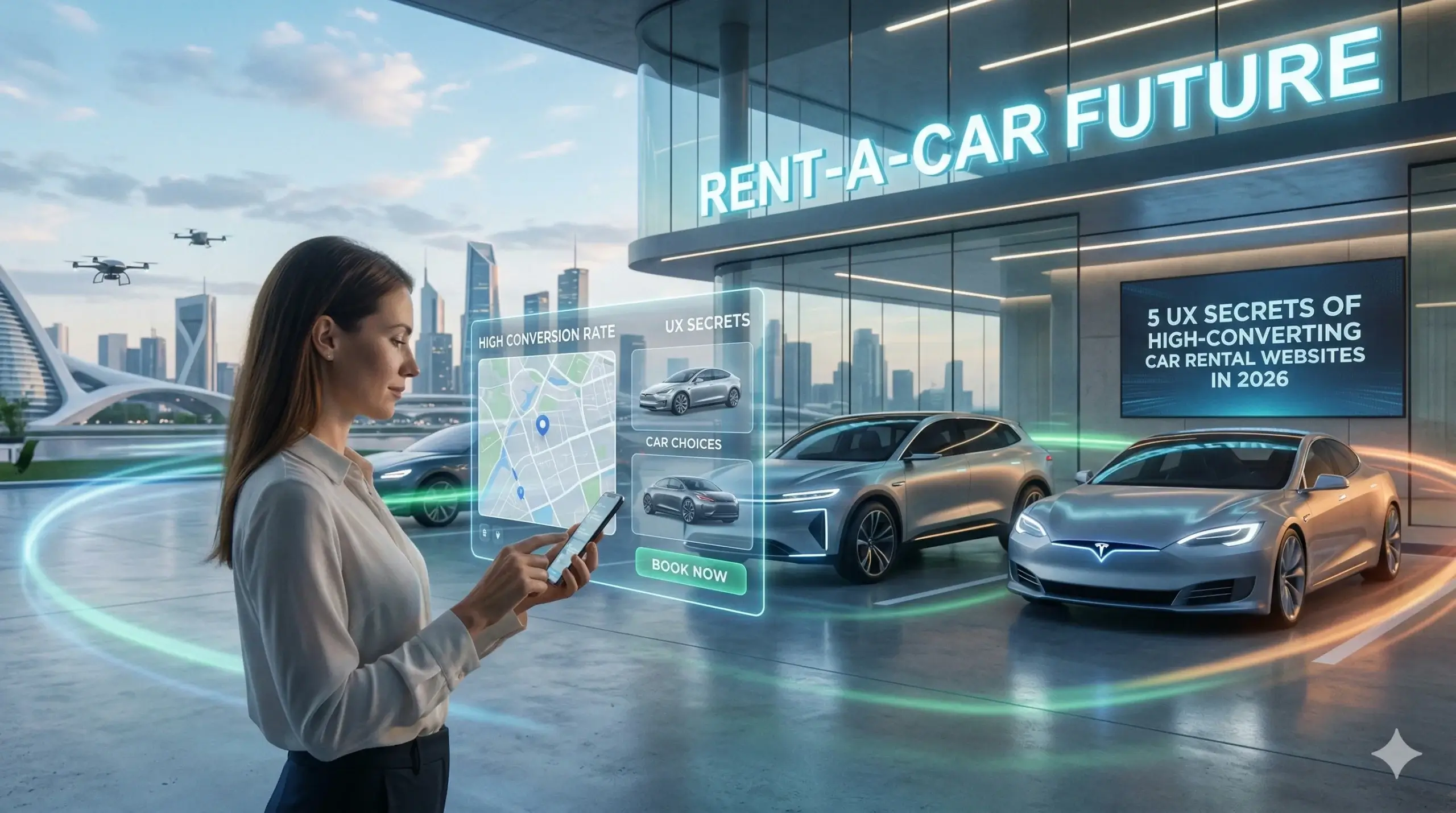
  • 5 UX Secrets of High-Converting Car Rental Websites in 2026

    5 UX Secrets of High-Converting Car Rental Websites in 2026

    In 2026, a car rental website that simply “looks nice” is a liability. For business owners, high traffic means nothing if your bounce rate is climbing and your “Book Now” button remains untouched. Most independent rental agencies lose 60-70% of potential revenue due to “friction”—the technical and psychological barriers that prevent a user from completing a reservation.

    To scale in a competitive automotive market, your website must evolve from a static brochure into a high-performance conversion engine. Here are the five UX secrets driving industry leaders this year.

    1. The “Two-Click” Booking Philosophy

    The modern traveler expects immediacy. If a user has to navigate through three pages just to see vehicle availability, they will leave for a competitor. High-converting car rental website design prioritizes a “Search-to-Selection” flow that requires minimal cognitive load.

    • The Solution: Implement a persistent, simplified booking widget on the homepage hero section.
    • Technical Depth: Use “Type-ahead” API integration for location fields and pre-populated date pickers. Reducing keystrokes directly correlates with lower abandonment rates. Your car booking system should feel like an extension of the user’s thought process, not a hurdle.

    2. Mobile-First “Thumb-Zone” Optimization

    With over 70% of car rental searches occurring on mobile devices, desktop-first design is obsolete. However, 2026 standards go beyond “responsiveness.” High-converting sites optimize for the “thumb-zone”—the area of a smartphone screen easiest to reach with one hand.

    • The Solution: Place critical CTAs (Call to Actions) and filter toggles within the bottom third of the screen.
    • Business Benefit: This reduces physical friction, making it easier for users to browse your fleet while on the go, significantly increasing mobile conversion rates for last-minute rentals.

    3. High-End Aesthetics Grounded in Performance

    Visuals sell the experience, but heavy unoptimized imagery kills SEO. In automotive website development, the “Digital Trace” angle focuses on the intersection of high-end aesthetics and technical speed.

    • The Secret: Use WebP or AVIF image formats and lazy-loading scripts to ensure your high-resolution fleet photos don’t tank your Core Web Vitals.
    • The Impact: Google’s algorithm prioritizes page speed. A site that loads in under 2 seconds isn’t just a luxury; it’s a requirement for ranking in Local SEO and retaining impatient US consumers.

    4. Radical Transparency & Trust Signals

    US consumers are increasingly wary of hidden fees (insurance, cleaning, or young driver surcharges) revealed only at the final checkout stage. This “sticker shock” is the #1 cause of cart abandonment.

    • The Solution: Use “All-in” pricing models or dynamic price breakdowns that update in real-time as users select add-ons.
    • ADA Compliance: Ensure your pricing tables and forms are fully accessible. In the US, ADA compliance is not optional. Proper ARIA labeling and keyboard navigation ensure you reach 100% of your audience while protecting your business from legal risks.

    5. Micro-Interactions and Social Proof Integration

    Trust is the currency of the rental industry. Generic “Testimonial” pages are ignored. Instead, high-converting sites embed social proof into the UX journey.

    • The Strategy: Integrate micro-interactions, such as “3 people booked this vehicle in the last 24 hours” or live Google Review snippets directly on the vehicle selection page.
    • The Result: These small psychological triggers validate the user’s choice at the exact moment of decision-making, bridging the gap between “just looking” and “confirmed booking.”

    Optimize Your Digital Trace for Growth

    Is your current website a high-performance asset or a silent drain on your marketing budget? At Digital Trace, we specialize in bridging the gap between sophisticated automotive design and raw technical performance.

    Stop losing leads to outdated UX. Book Your Free Website Audit & Consultation

    Let’s analyze your current metrics and build a digital presence that drives measurable ROI for your rental business.
  • The Fitment Factor: How Year-Make-Model Lookups Increase Automotive AOV by 40%

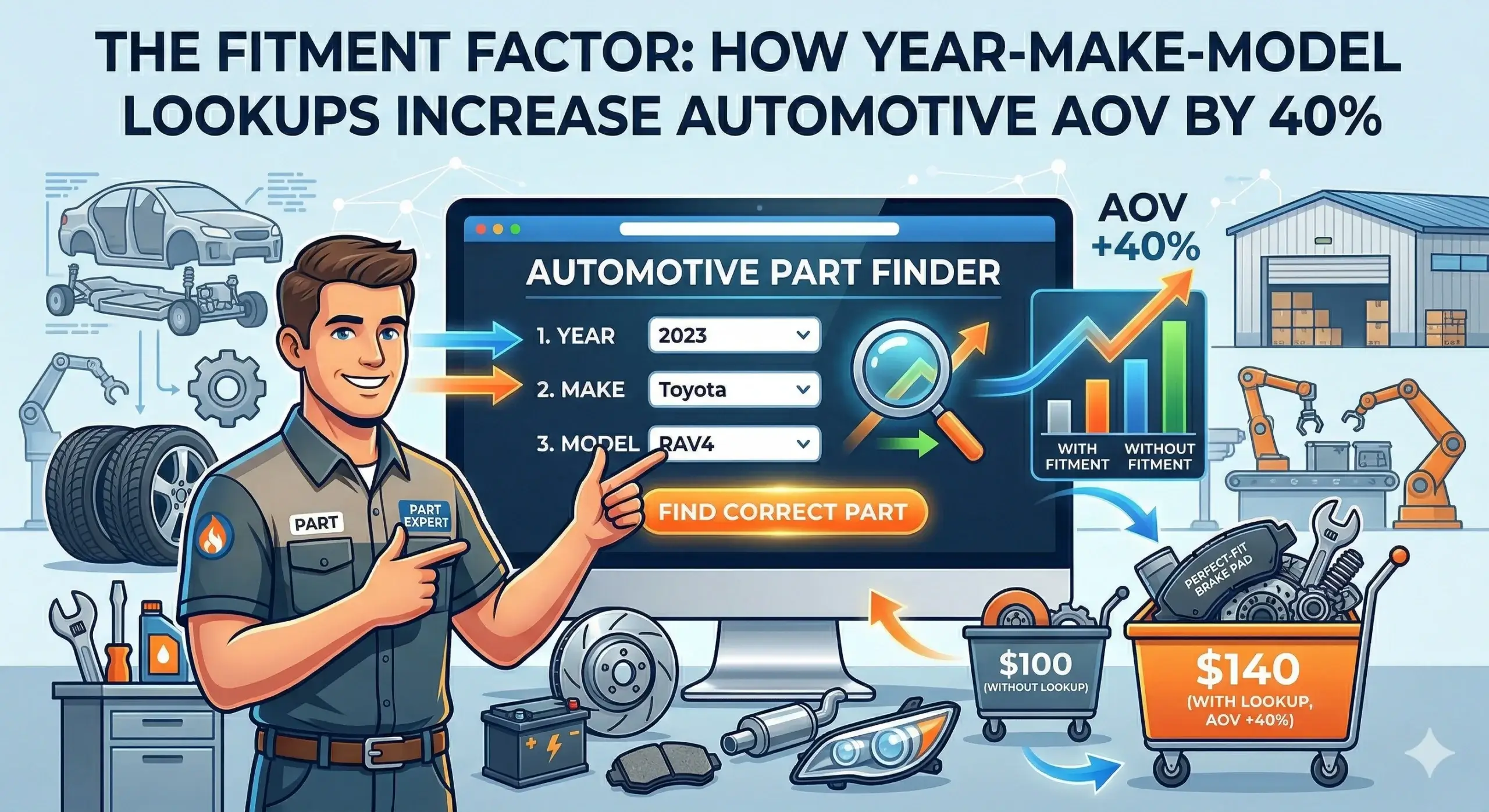
    The Fitment Factor: How Year-Make-Model Lookups Increase Automotive AOV by 40%

    In the automotive ecommerce world, “close enough” is a conversion killer. For US small business owners, the biggest hurdle isn’t just getting traffic; it’s overcoming the “Fitment Fear.” When a customer is unsure if a part fits their specific vehicle, they do one of two things: they bombard your support team with questions, or they leave for a competitor who provides certainty.

    The Year-Make-Model (YMM) lookup is not just a search tool—it is a psychological trigger that builds immediate trust, reduces return rates, and, most importantly, increases Average Order Value (AOV) by up to 40%.

    Why Precision Fitment Drives AOV

    High AOV is driven by confidence. When a car online store utilizes a robust fitment data integration, the shopping experience shifts from “search” to “solution.”

    1. The Power of “Complete the Kit”

    When a user selects their 2022 Ford F-150 via a YMM filter, your website can programmatically suggest related items—gaskets, bolts, or fluids—that are guaranteed to fit that specific trim. This cross-selling strategy is significantly more effective than generic “you may also like” widgets because it is rooted in technical necessity.

    2. Reducing Cart Abandonment

    Uncertainty leads to hesitation. By implementing a “Green Check” fitment confirmation on the product page, you remove the primary friction point in the automotive buyer’s journey. Precision eliminates the mental barrier of “What if I have to ship this back?”

    The Technical Backbone: ACES and PIES Data

    To compete in the US market, your car parts website design must go beyond aesthetics. It requires deep integration with industry standards like ACES (Aftermarket Catalog Exchange Standard) and PIES (Product Information Exchange Standard).

    • ACES manages the “fitment” (What vehicle does this fit?).
    • PIES manages the “specs” (What color is it? How much does it weigh?).

    At Digital Trace, we treat these data points as the foundation of your SEO. When your site architecture is built around structured fitment data, Google recognizes your pages as highly relevant to specific long-tail searches (e.g., “performance brake pads for 2019 Chevy Silverado”), driving high-intent traffic directly to your checkout.

    Performance: Speed vs. Complexity

    Adding a complex YMM database can often slow down a website. In ecommerce, page speed is a direct correlation to revenue. A one-second delay in load time can result in a 7% reduction in conversions.

    A senior-level build ensures that your fitment lookup is handled via optimized API calls or lightweight asynchronous loading. This ensures that while the user filters through thousands of SKUs, the interface remains snappy and responsive—a critical factor for Mobile-First Indexing.

    US Market Standards: Compliance and Growth

    Operating an automotive brand in the US requires adherence to specific digital standards that many generic agencies overlook:

    • ADA Compliance: Ensuring your search tools are accessible to all users is not just a best practice; it’s a legal necessity to avoid predatory litigation.
    • Local SEO Integration: For businesses with a physical storefront or warehouse, your online fitment data should sync with local inventory, capturing “near me” searches from DIYers and local mechanics.
    • UX for the Professional & Hobbyist: Your design must cater to both the professional mechanic who needs speed and the hobbyist who needs education.

    Beyond the Template: Why Custom Logic Wins

    Generic Shopify or WooCommerce templates are rarely equipped to handle the complexity of automotive fitment without significant bloating. A professional “Digital Trace” is one where the aesthetics reflect the quality of the parts you sell, while the backend operates with the precision of a high-performance engine.

    A custom-engineered automotive site doesn’t just look better; it functions as a 24/7 salesperson that never misquotes a part.


    Optimize Your Digital Trace

    Is your current website driving growth or causing friction? A high-performance automotive brand requires more than just a catalog; it requires a conversion engine.

    Contact Digital Trace today for a free website audit. Let’s analyze your current fitment logic and identify the technical gaps standing between you and a 40% increase in AOV.