Category: Restaurants

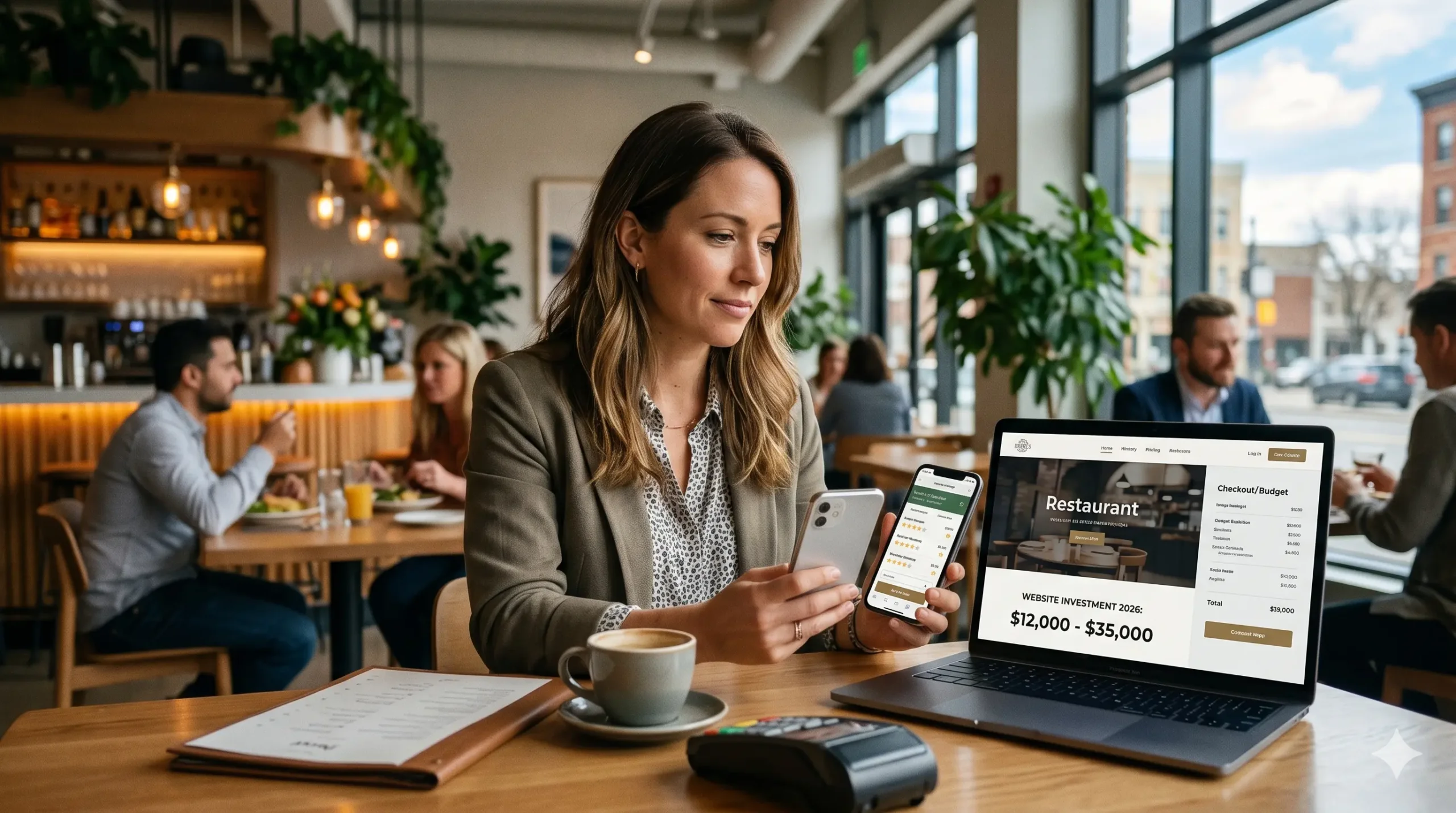
  • How Much Does a Restaurant Website Cost in 2026? (And Why It’s Your Best Investment)

    How Much Does a Restaurant Website Cost in 2026? (And Why It’s Your Best Investment)

    You’ve got a great restaurant. The food is good, regulars love you, and your Google reviews aren’t bad. But your phone isn’t ringing the way it should be — and when you look at your website, something feels off. You just can’t put your finger on what.

    Here’s what’s actually happening: people are finding you online, landing on your site, and leaving before they ever scroll down to your phone number or menu. Not because your food looks bad. Because your site isn’t doing its job.

    Most restaurant owners think of a website like a framed photo on the wall — something nice to have, set it and forget it. The restaurants getting consistent reservations and takeout orders treat their website like their best server: always on, always presenting well, always moving guests toward a decision.

    This guide breaks down what a restaurant website actually costs in 2026, what you get at each price point, and — more importantly — what a high-performing restaurant homepage design looks like when it’s built to bring in real revenue.


    Why Most Restaurant Websites Cost More Than You Think (Just Not In The Way You Expect)

    The upfront price of a restaurant website ranges widely — anywhere from $500 on a freelance platform to $10,000+ from a full-service agency. But the number that actually matters isn’t what you pay to build the site. It’s what you lose every month when the site doesn’t work.

    Think about it this way: if your website gets 800 visitors a month and only 1% of them call or reserve a table, you’re getting 8 leads. If the site were converting at 3% — which is realistic for a well-designed restaurant site — you’d be getting 24. That’s 16 missed opportunities every single month, often worth hundreds to thousands in revenue.

    A cheap website that looks “fine” but converts poorly isn’t saving you money. It’s quietly costing you customers while you’re busy in the kitchen.


    What You Actually Get at Each Price Point

    Understanding the tiers helps you make a smart decision — not just the cheapest one.

    $500–$1,500 — DIY or Entry-Level Freelancer

    • A basic template with your name and address dropped in
    • Usually no mobile optimization (more on why that kills you below)
    • No online ordering integration, no local SEO setup, no speed optimization
    • Fine for a placeholder. Not fine if you want it to do any work for you.

    $2,000–$5,000 — Mid-Range Web Designer

    • A more custom look and feel
    • May include basic menu layout and a contact form
    • Results vary wildly depending on the designer’s experience with restaurants
    • Often missing the performance and conversion strategy that turns visitors into guests

    $5,000–$12,000+ — Specialist Restaurant Web Design Agency

    • Custom design built around how restaurant customers actually behave online
    • Mobile-first builds (because 70%+ of food searches happen on a phone)
    • Integrated online ordering, reservation systems, and local SEO structure
    • Speed-optimized so your site loads before someone gives up and calls your competitor

    The agencies in the top tier — like Digital Trace, which specializes in websites built specifically for restaurants — focus on one thing above the design: results. That means calls, reservations, and online orders. Not just a site that looks nice in a mockup.


    The Real Reason Your Website Isn’t Bringing in Customers

    Your Site Loads Too Slowly

    When someone types “best tacos near me” at 6:45 PM on a Friday night, they’re hungry and they’re deciding fast. If your site takes more than 3 seconds to load, a large portion of those visitors are gone before they even see your menu.

    Slow-loading sites happen because of bloated image files, bad hosting, or templates that weren’t built with performance in mind. The fix is technical — but the impact is 100% a business problem. Fewer people see your menu means fewer people walk through your door.

    Your Menu Is Hard to Find or Read

    Your menu is the #1 reason someone visits your restaurant website. If it’s buried two clicks deep, uploaded as a PDF that doesn’t load on mobile, or styled in a font that’s impossible to read on a phone screen — you’ve lost them.

    A strong restaurant homepage design puts the menu front and center, loads instantly, and works perfectly on every device. That’s not a design preference. It’s what converts browsers into bookings.

    Google Doesn’t Know Enough About You to Trust You

    There’s a layer of behind-the-scenes information that tells Google: “This is a real restaurant, serving this cuisine, in this neighborhood, open these hours.” Without it — what’s called structured data or schema markup — Google is less confident about surfacing your business in local search results.

    You don’t need to understand how it works. You just need to know that your competitors who show up above you probably have it, and you probably don’t.


    💡 Pro Tip: Your Menu PDF Is Killing Your Mobile Traffic

    Uploading your menu as a PDF feels like the easy solution — and it is, for you. But for a hungry customer on a phone at dinner time, a PDF is a frustrating extra step that often doesn’t even load properly. The fix is a properly coded HTML menu page on your website. It loads instantly, works on every device, and Google can actually read and rank it. If your current site has a PDF menu, that’s one of the first things worth fixing.


    Before & After: What a Better Website Actually Changes

    The Situation: A family-owned Italian restaurant in Austin, Texas had been in business for 11 years. Great reputation locally, solid foot traffic on weekends. But their website was built in 2018 by a cousin who’d moved on, and it hadn’t been touched since. The menu was a PDF. The site took 7+ seconds to load on mobile. There was no online reservation option. Their Google Business Profile wasn’t linked correctly to the site.

    What Changed: Digital Trace rebuilt the site from scratch — mobile-first design, HTML menu with high-quality food photography, integrated OpenTable reservation widget, local SEO structure, and a load time under 1.5 seconds.

    The Result: Within 90 days, their site’s click-to-call rate doubled. Online reservation requests increased by over 60% month-over-month. They started appearing in the top 3 local results for “Italian restaurant Austin” — a search they’d never ranked for before.

    The restaurant didn’t change its food, its staff, or its prices. They changed what happened when someone found them online.


    Not sure if your restaurant site has these same issues? Get a free website audit — no obligation, just a clear picture of what’s costing you reservations and orders.


    What Makes a Restaurant Website Actually Work in 2026

    The best restaurant websites aren’t just pretty. They’re engineered around a simple question: What does a hungry person need to see in the first 5 seconds to decide to visit or order?

    Here’s what that looks like in practice:

    • A clear, compelling headline — not “Welcome to Our Restaurant.” Something that tells them exactly what you are and why it’s worth their time.
    • A high-quality hero image or short video — of your actual food, not stock photos
    • Your phone number visible immediately — not buried in a footer
    • Your hours and location above the fold — before any scrolling required
    • A one-click path to your menu — no PDFs, no extra steps
    • A reservation or order button that works flawlessly on mobile
    • Social proof — recent Google reviews or press mentions, pulled in automatically

    This is what good restaurant website design delivers — not just aesthetics, but a clear path from “I found you” to “I’m coming in tonight.”


    Your Path to More Leads: 5 Steps That Actually Move the Needle

    You don’t need to understand web design to take action. Here’s what the process looks like when you work with a specialist:

    1. Audit your current site — Find out where visitors are dropping off and what’s breaking on mobile. (You can start this today with a free website audit.)
    2. Fix your mobile experience first — Most restaurant searches happen on phones. If your site isn’t built mobile-first, everything else is secondary.
    3. Replace your PDF menu with a real menu page — This single change can meaningfully improve both your user experience and your Google visibility.
    4. Add local SEO structure — Get your site speaking Google’s language so it surfaces your restaurant for the right searches in your neighborhood.
    5. Connect your reservation and ordering tools — Remove every possible barrier between “I want to eat there” and “I just booked a table.”

    Each of these steps is something Digital Trace handles end-to-end — so you can stay focused on running your restaurant while the website does its job.


    FAQ: What Restaurant Owners Actually Ask Before Hiring a Web Agency

    Why am I not getting calls from my website even though I have one?

    Having a website and having a working website are two different things. The most common culprits are slow load speed, a poor mobile experience, no clear call-to-action, and missing local SEO signals. Most restaurant websites have at least two or three of these issues — often all of them.

    How do I know if my restaurant website is actually working?

    If you can’t tell you how many people visited your site last month, how many clicked your phone number, or how many clicked to your menu — your site isn’t set up to be measured, which means it’s not being managed. A working restaurant website has tracking in place so you know exactly what’s happening and what to improve.

    How long does it take to see results from a new restaurant website?

    Most restaurants see meaningful changes in local search visibility within 60–90 days of launching a properly built, optimized site. Immediate improvements — like higher click-to-call rates and more online orders — often happen within the first few weeks once the user experience issues are fixed.

    What makes a restaurant website different from a regular business website?

    Restaurant customers make fast, emotional decisions. They’re hungry, they’re looking on their phone, and they decide in seconds. A restaurant website needs to load instantly, show mouth-watering food imagery, surface your hours and menu immediately, and make reserving or ordering completely frictionless. Most general web designers don’t build for that specific behavior — restaurant-specialist designers do.

    Do I really need a fast website if my customers are mostly local?

    Yes — especially if they’re local. Local customers searching for “restaurants near me” are choosing between you and three competitors in the same moment. If your site loads in 6 seconds and a competitor’s loads in 1.5 seconds, they’re gone before you had a chance. Speed isn’t a luxury for high-traffic national sites. It’s a basic requirement for any restaurant that wants to win local searches.

    I’ve been burned by a web agency before. How is this different?

    That’s one of the most common things restaurant owners tell us. The difference comes down to specialization and accountability. Generic agencies build generic websites. Digital Trace focuses specifically on restaurant website development — which means the work is measured against one standard: are you getting more reservations, calls, and orders? Request a free audit and we’ll show you exactly what your current site is and isn’t doing before you make any decisions.


    Your Restaurant Deserves a Website That Works As Hard As You Do

    You’re putting everything into your food, your team, and your guests’ experience. Your website should be doing the same thing for you — 24 hours a day, 7 days a week, for every person who searches for a place to eat in your area.

    Right now, somewhere between dozens and hundreds of potential customers are finding your restaurant online every month. The question is: what happens next? Are they calling you, booking a table, placing an order — or are they clicking away to someone else?

    Find out exactly what your website is costing you with a free, no-obligation audit from Digital Trace. We’ll review your site, show you what’s working and what isn’t, and give you a clear picture of what a high-performing restaurant website could do for your business.

    No pressure. No jargon. Just honest answers.
    Get Your Free Restaurant Website Audit →

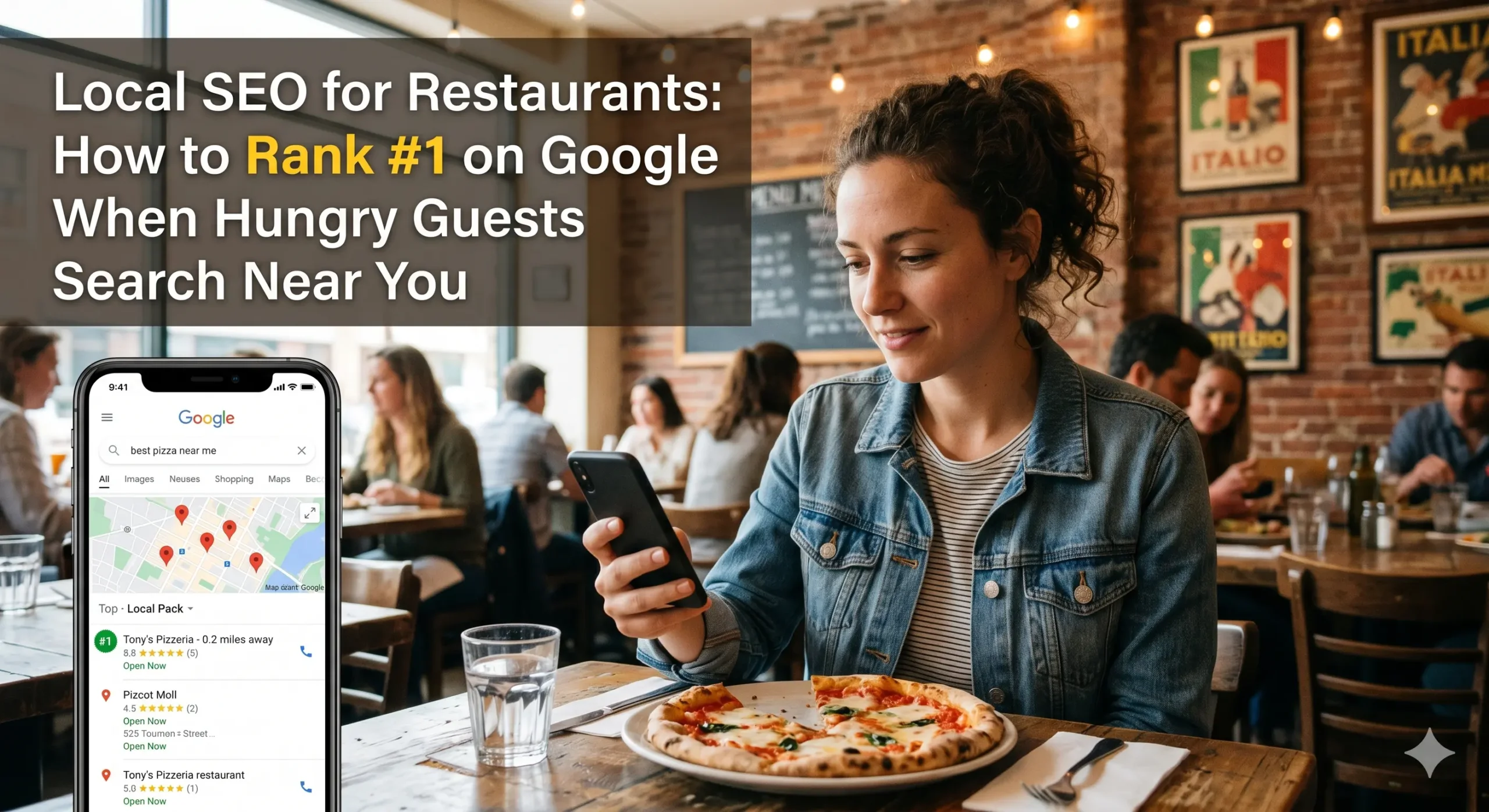
  • Local SEO for Restaurants: How to Rank #1 on Google When Hungry Guests Search Near You

    Local SEO for Restaurants: How to Rank #1 on Google When Hungry Guests Search Near You

    Picture this: someone is sitting two blocks from your restaurant, phone in hand, hungry, typing “best Italian near me.” Your competitor shows up. You don’t.

    That’s not a marketing problem. That’s a website problem.

    Most restaurant owners assume Google ignores them because they’re small, or because they don’t run ads. The real reason is quieter — and more fixable. Your restaurant site design is either helping Google trust your business enough to show it, or it’s giving Google reasons to skip you entirely.

    This guide breaks down exactly what’s happening behind the scenes, what it’s costing you in empty tables and missed phone calls, and what a properly built restaurant website actually looks like.


    Why Google Doesn’t Show Your Restaurant (Even to People Nearby)

    Google’s job is to answer a hungry person’s question with confidence. When it looks at your website, it’s asking: Can I trust this place is real, open, and worth recommending?

    If your site is slow, hard to navigate on a phone, or missing basic information, Google hedges its bet — and shows a competitor instead. That competitor probably isn’t better than you. They just have a website that gives Google fewer reasons to doubt them.

    The fix isn’t magic. It’s web design for restaurants done with Google’s expectations in mind, not just what looks pretty on a desktop screen.


    Your Website Is Like Your Host Stand — First Impressions Are Everything

    Think about the last time you walked into a restaurant and the host stand was empty, the menu was water-stained, and nobody acknowledged you for two minutes. You probably considered leaving.

    That’s what a bad restaurant website does to a visitor — except online, they actually do leave. Usually within three seconds.

    When someone finds your site from Google:

    • If it loads slowly, they hit the back button before they see your phone number
    • If it isn’t mobile-friendly, your menu looks like a tangled mess on their screen
    • If your hours aren’t front and center, they assume you might be closed and call someone else

    The best restaurant web designers build sites where a guest can find your address, view your menu, and make a reservation within ten seconds — on their phone, in poor cell signal, at 7 PM on a Friday.


    The Hidden Reasons Your Phone Isn’t Ringing

    Your Site Loads Too Slowly

    Most restaurant websites carry way too many large images. Beautiful food photography matters — but when those images aren’t optimized, your site takes five or more seconds to load. Most visitors are gone by second three.

    Google also measures load speed and uses it as a ranking signal. A slow site gets buried — not because your food isn’t great, but because your restaurant web page design is technically weighing itself down.

    A properly built site compresses images without losing quality, loads the most important content first (your name, phone number, and CTA), and performs fast on mobile networks — not just your office WiFi.

    Google Doesn’t Know Enough About Your Business

    There’s a layer of invisible information websites can include that tells Google exactly what type of business you are, where you’re located, what hours you keep, and what cuisine you serve. It’s called structured data.

    Without it, Google has to guess — and when Google isn’t sure, it doesn’t take the risk of showing you. Adding this information to your restaurant homepage design is one of the fastest ways to improve your visibility in local search results.

    Your Menu Isn’t Readable by Google

    Here’s one most restaurant owners never hear: if your menu is a PDF, an image, or embedded from a third-party service, Google can’t read it. That means every search like “restaurants with wood-fired pizza near me” — where your menu is the proof — won’t surface your site.

    A proper restaurant menu design website has menu items in actual text on your pages, so Google can match your food to what people are searching for. That’s free, perpetual discoverability that most restaurants are leaving on the table.


    💡 Pro Tip

    One of the most common mistakes restaurant owners make is linking their menu as a PDF download. It feels professional — but Google can’t index a PDF the way it indexes a webpage. Every item on that PDF is invisible to search. Move your menu into an actual webpage with text, organized by category, and you’ll start showing up in searches you never appeared in before. A good restaurant website designer will handle this automatically.


    What a High-Performing Restaurant Website Actually Does

    The difference between a restaurant site that generates reservations and one that just “exists” comes down to a few specific decisions:

    • Mobile-first design — over 80% of local searches happen on a phone. If your site isn’t built for mobile, it’s built for no one.
    • Click-to-call phone numbers — your number should be tappable from every page, without the visitor having to find it
    • Fast-loading food photography — visual and appealing, without slowing the page down
    • Google Business Profile integration — your website and your Google listing should reinforce each other
    • Location-specific pages — if you have multiple locations, each one needs its own page with its own address, hours, and content

    This is what Digital Trace builds for restaurant businesses. Not sites that look good in a portfolio screenshot — sites that show up in search and turn visitors into guests.


    Before & After: What a Real Turnaround Looks Like

    The situation: A family-owned Italian restaurant in Austin, Texas had been in business for eleven years. Great food, loyal regulars — but their website hadn’t been updated since 2017. It loaded in seven seconds on mobile. Their menu was a PDF. Their Google Business Profile pointed to a website that didn’t mention their hours or their new outdoor patio.

    What changed: Their site was rebuilt with a mobile-first layout, an optimized text-based menu organized by course, click-to-call buttons on every page, and proper structured data added behind the scenes. Their Google Business Profile was synced with the new site’s content.

    The result: Within 60 days, they were ranking in the top three results for four high-intent local searches. Online reservation requests increased by roughly 65%. The owner’s words: “I thought people just weren’t searching for us. Turns out they were — we just weren’t showing up.”


    Not sure if your restaurant website has these issues? Get a free website audit — no obligation, just a clear picture of what’s costing you reservations and calls.


    Your Path to More Reservations: 5 Steps That Actually Work

    1. Check your site on your phone — right now. Open your restaurant’s website on your personal phone using cellular data (not WiFi). Count how long it takes to load. If it’s more than three seconds, customers are leaving before they see your menu.

    2. Find out if your menu is visible to Google. Copy a specific dish name from your menu and search it on Google along with your city. If your site doesn’t appear, your menu may be locked in a PDF or image that Google can’t read.

    3. Confirm your Name, Address, and Phone number are consistent everywhere. Your website, Google Business Profile, Yelp listing, and Facebook page should all show identical information. Even small differences (St. vs Street) can confuse Google and hurt your local ranking.

    4. Add a clear call to action above the fold. The first thing someone sees on your site — before they scroll — should be your phone number, your hours, and a button that says “Make a Reservation” or “Order Online.” Don’t make them dig for it.

    5. Work with a restaurant web design agency that understands local SEO. A site that looks great but doesn’t rank is just an expensive brochure. The right restaurant website development company builds both at once — design that converts and structure that ranks.


    Frequently Asked Questions

    Why am I not getting calls from my website even though I have one?

    Having a website and having a website that works are two different things. Most restaurant sites have at least one silent problem — slow loading, a PDF menu, missing location data — that stops Google from showing them to local searchers. A free audit will usually surface the issue in minutes.

    How do I know if my restaurant website is actually working?

    The honest answer: if you’re not getting regular inquiries, reservation requests, or direction clicks from your site, it probably isn’t working. A properly optimized site should be your most consistent source of new customer inquiries — not an afterthought.

    How long does it take to see results from a redesigned restaurant website?

    Most restaurants see measurable improvement in local search rankings within 30 to 60 days of launching a properly built site. The technical improvements — speed, structured data, mobile performance — take effect quickly. Content-driven results build over time but compound.

    What makes a restaurant website different from a regular business website?

    Restaurants have specific needs that generic websites don’t address: a readable, indexable menu, reservation and ordering integrations, location-specific pages for multi-location businesses, and mobile-first design for on-the-go searchers. A restaurant web design agency that has built sites specifically in the food and hospitality space will know these requirements without you having to explain them.

    Do I really need a fast website if my customers are mostly local?

    Local customers are more reliant on mobile browsing — they’re searching while they’re out, often in areas with variable cell coverage. A slow site hurts you more with local searchers, not less. Google also factors page speed directly into local rankings.

    How do I know if my restaurant website has these specific problems?

    The fastest way is to get a free website audit from Digital Trace. The audit looks at your site’s speed, mobile experience, menu visibility, local SEO signals, and conversion setup — and gives you a plain-English summary of what’s costing you leads, with no obligation to do anything with it.


    Ready to Stop Losing Reservations to a Broken Website?

    Every day your restaurant site isn’t built for local search is a day you’re handing customers to whoever shows up in that top spot instead of you.

    Digital Trace specializes in building and optimizing restaurant websites across the US — sites that load fast, rank well, and turn hungry searchers into paying guests. There’s no guesswork, no generic templates, and no vague promises about “increasing your visibility.”

    Get your free website audit →

    Find out exactly what’s costing you reservations, calls, and revenue — and what it would take to fix it. No sales pressure. Just a clear, honest look at your site from people who build restaurant websites for a living.

  • Why Your Restaurant Is Losing Customers to Competitors With Better Websites

    Why Your Restaurant Is Losing Customers to Competitors With Better Websites

    You put real effort into your food, your staff, and your dining room. But every night, people in your area open Google, search for somewhere to eat, click on your competitor’s website — and book a table there instead of yours.

    It’s not because their food is better. It’s because their website is.

    Most restaurant owners assume their website is “fine.” It exists. It has a menu. It has an address. But “fine” isn’t doing any work for you — it’s actively sending customers somewhere else. Poor restaurant web page design is one of the most expensive, invisible problems in the industry, and almost nobody realizes it until they do the math.

    This post breaks down exactly what’s happening, why it’s happening, and what you can do about it.


    Your Website Is the New Curb Appeal — And Right Now It May Look Closed

    Think about what happens before a guest sets foot in your door. They don’t walk past and peek in the window anymore. They search on their phone, scan results in 10 seconds, and make a judgment before they’ve seen a single plate of food.

    Your website is the first impression. If it looks outdated, loads slowly, or makes it hard to find your hours, that potential customer is already clicking on the restaurant down the street.

    A badly designed restaurant site is like having a dark, unmarked entrance on a busy block — even if everything inside is outstanding, people aren’t going to risk it.

    Here’s what’s costing you:

    • A homepage that doesn’t show your food, your vibe, or your story in the first five seconds
    • A menu buried three clicks deep — or worse, a PDF that won’t load on mobile
    • No visible phone number or “Reserve a Table” button above the fold
    • Photos that were taken in bad lighting in 2019

    Every one of these issues costs you real reservations.


    Why Your Phone Isn’t Ringing From Google

    When someone searches “Italian restaurant near me” or “best brunch spots in [your city],” Google has to decide which restaurants to show. The decision isn’t random — it’s based on signals Google reads from your website.

    If your site is slow, outdated, or missing key information, Google quietly deprioritizes it. You won’t get a warning. You just won’t show up.

    The technical term is “local SEO,” but the plain-English version is: Google doesn’t trust your website enough to recommend your restaurant to people searching nearby.

    Common reasons this happens:

    • Your site takes more than 3 seconds to load (most people leave before it finishes)
    • Google can’t confirm your address, hours, and category from your site
    • Your site isn’t mobile-optimized — and most restaurant searches happen on phones
    • You have no recent, indexed content signaling that your business is active

    This is fixable. But it requires more than a fresh coat of paint on the homepage.


    The 3-Second Test Your Website Is Probably Failing

    There’s a simple test every restaurant website should pass: a stranger should be able to look at your homepage for three seconds and know exactly what you serve, where you are, and how to book or order.

    Pull up your own site right now. Can someone tell in three seconds:

    • What type of food you serve?
    • Whether you’re open tonight?
    • How to make a reservation or place an order?

    If the answer to any of those is “no” or “maybe,” you’re losing customers every single day.

    The best restaurant website design solves this with intention — the right photo at the top, a clear headline, visible CTAs, and a menu that’s actually readable on a phone. It’s not about being flashy. It’s about being instantly clear.

    💡 Pro Tip: One of the most common mistakes restaurant owners make is uploading their menu as a PDF. It looks like an easy solution, but PDFs don’t load reliably on mobile, can’t be read by Google, and are often impossible to zoom without zooming the whole page. Replace your PDF menu with a properly formatted HTML menu page — it’s easier for customers to use and dramatically better for your search rankings.


    What a Competitor With a Great Website Is Doing That You Aren’t

    You’ve probably noticed a restaurant in your area that seems to always be busy — even if your food is just as good (or better). Chances are, their website is doing a lot of heavy lifting you don’t see.

    Here’s what a well-built restaurant site actually does:

    • Loads in under 2 seconds — so customers don’t bounce before they see your menu
    • Shows your best dishes visually — high-quality photos that make people hungry before they’ve read a word
    • Makes reservations frictionless — OpenTable, Resy, or even a simple call button integrated directly on the homepage
    • Ranks for local searches — because the site is structured in a way Google can read and trust
    • Converts on mobile — because more than 70% of restaurant searches happen on a phone

    The gap between a site that “exists” and one that actually wins you business is exactly where Digital Trace builds restaurants websites. Their team focuses specifically on what drives reservations and orders — not just what looks good in a portfolio screenshot.


    Real Results: What Happens When You Fix the Website

    The Scenario: A mid-size Italian restaurant in Chicago had been open for six years. Good reviews on Yelp, solid regulars, but the owner noticed weeknight covers were dropping. He assumed it was competition from a new spot two blocks away.

    When Digital Trace ran an audit, the picture became clear fast:

    • The site took 7+ seconds to load on mobile
    • The menu was a PDF last updated in 2022
    • There was no visible reservation button on the homepage
    • Google couldn’t read the restaurant’s address and hours from the site structure
    • The homepage photo was a generic stock image of pasta — not their actual food

    What changed: A redesigned site with fast hosting, a mobile-first layout, proper local SEO structure, updated photography, and an integrated reservation flow.

    The result: Within 90 days, the restaurant was ranking on the first page for three high-intent local searches. Weeknight reservations increased by 40%. The owner also noticed fewer calls asking “are you still open?” — because the hours were now clearly visible without digging.

    The food didn’t change. The kitchen didn’t change. The website did.


    Not sure if your restaurant’s website has these issues? Get a free website audit — no obligation, just a clear picture of what’s costing you reservations and revenue.


    Your Path to More Customers: 5 Steps That Actually Move the Needle

    You don’t need to understand code to understand what a better website does for your business. Here’s the straightforward path:

    1. Audit your current site honestly. Load it on your phone — not your desktop. Is it fast? Is it clear? Is it easy to find your menu and make a reservation? If you’re hesitating on any of those, that’s your answer.
    2. Fix the mobile experience first. More than 70% of people searching for restaurants are on their phones. If your site is frustrating on mobile, you’re losing the majority of potential customers before they even see your menu.
    3. Replace that PDF menu. Build a real, readable, searchable menu page. Your customers will thank you, and Google will too.
    4. Add a clear, prominent CTA. Every page of your site — especially the homepage — should have a visible “Reserve a Table,” “Order Online,” or “Call Us” button. Make it impossible to miss.
    5. Work with a team that understands restaurants, not just websites. Generic web design agencies build generic websites. A restaurant website development company that specializes in the food industry knows what drives covers, what kills conversions, and what Google actually needs to rank you locally.

    Frequently Asked Questions

    Why am I not getting calls or reservations from my website?

    The most common reason is visibility — your site isn’t showing up when people search for restaurants like yours nearby. The second reason is friction — people land on your site but can’t quickly find your menu, hours, or a way to book. Both problems are fixable, but they require changes beyond just updating your homepage photo.

    How do I know if my restaurant website is actually working for me?

    If you can’t answer “how many reservations came from my website this month,” your site isn’t working hard enough. A functioning restaurant site should be traceable — you should be able to see how many people visited, how many clicked your reservation button, and which searches brought them there. If you don’t have that visibility, start with a free audit to see exactly where your site stands.

    How long does it take to see results from a new or redesigned website?

    Most restaurants see measurable improvements in search visibility within 60–90 days of launching a properly built site. Conversion improvements — more calls, more reservations — often show up faster because they don’t depend on Google catching up. The key is that the work needs to be done right from the start.

    What makes a restaurant website different from a regular small business website?

    Restaurants have unique conversion goals — a reservation, a phone call, an online order — and unique content needs, like a readable menu, photography that creates appetite, and hours that are immediately visible. A site built for a law firm or a plumber won’t serve a restaurant’s customers. The structure, the design priorities, and the local SEO strategy all need to be built with the dining experience in mind.

    Do I really need a fast website if my customers are local anyway?

    Yes — especially because they’re local. Local customers are searching on their phones while they’re already out, often deciding where to eat in the next 30–60 minutes. A site that takes five seconds to load on a mobile connection will lose that customer to a faster competitor before your homepage even appears. Speed isn’t a luxury. For restaurants, it’s a reservation.

    What if I already paid for a website — do I have to start over?

    Not always. Many restaurant sites have a solid foundation but need targeted improvements: faster hosting, a rebuilt menu page, a better mobile layout, or basic local SEO fixes. A proper audit will tell you what’s actually broken and what’s working so you only fix what needs to be fixed. That’s exactly what Digital Trace’s free audit is designed to show you.


    Stop Guessing — Find Out Exactly What Your Website Is Costing You

    Every week your restaurant site has these problems is another week of reservations going to the competitor down the street. The good news: this is one of the most fixable problems in your business.

    Digital Trace specializes in building high-performing websites for restaurants across the US — designed to rank locally, convert on mobile, and drive the reservations and orders that keep your dining room full.

    There’s no guesswork, no long-term commitment to start, and no obligation. Just a clear, honest look at what’s working, what isn’t, and what it would take to fix it.

    Get your free restaurant website audit →

    Find out exactly where you’re losing customers — and what it’ll take to get them back.

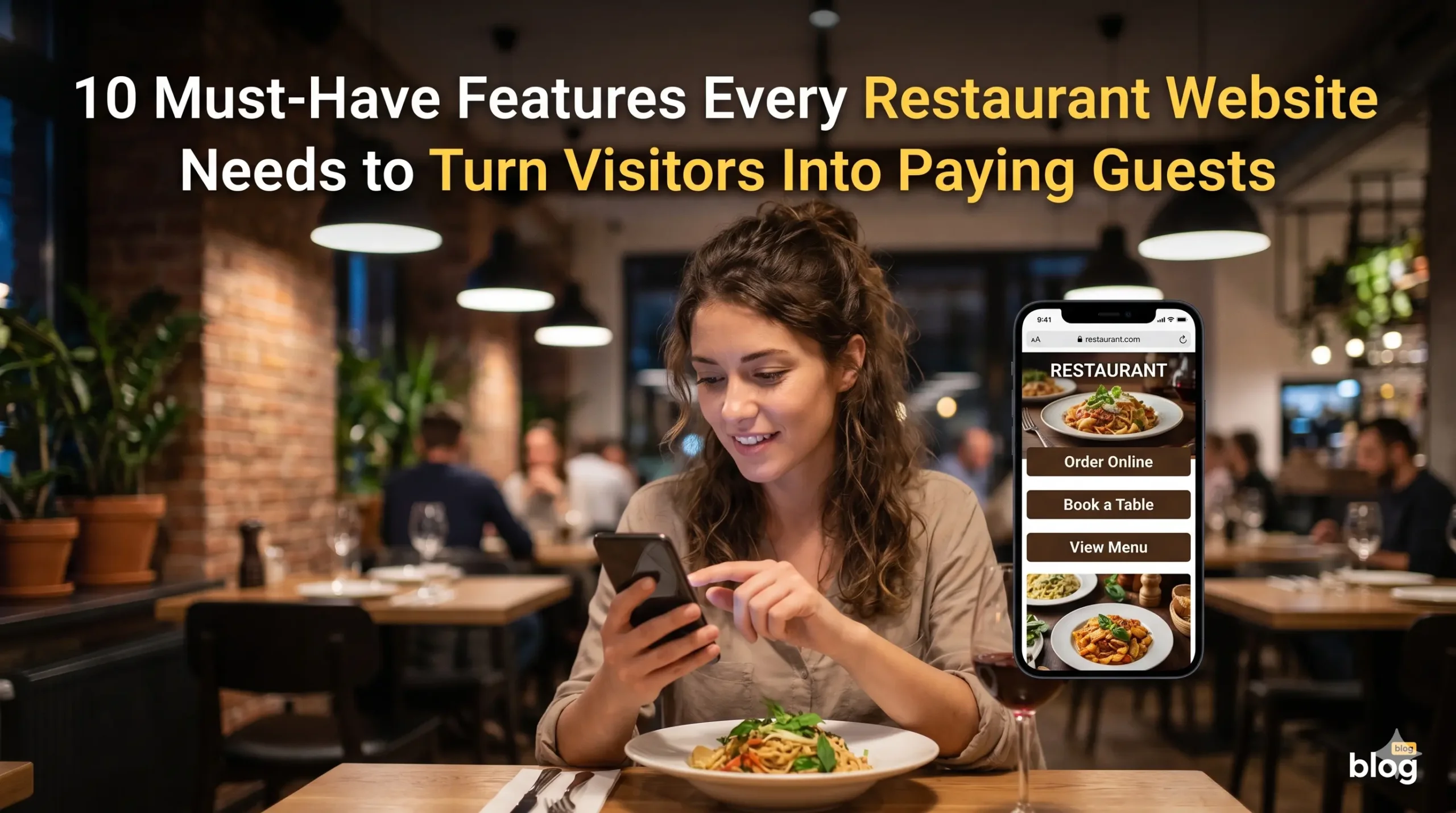
  • 10 Must-Have Features Every Restaurant Website Needs to Turn Visitors Into Paying Guests

    10 Must-Have Features Every Restaurant Website Needs to Turn Visitors Into Paying Guests

    Picture this: someone searches “best Italian restaurant near me” on a Friday night. Your restaurant shows up. They click your website. Within eight seconds, they’ve hit the back button and booked a table at your competitor.

    That’s not a hypothetical — it’s happening to restaurants across the US every single day. Most owners assume the problem is their marketing budget or their Google ranking. The real problem is almost always the website itself.

    A restaurant website isn’t just a digital menu card. It’s the first impression you make before a single plate hits the table — and if it’s slow, confusing, or missing the right information, hungry visitors will close the tab faster than a bad Yelp review spreads.

    The good news? The fixes are specific and proven. Here are the 10 features that separate a restaurant website that fills seats from one that quietly drives customers away.


    1. A Homepage That Answers the Three Questions Guests Ask First

    When someone lands on your site, they have three questions: What kind of food is this? Where are you? Are you open right now? If your homepage doesn’t answer all three in the first scroll, you’ve already lost them.

    Most restaurant homepages bury this information. A beautiful hero image with no location, vague taglines like “A dining experience like no other,” and a navigation menu that requires three clicks to find your hours — all of this kills conversions before they start.

    A well-built restaurant homepage design puts your cuisine type, neighborhood or city, and hours (or an “Open Now” indicator) front and center. No hunting required.


    2. A Menu That’s Actually Usable on a Phone

    Here’s the most common mistake in restaurant web page design: a PDF menu.

    PDFs don’t load well on mobile. They’re impossible to zoom and scroll without frustration. Google can’t read them. And when you update your menu, guests are left looking at outdated pricing and dishes you no longer serve.

    Your menu needs to be built as actual web content — organized by category, readable on any screen, and easy to update. If a guest has to pinch-and-zoom to read what a dish costs, they’re already annoyed before they’ve ordered.

    Over 70% of restaurant website traffic comes from smartphones. A mobile-unfriendly menu isn’t just a design problem — it’s a revenue problem.


    3. A Clear, One-Tap Reservation or Booking System

    Every extra step between “I want to eat there” and “I have a reservation” is a step where you lose someone.

    If your reservation process requires guests to call during business hours, fill out a contact form, or navigate to a third-party site that doesn’t match your branding, you’re creating friction that sends diners somewhere easier.

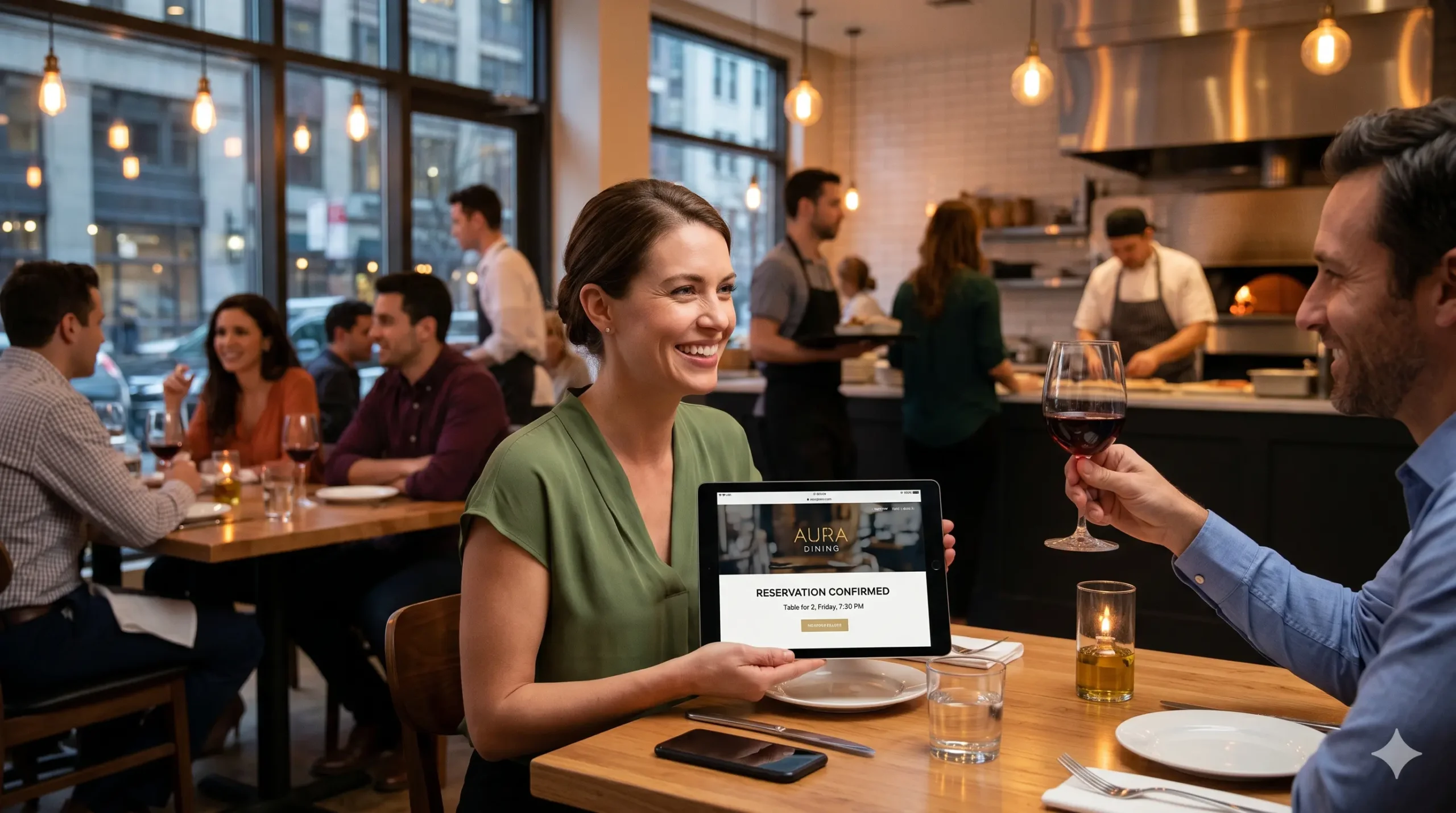
    The best restaurant web design integrates booking directly into the site — visible on the homepage, easy to complete in under a minute, and optimized for mobile. Whether you use OpenTable, Resy, or a direct system, the button needs to be impossible to miss.


    4. A Site That Loads in Under Three Seconds

    Think about your busiest Friday night. Now imagine that every guest who walked through your door turned around and left before being seated — simply because the wait was too long.

    That’s what a slow website does. Studies consistently show that most mobile users leave a site that takes longer than three seconds to load. They don’t wait. They leave, and they go to a competitor who was faster.

    Slow websites happen for a few common reasons: oversized images, cheap hosting, and websites built on bloated templates not optimized for performance. A properly built restaurant site compresses images without sacrificing quality, uses fast hosting, and is built with speed as a priority — not an afterthought.

    At Digital Trace, every restaurant website we build is performance-tested before it goes live.


    5. Location Details That Work With Google, Not Against It

    You can’t afford for Google to be confused about where you are.

    Many restaurant websites have location information buried in the footer, formatted inconsistently, or missing entirely from the backend code. When that happens, Google has a harder time connecting your site to local search results — meaning someone searching “dinner spots in [your city]” may never see you.

    The fix involves something called structured data markup — a layer of code that tells Google your exact address, hours, cuisine type, and phone number in a format it can read with confidence. It’s invisible to visitors but critical for search visibility.

    This is one of the first things a good restaurant web design agency checks and corrects.


    💡 Pro Tip

    The #1 reason restaurants don’t show up in local searches has nothing to do with their Google Business Profile.

    Most restaurant owners spend time optimizing their Google Business Profile and ignore what’s happening on the website itself. But Google cross-references your site and your GBP. If your website has inconsistent NAP data (Name, Address, Phone) — different formats in different places — it quietly undermines your local search rankings. Make sure every mention of your contact info across your entire website is formatted identically.


    6. Professional Food Photography That Makes People Hungry

    A restaurant’s website is the only marketing that lets you make someone literally crave your food before they’ve tried it. But only if your photos are good.

    Stock photos of generic pasta dishes and salads actively hurt you. They signal that you’re not confident enough in your own food to show it. Guests notice.

    High-quality food photography doesn’t have to cost a fortune, but it has to be real. If professional photography isn’t in the budget yet, even well-lit smartphone photos of your actual dishes outperform generic stock images. The food should look like something worth making a reservation for.


    7. Your Hours, Phone Number, and Address — Everywhere

    This sounds obvious, but it’s one of the most common failures in restaurant site design.

    Guests often arrive on an inner page — a blog post, a menu page, a photo gallery — not your homepage. If your contact information only lives in one place, anyone who lands elsewhere has to go hunting for it.

    Your phone number, address, and hours should appear in the header or top navigation, the footer, and on a dedicated Contact or Find Us page. Bonus: make your phone number a clickable link on mobile. One tap, and they’re calling you.


    8. Social Proof Built Into the Site

    Your four-star Yelp rating is doing you a lot of good — but only if people see it while they’re still on your website.

    External review sites like Yelp and TripAdvisor pull visitors away from your site to a platform where your competitors are listed right beside you. Integrating curated reviews, star ratings, or press mentions directly into your website keeps that trust-building moment on your turf.

    A section featuring recent reviews, local press features, or awards accomplishes something no amount of marketing copy can: it shows real people chose you and came back.


    9. An Email Capture That Builds Your Guest List

    Social media algorithms change. Ad costs go up. But an email list is yours permanently.

    A restaurant that collects emails — even just offering something simple like “Join our list for exclusive specials and event announcements” — is building a direct line to repeat customers. That list becomes one of your most valuable marketing assets over time.

    Most restaurant websites have no email capture at all. Adding one takes a day to implement and can generate hundreds of returning visitors per year.


    10. A Site That Converts — Not Just One That Looks Good

    This is the one most agencies miss.

    A beautiful restaurant website that doesn’t guide visitors toward a clear action — making a reservation, calling, or signing up for your email list — is just an expensive brochure. Every page needs a purpose, and every visit should end with the guest taking a step closer to sitting down at one of your tables.

    Conversion-focused restaurant web design means every element of the site — the layout, the calls to action, the navigation, the load speed — is working together toward one goal: turning website visitors into paying guests.


    Before & After: How a New Jersey Bistro Filled Its Dining Room on Weeknights

    La Cucina Moderna was a well-reviewed Italian bistro in suburban New Jersey. The food was excellent, reviews were strong, and the owner had loyal regulars — but weeknight covers were consistently low.

    The website was four years old. The menu was a PDF. The homepage took over six seconds to load on mobile. There was no online reservation system — just a phone number.

    After a full website rebuild focused on performance, mobile usability, and a direct OpenTable integration, the results shifted noticeably within 90 days. Mobile traffic converted to reservations at nearly three times the previous rate. Weeknight bookings increased by roughly 40%. And the owner stopped fielding voicemails from guests who’d given up trying to book over the phone.

    The restaurant didn’t change its food, its prices, or its location. It changed what happened when someone landed on its website.


    Not sure whether your restaurant website is costing you covers? Get a free website audit — no obligation, just a clear picture of what’s costing you leads.


    Your Path to More Covers and Fewer Empty Tables

    The changes that make the biggest difference aren’t complicated. Here’s where to start:

    1. Open your site on your phone — if it loads slowly, is hard to read, or doesn’t have a clear reservation button, that’s your first fix.
    2. Check your menu — if it’s a PDF, getting it rebuilt as web content should be a priority.
    3. Search your own restaurant on Google — look at what a new guest sees. Does your address, phone, and hours show up correctly in local results?
    4. Read your website like a stranger would — is it immediately clear what kind of food you serve, where you are, and how to book?
    5. Talk to a restaurant web design team that understands the industry — not a generalist who builds websites for everyone from dentists to dog groomers. A specialist understands what drives restaurant reservations and what kills them.

    The team at Digital Trace focuses specifically on restaurant website development and design — building sites that perform, not just sites that look good in a portfolio.


    Frequently Asked Questions

    Why am I not getting reservations from my website even though I have decent traffic?

    Traffic and conversions are two separate problems. A site can receive thousands of visitors a month and convert almost none of them if the booking process is buried, the site loads slowly on mobile, or there’s no clear call to action. Getting traffic is step one — getting that traffic to act is what actually fills seats.

    How do I know if my restaurant website is actually working or just sitting there?

    The clearest sign: look at whether visitors are completing reservations, calling, or clicking your contact information. If you have Google Analytics set up, check your bounce rate and average session duration. High bounce rates (people leaving quickly) on your homepage usually mean something isn’t working — either the load speed, the content, or the lack of a clear next step. If you’re not sure, a free website audit can show you exactly where the drop-offs are happening.

    How long does it take to see results after launching a new restaurant website?

    Most restaurants see measurable improvements in conversion rates within 30 to 60 days of launching a properly built site. Improvements in local search rankings typically follow over 60 to 90 days as Google indexes and evaluates the new site. The results compound over time — a faster, better-structured site earns more trust from Google the longer it’s live.

    What makes a restaurant website different from a regular business website?

    Restaurants have a very short window to create appetite and urgency in a potential guest. The design decisions, the way the menu is presented, the speed of the booking flow, and the photography all work together in a way that’s specific to food and hospitality. A generalist web designer can build a technically functional site — but a restaurant web design agency that understands the industry knows which features actually drive reservations versus which ones just look impressive in a demo.

    Do I really need a fast website if most of my customers are local and find me on Google Maps?

    Yes — because Google Maps and your website are linked. A slow or poorly built website affects how confidently Google ranks your business in local search, including Maps results. Beyond rankings, a local customer who clicks through from Maps to your website and hits a slow, confusing page will close it and call the competitor listed right below you. Speed and usability are non-negotiable regardless of where your traffic comes from.

    I’ve worked with web agencies before and didn’t see results. Why would this be different?

    Most restaurant owners who’ve been burned by agencies got a site that looked good in a presentation but wasn’t built to convert. Aesthetics and conversion are not the same thing. The difference is in whether the agency measures success by how the site looks or by how many reservations it generates. Every site Digital Trace builds for restaurants is evaluated on business outcomes — not just design awards.


    Ready to Find Out What Your Website Is Costing You?

    Your restaurant is doing the hard work — great food, great service, a dining room worth showing off. Your website should be doing the same for you online, 24 hours a day.

    A slow site, a buried phone number, a PDF menu, a booking process that requires a phone call — each one of these is a guest who went somewhere else. And most owners have no idea how many that adds up to.

    Get your free restaurant website audit from Digital Trace. We’ll show you exactly what’s working, what’s not, and what it would take to turn your site into your best-performing front-of-house asset. No obligation. No sales pressure. Just a clear, honest look at what’s costing you covers.

    Claim Your Free Audit →

  • How a Professional Restaurant Website Design Can Increase Your Reservations by 40%

    How a Professional Restaurant Website Design Can Increase Your Reservations by 40%

    Your dining room is packed on Saturday nights. But on Tuesday? Crickets. And your website — the one you paid someone to build three years ago — isn’t helping. Potential customers are searching for restaurants like yours right now, landing on your site, and leaving without making a reservation. Not because your food isn’t good. Because your website didn’t give them a reason to stay.

    Most restaurant owners assume their website is “fine.” It has a menu, a phone number, some photos. But “fine” doesn’t fill tables. And the gap between a website that exists and a website that actually drives reservations is costing you thousands of dollars a month — money you’re not even seeing leave.

    This article breaks down exactly what a high-performing restaurant website looks like, what most restaurant sites get wrong, and how fixing these issues can realistically increase your reservations by 40% or more.


    Your Website Is Your Host Stand — And Right Now, Nobody’s There

    Think about what happens when a guest walks into your restaurant. Someone greets them, sets the tone, and makes them feel welcome before they’ve even sat down. Your website should do the exact same job for every person who finds you online.

    When someone searches “Italian restaurant near me” at 6:30 PM on a Friday, they’re hungry and ready to book. They’ll spend about 10 seconds on your site before deciding to stay or bounce. If your homepage doesn’t immediately show them what you serve, where you’re located, and how to make a reservation — they’re gone.

    Most restaurant websites fail this moment completely. The hero image is a stock photo of food that doesn’t look like your dishes. The menu is buried three clicks deep. The reservation button, if it exists at all, blends into the background. That visitor just became a customer for the restaurant down the street.


    Slow Loading = Empty Tables

    Here’s the uncomfortable truth: if your website takes more than 3 seconds to load on a phone, most people have already left. Not frustrated — just gone.

    The majority of restaurant searches happen on mobile devices, by people standing on a sidewalk or sitting at a bar trying to decide where to eat next. Your site needs to load fast and look perfect on a 6-inch screen. If it doesn’t, Google knows it — and ranks you lower because of it.

    A slow, clunky mobile experience is like having your host stand blocked by a pile of chairs. People can see the restaurant exists, but getting in feels like too much work.

    What a proper restaurant website does differently:

    • Loads completely in under 2 seconds on mobile
    • Displays your menu, hours, and phone number without any scrolling
    • Has a tap-to-call button that works the first time, every time
    • Shows a reservation or order link within the first screen

    At Digital Trace, every restaurant website development project starts with a mobile-first audit. Because if the phone experience isn’t flawless, nothing else matters.


    Your Menu Is Probably Killing Your Reservations

    This is the most common and most expensive mistake in restaurant web design: the PDF menu.

    You know the one. Someone clicks “Menu,” and a PDF opens — or worse, tries to open and fails on mobile. The text is tiny. The layout is sideways. The prices are from two years ago. The visitor gives up and goes to Yelp instead.

    A properly designed restaurant menu page is one of the highest-converting elements on your entire site. Done right, it makes people hungry before they even arrive. Done wrong, it’s a conversion killer.

    What a well-built restaurant menu page includes:

    • Clean, readable categories with clear pricing
    • Food photography (even simple, well-lit phone photos beat a PDF)
    • Dietary labels (GF, vegan, spicy) that people search for
    • A direct path from menu to reservation or online order

    When Google can read your menu properly — because it’s built in actual web text, not locked inside a PDF — your restaurant starts showing up for searches like “best vegan pasta near me” or “gluten-free brunch Chicago.” That’s free, ongoing traffic you’re currently missing.


    💡 Pro Tip: Your Address Needs to Be More Than Just Text

    One of the most common issues we find in restaurant websites is a missing or incomplete Google Business Profile connection. Your address might be on your site, but if Google can’t confirm it matches your Maps listing and structured business data, you’re losing visibility in local “near me” searches. The fix is straightforward: your site needs what’s called local schema markup — a small piece of code that tells Google your name, address, hours, and cuisine type with complete confidence. Most restaurant owners have never heard of it. Most restaurant websites don’t have it. Getting it set up correctly can meaningfully improve how often you appear in Google’s local results.


    Great Food Photography Isn’t a Luxury — It’s Revenue

    When someone lands on your website, they eat with their eyes first. If your homepage shows blurry photos, stock images, or no food at all, you’ve already lost the emotional connection that turns a browser into a customer.

    Restaurants with professional or even well-composed photography on their websites see significantly higher engagement — people stay longer, click more, and are more likely to make a reservation. It’s not vanity. It’s conversion.

    You don’t always need a full professional shoot. Good lighting, a clean background, and a modern phone camera can produce homepage-worthy images. The key is using your food, your space, and your atmosphere — not something generic.

    The best restaurant web designers know how to present your photography in a way that feels upscale regardless of budget. The layout, the sizing, the way images load — all of it affects how premium your restaurant feels before a guest has ever tasted a bite.


    What Happened When One Restaurant Fixed These Problems

    A family-owned Mexican restaurant in Austin, Texas was doing well by word of mouth but struggling to fill weekday reservations. Their website was four years old, loaded slowly on phones, had a PDF menu that barely worked on mobile, and had no online reservation option — just a phone number.

    They weren’t appearing in local searches for “Mexican food Austin” despite being one of the highest-rated spots in their neighborhood. Their Google Business Profile wasn’t properly linked to the site, and their homepage had stock photography instead of their actual food.

    After a complete website rebuild focused on mobile speed, a proper digital menu, integrated OpenTable reservations, and local schema markup, the results came in over 90 days:

    • Organic website traffic increased by 68%
    • Online reservation requests went from near zero to accounting for 35% of all bookings
    • Weekday covers increased by over 40%
    • Their Google Maps ranking for relevant searches jumped from page 2 to the top 5

    The food didn’t change. The restaurant didn’t change. The website did.


    Not sure if your restaurant website has these issues? Get a free website audit — no obligation, just a clear picture of what’s costing you reservations.


    Your Path to More Reservations

    You don’t need to understand web development to fix your restaurant’s online presence. Here’s how the process works in plain terms:

    Step 1: Find out what’s actually broken. A proper audit shows you exactly which parts of your site are costing you leads — speed, mobile experience, menu design, local search visibility. Most restaurant owners are surprised by what they find.

    Step 2: Fix the mobile experience first. Since most of your visitors are on phones, this has the fastest impact. Speed, tap-to-call, and a visible reservation link are non-negotiable.

    Step 3: Build a real menu page. Replace any PDF menus with a properly coded, Google-readable menu that showcases your food and ranks for specific searches.

    Step 4: Add photography that sells the experience. Even a curated set of 10–15 strong images makes a measurable difference in how long people stay on your site and whether they book.

    Step 5: Connect your site to local search signals. Schema markup, Google Business Profile alignment, and consistent location data across the web all work together to get you in front of hungry, nearby customers.

    The team at Digital Trace handles all of this as part of their restaurant website design and development services — so you can focus on running your restaurant, not chasing down web developers.


    FAQ: Real Questions Restaurant Owners Ask Before Hiring a Web Agency

    Why am I not getting calls from my website even though people are visiting it?

    Traffic without calls usually means your site has a conversion problem, not a visibility problem. Visitors are arriving but leaving without taking action — often because the phone number isn’t easy to find on mobile, there’s no clear call-to-action, or the site loads so slowly they gave up before seeing anything. A site visit that doesn’t result in a call or reservation is revenue that walked out the door.

    How do I know if my restaurant website is actually working?

    If you can’t answer “how many reservations came from my website last month,” your site isn’t tracking what matters. A working restaurant website gives you clear data: where visitors come from, what they click, and whether they convert. Without that, you’re flying blind. Most restaurant owners we talk to have no idea their site is underperforming until they see the numbers side by side.

    How long does it take to see results from a new restaurant website?

    Most restaurants see meaningful changes within 60–90 days of launching a properly built site. Local SEO improvements — like appearing in Google Maps searches — can show movement in as little as 30 days. Reservation volume typically increases within the first month as the mobile and speed issues get resolved. Results compound over time as Google builds more trust in your site.

    What makes a restaurant website different from a regular business website?

    Restaurant websites have to do something most business sites don’t: make someone hungry and move them to act within about 10 seconds. That means food photography front and center, a menu that’s immediately accessible, reservation capability that doesn’t require a phone call, and location/hours visible without scrolling. A generic business template doesn’t account for any of that — which is why restaurant-specific design matters.

    Do I really need a fast website if my customers are mostly local and find me on Google Maps?

    Yes — because Google Maps rankings are directly influenced by your website’s quality and speed. A slow, poorly structured site signals to Google that your business may not be reliable, which pushes your Maps listing lower in local results. The people finding you on Maps clicked through from a search result that your website helped earn. Take the website out of the equation and your Maps visibility suffers with it.

    How do I know if the agency I hire actually understands restaurants?

    Ask them to show you restaurant websites they’ve built — not just pretty designs, but results. Did reservations increase? Did local search rankings improve? An agency that understands restaurants knows that a beautiful homepage means nothing if the menu is hard to navigate on a phone or if the site doesn’t appear in “near me” searches. Get a free website audit from Digital Trace and see exactly what a restaurant-specific review looks like before committing to anything.


    Ready to Fill More Tables?

    Your restaurant’s website should be your hardest-working front-of-house employee — available 24/7, making a great first impression, and turning curious searchers into confirmed reservations.

    If you’re not sure whether your current site is doing that job, the answer is probably no. Most restaurant websites are quietly losing bookings every single day through problems that are entirely fixable.

    Digital Trace specializes in building fast, conversion-focused websites for independent and growing restaurants across the US. The process starts with a free, no-obligation audit that shows you exactly what’s costing you leads right now — no jargon, no pressure, just a clear picture of where you stand and what’s possible.

    Claim your free restaurant website audit →

    There’s no risk and no commitment. Just real answers abo