Category: Plumbing

  • Why Your Competitor Gets More Plumbing Jobs (Hint: Their Website)

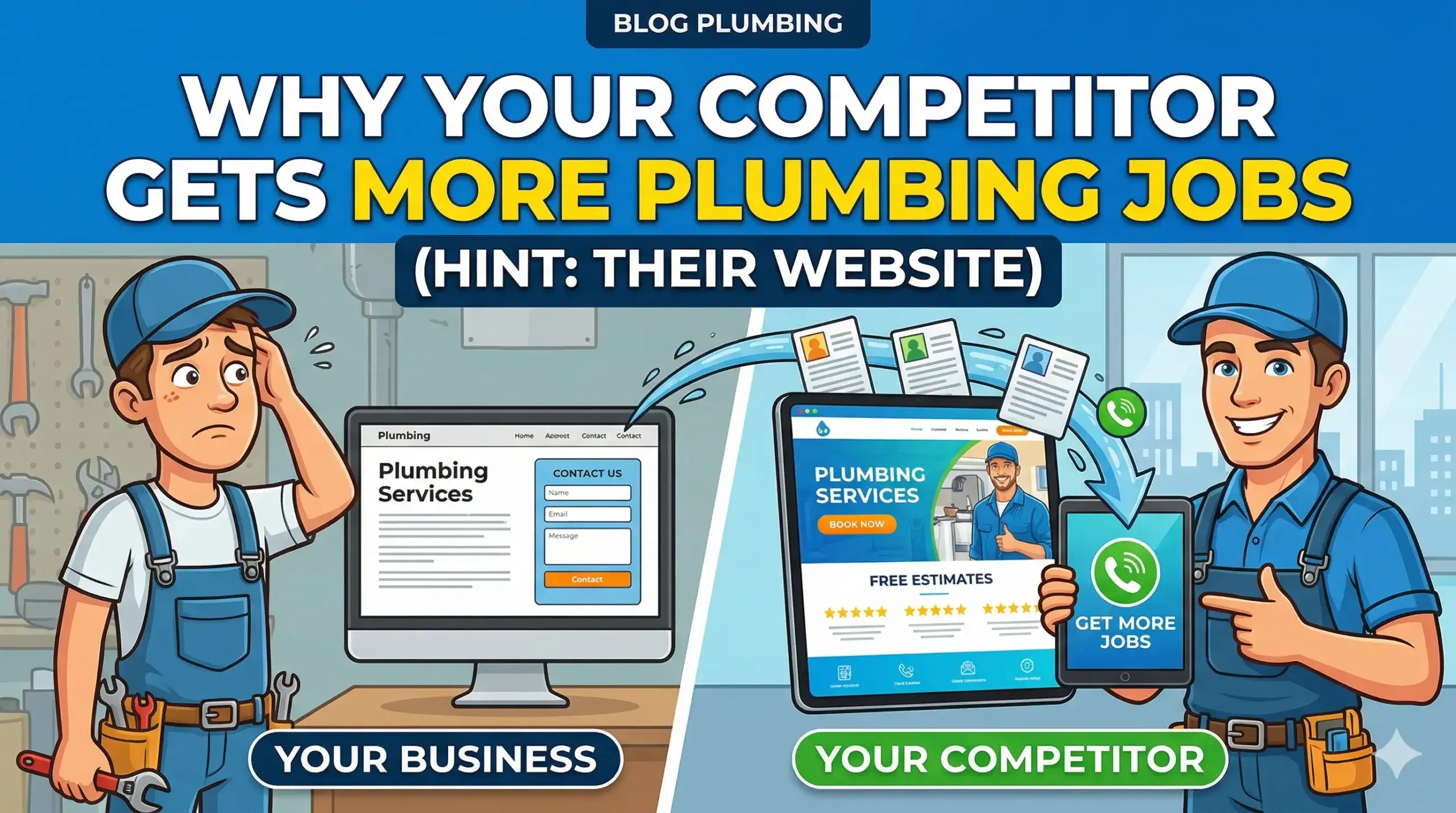
    Why Your Competitor Gets More Plumbing Jobs (Hint: Their Website)

    You’re a skilled plumber. You show up on time, do clean work, and your existing customers love you. So why does the guy across town — the one whose trucks you keep seeing everywhere — seem to be pulling in more calls than you?

    Most plumbers assume it’s word-of-mouth, or that the other guy has been around longer. But here’s what’s actually happening: that competitor has a plumbing website design that works around the clock to bring in leads, while your site quietly turns visitors away.

    This isn’t about having a “pretty” website. It’s about the difference between a site that makes your phone ring and one that doesn’t. By the end of this article, you’ll know exactly what separates the two — and what to do about it.


    Your Website Is Either a Lead Magnet or a Leaky Pipe — There’s No Middle Ground

    Think of your website like a supply line. When it’s working right, jobs flow steadily to your business. When it’s got hidden problems — a slow load here, a broken connection there — pressure drops. Customers don’t make it to the point where they call you. They just disappear upstream to someone else.

    Most plumbing business owners don’t realize their website has leaks. The site looks fine to them. But “fine to you” and “converting visitors into paying customers” are two completely different things.

    Here’s the hard truth: the majority of people searching for a plumber pick from the first one or two options that load fast, look trustworthy, and make it dead-simple to call. If your site isn’t that — even by a small margin — you’re losing jobs every single day.


    The 3-Second Rule That’s Costing You Calls

    When someone’s toilet is overflowing or a pipe has burst, they grab their phone and search for a plumber fast. They’re not browsing — they’re deciding in seconds.

    If your website takes more than 3 seconds to load, a large portion of those visitors are already gone before they even see your phone number. They didn’t call your competitor because they were loyal to them. They called because that site was simply faster.

    This isn’t a minor issue. Site speed directly affects how many people stay long enough to contact you — and Google factors it in when deciding which plumbing websites to rank higher in search results.

    The fix: Properly built websites for plumbers are optimized from the ground up for speed — compressed images, clean code, fast hosting. Not bolted-on tricks, but sites engineered to load instantly on the phone a customer is holding during an emergency.


    Google Can’t Find You — Even When You’re Right There

    Here’s a scenario that plays out for hundreds of plumbing businesses across the US: a homeowner searches “emergency plumber near me” — and a plumber with half your experience shows up on page one, while your business is buried somewhere customers never scroll.

    Why? Google needs clear signals to feel confident showing your business. When your website is missing the right structure — things like clear service pages, location signals, and business information formatted in a way Google understands — it hedges its bets and shows someone else instead.

    It’s like having your shop in the right neighborhood but no sign out front. You’re there. Google just isn’t sure enough about what you do or who you serve to point customers your way.

    What actually works: A well-structured plumbing company website tells Google exactly what services you offer, which areas you serve, and why you’re the right choice. Digital Trace builds plumbing websites with this architecture baked in — not added as an afterthought.


    💡 Pro Tip: Your Homepage Isn’t Doing the Work You Think It Is

    Most plumbers send all their traffic to their homepage and wonder why people don’t call. Here’s the issue: a homepage is general. A visitor searching “water heater replacement [city]” lands on your homepage and has to figure out if you even do that — so many just leave.

    The fix is dedicated service pages: one for drain cleaning, one for water heater work, one for emergency calls, and so on. Each page talks directly to that customer’s specific problem. Google sees more relevant content and ranks you higher for those searches. Customers feel like you understand their exact situation and are more likely to call. Digital Trace builds out this full page structure for every plumbing client — it’s one of the fastest ways to start capturing leads you’re currently missing.


    Your Website Looks Fine on a Computer — But Your Customers Are on Their Phones

    Pull up your website right now on your phone. Really look at it. Is the phone number easy to tap? Do you have to pinch and zoom to read anything? Does the page load without things jumping around?

    More than 70% of local service searches happen on mobile devices. For plumbing — where someone’s dealing with an active problem and needs help now — that number is even higher. A website that looks decent on a desktop but frustrates mobile users is effectively invisible to a huge portion of your potential customers.

    A slow, hard-to-navigate mobile experience sends one clear message: this business isn’t organized. That’s not the first impression you want when someone is deciding who to trust with their home.

    The better approach: Every site Digital Trace builds is mobile-first. That means the phone number is always one tap away, the page loads fast on any connection, and the experience feels clean and professional on a 5-inch screen.


    What Happens When You Fix These Problems: A Real-World Example

    A plumbing company in the midwest — a two-truck operation that had been in business for eight years — was getting almost no calls from their website. They were relying entirely on referrals and had an outdated site a nephew had built years ago. It loaded slowly, wasn’t set up for mobile, and had no individual service pages.

    After rebuilding the site with proper structure, mobile optimization, and dedicated pages for their core services (drain cleaning, water heater installation, and emergency calls), the results were significant:

    • Organic search traffic increased substantially within 90 days
    • They began ranking in the top 3 results locally for emergency plumbing searches
    • Inbound calls from new customers more than doubled compared to the same period the prior year
    • They hired a third technician within six months to handle the additional volume

    The work didn’t change. The truck count barely changed. The website changed — and the business followed.


    Not sure if your plumbing website has these issues? Get a free website audit — no obligation, just a clear picture of what’s costing you leads.


    Your Path to More Leads: What the Next Steps Look Like

    Getting your website working the way it should isn’t complicated. Here’s what the process looks like:

    1. Find out what’s actually broken. Most plumbers are surprised to discover their site has multiple invisible issues — slow load times, missing service pages, no mobile optimization. A free audit shows you exactly what’s going on.
    2. Get a site that’s built for your business, not just built. A plumbing website should have pages for each of your core services, clear calls to action, and a design that makes it easy for stressed-out customers to call you in seconds.
    3. Make sure Google knows who you are and where you work. The right structure tells search engines exactly what you do and which areas you serve — so you show up when the right customers are searching.
    4. Optimize for mobile, because that’s where your customers are. Every element of the site should be easy to use on a phone — especially the phone number.
    5. Track what’s working. A good website isn’t a one-time thing. Knowing where your leads are coming from lets you double down on what’s working and stop wasting money on what isn’t.

    FAQ: What Plumbers Actually Ask Before Rebuilding Their Website

    Why am I not getting calls from my website even though I have one?

    Having a website and having a website that generates leads are two very different things. The most common culprits are slow load speed, no dedicated service pages, and a site that wasn’t built with local search in mind. If someone can’t find you on Google or your site frustrates them when they do, they’ll just call the next plumber on the list.

    How do I know if my plumbing website is actually working?

    If you can’t tell where your leads are coming from, that’s already a problem. A working plumbing website should be producing measurable inbound calls and contact form submissions from people who found you through search — not just from people who already knew your name. Get a free website audit and you’ll have a clear answer within days.

    How long does it take to see results from a new website?

    Most plumbing businesses start seeing meaningful changes in search visibility within 60–90 days of launching a properly built site. Emergency and high-intent searches (like “plumber near me”) often show results faster than broader terms. The key is getting the foundation right from day one.

    What makes a plumbing website different from a regular business website?

    Plumbing customers are usually dealing with an urgent problem. They need to find you fast, trust you instantly, and contact you in one tap. A generic website template isn’t designed for that. A purpose-built plumbing site has service-specific pages, trust signals (licenses, reviews, service area), a prominently placed phone number, and load speeds optimized for mobile emergency searches.

    Do I really need a fast website if my customers are local?

    Yes — especially because your customers are local. Local searches on mobile devices are the most time-sensitive searches on the internet. Someone with a burst pipe isn’t going to wait for a slow site to load. Speed is one of the single biggest factors in whether a local visitor calls you or calls someone else.

    I’ve paid for a website before and got nothing out of it. Why would this be different?

    Most web designers build websites that look good in a portfolio. That’s not the same as building one that generates leads. The difference is in the details: site architecture built for search engines, pages structured around what your customers are actually searching for, and performance optimization that keeps visitors from bouncing. That’s the approach Digital Trace takes specifically for web design for plumbers.


    Ready to See What Your Website Is Costing You?

    Every week your plumbing website isn’t performing, you’re handing jobs to a competitor — often without realizing it. The problem usually isn’t what you can see. It’s the slow load, the missing service page, the mobile layout that frustrates customers before they ever get to your phone number.

    A free audit from Digital Trace will show you exactly where the gaps are — no jargon, no pressure, just a clear breakdown of what’s working and what isn’t.

    Book your free website audit today — and find out how many leads your current site is leaving on the table.

  • The #1 Reason Your Plumbing Website Isn’t Converting

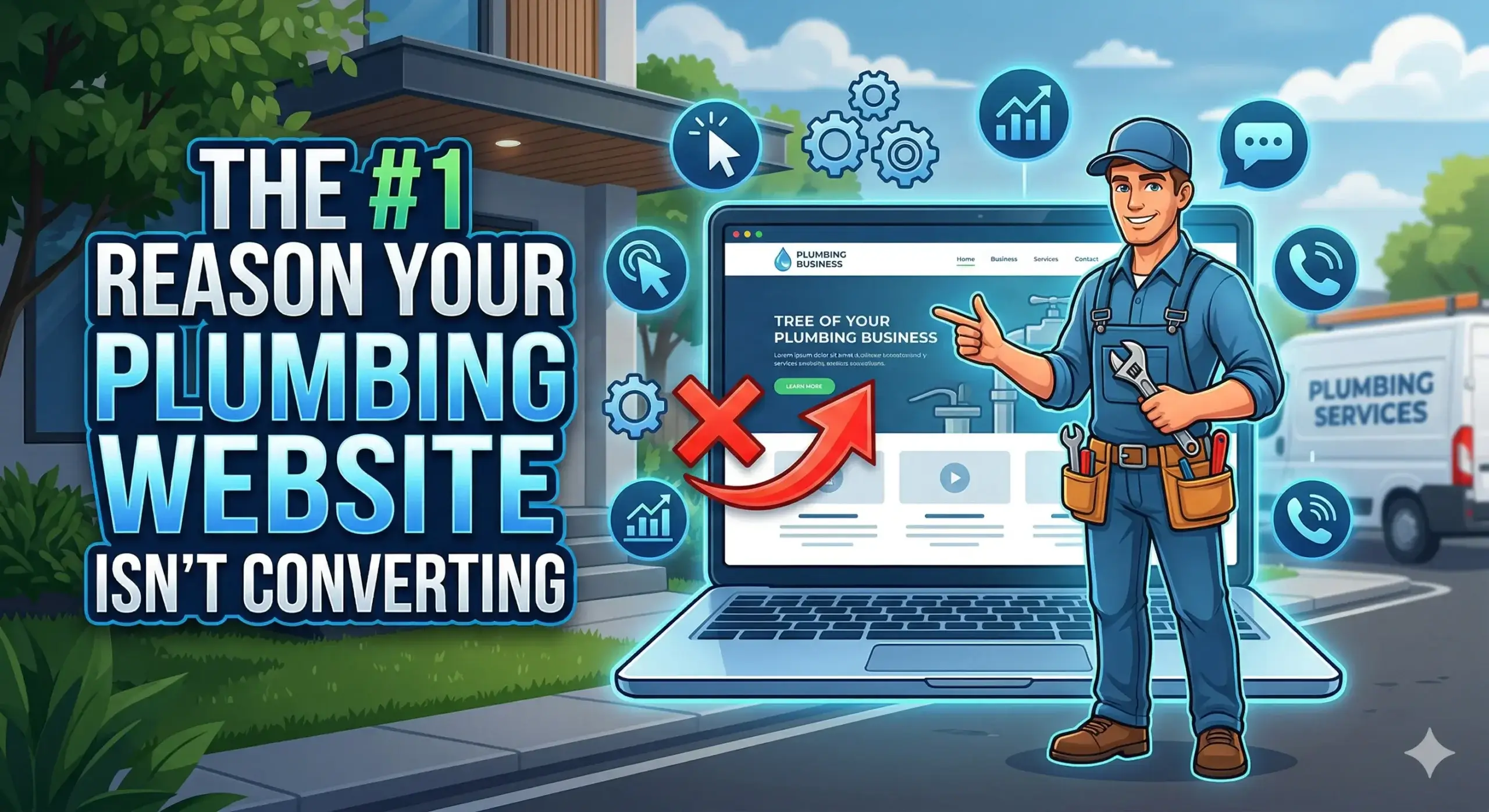
    The #1 Reason Your Plumbing Website Isn’t Converting

    You have a website. Maybe you paid someone decent money to build it a few years back. It looks fine. But the phone isn’t ringing the way it should — and you’re not sure why.

    Most plumbing business owners assume the problem is traffic. “I just need more people to find me.” So they chase SEO tips or run a few Google ads, get a bump in visitors, and… still not enough calls. The traffic wasn’t the problem. The website was.

    Here’s the truth: most plumbing websites are built to look good in a portfolio screenshot — not to convert a stressed homeowner who’s standing in two inches of water at 9 PM on a Tuesday. Those are two very different design goals, and the gap between them is where your leads are disappearing.

    By the end of this post, you’ll know exactly what’s killing your conversions and what a plumbing website built to actually generate calls looks like.


    Your Website Loads Slowly — And Visitors Are Gone Before They See Your Number

    Picture this: a homeowner Googles “emergency plumber near me.” Your site comes up. They click it. They wait. And wait. Three seconds pass, nothing loads — so they hit the back button and call your competitor instead.

    That’s not a hypothetical. It’s happening to plumbing websites across the country every single day.

    Most visitors expect a page to load in under 2–3 seconds. When it doesn’t, they leave — and they don’t come back. A slow site doesn’t just lose one visitor. It bleeds leads constantly, invisibly, without a single indication in your call log.

    The technical reason is usually oversized images, cheap hosting, or a bloated website theme that was never optimized for speed. None of that is obvious from looking at the site — but it’s costing you real money.

    What Digital Trace does instead: Every website we build for plumbing companies is engineered to load fast on mobile and desktop — because we know that your customer is usually on their phone, frustrated, and needs help right now. A half-second faster load time isn’t a tech upgrade. It’s more calls.


    Your Call-to-Action Is Buried — Or Doesn’t Exist At All

    Think of your website like a job site walkthrough. If a homeowner walks in and can’t immediately find the foreman — the person in charge, the one who can help them — they’re going to feel lost and leave. Your website works the same way. If someone lands on your homepage and has to scroll, search, or figure out how to contact you, most of them won’t bother.

    The average plumbing customer visits your site with one goal: figure out if you can help them and how to reach you. If that answer isn’t obvious in the first 5 seconds, you’ve already lost them.

    Here’s what’s typically missing or broken:

    • No phone number visible in the top header on mobile
    • CTA buttons buried below the fold (below the first screen they see)
    • Generic buttons that say “Learn More” instead of “Call Now” or “Get a Free Quote”
    • No sense of urgency for emergency services

    The fix: Your phone number should be front and center on every single page — clickable on mobile. Your primary CTA button needs to be above the fold, and it needs to tell people exactly what happens when they click it.


    💡 Pro Tip: Your Homepage Headline Is Probably About You — Not Your Customer

    Most plumbing websites open with something like: “Smith Plumbing — Serving the Greater Metro Area Since 1998.”

    That’s not a headline. That’s a business card. Your visitor doesn’t care about your founding date. They care about one thing: Can you fix my problem, and can you do it fast?

    Try leading with something like: “Emergency Plumbing Repairs — We Answer 24/7” or “Burst Pipe? We’ll Be There in 60 Minutes.” That’s what converts. The technical term is “benefit-led copy,” but the plain English version is: lead with what’s in it for them, not what’s in it for you. Change your headline, and you may see more calls within days — no redesign required.


    Google Doesn’t Know Enough About Your Business to Show It Confidently

    You might be showing up in search results — but not in the right ones, and not with the information that makes someone choose you. When Google isn’t sure what your business does, who it serves, or where it operates, it hedges. That means lower rankings, no map pack placement, and no star ratings showing in search results.

    The reason this happens: your site is missing structured data — a simple layer of code that tells Google exactly what your business is, what services you offer, where you operate, and how to reach you. Think of it like filling out your contractor’s license paperwork. Without it, Google treats you like an unlicensed operator.

    Fixing this doesn’t require a full redesign. But it does require someone who knows what they’re doing, because mistakes in that code can actively hurt your rankings.


    Your Website Doesn’t Build Trust Fast Enough

    A homeowner letting a stranger into their house to work on their pipes is a big deal. They’re not just looking for the cheapest option — they’re looking for someone they can trust, quickly. Your website has about 5 seconds to establish that trust.

    Most plumbing websites fail here because they:

    • Have no real photos (stock images of wrenches don’t build trust)
    • Have no reviews visible on the homepage
    • Don’t clearly list their license number, service area, or years in business
    • Have no clear “About” section with a real face and story

    When someone can’t tell within seconds who you are and why you’re trustworthy, they leave. Not because they don’t want to hire you — because your website didn’t give them a reason to stay.

    What works: Real photos of your team on the job. A Google review widget showing recent 5-star ratings. A simple trust bar with your license number, years in business, and response time guarantee. These don’t take long to add — and they can dramatically change how visitors respond.


    A Real-World Example: What Happens When You Fix the Right Things

    Before: A residential plumbing company in the Midwest had a website built a few years ago. It looked clean. They were getting around 400 visitors a month from Google. But they averaged only 3–5 calls a week from the site — and most of those were price shoppers, not ready-to-book customers.

    Their problems were textbook: a 6-second load time on mobile, no phone number visible without scrolling, a homepage headline that led with their company name, and zero reviews on the site.

    After: The site was rebuilt with speed as the top priority — load time dropped to under 2 seconds. The phone number was pinned to the top of every page. The homepage headline was rewritten to speak directly to emergency situations. A review feed pulled live from Google, showing 47 reviews averaging 4.8 stars.

    Result: Within 90 days, inbound calls from the website went from 3–5 per week to 14–18 per week. Booked jobs increased by over 60%. The owner described it as “the best thing I’ve done for the business in five years.”

    None of those changes were magic. They were just done right.


    Not sure if your plumbing website has these issues? Get a free website audit — no obligation, just a clear picture of what’s costing you leads.


    Your Path to More Calls: 5 Steps That Actually Move the Needle

    You don’t need to overhaul everything at once. Start here:

    Step 1: Test your site speed. Type your URL into Google’s PageSpeed Insights (free tool). If your mobile score is below 70, that’s priority one.

    Step 2: Check your phone number on mobile. Pull up your homepage on your phone. Is your number visible without scrolling? Is it clickable? If not, fix that this week.

    Step 3: Rewrite your homepage headline. Lead with what you do and who you help — not your company name. Think: “Fast, Reliable Plumbing Repairs — Same-Day Service Available.”

    Step 4: Add real photos and reviews. If your site uses stock images, swap at least the hero image for a real photo of your team or your work. Add a Google reviews widget if you don’t have one.

    Step 5: Get a professional audit. Some issues — like missing structured data, broken mobile layouts, or technical SEO gaps — aren’t visible to the naked eye. A proper audit finds them fast.


    Frequently Asked Questions

    Why am I not getting calls even though people are visiting my site?

    Traffic without calls almost always points to a conversion problem, not a visibility problem. Your visitors are finding you — but something on the site is stopping them from picking up the phone. The most common culprits are slow load speed, a buried phone number, and a homepage that doesn’t clearly explain what you do and who you serve.

    How do I know if my plumbing website is actually working for me?

    If you can’t answer “how many calls came from my website last month,” your site isn’t being tracked properly. Every plumbing website should have call tracking, Google Analytics, and Google Search Console set up — so you know exactly what’s working and what isn’t. Without that data, you’re flying blind.

    What makes a plumbing website different from a regular business website?

    Plumbing customers are often in a stressful, urgent situation when they search. They’re not browsing — they’re deciding in seconds. A plumbing website needs to communicate trust, urgency, and availability faster than almost any other type of business site. Design decisions that work fine for a retail store or consultant will quietly kill conversions for a plumber.

    Do I really need a fast website if my customers are local?

    Yes — especially because they’re local. Local customers are almost always searching on their phone, often in a rush. Google also uses page speed as a ranking factor, meaning a slow site doesn’t just lose visitors who find you — it stops you from ranking in the first place. Speed isn’t optional; it’s the baseline.

    How long does it take to see results after improving my website?

    For on-site changes like speed, CTA placement, and trust signals, you can see a difference in call volume within 30–60 days. SEO-related improvements typically take 3–6 months to reflect in rankings. The clients who see results fastest are the ones who fix the conversion problems and the technical problems at the same time — not one or the other.

    How do I know what’s actually wrong with my site without guessing?

    That’s exactly what a free audit tells you. Book a free website audit here — we’ll look at your site’s speed, mobile experience, conversion setup, and local SEO, and give you a plain-English breakdown of what’s costing you leads and what to fix first. No technical jargon, no pressure.


    Ready to Find Out What Your Website Is Costing You?

    Every week your plumbing website stays broken is another week of calls going to your competitors — and you’ll never see those on your phone log. They’re just gone.

    The good news: most of these problems are fixable. And once they’re fixed, your site starts working for you around the clock — taking calls while you’re on a job, booking leads while you’re asleep.

    Get your free plumbing website audit →

    There’s no cost, no obligation, and no tech speak. Just a clear, honest look at what’s working, what isn’t, and what to do about it — tailored to your plumbing business.

  • How to Get More Plumbing Leads Without Paying for Ads

    How to Get More Plumbing Leads Without Paying for Ads

    You’ve got a website. Maybe it cost you a few hundred bucks, maybe a few thousand. You figured having something online was enough — and yet the phone isn’t ringing the way it should. Meanwhile, you know your competitor two towns over stays booked out two weeks in advance, and you can’t figure out why.

    Here’s what most plumbing business owners get wrong: they think having a website is the finish line. It’s not. A website that doesn’t work is like a service van with no signage — it exists, but it’s not doing anything for your business.

    The good news? You don’t need to throw money at Google Ads to fix this. The real problem — and the real solution — lives in your plumbing website design. Get that right, and your website becomes your best salesperson, running 24 hours a day without commission.

    This guide breaks down exactly what’s costing you leads right now, and what a properly built plumbing company website actually looks like.


    Your Website Loads Too Slowly — And You’ve Already Lost the Customer

    Picture this: a homeowner’s pipe bursts at 7pm. They grab their phone, search “plumber near me,” and your site comes up. They tap it. It takes five seconds to load. They hit the back button and call your competitor.

    That’s not a hypothetical. That’s happening to plumbing businesses with slow websites every single day.

    Most people will leave a website if it doesn’t load within three seconds on mobile. They’re not being impatient — they’re just stressed and in a hurry, which is exactly the mindset of someone who needs a plumber.

    The technical reason is usually oversized images, bloated code, or cheap hosting that can’t keep up. The fix isn’t glamorous, but it’s critical: fast hosting, compressed images, and clean code.

    Websites built for plumbing businesses by Digital Trace are built for speed from day one — because a half-second improvement in load time can be the difference between a new customer and a missed call.


    Your Site Looks Fine on a Computer — But Your Customers Are on Their Phones

    More than 70% of local service searches happen on mobile. When someone needs a plumber, they’re not sitting at a desk — they’re standing in a wet basement, reaching under a leaking sink, or on the phone with their landlord.

    If your website doesn’t work perfectly on a phone, you’re invisible to most of your potential customers.

    Bad mobile experience looks like:

    • Text too small to read without zooming
    • Buttons that are hard to tap
    • Phone numbers that aren’t clickable (so customers have to manually dial)
    • Forms that don’t fit the screen

    A proper mobile-first plumbing website makes it effortless to call you in one tap, request a quote in under a minute, and find your service area instantly — even on a 4G connection in a basement.


    Google Doesn’t Know Enough About Your Business to Recommend It

    When someone searches “emergency plumber in [your city],” Google is making a split-second decision about which businesses to show. If your site doesn’t give Google clear, structured signals about who you are, what you do, and where you serve, Google defaults to showing someone else.

    This isn’t about keyword-stuffing your homepage. It’s about giving Google the specific information it needs:

    • What services you offer (drain cleaning, water heater repair, pipe replacement, etc.)
    • What areas you serve — by city, zip code, or neighborhood
    • How long you’ve been in business
    • That you’re a legitimate, trusted local business

    There’s a technical layer here called schema markup — essentially a set of invisible tags on your website that tell Google “this is a plumbing business, this is their service area, this is their phone number.” Without it, Google is guessing. With it, Google gets confident and starts recommending you.

    This is one of the most commonly missed fixes on plumbing sites, and one of the first things checked in a Digital Trace website audit.


    💡 Pro Tip: Your Homepage Might Be Talking to Everyone — Which Means It’s Convincing Nobody

    A common mistake plumbing businesses make is building one generic homepage that tries to cover everything: residential, commercial, emergency, installation, repair. The result is a page that’s vague, unfocused, and doesn’t rank well for any specific search.

    The fix? Dedicated pages for your most important services. A separate page for water heater repair, one for drain cleaning, one for emergency plumbing. Each page speaks directly to a customer with that specific problem, and each page has a real shot at ranking on Google for that specific search.


    You’re Not Showing Up When It Matters Most — Emergency Searches

    “Emergency plumber open now.” “Plumber near me tonight.” These are the searches where someone is ready to hire right now — no shopping around, no waiting. They want the first credible option they see.

    Ranking for emergency and after-hours searches isn’t luck. It comes down to a few things your website needs to get right:

    • Clear messaging that you offer emergency or same-day service (above the fold, not buried)
    • A click-to-call phone number visible on every page
    • Local SEO signals that tell Google you serve specific neighborhoods or cities
    • Fast load times (see above — emergencies don’t wait for a slow website)

    If your site buries your phone number or makes people scroll to find out if you’re available after 5pm, you’re losing those high-intent jobs to someone else.


    The Real Cost of a Website That “Just Exists”

    Here’s a realistic scenario that plays out across the US every day.

    Before: A family-owned plumbing company in Ohio had a website built five years ago. It looked decent on desktop, but the owner never knew it was nearly unusable on mobile. The site took 6+ seconds to load on a phone, the “Contact Us” button was buried at the bottom, and the site had no individual pages for services like water heater replacement or sewer line repair. They were running Facebook Ads just to stay busy — spending around $1,200/month just to keep the phone ringing.

    After: After rebuilding with a mobile-first design, clean service pages, and proper local SEO structure, the same company started showing up in the top three results for “water heater repair [city]” and “emergency plumber [city]” without paying for clicks. Within four months, they had cut their ad spend in half and were generating more calls than before — from organic traffic alone. The biggest change? A click-to-call button at the top of every page. Simple, but it doubled contact form submissions and calls from mobile users.

    Not sure if your plumbing website has these issues? Get a free website audit — no obligation, just a clear picture of what’s costing you leads.


    Your Path to More Leads: What to Do Next

    You don’t need to overhaul everything overnight. Here’s what actually moves the needle, in order:

    1. Test your site on mobile. Pull it up on your own phone right now. Can you tap the phone number to call? Does it load in under 3 seconds? If not, that’s your first fix.
    2. Make your phone number impossible to miss. It should be at the top of every page, clickable on mobile. Not in the footer. Not hidden. Right there.
    3. Create a page for each of your main services. Don’t lump drain cleaning, water heater repair, and emergency plumbing all on one page. Give each one its own URL, its own content, its own chance to rank.
    4. Claim and optimize your Google Business Profile. Make sure your hours, service area, and services are up to date. Add photos. Respond to reviews. This is free and directly tied to how often you show up in local searches.
    5. Get a professional audit of what’s actually broken. Most plumbing business owners don’t know what’s costing them leads — because the issues are invisible until you know where to look.

    Learn how Digital Trace builds websites for plumbing companies built to rank, convert, and grow — without paid ads as a crutch.


    FAQ: Real Questions from Plumbing Business Owners

    Why am I not getting calls from my website?

    Usually it comes down to one of three things: the site loads too slowly and people leave before they see your number, your site doesn’t rank for the searches your customers are actually typing, or your contact options aren’t obvious enough on mobile. Most of the time it’s a combination of all three.

    How do I know if my plumbing website is actually working?

    If you can’t answer “how many calls or form submissions did my website generate last month,” your site probably isn’t working. A website that’s doing its job will have clear tracking in place and will consistently drive inbound contacts — not just sit there looking professional.

    How long does it take to see results from a new website?

    For local SEO, most plumbing businesses start seeing meaningful movement within 60 to 90 days of launching a properly optimized site. Emergency and high-intent keywords can move faster. Paid ads are faster than organic, but a well-built site compounds over time — you keep getting leads without paying per click.

    What makes a plumbing website different from a regular business website?

    Plumbing customers are often in a hurry, stressed, and searching on mobile. Your website needs to be built for that specific behavior: fast loading, clear emergency availability messaging, service-specific pages, and a frictionless way to contact you in one tap. A generic business template doesn’t account for any of that.

    Do I really need a fast website if my customers are local?

    Yes — especially because your customers are local. Local searches almost always happen on mobile, often in urgent situations. Google also uses page speed as a ranking factor for local results. A slow website doesn’t just frustrate visitors; it actively hurts where you show up in search.

    How do I know if I need a new website or just some fixes?

    That depends on what’s under the hood. Some sites just need targeted improvements — faster hosting, better service pages, improved mobile layout. Others have issues deep enough that starting fresh is actually more efficient. The fastest way to find out is a proper audit. Request your free website audit here and get a clear picture of where you stand.


    Ready to Find Out What Your Website Is Really Costing You?

    Most plumbing businesses have no idea how many leads they’re losing every week — because the problem is invisible. No error message, no alert. Customers just silently leave and call someone else.

    A free website audit from Digital Trace shows you exactly what’s happening: where visitors are dropping off, why Google isn’t ranking your site, and what it would take to turn your website into a consistent source of inbound calls.

    There’s no obligation. No sales pressure. Just a clear, honest look at what’s working and what isn’t.

    Get your free plumbing website audit →

    No risk. No fluff. Just answers.

  • 7 Website Mistakes That Are Costing Plumbing Businesses Jobs

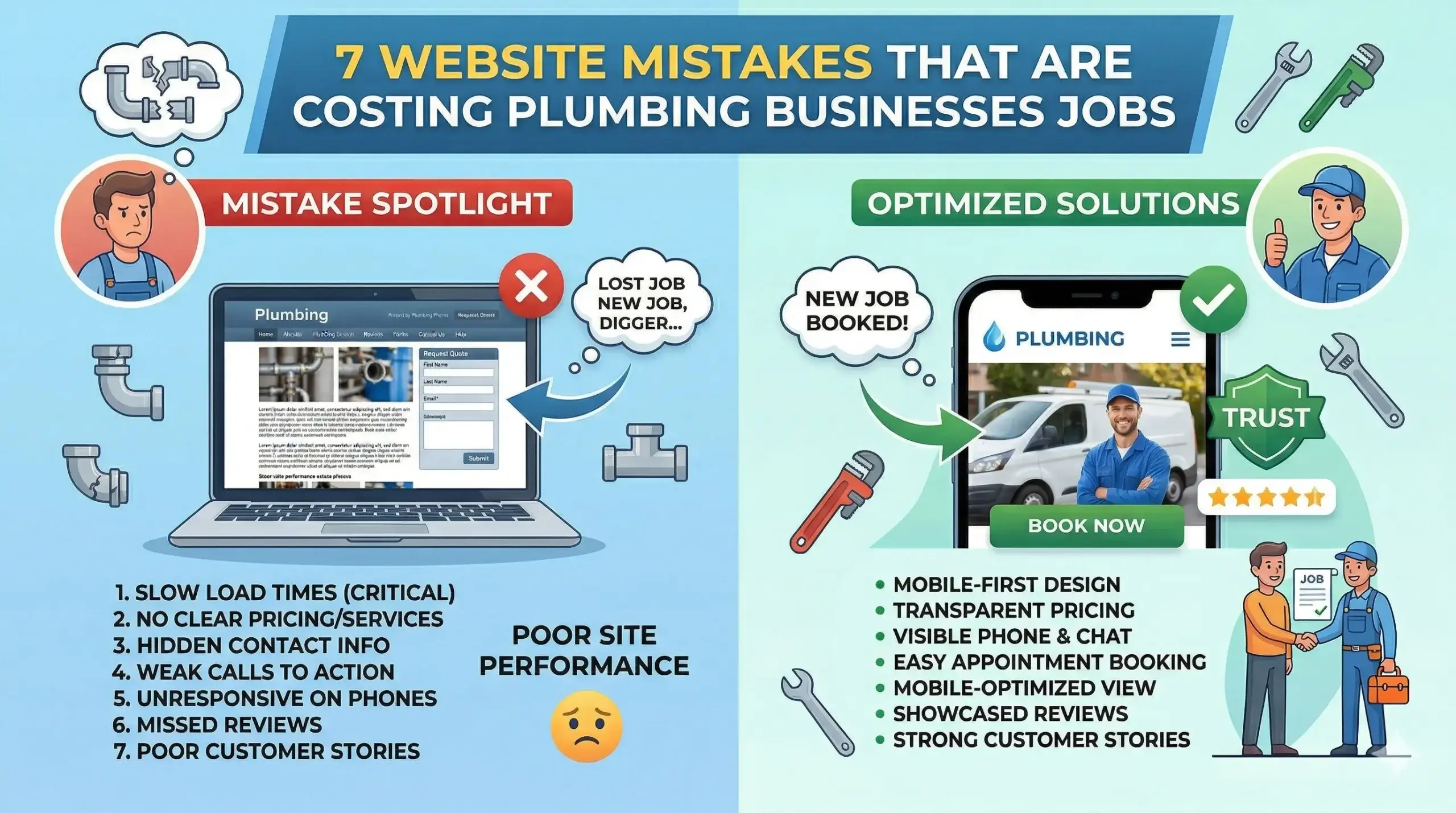
    7 Website Mistakes That Are Costing Plumbing Businesses Jobs

    You did everything right. You built your skills, bought the trucks, hired the crew, and showed up for every job. But when someone in your area searches for a plumber online — your competitor’s name appears, not yours. And when someone does land on your website, they click away without calling.

    Most plumbing business owners assume the problem is that they need to “do more marketing.” The real problem is almost always the website itself — and it’s usually a handful of fixable mistakes quietly killing your lead flow every single day.

    This isn’t about fancy design trends or abstract SEO theory. It’s about the specific things your plumbing company website is probably doing wrong right now, why they cost you jobs, and what a well-built site actually looks like.


    Mistake #1: Your Site Takes Too Long to Load — And Nobody Waits

    Think of your website like a service call. If your tech shows up 20 minutes late with no call ahead, the homeowner’s already calling someone else. Your website is exactly the same — if it takes more than 3 seconds to load, most visitors are gone before your phone number even appears on screen.

    Slow websites usually happen because of oversized images, cheap hosting, or bloated page builders that weren’t built with speed in mind. The site looks fine to you because your browser has cached it — but a first-time visitor on a phone sees a blank screen and a loading spinner.

    The business cost is direct: fewer calls, fewer bookings, less revenue. A plumbing website design built for performance loads fast on every device, every time — because slow sites don’t just frustrate visitors, they rank lower on Google too.


    Mistake #2: Your Phone Number Is Buried (Or Worse, Not Clickable on Mobile)

    This one sounds obvious, but it’s one of the most common mistakes on plumbing websites. Someone has a burst pipe at 9pm. They’re on their phone, stressed, searching fast. They land on your site — and your phone number is tucked at the bottom of the page in small gray text. Or it’s an image, so they can’t tap to call.

    That person calls the next plumber who makes it easy.

    Your phone number should be visible above the fold on every page — meaning they see it without scrolling. On mobile, it must be a clickable tap-to-call link. Every extra step between “found your site” and “calling you” costs you jobs.


    Mistake #3: Google Doesn’t Know Enough About Your Business to Trust It

    Here’s one that surprises most plumbing business owners: Google doesn’t just crawl your website and automatically understand who you are, what you do, and where you serve. There’s a behind-the-scenes layer of information — called structured data or schema markup — that tells Google: “This is a licensed plumbing company in [city], they do emergency repairs, water heater installs, and drain cleaning.”

    Without it, Google treats your site like a stranger at the door — it might let them in, but it won’t recommend them.

    The fix isn’t complicated, but it requires someone who knows how to implement it correctly. When done right, your business shows up with richer information in search results — your rating, your service area, your business hours — and Google is far more confident showing you to searchers in your area.


    Mistake #4: Your Website Looks the Same on Every Device — And That’s a Problem

    Most plumbing leads come from mobile searches. Someone’s got a leak, they pull out their phone, and they search “emergency plumber near me.” If your site wasn’t built to display correctly on a phone screen, you’re invisible to that person — even if you rank on Google.

    A site that isn’t truly mobile-optimized will have:

    • Buttons too small to tap
    • Text that overflows the screen
    • Images that stack awkwardly
    • Forms that are hard to fill out on a small keyboard

    Mobile optimization isn’t just about the site fitting on a smaller screen. It’s about the entire experience being smooth, fast, and conversion-focused on a phone — because that’s where your customers are finding you.


    Mistake #5: Your Homepage Talks About You Instead of the Customer’s Problem

    Take a look at your homepage right now. Does it open with something like: “Welcome to [Company Name] — serving [city] since 1998. We are a family-owned business committed to excellence…”?

    That’s not what a stressed homeowner with a flooding bathroom needs to read.

    The best plumbing websites lead with the problem the customer has and the solution you provide. “Got a leak? We’re in [city], available 24/7, and we’ll have someone at your door within the hour.” That’s a homepage that converts. The “about us” story matters — but it belongs lower on the page, after you’ve already addressed why the visitor should call you.

    Think of it this way: a good plumber doesn’t show up to a job and spend five minutes telling the homeowner about their certifications before asking what’s wrong. They assess the problem first. Your website should do the same.


    Mistake #6: You Have No Reviews or Trust Signals Where It Counts

    Online reviews are the word-of-mouth referrals of the internet — and most plumbing websites either hide them or don’t use them strategically. Your Google reviews shouldn’t just live on your Google Business Profile. They should be prominently featured on your website, ideally near the top, near your service pages, and near your contact form or phone number.

    Trust signals to include on every plumbing website:

    • Google review count and average rating
    • Licensing and insurance badges
    • Years in business
    • Service guarantee or warranty statement
    • Photos of your real team and trucks (not stock photos)

    When someone lands on your site who has never heard of you, these signals answer the silent question they’re all asking: “Can I trust this company in my home?”


    Mistake #7: Your Contact Form Is the Finish Line — Not a Funnel

    Most plumbing websites have a contact form. Very few have a contact process that’s designed to actually convert visitors into booked jobs. A form that asks for name, email, message, and nothing else gives you almost no useful information — and gives the visitor no reason to trust that someone will respond quickly.

    A conversion-focused contact section for a plumbing website includes:

    • A clear headline (“Get a Free Quote — We Respond Within 1 Hour”)
    • A short form with the right fields (type of issue, best time to call)
    • A phone number visible right next to the form
    • An expectation of when they’ll hear back
    • Mobile-friendly form fields that don’t require zooming

    The goal isn’t just to collect a submission — it’s to give the visitor enough confidence to actually hit send.


    💡 Pro Tip: Your Plumbing Service Area Pages Could Be Your Biggest Lead Source — If They Exist

    Many plumbing websites have one generic “Services” page that lists everything they do. That’s fine, but it leaves a massive opportunity on the table. If you serve multiple cities or neighborhoods, each one should have its own dedicated page — “Emergency Plumber in [City],” “Water Heater Repair in [City]” — with real, useful content about your service in that area.

    Google matches searchers to local results. If you don’t have a page that specifically says you serve a given area, Google has no reason to show you to someone searching there. Individual service-area pages are one of the highest-ROI investments in plumbing website design — and most competitors haven’t done it yet.


    Before & After: How One Plumbing Company Went From Invisible to Booked Out

    A residential plumbing company in the Midwest — three trucks, mostly referral-based — had a website they’d built themselves using a drag-and-drop builder several years prior. It technically worked: it listed their services, had a contact form, and loaded eventually. But they were getting almost no leads from it and had watched two younger competitors start dominating local search results.

    The audit found the core issues: a 9-second load time on mobile, no structured data, a homepage that opened with a company history paragraph, and zero service-area pages for the six suburbs they regularly served.

    After rebuilding the site with proper mobile optimization, location-specific service pages, click-to-call functionality, and a conversion-focused homepage, the results shifted within 60 days. Monthly website leads went from 2–3 form submissions to 18–22 per month. Their cost per lead dropped significantly because the traffic they already had was finally converting. Within one quarter, they added a fourth truck.

    The traffic hadn’t changed dramatically. The website had.


    Not sure if your plumbing website has these issues? Get a free website audit — no obligation, just a clear picture of what’s costing you leads.


    Your Path to More Leads: Where to Start

    You don’t need to fix everything at once. Here’s a clear sequence that makes sense for most plumbing businesses:

    1. Test your site speed. Use Google’s free PageSpeed Insights tool (pagespeed.web.dev). If your mobile score is below 70, speed is costing you leads right now.
    2. Check your phone number. Open your site on your phone. Is your number visible without scrolling? Can you tap it to call? If not, fix this first — it takes hours, not weeks.
    3. Read your homepage like a stranger. Cover the logo. Does the first sentence speak to a customer’s problem, or your company history?
    4. Count your trust signals. If a first-time visitor can’t see reviews, credentials, or a guarantee in the first scroll, you’re losing people who were interested.
    5. Talk to someone who builds plumbing websites specifically. Generic web agencies build generic sites. The difference between a website built specifically for plumbing businesses and a generic template is measurable in calls per week.

    FAQ: Real Questions From Plumbing Business Owners

    Why am I not getting calls from my website even though I’m getting some traffic?

    Traffic without calls usually means the site isn’t set up to convert visitors — not that there’s something wrong with your marketing spend. The most common culprits are a slow load time, a homepage that doesn’t address the customer’s problem immediately, or a phone number that isn’t visible or tappable on mobile. Getting people to your site is half the job. Getting them to call is the other half.

    How do I know if my plumbing website is actually working or just sitting there?

    If you don’t have Google Analytics or Search Console set up, you genuinely don’t know. A working plumbing website shows measurable data: how many people visited, how many clicked your phone number, how many filled out your form, and where they came from. If you can’t answer those questions, your site is a black box — and you can’t improve what you can’t measure. A free audit will show you exactly where your site stands.

    How long does it take to see results after fixing or rebuilding a plumbing website?

    Conversion improvements (speed, mobile usability, clearer CTAs) can show results within weeks because they affect visitors who are already finding you. SEO improvements — like service-area pages and structured data — typically take 60–90 days to show meaningful changes in rankings. The two work together: a faster, better-converting site also tends to rank higher because Google measures how people behave on your site.

    What makes a plumbing website different from just a regular small business website?

    A plumbing website needs to convert people who are in an urgent, stressful situation — often on a phone, often outside of business hours. That means 24/7 visibility, immediate trust signals, lightning-fast load times, and a contact experience that feels frictionless. It also needs service-area targeting built into the structure, because local search is where most plumbing leads start. A generic website doesn’t account for any of that.

    Do I really need a fast website if most of my customers are local and already know me?

    Referral customers who already know you will call you regardless of your website. But those customers won’t grow your business — new customers will. And new customers in your area are searching Google right now. When they find your site on a phone and it takes 8 seconds to load, they’re gone before they ever see your name. Speed isn’t a technical nicety — it’s the first impression you make on every stranger who could become a long-term customer.

    I’ve worked with a web agency before and didn’t see results. Why would this be different?

    Most web agencies build websites that look good in a browser on a desktop. They don’t specialize in the plumbing industry, don’t optimize for local search conversion, and don’t track whether the site is actually generating calls. The difference is in the specifics: industry-relevant structure, mobile-first performance, structured data for local businesses, and a design process that starts with “what makes this visitor call” — not “what looks nice.”


    Your Website Should Be Working as Hard as You Do

    Every day your plumbing website has these issues is another day your competitor is getting calls that could have been yours. The jobs are out there — people in your area are searching for a plumber right now. The only question is whether your website gives them a reason to call you or keep scrolling.

    A free website audit from Digital Trace takes the guesswork out of it. We’ll look at your site through the eyes of a homeowner with a problem, identify exactly what’s costing you leads, and give you a clear picture of what needs to change — with no obligation and no sales pressure.

    Claim your free website audit →

  • Why Your Plumbing Website Isn’t Generating Calls

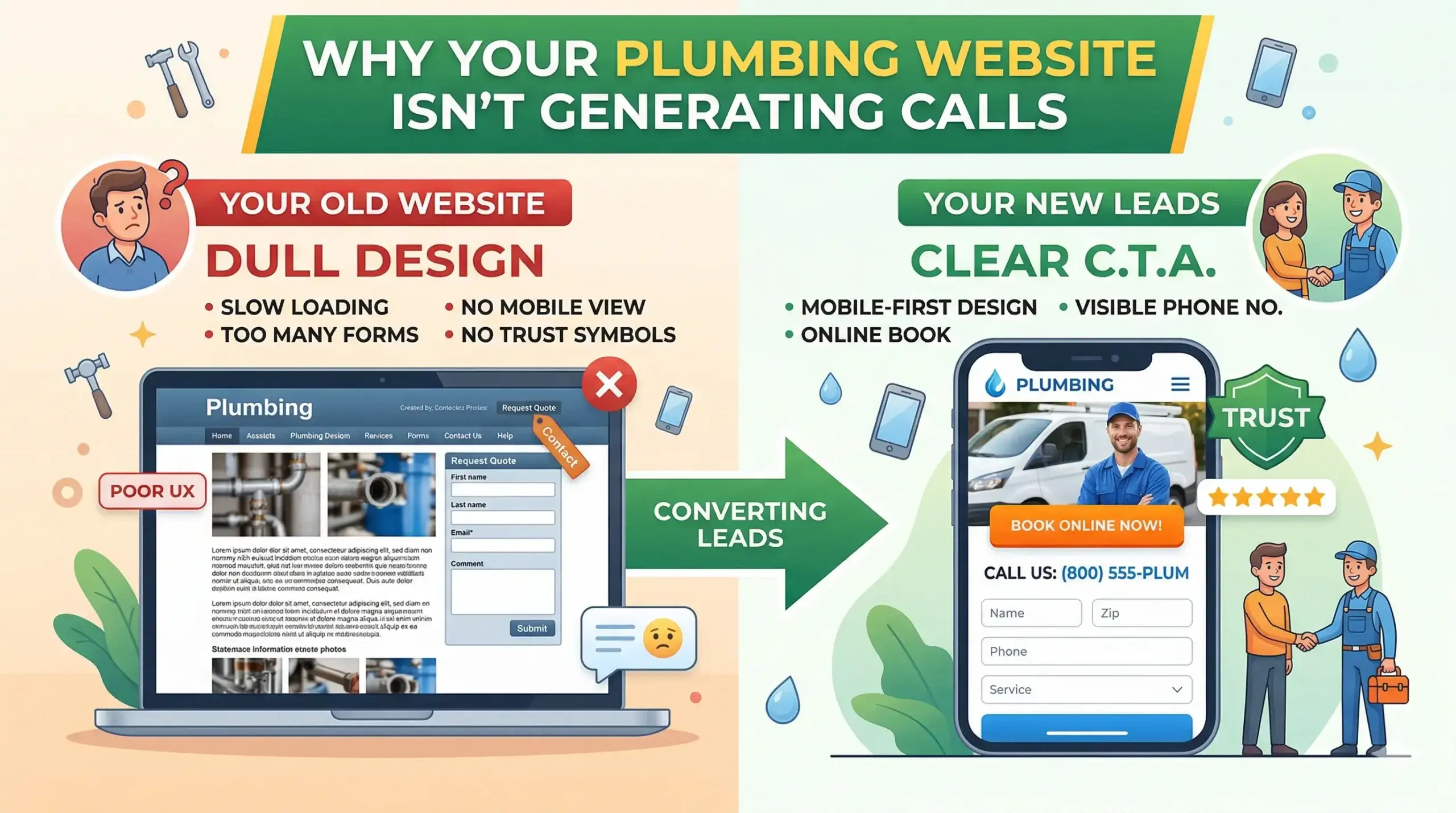
    Why Your Plumbing Website Isn’t Generating Calls

    You paid someone to build a website. Maybe it looks decent. But the phone isn’t ringing the way it should — and you can’t figure out why.

    Here’s the hard truth: most plumbing websites are built to look good in a demo, not to win jobs at midnight when someone’s kitchen is flooding. There’s a big difference between a site that exists and a site that converts strangers into callers — and most plumbing business owners don’t know which one they have.

    This post breaks down the exact reasons plumbing websites fail to generate calls, written in plain language with zero agency fluff. By the end, you’ll know what’s quietly costing you leads every single day — and what a properly built plumbing company website actually looks like.


    Your Website Loads Too Slowly — And Customers Are Already Gone

    Picture a homeowner with water pouring under their bathroom door. They grab their phone, Google “plumber near me,” tap your link — and wait. Three seconds. Five seconds. They tap the back button and call your competitor instead.

    That’s not a hypothetical. It happens hundreds of times a day across plumbing businesses nationwide.

    Most plumbing sites are loaded with oversized images, bloated code, and cheap hosting that can’t handle traffic spikes. None of that is visible to you — but your potential customers feel it immediately.

    What this costs you: Every second of load time above 3 seconds, you’re losing a significant percentage of visitors who never see your phone number at all.

    What good plumbing website design looks like instead: At Digital Trace, every website built for plumbing businesses is optimized from the ground up — compressed images, clean code, fast hosting — so the site loads before a frustrated homeowner gives up.


    Your Phone Number Isn’t Where It Needs to Be

    Think of your website like a service van. When someone needs a plumber, the first thing they look for is a phone number — just like they look for your company name and contact info on the side of your truck. If they have to hunt for it, they move on.

    Most plumbing sites bury the phone number in a footer or tucked inside a “Contact” page. On mobile — where the majority of emergency plumbing searches happen — that means a customer has to scroll, click, and hunt just to call you.

    The fix is simple but it has to be intentional:

    • Phone number in the top-right corner, clickable on mobile
    • A “Call Now” button that follows the user as they scroll
    • Your number repeated at the end of every page

    If someone has to look for your number, you’ve already lost them to the plumber whose number was right in front of their face.


    Google Doesn’t Know Enough About Your Business to Show It

    You might have heard the term “SEO” thrown around. Forget the jargon for a second. Here’s what actually matters:

    Google is trying to decide which plumber to show a homeowner right now. It looks at dozens of signals to make that decision. If your website doesn’t send the right signals — the right location info, the right service pages, the right structure — Google simply won’t trust your site enough to show it.

    This shows up as:

    • Not appearing when someone searches “plumber in [your city]”
    • Showing up on page 2 or 3 where almost no one looks
    • Competitors with worse reputations ranking above you

    The technical reason in plain English: Your site might be missing what’s called local SEO structure — things like individual pages for each service you offer, your business address and service area clearly marked up, and content that matches what real customers search for.

    What Digital Trace does instead: Every plumbing company website we build includes location-optimized service pages, the right technical foundations, and content structured the way Google expects — so when someone searches for a plumber in your area, your site actually has a shot at showing up.


    Your Website Looks Like Everyone Else’s — So Why Would They Call You?

    Most plumbing websites look identical. Stock photo of a pipe wrench. A tagline that says “Fast, Reliable Service.” A generic contact form at the bottom.

    When every plumbing site looks the same, price becomes the only differentiator — and you don’t want to compete on price.

    A website that converts tells a story within the first few seconds: who you are, what makes you different, and why a stranger should trust you with their home.

    What builds trust fast:

    • Real photos of your team and your trucks — not stock images
    • Specific credentials: licensed, insured, years in business
    • Recent reviews pulled directly onto the page (not just a link to Google)
    • A short video intro from the owner goes a long way in a skeptical market

    When someone lands on your site and immediately sees a real team, real reviews, and a clear reason to choose you — that’s when they call.


    💡 Pro Tip: Your Homepage Is Probably Trying to Do Too Much

    One of the most common mistakes in plumbing website design is building a homepage that talks about everything at once — drain cleaning, water heaters, emergency service, commercial jobs, remodels — all crammed into a wall of text.

    Visitors don’t read websites. They scan. If they can’t figure out in five seconds what you do and where you do it, they’re gone.

    The fix: Lead your homepage with one clear statement — “Emergency Plumber in [City] — Available 24/7” — and let your service pages handle the details. Each service you offer deserves its own dedicated page. That’s better for customers and better for Google.


    Real-World Scenario: How One Plumbing Business Turned Its Website Around

    A family-owned plumbing company in the Midwest had been in business for 11 years. They had a website built by a local graphic designer — it looked professional, had all their services listed, and had been sitting mostly untouched for four years.

    The problem? They were getting maybe two or three website calls a week, even during peak season. Their competitors were busier than they’d ever been.

    What was wrong:

    • The site took over 7 seconds to load on mobile
    • Their phone number wasn’t clickable
    • They had one single page for all their services — Google couldn’t tell what they specialized in
    • They had 47 five-star Google reviews, but none of them appeared on the website

    After rebuilding the site properly — fast load times, dedicated service pages, clickable contact options, reviews integrated on-page, and local SEO foundations in place — their inbound calls from the website increased to 15–20 per week within three months. Same service area. Same Google reviews. Just a website that actually worked.


    Not sure if your plumbing website has these problems? Get a free website audit — no obligation, just a clear picture of what’s costing you leads.


    Your Path to More Calls: A Simple Roadmap

    You don’t have to overhaul everything overnight. Here’s how a better plumbing website comes together:

    Step 1 — Find out what’s broken. Most business owners have no idea their site is slow, hard to navigate on mobile, or invisible to Google. A free audit surfaces the real problems.

    Step 2 — Fix your speed and mobile experience first. These have the biggest immediate impact. If people can’t load your site or tap your number on a phone, nothing else matters.

    Step 3 — Build dedicated pages for your key services. Drain cleaning, water heater installation, emergency plumbing — each one should have its own page written the way customers actually search.

    Step 4 — Put your reviews where they do the work. Don’t just link to Google. Embed recent reviews directly on your homepage and service pages.

    Step 5 — Make every page tell people what to do next. Call now. Request a quote. Book a same-day appointment. Every page needs one clear next step — not three, not zero.


    Frequently Asked Questions

    Why am I not getting calls even though my website looks fine?

    Looking good and performing well are two different things. A site can look polished but load slowly, be invisible to Google, or make it hard for mobile users to call you. Most of the problems that kill lead flow are invisible on the surface — speed issues, missing SEO structure, buried contact info. A performance audit usually reveals the culprit quickly.

    How do I know if my plumbing website is actually working?

    If you can’t answer “how many calls did my website generate this month,” your site isn’t set up to tell you. A properly built plumbing company website tracks calls, form submissions, and where visitors are coming from — so you have real numbers, not guesses. If you’re flying blind right now, a free website audit is a good starting point.

    How long does it take to see results from a new website?

    A faster, better-structured site can show improvements in a matter of weeks — especially for local search visibility and mobile conversion. Full SEO traction typically builds over 3–6 months. The plumbing businesses that see results fastest are the ones who launch with the right foundations rather than trying to fix a broken site piece by piece.

    What makes a plumbing website different from a regular business website?

    Plumbing customers are often in an urgent situation — they’re not browsing, they’re deciding fast. Your site needs to move faster, communicate trust more quickly, and make calling as frictionless as possible. It also needs to be built around local search signals that match how people search for emergency and residential plumbing services specifically. A generic website template built for, say, a retail store doesn’t do that job.

    Do I really need a fast website if my customers are local?

    Especially if your customers are local. Local searches happen overwhelmingly on mobile devices, often in moments of urgency. Google factors site speed directly into local rankings. A slow site doesn’t just frustrate visitors — it gets passed over by Google in favor of competitors who have faster sites. Speed isn’t a luxury feature for local businesses; it’s table stakes.

    I’ve already spent money on a website. Why isn’t it enough?

    Most plumbing websites are built once and forgotten. Meanwhile, Google updates its standards, mobile usage patterns shift, and competitors improve. A website that was adequate three years ago can be actively losing you business today. The question isn’t whether you have a website — it’s whether your website is still doing its job.


    Ready to See What’s Costing You?

    If your plumbing website isn’t generating consistent calls, something is broken — even if you can’t see it. It’s not your reputation. It’s not your service quality. It’s a fixable problem hiding in your website’s performance, structure, or visibility.

    Digital Trace specializes in web design for plumbers — not generic websites, not cookie-cutter templates. Real, fast, lead-generating plumbing company websites built to convert the customers already searching for you.

    Get your free website audit →

    No sales pitch. No obligation. Just a clear breakdown of what’s working, what isn’t, and exactly what it would take to fix it. Most plumbing business owners are surprised by what they find — and relieved to finally have answers.

    Your competitors are getting those calls. Let’s make sure the next ones come to you.