Category: Painting

  • From Zero to Booked: How Professional Painting Websites Turn Visitors Into Paying Customers

    From Zero to Booked: How Professional Painting Websites Turn Visitors Into Paying Customers

    You finished a beautiful exterior repaint last week. The homeowner was thrilled. You took photos, shook hands, and moved on to the next job. But when that homeowner’s neighbor searched “exterior house painter near me” two days later — your name never showed up.

    That’s not a lead generation problem. That’s a website problem.

    Most painting business owners think their website is just a place to list their services and phone number. But a professional painting website is actually your hardest-working salesperson — one that either earns you jobs around the clock or quietly loses them to a competitor while you’re on a ladder.

    This guide breaks down exactly what separates a painting website that sits there looking pretty from one that actually fills your schedule.


    Why Your Website Looks Fine but Your Phone Stays Silent

    Here’s a frustration that’s more common than you’d think: you spent money on a website, it looks decent enough, but it’s not producing calls.

    The problem usually isn’t how it looks — it’s how it performs behind the scenes.

    Think of your website like the outside of a freshly painted house. If the prep work underneath was skipped — bare wood, cracks unfilled, primer missed — the paint won’t stick no matter how good it looks on day one. A website with poor technical foundations is the same story. It might look fine, but Google won’t trust it, and visitors won’t stay long enough to contact you.

    What actually kills your call volume:

    • Pages that take more than 3 seconds to load (most visitors leave before they ever see your phone number)
    • No clear call-to-action above the fold — visitors don’t know what step to take next
    • A site that looks broken on phones (where most of your potential customers are searching)
    • Generic service descriptions that could apply to any contractor — nothing that says why you specifically

    These aren’t cosmetic issues. Each one is a paying customer who clicked away.


    The Mobile Problem That’s Costing You Jobs Right Now

    When a homeowner sees peeling paint on a Saturday afternoon and pulls out their phone to search for a painter, your site has about 8 seconds to convince them to call you.

    Most painting websites fail this test completely.

    A site that isn’t built for mobile makes everything harder: tiny text, buttons that don’t tap correctly, images that push the layout sideways, and a phone number buried at the bottom. The homeowner taps back and calls whoever came up next.

    What a mobile-ready painting website actually includes:

    • A tap-to-call button that works the instant someone lands on the page
    • Fast-loading photos of your actual work (compressed without losing quality)
    • A short, clear sentence at the top that answers: What do you do, who do you serve, where are you located?
    • A simple contact form that works on any screen size

    This is where websites built for painting businesses are fundamentally different from generic templates. A contractor-specific build puts the call button first, not as an afterthought.


    Google Doesn’t Know Enough About Your Business to Show It

    You might have a perfectly nice website — and still never appear when someone in your area searches for a painter.

    The reason is simple: Google needs specific signals to confidently show your business in search results. Without them, it doesn’t know where you work, what you specialize in, or whether you’re a legitimate, active business.

    This isn’t a traffic problem. It’s a trust problem — and it’s fixable.

    What Google needs to trust your painting website:

    • Your service area clearly named in your content (not just in your footer)
    • Separate pages or sections for each core service — interior painting, exterior painting, cabinet refinishing, etc.
    • Your business name, address, and phone number formatted consistently everywhere
    • Structured data (a piece of code that tells Google: “This is a local painting business, here are their hours, here’s their service area”) — this one change alone can meaningfully improve how often you show up

    💡 Pro Tip: One of the most common mistakes painting businesses make is having a single “Services” page that lists everything in one block of text. Google prefers individual pages for each service — one for interior painting, one for exterior, one for commercial painting. This isn’t about stuffing your site with content. It’s about giving Google a clear, organized picture of exactly what you offer so it can match you to the right searches. This one structural change is often the difference between appearing on page one and never appearing at all.


    What Visitors Are Judging Before They Ever Call You

    When someone lands on your painting website, they’re not just reading your services. They’re deciding whether to trust you with their home.

    That decision takes about 5 seconds — and it’s mostly visual and emotional, not logical.

    What builds instant trust on a painting website:

    • Real photos of your finished work (not stock images of paint cans or brushes)
    • A short section about you — your name, how long you’ve been in the business, what makes your work different
    • Visible reviews with real names and specific details (“Mike repainted our entire first floor in two days — impeccable trim work”)
    • A simple guarantee or clear statement of how you protect the homeowner’s property during a project

    Missing any of these, and a visitor’s instinct is to keep searching. Not because your work isn’t good — but because they can’t tell.


    Before & After: From a Slow Site to a Full Schedule

    The Situation: A residential painting company in the Southeast had been in business for nine years. Their work was excellent — steady word-of-mouth kept them running — but they’d hit a ceiling. Their website hadn’t been touched in four years, loaded slowly on phones, had no individual service pages, and their contact form wasn’t even working correctly.

    The Problems: They were invisible in local searches. Competitors with newer sites were capturing the homeowners actively searching online — the exact customers most likely to book quickly. The owner estimated he was missing 8–12 inquiries a month based on what he heard from neighbors and referrals who said they “couldn’t find” his site.

    What Changed: Their site was rebuilt with mobile performance as the priority. Each core service got its own dedicated page optimized for local searches. A tap-to-call button went front and center. Real project photos replaced the stock imagery. Customer reviews were pulled in prominently. The contact form was rebuilt and tested across devices.

    The Result: Within 60 days, inbound calls from the website more than doubled. By month three, they were booking two to three weeks out consistently — without spending a dollar on ads. The owner described it simply: “The phone just started ringing from people I’d never met.”


    Not sure if your painting website has these issues? Get a free website audit — no obligation, just a clear picture of what’s costing you leads.


    Your Path to More Leads: 5 Steps That Actually Work

    You don’t need to become a web expert. You just need the right foundation. Here’s what the path forward looks like:

    1. Audit what you have now. Find out what’s actually broken — load speed, mobile layout, missing local signals, dead contact forms. You can’t fix what you haven’t measured.

    2. Build service-specific pages. Each major service you offer deserves its own page. Interior painting. Exterior. Commercial. Deck staining. Each one is a separate chance to show up in search.

    3. Load real proof. Add project photos, customer reviews with names, and a short paragraph about who you are. Trust is built before someone calls — your site needs to do that work.

    4. Make contact effortless. One visible phone number. One tap-to-call button. One short form. The easier it is to reach you, the more people will.

    5. Work with someone who knows contractor businesses. Generic web agencies build generic websites. A team that understands how Digital Trace builds painting websites knows what local homeowners are looking for — and how to position you as the clear choice.


    Frequently Asked Questions

    Why am I not getting calls from my painting website?

    The most common reasons are a slow load time (people leave before the page finishes), no clear call-to-action visible immediately, or your site simply isn’t appearing in searches because Google doesn’t have enough local signals to trust it. Usually it’s a combination of all three, not just one.

    How do I actually know if my painting website is working?

    If your website is working, you should be able to trace inbound calls and contact form submissions directly to it. If you’re not tracking that, you have no idea what’s working. A quick audit will tell you within minutes whether your site is attracting traffic, keeping visitors, and prompting them to reach out — book a free review here.

    How long does it take to see results from a new painting website?

    Most painting businesses see meaningful changes within 30–60 days after a proper rebuild — not years. The initial improvement usually comes from fixing mobile performance and contact paths (faster calls). SEO improvements that drive more search traffic typically build over 60–90 days as Google re-indexes the updated pages.

    What makes a painting website different from a regular business website?

    Homeowners hiring a painter are making a trust decision about someone entering their home. Your site needs to work harder on credibility — real project photos, specific reviews, a clear explanation of your process, and visible local roots. A generic business site template doesn’t account for any of that.

    Do I really need a fast website if my customers are local?

    Especially if your customers are local. Local homeowners search on their phones, often in the moment — standing in their backyard noticing their fence needs repainting, or walking through a house they just bought. If your site takes five seconds to load on a phone, they’ve already moved on to the next result. Speed isn’t a luxury — it’s the price of entry.

    I’ve paid for a website before and got nothing. Why would this be different?

    Most painting business owners who’ve been burned hired a general-purpose designer who built them a site that looked fine but wasn’t built to convert or rank locally. The difference is in the strategy behind the build — not just the visuals. A site built specifically around how local homeowners search and decide is a different product entirely.


    Ready to See What Your Website Is Actually Costing You?

    Every week your website isn’t performing, jobs are going to competitors. Not because they’re better painters — because their site shows up and yours doesn’t.

    Digital Trace offers a free, no-pressure audit that shows you exactly where your painting website is losing leads — and what it would take to fix it. No jargon, no sales pitch. Just a clear, honest look at what’s holding you back.

    Get your free website audit →

    There’s no risk. Just answers — and a roadmap to a phone that rings.

  • House Painting Website Design: What Works, What Fails, and What Wins You Customers

    House Painting Website Design: What Works, What Fails, and What Wins You Customers

    Your crew does great work. Your past clients rave about you. But your phone stays quiet, and your competitor — the one whose work isn’t even as clean as yours — keeps showing up at the top of Google and landing the jobs you should be getting.

    The difference isn’t skill. It’s their website.

    Most painting business owners think having a website is enough. But a website that just exists isn’t the same as a website that works. There’s a big gap between the two, and that gap is where your leads are disappearing every single day.

    This guide breaks down exactly what separates a painting website that generates real calls from one that just sits there looking pretty. No tech jargon, no fluff — just the straight answer to why your site isn’t delivering and what actually fixes it.


    Your Website Is Slow — And That’s Sending Customers Straight to a Competitor

    Think of your website like a freshly painted front door. If a potential customer walks up, rings the bell, and waits 10 seconds with no answer, they turn around and knock on the next door down the street.

    That’s exactly what happens when your site loads slowly. Most people will leave a website within 3 seconds if it hasn’t loaded. They don’t wait. They don’t come back. They just call someone else.

    The most common cause? Oversized photos. Painting businesses love showcasing their work — and they should — but uploading raw, unoptimized images straight from a camera or phone makes pages crawl. Large image files, cheap hosting, and bloated website builders all pile on top of each other.

    The real cost: every second of load time is a potential customer gone. If your site takes 6–7 seconds to load on a phone, you’re likely losing the majority of mobile visitors before they even see your phone number.

    Websites built for painting businesses by Digital Trace are built fast from the ground up — compressed images, optimized code, and hosting that can actually handle traffic.


    Nobody Calls a Website They Don’t Trust

    Imagine a homeowner is getting quotes for an exterior repaint. They Google a few local painters and land on your site. Within about 10 seconds, they’ve already made a gut decision about whether you’re legit.

    If your site looks outdated, has no photos of real work, or makes it hard to figure out who you are and where you serve — they’re gone. It doesn’t matter how good your work actually is.

    A painting website earns trust through:

    • Real before-and-after photos of projects (not stock images)
    • Clear service areas — which towns, cities, or regions you cover
    • Visible reviews or testimonials from real customers
    • A phone number that’s easy to find — not buried in the footer
    • A professional look that matches the quality of your work

    The hard truth is that homeowners can’t see your work until they hire you. Your website is the audition. If it looks like a rushed job, that’s what they assume your painting will look like too.


    Google Doesn’t Know Enough About You to Show You in Search Results

    You might have a website, but if Google can’t clearly understand who you are, what you do, and where you do it — it won’t confidently show you to people searching for painters in your area.

    This isn’t about tricks. It’s about clarity. Google needs specific signals: your location, your services, your service area, your business name. When those signals are missing or inconsistent, you slide down the results and your competitor (who probably has a simpler but better-optimized site) shows up instead.

    Common reasons painters don’t show up locally:

    • No Google Business Profile connected to the site
    • Pages with thin content that don’t mention specific cities or services
    • No structure that helps Google read and categorize the site properly
    • Missing or inconsistent business name, address, and phone number across the web

    The fix isn’t complicated, but it has to be done right. How Digital Trace builds painting websites includes local SEO structure built into every page from day one — not bolted on as an afterthought.


    Your Website Isn’t Set Up to Turn Visitors Into Calls

    Getting someone to your website is only half the battle. The other half is getting them to actually pick up the phone or fill out a form.

    Most painting websites fail here in two specific ways:

    1. No clear next step. The visitor lands on the page, looks around, and isn’t sure what to do. There’s no obvious call-to-action, no “Request a Free Quote” button, no reason to act right now. They tell themselves they’ll come back later — and they don’t.

    2. Forms that ask too much. A 12-field contact form asking for square footage, paint preferences, and project timelines kills conversions. People don’t fill those out. A simple name, phone number, and a quick description of the job gets you 3–4x more submissions.

    The goal of a painting website isn’t to impress people. It’s to get them to contact you. Every design decision — where the phone number sits, what color the button is, how many clicks it takes to request a quote — affects whether that happens or not.


    💡 Pro Tip: One of the most common mistakes painting businesses make is having a beautiful homepage but a forgettable, generic “Contact Us” page. Your contact page should reinforce trust — include a short message about your response time, your service area, and a photo of your team or a recent project. Small touches like “We respond within 2 hours” can meaningfully increase how many people actually submit the form.


    What Happens When You Get This Right: A Real-World Example

    Consider a residential painting company in the Pacific Northwest. They’d been in business for 11 years, had strong word-of-mouth referrals, and a website their nephew built in 2019 on a free builder platform.

    Their problems were typical: the site loaded in over 8 seconds on mobile, there were no clear calls-to-action, their service area wasn’t listed anywhere on the site, and Google wasn’t showing them for any of the 12 cities they actually served.

    After rebuilding with a conversion-focused design — fast load times, local SEO structure, a simple quote request form, and a photo gallery of real projects — the results shifted noticeably within 90 days:

    • Organic Google traffic more than doubled
    • Average site load time dropped from 8+ seconds to under 2
    • Contact form submissions increased from roughly 2–3 per month to 15–20 per month
    • Call volume from new customers increased enough to add a second crew

    The work didn’t change. The service area didn’t change. The only thing that changed was the website — and how it was built to perform.


    Not sure if your painting website has these issues? Get a free website audit — no obligation, just a clear picture of what’s costing you leads.


    Your Path to More Leads: 5 Simple Steps

    Here’s what moving from a website that doesn’t work to one that generates real business actually looks like:

    1. Audit what you have. Know specifically what’s broken — slow load times, missing local signals, no clear CTA. You can’t fix what you haven’t measured.
    2. Get clear on who you’re talking to. Your website should speak directly to homeowners in your specific area who want a reliable, professional painter — not to everyone everywhere.
    3. Build for mobile first. Most of your potential customers are searching from their phones. If your site isn’t fast and easy to navigate on a phone screen, you’re already losing.
    4. Make it easy to contact you. One visible phone number. One simple form. A clear, specific call-to-action on every page. Remove friction everywhere.
    5. Let Google find you. Every page should clearly signal your location, services, and service area. Consistent information across Google Business Profile, your website, and any directory listings is how local rankings improve.

    Frequently Asked Questions

    Why am I not getting calls from my website even though I have decent traffic?

    Traffic without conversion is the most common issue we see. If people are landing on your site but not calling, the problem is usually one of three things: the site loads too slowly and people bounce before seeing your phone number, there’s no clear call-to-action telling them what to do next, or the site doesn’t look credible enough to make them trust you with their home. Traffic is only valuable when your site is built to convert it.

    How do I know if my painting website is actually working?

    A website that’s working will consistently generate inbound calls and form submissions from people who found you through Google — not just referrals. If the only leads you’re getting come from word-of-mouth, your website isn’t pulling its weight. Request a free website audit and we’ll show you exactly what’s happening under the hood.

    How long does it take to see results from a new website?

    For local search visibility, most painting businesses start seeing meaningful improvement within 60–90 days of launching a properly optimized site. Conversion improvements (more calls and form fills) are usually noticeable much faster — often within the first few weeks — because they’re about fixing the experience for visitors who are already finding you.

    What makes a painting website different from a regular business website?

    A website built for a painting business has to do specific things that a generic template doesn’t account for: it needs to rank locally for neighborhood-level searches, it needs to display project photos in a way that builds instant credibility, and it needs to speak to homeowners who are comparing multiple painters and making a trust-based decision. A generic design might look fine, but it won’t be built around those specific conversion and local SEO needs.

    Do I really need a fast website if my customers are local and mostly referrals?

    Referrals are great — but they don’t scale the way organic search can. And even referred customers will Google you before calling to make sure you’re credible. If your site loads slowly or looks outdated, it can actually undermine the referral. Beyond that, a slow site is penalized by Google, which means you stay invisible to the much larger pool of homeowners searching for painters who have no idea you exist yet.

    Can’t I just use a website builder like Wix or Squarespace?

    You can — and many painters do. The issue is that these platforms were built for general use, not local service businesses. They tend to produce slower sites, offer limited control over SEO structure, and use templates that look similar to thousands of other businesses. If you’re serious about generating leads from Google, a website purpose-built for your painting business will consistently outperform a generic builder site.


    Your Painting Business Deserves a Website That Works as Hard as You Do

    You’ve built something real — a crew that shows up, does clean work, and leaves customers happy. But if your website isn’t reflecting that, you’re handing jobs to competitors who may not even do work as good as yours.

    The leads are out there. Homeowners in your area are searching for painters right now. The question is whether they find you or find someone else.

    A website built specifically for a painting business — fast, local SEO-optimized, and designed to turn visitors into calls — is the single highest-leverage investment most painting companies can make.

    Get your free website audit from Digital Trace →

    No pitch, no obligation. Just a clear, honest look at what your current site is costing you in missed leads — and exactly what it would take to fix it. Painting business owners across the US use this audit to finally understand why their phone isn’t ringing, and what to do about it.

  • How to Rank #1 on Google as a Local Painting Contractor (Website Guide)

    How to Rank #1 on Google as a Local Painting Contractor (Website Guide)

    You finished a beautiful job last week. The customer loved it. But right now, someone three miles away just Googled “house painters near me” — and hired your competitor.

    Not because your competitor is better. Not because they’ve been around longer. Because their website showed up and yours didn’t.

    That’s the reality most painting contractors are living in, and most don’t even realize it. They think having any website is enough. It isn’t. A website that doesn’t show up on Google, doesn’t load fast enough, and doesn’t give visitors a reason to call is worse than no website at all — because it costs you money every month without doing anything for you.

    This guide breaks down exactly why your painting website isn’t bringing in leads, what the real problems are (in plain English), and what a website built for painting businesses actually needs to do. By the end, you’ll know what’s broken and how to fix it.


    Why Your Phone Isn’t Ringing (And It’s Not Because of the Market)

    A lot of painting contractors assume the slow season is to blame when calls dry up. Sometimes that’s true. But if your calendar has gaps in peak months and your competitors are booked out — your website is the problem.

    Think of your website like a work truck. If it’s not well-maintained, not stocked with the right tools, and breaks down before it gets to the job site — it doesn’t matter how good a painter you are. No one’s seeing your work.

    Most painting websites have three core problems:

    • They don’t show up — Google doesn’t rank them because they’re not built for search
    • They lose people fast — Slow load times and confusing layouts send visitors straight to a competitor
    • They don’t convert — Even the ones that get visitors don’t turn them into calls

    Let’s break each of these down.


    The Real Reason Google Ignores Your Website

    What you experience: You search your own business and you’re on page 3 — if you show up at all. Your competitor, who hasn’t been in business as long as you, shows up first.

    Why it happens: Google ranks websites based on signals of trust and relevance. If your website doesn’t include the right location information, the right service language, and a few behind-the-scenes technical details — Google simply doesn’t know enough about you to recommend you confidently.

    One of the biggest hidden problems is something called local schema markup. In plain terms: it’s a small piece of code that tells Google “This is a painting company, they serve these cities, here’s their phone number.” Without it, Google has to guess — and it usually guesses wrong.

    What Digital Trace does instead: Every painting website design Digital Trace builds includes proper local schema, city-specific service pages, and keyword-optimized content that tells Google exactly who you are and where you work. Not guesswork — structure.


    Your Website Is Losing Visitors in the First 3 Seconds

    What you experience: You have a website. People supposedly visit it. But your phone doesn’t ring. Something’s not adding up.

    Why it happens: Most people searching for a painter on their phone will leave your website if it takes more than 3 seconds to load. That’s not an exaggeration — it’s consistent behavior across mobile users. A slow-loading site bleeds potential customers before they ever see your phone number.

    Speed is determined by things most non-technical business owners would never think to check: image file sizes, hosting quality, code that hasn’t been cleaned up, and whether your site is optimized for mobile at all. If your website was built cheap or hasn’t been touched in a few years, it’s almost certainly slower than it should be.

    What Digital Trace does instead: Speed is built into every website from the start — not patched on later. Images are compressed properly, hosting is performance-focused, and every site is tested on mobile before it goes live. Because that’s where your customers are searching from.


    💡 Pro Tip

    The #1 mistake painting contractors make: Listing only your city in the service area section of your website.

    If you serve 10 towns but your site only mentions one, Google will only try to rank you for that one. Every town you want to work in needs its own dedicated page — or at minimum, its own section — with content that mentions the area specifically. This is one of the fastest ways to expand where you show up on Google without rebuilding your whole site.


    Your Website Doesn’t Give Visitors a Reason to Call

    Getting someone to your website is only half the battle. The other half is getting them to pick up the phone.

    Most painting websites fail here because they look like a flyer, not a business. They show a logo, maybe a few photos, and a contact form buried at the bottom. That’s not enough for someone who’s about to invite a crew into their home.

    Homeowners hiring a painter want to see:

    • Real photos of your work — not stock images
    • Reviews and social proof — what did past customers say?
    • Clear service areas — do you even work in my neighborhood?
    • An easy way to contact you — phone number visible, not hidden in a menu
    • A reason to trust you — years in business, licenses, before/afters

    If your website doesn’t answer those questions immediately, visitors leave. They’re not going to dig around. They’ll click the next result.


    Before & After: What Happens When a Painting Website Actually Works

    Mike runs a residential painting company in the Dallas-Fort Worth area. He’d been in business for nine years, had plenty of referrals, but his website was something he’d paid a cousin to build back in 2019. It wasn’t ranking. It loaded slowly. And it had no reviews, no location pages, and a contact form that went to an email he rarely checked.

    He was getting maybe two or three website leads a month — mostly low-budget inquiries.

    After a full rebuild focused on painting website design built for local search — with speed optimization, 12 city-specific service pages, a before/after photo gallery, and a click-to-call button above the fold — the results shifted significantly within four months:

    • Monthly website leads went from 2–3 to 18–22
    • Average job value from web leads was higher because the site positioned his work properly
    • He started ranking in the top 3 for several surrounding cities he’d never shown up in before

    His phone didn’t start ringing because he got lucky. It started ringing because his website finally did its job.


    Not sure if your website has these problems? Get a free website audit — no obligation, just a clear picture of what’s costing you leads.


    Your Path to More Leads: 5 Steps That Actually Move the Needle

    Here’s what it actually takes to turn your website into a lead machine. No technical degree required — just knowing what to prioritize.

    1. Fix your speed first. If your site takes more than 3 seconds to load on a phone, that’s your biggest leak. Everything else is secondary.
    2. Build pages for every city you serve. One homepage isn’t enough. If you work in 8 towns, you need 8 dedicated pages — or at minimum, 8 well-structured sections.
    3. Put your phone number where people can see it immediately. Not in a dropdown menu. Not at the bottom. Top of every page, clickable on mobile.
    4. Add real photos and real reviews. These aren’t cosmetic. They’re trust signals that turn a visitor into a caller.
    5. Tell Google who you are. Schema markup, a Google Business Profile that matches your website, and consistent contact information across the web. This is what separates websites that rank from websites that don’t.

    FAQ: Real Questions From Painting Contractors

    Why am I not getting calls from my website even though people are visiting it?

    Traffic without calls usually means your website isn’t giving visitors enough reason to trust you or contact you. Check whether your phone number is visible immediately, whether you have real reviews on the page, and whether your contact options are easy to use on mobile. Most of the time, it’s a conversion problem — not a traffic problem.

    How do I actually know if my painting website is working?

    If you’re not tracking where your leads come from, you don’t know. A properly set-up website should show you how many people visited, what pages they looked at, and whether they called or submitted a form. If you have no idea what your site is doing, a free website audit is a good place to start — it shows you exactly what’s happening and what isn’t.

    How long does it take to start getting leads from a new website?

    For local painting contractors, most businesses start seeing meaningful movement in Google rankings within 60–90 days of a properly built website going live. It’s not instant — but it’s also not years. The key is that the foundation has to be right from day one. A cheap or generic site can sit there for two years and never move.

    What makes a painting website different from just any business website?

    A painting website needs to do a few specific things a generic site doesn’t: rank for local searches by city and neighborhood, show visual proof of work (before/afters matter enormously in this industry), and build trust fast with homeowners who are nervous about letting strangers into their home. Generic website builders don’t account for any of that.

    Do I really need a fast website if my customers are mostly local and older?

    Yes — because even older homeowners are searching on smartphones now, and Google itself ranks faster websites higher than slower ones. Speed isn’t just about user experience. It directly affects whether you show up at all. A slow site hurts your visibility before anyone even has the chance to see it.

    Can I just use a template site or a website builder instead of hiring an agency?

    You can — but template sites and DIY builders are built for everyone, which means they’re optimized for no one. They won’t have the local SEO structure, the speed performance, or the conversion-focused design that a painting website actually needs to compete. If you want a site that generates leads consistently, it needs to be built with that specific goal in mind.


    Stop Leaving Leads on the Table

    Every week your website isn’t ranking, isn’t loading fast enough, or isn’t giving visitors a reason to call — is a week your competitors are getting those jobs instead.

    The good news: most of these problems have clear, fixable solutions. And most painting contractors, once they see what’s actually happening with their site, are surprised at how much they’ve been leaving on the table.

    Digital Trace specializes in painting website design built specifically for local contractors who want more calls, better leads, and a site that actually earns its keep.

    Get your free website audit →

    No sales pitch. No obligation. Just an honest look at what’s working, what isn’t, and what it would take to fix it. If you’re a painting contractor in the US ready to stop guessing and start getting results — this is where it starts.

  • 7 Must-Have Features Every Painting Company Website Needs to Get More Leads

    7 Must-Have Features Every Painting Company Website Needs to Get More Leads

    You do great work. Your jobs look immaculate. Past clients rave about you. So why is the phone not ringing from your website?

    Most painting business owners assume the answer is more advertising — more Facebook posts, maybe a Google ad here and there. But the real problem is almost always the website itself. It’s not designed to convert visitors into leads. It’s just sitting there, looking decent, doing nothing.

    Here’s the hard truth: a painting website that doesn’t actively work for you is like sending an estimator to a job site with no tools. The opportunity is there, but nothing gets done.

    This post breaks down the 7 features that separate painting company websites that generate real leads from the ones that silently bleed money every single day. If your site is missing even a few of these, you’re handing jobs to competitors — and you probably don’t even realize it.


    1. A Clear, Specific Headline That Tells Visitors Exactly What You Do

    The problem: Most painting websites open with something like “Welcome to ABC Painting” or “Quality Painting Services.” That tells a visitor almost nothing.

    Why it matters: When someone lands on your site, they make a decision in about 3 seconds: Does this look like what I need? If your headline doesn’t immediately say who you serve, where you work, and why you’re the right choice — they leave.

    The real cost: You’re paying (in time, in SEO, in ad spend) to get people to your site, and they bounce before they even scroll.

    What to do instead: Lead with a specific, benefit-driven headline. Something like: “Professional Interior & Exterior Painting in [City] — Done Right, On Time, Every Time.” That headline answers three questions immediately: what you do, where you do it, and why they should trust you.

    At Digital Trace, every painting website design starts with a headline audit — because the first 10 words on your homepage can make or break everything that follows.


    2. A Phone Number That’s Always Visible (Especially on Mobile)

    The problem: A surprising number of painting websites bury the phone number in the footer — or worse, only have it on a contact form.

    Why it matters: The majority of people searching for painting services are on their phones. They want to tap and call, not fill out a form, wait 24 hours, and play phone tag. If your number isn’t visible at the top of every page on mobile — as a tappable link — you’re losing calls before they ever happen.

    The real cost: Every person who had to hunt for your number and gave up is a job you didn’t get. These are warm leads who already liked what they saw — they just couldn’t reach you fast enough.

    What to do instead: Pin your phone number to the top of every page with a click-to-call button on mobile. Make it big. Make it obvious. Don’t make them work for it.


    3. Before-and-After Project Photos That Prove Your Work

    The problem: Generic stock photos of paint brushes and rollers don’t sell jobs. Real photos of your actual work do.

    Why it matters: Painting is a visual trade. Your potential customer is standing in their living room, imagining what it could look like. They need to see your work — specifically work that looks like theirs. A gallery of real before-and-after photos from jobs you’ve done in your area is one of the most powerful trust signals a painting website can have.

    The real cost: If your site has no photos — or has only after shots without the before — visitors have no emotional reference point. They don’t connect. They move on to someone whose site shows the transformation clearly.

    What to do instead:

    • Group photos by project type (interior, exterior, cabinets, commercial)
    • Always show before AND after shots together
    • Add a one-line caption: what room, what finish, what city
    • Feature your best work prominently on the homepage — not buried in a gallery tab

    4. Fast Loading Speed — Especially on Mobile

    The problem: If your site takes more than 3 seconds to load, most people leave — and they don’t come back.

    Why it matters: Most painting websites are overloaded with large, uncompressed images and slow hosting. On a mobile connection, that’s a disaster. Visitors don’t wait. They hit the back button and call the next painter in the search results — who is almost certainly your competitor.

    The real cost: You can have the best photos, the best headline, and the best reviews — but none of it matters if your site doesn’t load in time for anyone to see it.

    What to do instead: Your images need to be compressed and properly sized for web. Your hosting needs to be fast. Your code needs to be clean. This is exactly why how Digital Trace builds painting websites prioritizes performance from the ground up — not as an afterthought.


    💡 Pro Tip

    One of the most common mistakes painting websites make: uploading photos straight from a phone or camera without resizing them. A single uncompressed photo can be 5–10 MB. Multiply that by a gallery of 20 photos and your site is essentially loading a massive file dump every time someone visits. The fix is straightforward — compress and resize every image before uploading — but most painters (and a lot of cheap web developers) skip this step entirely. The result is a site that feels slow, even when the design looks fine.


    5. Genuine Reviews — Front and Center, Not Hidden

    The problem: Most painting sites have a reviews page buried in the navigation. Or they link to Google and hope people click through.

    Why it matters: Reviews aren’t just nice to have — they’re what converts a curious visitor into someone who actually calls. People hiring a painter are letting a stranger into their home. They need social proof, and they need it immediately, without hunting for it.

    The real cost: If your reviews are hard to find, they’re basically invisible. Visitors assume you either don’t have many, or you’re hiding something.

    What to do instead:

    • Embed 3–5 of your best Google reviews directly on your homepage
    • Include the reviewer’s name, star rating, and a specific detail (not just “great job!”)
    • Add a total review count: “★★★★★ 87 Reviews on Google” builds immediate credibility
    • Update them regularly — a site with reviews from 4 years ago feels stale

    6. A Contact Form That Actually Works (And a Response That’s Fast)

    The problem: Many painting websites have broken contact forms — or forms that send to an email no one checks regularly.

    Why it matters: Someone who fills out your form is a warm lead. They’ve already decided they want a quote. If they don’t hear back within a few hours, they move on. Studies across service businesses show that leads contacted within the first hour are far more likely to convert than those contacted a day later.

    The real cost: Every unanswered form submission is a job that went to a competitor who responded faster.

    What to do instead:

    • Test your contact form every few weeks — forms break more often than you’d think
    • Set up an automatic email confirmation so the customer knows their message was received
    • Route form submissions to your phone via text, not just email
    • Keep the form short: name, phone, service type, and preferred callback time is enough

    7. Local SEO Built Into Every Page

    The problem: You show up when people Google your business name — but not when they Google “house painter near me” or “exterior painting [your city].”

    Why it matters: Most painting jobs come from local search. If your site doesn’t clearly signal to Google where you work and what you do, Google simply won’t show you to people searching in your area. This isn’t about tricks or hacks — it’s about giving Google enough information to confidently recommend your business.

    The real cost: Your competitor down the street — who may do worse work than you — shows up first in search results because their site has the right local signals. You’re invisible to everyone who doesn’t already know your name.

    What to do instead:

    • Each service area should have its own page (not just a list of cities in a footer)
    • Use your city and service type naturally in your headings and page titles
    • Keep your Google Business Profile linked to and consistent with your website
    • Make sure your address, phone number, and service areas are clearly listed on your site

    A Real-World Example: How One Painting Business Turned Their Website Around

    Consider a residential painting company based in the suburbs of Columbus, Ohio. Good reviews on Google. Five years in business. Word-of-mouth was solid — but their website was generating almost zero calls.

    Here’s what was wrong: the homepage loaded slowly because of large uncompressed photos, the phone number wasn’t visible on mobile, and there were no before-and-after project photos — just a stock image of someone painting a wall. Their service pages had no mention of the specific neighborhoods they covered.

    After a full redesign focused on speed, mobile usability, real project photos, and local SEO structure:

    • Their site load time dropped from 8 seconds to under 2 seconds
    • Calls from the website went from near zero to a consistent 10–15 per month within 90 days
    • Three of their core service pages started ranking on the first page of Google for local search terms

    None of that required paid ads. It was all the website doing its job.


    Not sure if your painting website has these issues? Get a free website audit — no obligation, just a clear picture of what’s costing you leads.


    Your Path to More Leads: What to Do Next

    Here’s a simple sequence that works for most painting businesses:

    1. Test your site on your phone. Pull it up the way a customer would. Does the phone number show up immediately? Does it load fast? Is it easy to read?
    2. Check your contact form. Fill it out yourself and make sure you receive the submission. If it’s broken, fix it today.
    3. Audit your photos. Do you have real before-and-after shots from actual jobs? If not, bring your phone to your next three projects and document the transformation.
    4. Search for yourself the way a customer would. Google “house painting [your city]” — are you showing up? If not, your local SEO needs work.
    5. Get a professional eye on it. A free website audit from Digital Trace will tell you exactly where your site is losing leads and what it would take to fix it.

    Frequently Asked Questions

    Why am I not getting calls from my website even though I have one?

    Having a website isn’t the same as having one that works. Most painting websites look fine but are missing key conversion signals — a visible phone number, fast loading, local SEO, and real project photos. If visitors can’t quickly find what they need, they leave without calling.

    How do I know if my painting website is actually working?

    A working website generates regular contact form submissions and phone calls from people who found you through Google — not just from people who already knew your name. If all your website traffic comes from existing clients or people who Googled your business name directly, your site isn’t pulling in new customers.

    What makes a painting website different from a regular business website?

    Painting is a visual, trust-heavy, local service. Your site needs to show real project photos (not stock images), display local service areas clearly, make phone contact dead simple, and load fast on mobile — because most of your potential customers are searching from their phones while standing in a room they want painted. Generic templates don’t account for any of that.

    How long does it take to see results from a new website?

    Most painting businesses start seeing a meaningful uptick in leads within 60–90 days of launching a properly optimized site. Local SEO takes time to build, but fast load speeds and better conversion elements (like visible phone numbers and real photos) can generate results almost immediately. Get a free website audit to understand where you stand right now.

    Do I really need a fast website if my customers are local?

    Yes — especially if they’re local. Local customers are mostly searching on mobile data connections, which are slower than home WiFi. A slow-loading site on a mobile connection loses visitors fast. Google also factors site speed into local search rankings, so a slow site makes you less visible AND less likely to convert anyone who does find you.

    I’ve been burned by web agencies before. How is this different?

    That’s a fair concern, and it’s the most common thing painting business owners tell us. The difference is accountability. A good painting website agency shows you exactly what they’re building, why each decision was made, and what results to expect — in plain English, not marketing fluff. Start with a no-obligation audit and see if the conversation feels different.


    Your Painting Business Deserves a Website That Actually Works

    Every week your website sits underperforming, you’re handing leads to competitors. The jobs are out there — people in your area are actively searching for a painter right now. The question is whether your site is visible, fast, and trustworthy enough to make them call you instead of someone else.

    Digital Trace specializes in building high-converting websites for painting businesses across the US. No templates. No guesswork. Just websites built specifically for how painting customers search, decide, and reach out.

    Book your free website audit today — we’ll show you exactly what your site is missing and what it’s costing you. No pitch, no pressure. Just answers.

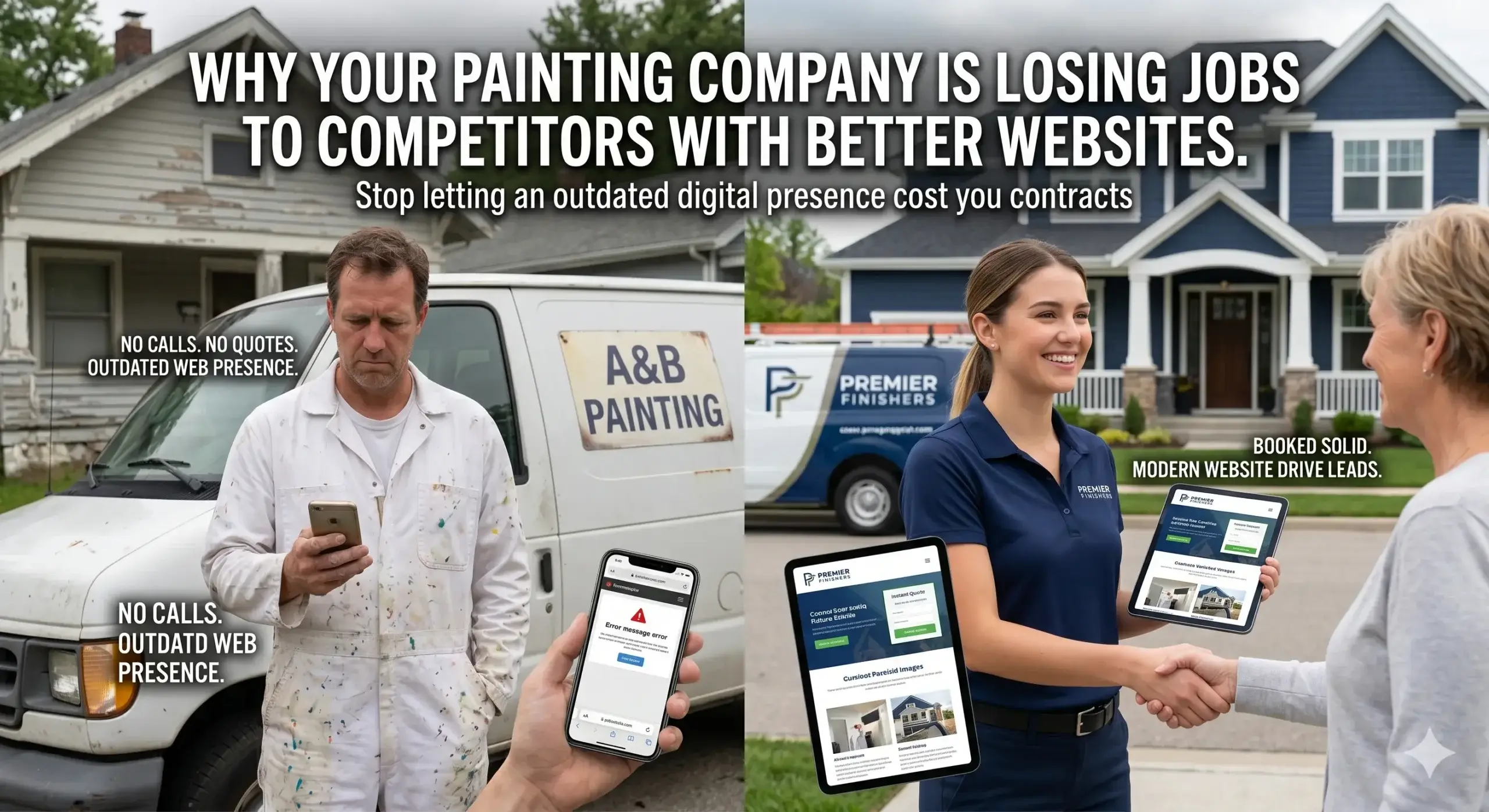
  • Why Your Painting Company Is Losing Jobs to Competitors With Better Websites

    Why Your Painting Company Is Losing Jobs to Competitors With Better Websites

    You did the estimate. You showed up on time. Your work is solid. So why did the homeowner hire the other guy?

    Nine times out of ten, the decision was made before you ever picked up the phone — the moment they typed “painters near me” and started clicking through websites. If yours didn’t look the part, load fast enough, or make it easy to reach you, they moved on. Simple as that.

    Most painting business owners assume they’re losing work because of price. Sometimes that’s true. But more often, there’s a silent leak draining leads every single week — and it’s sitting on your screen right now. This post breaks down exactly what’s happening, why it happens, and what you can do about it. No jargon, no fluff — just real answers a painting business owner can use.


    Your Website Is Like a Job Site Walkthrough — First Impressions Are Everything

    Think about it this way: when a homeowner lets a painter walk through their house for an estimate, they’re already judging — are you professional? Do you seem trustworthy? Did you wipe your boots?

    Your website does that same walkthrough for every person who searches for a painter online. It happens before you ever speak to them.

    If your site looks outdated, loads slowly, or is hard to navigate on a phone, the homeowner’s gut says: this company isn’t careful enough. They close the tab. They call your competitor.

    What this looks like in real life:

    • Blurry before-and-after photos that look like they were taken in 2011
    • Text that’s too small to read on a phone screen
    • No clear “Call Now” button visible without scrolling
    • A contact form that feels like filing taxes

    The fix isn’t about being flashy. It’s about looking like you run a tight, professional operation — because you do. A website built for painting businesses should show that from the very first second.


    If Your Site Takes More Than 3 Seconds to Load, You’re Already Losing

    Here’s something most painting business owners don’t realize: people don’t wait for slow websites. Studies consistently show that most visitors abandon a page if it doesn’t load within a few seconds. On mobile — where most of your potential customers are searching — that window gets even shorter.

    Why it happens: Many websites are built with oversized images, bloated code, or cheap hosting that wasn’t designed to handle real traffic. Your site looks fine when you check it because your browser cached it. For someone new? They’re staring at a loading spinner.

    What it costs you: If even 2–3 people a week leave because your site is slow, and each job is worth $1,500–$5,000, you’re leaving serious money on the table every single month.

    What good painting website design actually does:

    • Compresses images without losing quality
    • Uses fast, reliable hosting built for business
    • Loads fully on mobile in under 2 seconds
    • Puts your phone number front and center — immediately

    Speed isn’t a tech luxury. It’s a sales tool.


    Google Doesn’t Know Enough About Your Business to Show It

    You might have a website. But if Google can’t figure out what you do, where you do it, and why you’re credible, it won’t show your site to people searching for painters in your area.

    The plain-English version: Google reads your website the same way a new customer might skim it. If it doesn’t clearly say “residential painting contractor serving [City]” — with real service pages, location signals, and structured information — Google hedges its bets and sends traffic to the competitors who made it obvious.

    What’s usually missing from painting websites:

    • Individual service pages (interior painting, exterior painting, cabinet painting — not one page that mentions all three)
    • Location-specific content (“serving homeowners in [City] and surrounding areas”)
    • A Google Business Profile that matches the website’s information
    • Basic technical signals that help Google categorize the site correctly

    💡 Pro Tip: One of the most common mistakes painting business owners make is having a single “Services” page that lists everything in a few sentences. Google treats each service as a separate search. If you want to show up for “exterior house painting near me,” that phrase needs its own dedicated page with real detail behind it — not a bullet point buried under five others. This single change can meaningfully improve how often Google shows your site for high-intent searches.


    Your Phone Number Shouldn’t Be a Treasure Hunt

    Pull up your website on your phone right now. How many times do you have to scroll or tap before you can call your own business?

    If the answer is more than zero, you have a problem.

    Most painting customers are deciding quickly. They might be standing in their driveway looking at peeling trim, or sitting at their kitchen table comparing three painters at once. The easier you make it to contact you — the more calls you get. Full stop.

    What a high-converting painting website does differently:

    • Shows a clickable phone number in the top bar on every page
    • Has a simple, short contact form (name, phone, what do you need — done)
    • Includes a clear, direct call-to-action on every section: “Get a Free Estimate”, “Call Now”, “Schedule Today”
    • Makes the next step feel obvious, not optional

    If your competitor’s site has a “Call Now” button visible the moment the page loads and yours doesn’t — they’re getting the call. Every time.


    Real-World Scenario: Before and After

    The business: A residential painting company based in the Midwest. Two crews, solid reputation, mostly word-of-mouth referrals. Owner had a website built years ago by a friend — functional, but bare-bones.

    The problem: They were getting roughly 3–5 website inquiries a month. The site had no individual service pages, loaded slowly on mobile, and the only way to contact them was a form buried at the bottom of the homepage.

    What changed: A new painting website design was built with dedicated pages for interior, exterior, and cabinet painting. The site loaded in under 2 seconds. A click-to-call button was added to the top of every page. Local SEO signals were built in from the ground up.

    The result: Within 90 days, website inquiries went from 3–5 per month to 18–22 per month. The owner didn’t change his prices or add crew — the website just started doing its job.


    Not sure if your painting website has these issues? Get a free website audit — no obligation, just a clear picture of what’s costing you leads.


    Your Path to More Leads: 5 Steps That Actually Work

    You don’t need to become a web designer. You just need a website that does its job. Here’s the straightforward path:

    1. Audit what you have. Look at your site on your phone. Is it fast? Is your number easy to find? Does it explain exactly what you do and where you work? If you’re unsure, a professional audit will tell you fast.
    2. Build dedicated service pages. Interior painting, exterior painting, cabinet refinishing — each one deserves its own page with real descriptions, photos, and a call-to-action.
    3. Fix your speed. Compress your images. Move to reliable hosting. This alone can improve both your Google rankings and the number of people who actually stay on your site.
    4. Make contact frictionless. Click-to-call at the top. Short form. Clear ask. The simpler you make it, the more people follow through.
    5. Work with someone who knows the painting industry. Generic web designers build generic websites. A painting website design agency understands what painting customers are looking for — and builds toward that specifically.

    FAQ: Real Questions From Painting Business Owners

    Why am I not getting calls from my website even though I have one?

    Having a website and having a website that works are two different things. Most painting websites fail on one of three things: they’re hard to find on Google, they load too slowly for people to stick around, or they don’t make it obvious how to contact you. Usually it’s a combination of all three.

    How do I know if my painting website is actually working?

    If you don’t know how many people visit your site each month, how they found you, and how many of them contacted you — you have no visibility. At minimum, you should have Google Analytics installed and be tracking form submissions and phone clicks. If that sounds foreign, it means no one set it up properly.

    How long does it take to see results from a new website?

    A well-built site can start showing results within 60–90 days for local search. Depending on competition in your area, some results come faster. The key is that a properly built website compounds over time — it gets stronger the longer it’s live, not weaker.

    What makes a painting website different from a regular business website?

    Painting customers make decisions based on trust and visuals. They need to see real work, real reviews, and a clear sense that you’re a legitimate, established business. They’re also almost always searching on mobile. A painting website needs to be built around those specific behaviors — not copied from a generic template.

    Do I really need a fast website if my customers are local?

    Yes — especially because your customers are local. They’re searching on their phones, often outdoors or on the go, sometimes on slower connections. If your site doesn’t load fast, they’re gone before they see your work. Local doesn’t mean slow is acceptable. It means speed matters even more.

    How do I know if Digital Trace is the right fit for my painting business?

    The easiest way is to see what they find. Book a free website audit and get a specific breakdown of what’s working, what’s broken, and what it’s costing you in lost leads. No pitch, no obligation — just real information you can use.


    Stop Leaving Jobs on the Table

    Your reputation is solid. Your work speaks for itself. The only thing working against you is a website that isn’t pulling its weight.

    Every week that passes with a slow, hard-to-find, hard-to-use website is another week your competitor is getting calls that should be yours.

    The good news: this is fixable. And it starts with knowing exactly what’s broken.

    Get your free website audit →

    Digital Trace will review your painting website, show you exactly what’s costing you leads, and give you a clear picture of what a high-performing site could do for your business — no strings attached.

    Your next job shouldn’t go to the painter with the better-looking truck. It should go to you — because you have the better website.