Category: Orthodontist

  • How to Choose the Right Orthodontist Web Design Agency in the US (Without Getting Burned)

    How to Choose the Right Orthodontist Web Design Agency in the US (Without Getting Burned)

    You spent thousands on a website. It looks decent enough. But the phone isn’t ringing the way it should, and when you search your own practice on Google, you’re nowhere to be found โ€” yet somehow your competitor down the street always shows up first.

    Most orthodontists assume this is just “how it is.” It’s not. The problem isn’t your location, your prices, or your reputation. In most cases, the culprit is a website that was built to look good in a portfolio screenshot โ€” not to actually win you patients.

    Choosing the wrong web design agency is one of the most expensive mistakes an orthodontist can make. This guide walks you through exactly what to look for, what red flags to avoid, and how to find an agency that treats your website as a patient-generating machine โ€” not a digital checkbox.


    Why Most Orthodontist Websites Quietly Lose Patients Every Day

    Here’s something nobody tells you: a website that isn’t actively winning you patients is actively costing you them.

    Think of your website like your front reception desk. If someone walks in and the desk is cluttered, the staff is slow to respond, and nobody can tell them what to do next โ€” they walk out. That’s exactly what happens on thousands of orthodontic sites every single day. Visitors land, feel confused or unimpressed, and book with whoever showed up next in their search.

    The most common culprits:

    • No clear “next step.” A visitor lands on your homepage and doesn’t immediately see how to book a consultation. They shouldn’t have to hunt for it.
    • Slow load times. Most people are browsing on their phones between school pickups and work meetings. If your site takes more than 3 seconds to load, more than half of those visitors are already gone โ€” before they’ve even seen your phone number.
    • Generic content. If your website could belong to any orthodontist in any city, Google has no strong reason to show it to people in your city.
    • No trust signals. Before a parent books their child’s first ortho consultation, they want to see reviews, before/after photos, staff bios, and proof that you’re the real deal.

    A website that’s missing any of these isn’t just underperforming โ€” it’s handing patients directly to your competitors.


    What “Good Design” Actually Means for an Orthodontic Practice

    A lot of agencies will show you a beautiful mockup and call it done. But for an orthodontic clinic, good design has nothing to do with aesthetics and everything to do with what happens after someone lands on your page.

    Does it load fast on a phone? The majority of people searching for an orthodontist are doing it on a mobile device. A site that looks great on a desktop but loads slowly or breaks on mobile is failing most of your potential patients.

    Does it make the next step obvious? Every page on your site should point visitors toward one clear action โ€” booking a free consultation, calling your office, or at minimum, filling out a contact form. If someone has to scroll and think, you’ve already lost their attention.

    Does it speak to your specific patients? Parents of teens searching for braces have different concerns than adults looking into Invisalign. A high-performing orthodontic website speaks directly to those worries โ€” cost, treatment length, what to expect โ€” and answers them before the patient even has to ask.

    When Digital Trace builds websites for orthodontist practices, every design decision is made with one question in mind: will this bring in more consultations? That’s the only metric that matters.


    The Hidden Reason Your Website Doesn’t Show Up on Google

    Your website might look perfectly fine. But if it’s not showing up when someone in your city searches “orthodontist near me” or “braces for kids [your city],” there’s likely a technical problem hiding underneath the surface.

    Google needs to understand your business before it will confidently send people to you. If your site is missing the right signals โ€” things like proper location information, fast performance, correct page structure, and content that matches what people are actually searching for โ€” Google treats your site like a stranger it doesn’t quite trust yet.

    The most common issues we find when auditing orthodontic websites:

    • No Google Business Profile connection. Your website and your Google listing aren’t talking to each other, which weakens your local search presence.
    • Missing location signals. If Google can’t clearly confirm where your practice is and who you serve, it won’t rank you confidently for local searches.
    • Thin or copied content. Many orthodontic websites use template text that’s nearly identical to hundreds of other practices. Google deprioritizes content it’s seen before.
    • Pages that load too slowly. Speed is a direct ranking factor. A slow site doesn’t just lose visitors โ€” it loses ranking positions too.

    None of this is your fault. Most agencies don’t explain any of this when they hand over a finished site. They deliver the design and disappear.


    ๐Ÿ’ก Pro Tip: The “3-Second Test” Most Orthodontists Never Run

    Pull out your phone right now. Open a browser you don’t normally use (so it’s not cached), and search your practice name. Then tap your website.

    Count to three.

    If you’re still looking at a loading screen โ€” or if the first thing you see is a giant banner image with no immediate call to action โ€” you’ve just experienced what most of your potential patients experience before they leave and call someone else.

    The fix isn’t always a total redesign. Sometimes it’s optimizing your images, consolidating your code, and restructuring your homepage content so the most important information (your location, your services, and how to book) appears immediately. A quick technical audit can reveal exactly what’s slowing you down.


    What a Real Turnaround Looks Like: Before and After

    A two-location orthodontic practice in the Southeast had a website they’d invested in three years prior. It looked professional โ€” clean design, nice photos, branded colors. But new patient inquiries had plateaued, and they were watching a newer competitor down the road consistently outrank them on Google.

    The problems uncovered:

    • The website took 7+ seconds to load on mobile
    • There was no dedicated page for Invisalign (one of their highest-value services), so they weren’t ranking for it at all
    • The homepage had no clear call-to-action above the fold โ€” visitors had to scroll past a large banner image before they could find the “Book a Consultation” button
    • Their Google Business Profile wasn’t linked to the website correctly, weakening their local rankings

    What changed:

    The site was rebuilt with mobile performance as the priority. Dedicated service pages were created for Invisalign, braces for teens, and early orthodontic treatment. The homepage was restructured so the first thing every visitor sees is the practice name, their two locations, and a prominent button to book a free consultation. Local SEO signals were properly connected.

    The result: Within 90 days, organic search traffic had more than doubled. New patient consultation requests from the website went from roughly 8 per month to over 30 โ€” without spending a dollar more on ads.


    Not sure if your website has any of these issues? Get a free website audit โ€” no obligation, just a clear picture of what’s costing you leads.


    What to Ask Before You Hire a Web Design Agency

    Not all web agencies are the same. Some are generalists who build websites for everyone from plumbers to pet stores. Others specialize in healthcare. Very few genuinely understand the orthodontic industry โ€” the patient journey, the competitive landscape, and what actually drives someone to book a consultation.

    Before you sign any contract, ask these questions:

    • Have you built websites specifically for orthodontic practices before? Ask to see examples. If they show you dental sites, that’s not the same thing.
    • How do you measure success? If the answer is anything other than “leads and new patient inquiries,” be cautious.
    • Who owns the website after it’s built? Some agencies lock you into their platform so you can’t leave without losing everything. Make sure you own your domain and your site files outright.
    • What happens after launch? A website needs ongoing maintenance, speed optimization, and content updates to keep ranking. Ask what’s included.
    • Can you explain how you’ll help us rank locally? If they start talking in jargon without connecting it to actual patient volume, that’s a red flag.

    The right agency won’t just build you a site โ€” they’ll treat your practice like a business partner and measure their own success by yours.


    Your Path to More Patients: 5 Steps to Getting Your Website Right

    Step 1: Audit what you have. Before spending anything on a new site, understand what’s actually broken about your current one. Speed, local SEO, mobile experience, and conversion rate are the four areas that matter most. A proper audit takes 30โ€“60 minutes and can save you from making the same mistakes in a new build.

    Step 2: Get clear on who your best patients are. Are you trying to attract more teen braces patients? Adults interested in Invisalign? Both? Your website should be built around their specific questions and concerns โ€” not around what you think sounds professional.

    Step 3: Make sure your site loads fast on mobile. This is non-negotiable. If your site takes more than 3 seconds to load on a phone, fix that before anything else.

    Step 4: Build or rebuild with local SEO built in. Your website needs to clearly signal where you are, who you serve, and what services you offer โ€” in a way that Google can read and trust. This isn’t an afterthought; it needs to be built into the foundation.

    Step 5: Work with an agency that understands orthodontics specifically. Learn how Digital Trace builds orthodontist websites that are designed from the ground up to attract and convert local patients โ€” not just to look nice in a portfolio.


    Frequently Asked Questions

    Why am I not getting calls from my website even though I’m getting traffic?

    Traffic without calls usually means one of two things: the people landing on your site aren’t the right patients (a targeting problem), or they are the right patients but the site doesn’t give them a clear reason to call (a conversion problem). Most orthodontic sites suffer from the second issue โ€” there’s no prominent phone number, no clear next step, and no sense of urgency to book now versus later.

    How do I know if my orthodontic website is actually working?

    If you can’t point to a specific number of consultation requests that came directly from your website each month, your site isn’t working โ€” it’s just existing. A working orthodontic website has clear tracking set up so you know exactly how many people visited, where they came from, and how many contacted you. If your current agency never set that up, that’s a problem worth fixing immediately.

    How long does it take to see results from a new orthodontic website?

    For technical fixes and speed improvements, some results โ€” like improved rankings for branded searches โ€” can show up within weeks. For broader local SEO gains, most orthodontic practices start seeing meaningful increases in organic inquiries within 60โ€“90 days of a proper rebuild. Paid ads can bridge the gap if you need results faster.

    What makes an orthodontic website different from a regular healthcare website?

    Orthodontic patients have a very specific decision process โ€” they’re comparing treatment options (braces vs. Invisalign), comparing practices, and often waiting for the right offer or reason to commit. A generic healthcare website doesn’t address any of that. A well-built orthodontic site speaks directly to those comparisons, highlights financing options, shows real patient results, and makes booking a free consultation feel completely risk-free.

    Do I really need a fast website if most of my patients are local?

    Yes โ€” especially because your patients are local. Local patients are searching on their phones, often in the moment. Google also prioritizes fast-loading sites in local search results. A slow site doesn’t just frustrate visitors; it actively pushes you down in the rankings, handing those local searches to a competitor who invested in performance.

    How do I know if my current agency is doing a good job?

    Ask them for a monthly report that shows new patient inquiries from organic search โ€” not just “traffic” or “impressions.” If they can’t show you that number, or if it’s been flat for more than three months, it’s time for a second opinion. Get a free website audit from Digital Trace and get a clear, honest picture of where you stand.


    Ready to Stop Losing Patients to Your Website?

    Every month your website underperforms is a month of consultations that went to your competitor instead of you. The good news is that most of the problems holding orthodontic websites back are fixable โ€” and finding them starts with a single, honest audit.

    Digital Trace specializes in building high-converting orthodontic websites for practices across the US. No fluff, no lock-in, no generic templates. Just a website that works as hard as you do.

    Get your free website audit today โ€” we’ll show you exactly where you’re losing patients and what it would take to fix it. No pressure, no jargon, no obligation.
  • Orthodontist Website Design Checklist: 15 Must-Have Features to Book More Patients

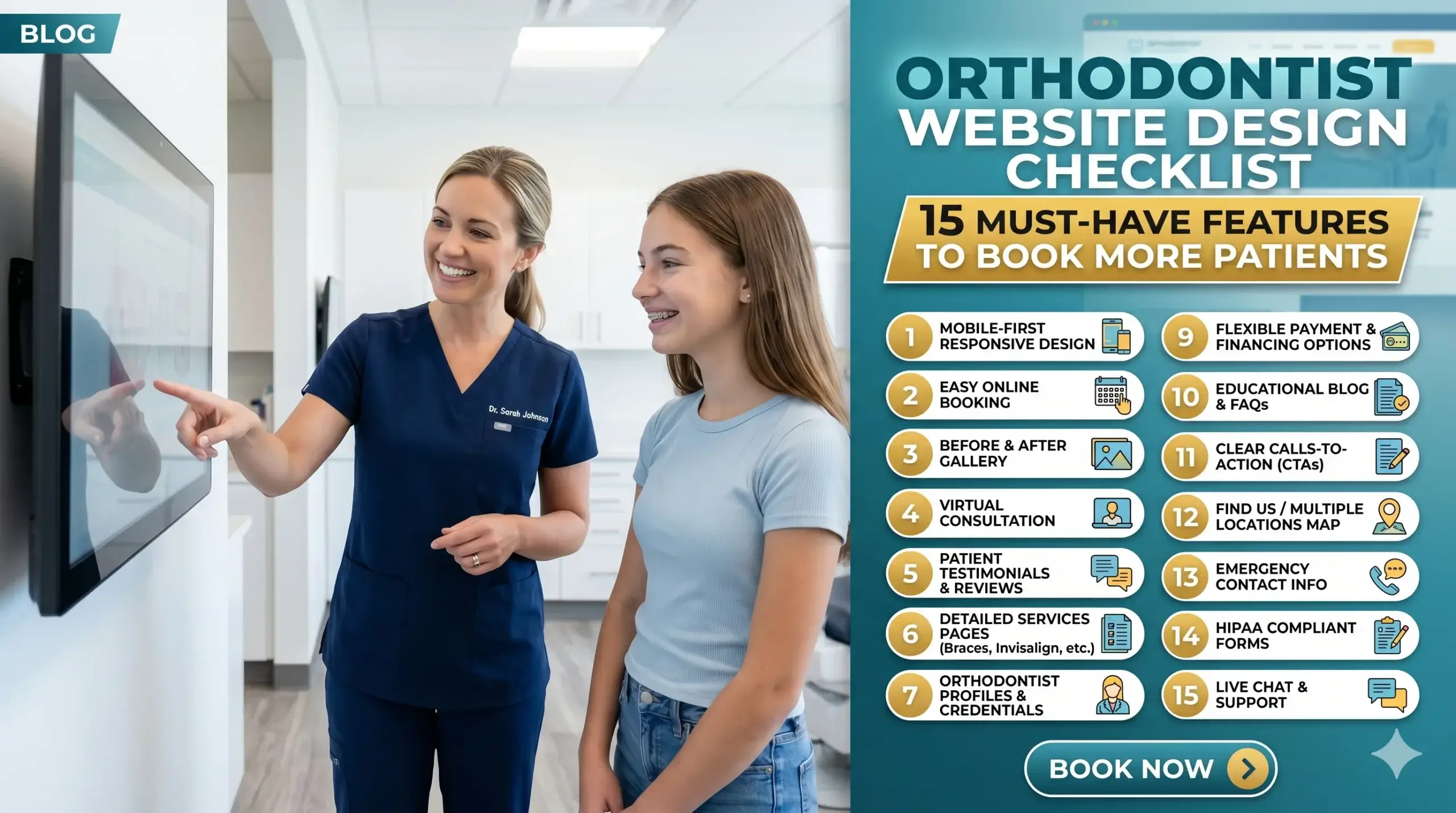
    Orthodontist Website Design Checklist: 15 Must-Have Features to Book More Patients

    You spent real money on a website. Maybe a few thousand dollars, maybe more. It looks clean, it has your logo, your services are listed โ€” and yet your phone still isn’t ringing the way it should.

    Most orthodontists assume the problem is awareness. “Not enough people know about us yet.” But the reality is harsher: people are finding your website โ€” and leaving without calling.

    The problem isn’t your marketing budget. It’s what happens the moment a potential patient lands on your site. Most orthodontic websites are built to look professional, not to perform. There’s a significant difference between the two.

    This checklist breaks down the 15 features that separate a website that books patients on autopilot from one that just sits there. Work through it honestly. By the end, you’ll know exactly what your site is missing โ€” and what it’s costing you.


    1. Your Site Loads in Under 3 Seconds

    Think of your website like a front desk receptionist. If a patient walks in and stands there for 5, 6, 7 seconds without anyone acknowledging them โ€” they leave. A slow website does the same thing.

    Most people won’t wait. Studies consistently show the majority of users abandon a site that takes longer than 3 seconds to load. On mobile, that window is even shorter.

    The technical cause is usually oversized images, outdated hosting, or code-heavy page builders. But the business cost is simple: you’re losing patients before they even see your phone number.

    At Digital Trace, every site we build is optimized for speed from the ground up โ€” not patched after the fact.


    2. Mobile-First Design (Because That’s Where Your Patients Are)

    Over 60% of local searches happen on a phone. If your orthodontic site was designed on a desktop and “made responsive” as an afterthought, patients on mobile are seeing a broken, cramped version of what you intended.

    Buttons that are too small to tap. Text that requires zooming. A “Book Appointment” button buried below the fold.

    A mobile-first design means the phone experience is built first, with desktop as the secondary view โ€” not the other way around. This is one of the single biggest gaps we see in orthodontic clinic website design.


    3. A Click-to-Call Button Above the Fold

    “Above the fold” means what a visitor sees without scrolling. On mobile, if your phone number isn’t tappable within the first screen, you’re adding friction to the single most important action a potential patient can take.

    Your phone number should be a live button in your header โ€” always visible, always tappable. On desktop, it should still be prominent and easy to copy.

    If someone has to hunt for how to contact you, most of them won’t bother.


    4. Clear, Specific Service Pages (Not One Giant “Services” Page)

    One of the most common mistakes in orthodontic website design is lumping everything โ€” braces, Invisalign, retainers, palate expanders โ€” onto a single services page.

    Google can’t rank a page that tries to be about everything. And patients searching for “Invisalign provider near me” want to land on a page specifically about Invisalign โ€” not scroll through a wall of text to find it.

    Each core service deserves its own dedicated page with its own headline, its own content, and its own call to action.


    5. Real Patient Testimonials (With Names and Photos Where Possible)

    Orthodontic treatment is a significant commitment โ€” financially and emotionally. Before a parent books a consultation for their child, or an adult considers clear aligners, they want proof that you’ve done it before and done it well.

    Generic 5-star ratings aren’t enough. Specific testimonials โ€” ideally with first names, the treatment received, and a photo โ€” convert far better than anonymous reviews.

    If you have Google reviews, they should be pulled into your site. If you have before/after cases (with proper consent), they belong on your homepage and service pages.


    6. Before & After Photos That Do the Selling for You

    No amount of copy sells orthodontic treatment like a great smile transformation photo.

    Think of your before/after gallery as a silent salesperson who’s always working. A prospective patient looking at a case that looks like their own situation โ€” crowded teeth, an overbite, a gap โ€” immediately pictures themselves in that result.

    The gallery should be easy to browse, load quickly, and be organized by treatment type where possible. Don’t hide it three clicks deep.


    7. A Prominent, Easy-to-Use Appointment Booking Option

    If the only way to book is to call during business hours, you’re losing the patients who browse at 9pm after putting their kids to bed.

    Online booking โ€” or at minimum a short contact form that promises a fast callback โ€” captures the patient at the exact moment they’re ready to commit. That moment passes quickly.

    The booking option should live in your header, at the bottom of every service page, and in any CTA section throughout the site.


    8. Local SEO Signals Built Into the Page Structure

    Your website needs to tell Google exactly who you are, where you are, and who you serve. Without this, you’re invisible to the most valuable searches: “orthodontist in [city]” or “braces near me.”

    This means your city and state appear naturally in your page headings, your content, and your metadata. It means your Google Business Profile information matches what’s on your site. It means your address and phone number are in the footer on every page โ€” in text, not just an image.

    Google doesn’t know enough about many orthodontic clinic websites to show them confidently in local results. The fix isn’t complicated, but it has to be intentional.


    9. Schema Markup (So Google Reads Your Site Like an Expert)

    Here’s a plain-English version of what schema markup does: it gives Google a cheat sheet about your practice.

    Without it, Google reads your site and makes educated guesses. With it, Google knows you’re a licensed orthodontist, your hours, your location, your services, and your review rating โ€” and it can display that information directly in search results as rich snippets.

    It’s invisible to visitors but enormously valuable for rankings. Most braces websites don’t have it set up correctly.


    ๐Ÿ’ก Pro Tip: Your Homepage Headline Is Costing You Patients

    The most common mistake we see on orthodontic websites? A homepage headline that says something like “Welcome to [Practice Name] Orthodontics.”

    That tells a visitor nothing about why they should choose you. The headline is the first thing someone reads โ€” it’s your one second to prove you understand their situation.

    Try something like: “Straighter Smiles for Kids and Adults in [City] โ€” Without the Wait.” Lead with the benefit and the location. This small change can meaningfully improve how long visitors stay โ€” and whether they call.


    10. Trust Signals in the Right Places

    Trust signals are anything that answers the unspoken question: “Can I trust these people with my family’s teeth?”

    These include:

    • Years in practice
    • Number of patients treated
    • Board certifications and affiliations (AAO membership, for example)
    • Insurance accepted
    • Before/after cases
    • Staff photos and bios

    Most orthodontic websites have some of these โ€” buried in an “About” page nobody reads. The highest-converting orthodontic sites surface trust signals on the homepage and on every service page.


    11. Fast, Clear Navigation That Doesn’t Make People Think

    If a visitor has to pause to figure out where to click, you’ve already lost momentum.

    Your navigation should have no more than 6โ€“7 items. “Services” should expand to show individual treatments. “Contact” should always be visible. There should never be a dead end โ€” every page should guide visitors somewhere logical next.

    Confusing navigation is one of the silent killers of orthodontic website performance.


    12. A Blog or Resource Section (That Actually Earns Rankings)

    A blog isn’t just content for content’s sake. When done right, it’s a lead magnet.

    A parent searching “how long do braces take for teens” or “Invisalign vs braces cost” is a qualified lead. If your site answers that question better than anyone else, Google sends them to you โ€” and your booking button is right there.

    The key word is done right. Thin, generic blog posts don’t rank. Specific, genuinely helpful content written for your actual patients does.


    13. HIPAA-Aware Contact Forms

    This one is easy to overlook and expensive to get wrong. Any form on your site that collects patient information โ€” symptoms, treatment history, insurance details โ€” needs to be handled in a way that’s compliant with HIPAA guidelines.

    A standard contact form plugin is not sufficient. This matters both legally and for patient trust. If a patient doesn’t feel their information is safe, they won’t submit.

    Work with a web design agency that understands healthcare compliance, not just design.


    14. Page Titles and Meta Descriptions That Match What Patients Search For

    Every page on your site has a title that appears in Google search results and a meta description below it. Most orthodontic sites leave these at default โ€” or have them filled with the practice name instead of what patients are actually searching.

    A page titled “Services โ€” Bright Smiles Orthodontics” tells Google nothing useful. A page titled “Invisalign for Adults in Austin, TX | Bright Smiles Orthodontics” tells Google exactly what to rank it for โ€” and tells the searcher exactly why to click.

    This is one of the fastest wins in orthodontic site optimization. It costs nothing to fix, but it has to be fixed deliberately.


    15. Clear, Consistent Calls to Action Throughout the Site

    Every page should answer the question: “What do you want me to do next?”

    Many orthodontic websites assume the visitor will figure it out. They won’t. People follow the path you give them โ€” or they leave.

    Your CTAs should be:

    • Specific (“Book a Free Consultation” beats “Contact Us”)
    • Repeated at natural intervals down the page
    • Consistent โ€” the same offer, the same framing, the same destination

    The goal is zero friction between “I’m interested” and “I’ve booked.”


    Real-World Example: What This Looks Like in Practice

    A two-doctor orthodontic practice in the Southeast had a website they’d paid a local agency to build five years earlier. It looked fine. But they were getting almost no organic traffic and their consultation bookings had plateaued despite a solid local reputation.

    The core problems: the site loaded in over 6 seconds on mobile, there were no individual service pages (Invisalign, braces, and teens’ orthodontics were all on one page), and the homepage headline was the practice name with a stock photo of a family.

    After rebuilding with the right structure โ€” dedicated service pages, mobile speed optimization, updated local SEO signals, real patient testimonials pulled from their Google reviews, and a sticky click-to-call button โ€” organic traffic increased substantially over six months, and consultation bookings from the website more than doubled compared to the same period the prior year.

    Nothing exotic. No paid ads. Just a website that actually worked.


    Not sure if your website has these gaps? Get a free website audit โ€” no pressure, just an honest look at what’s costing you consultations.


    Your Path to More Patients: 5 Simple Steps

    You don’t need to fix everything overnight. Here’s a practical sequence:

    1. Test your site speed โ€” Use Google’s free PageSpeed Insights tool and see where you land. Anything below a 70 on mobile needs attention.
    2. Check your mobile experience โ€” Pull up your site on your phone right now. Is the phone number tappable in the first screen? Is the booking option easy to find?
    3. Audit your service pages โ€” Do you have separate pages for each treatment? If not, that’s your next priority.
    4. Surface your social proof โ€” Move your best testimonials and before/after photos to your homepage. Don’t make patients go looking.
    5. Talk to a specialist โ€” Not a generic web agency, but someone who builds websites specifically for orthodontic practices and understands what converts in this industry.

    Frequently Asked Questions

    Why am I not getting calls from my website even though it looks good?

    A website can look polished and still fail at the one job that matters โ€” converting visitors into patients. The most common culprits are slow load speed, no clear call to action, missing local SEO signals, and a lack of trust-building content. If your phone isn’t ringing, the design isn’t the problem. The structure and strategy are.

    How do I know if my orthodontic website is actually working?

    Look at three things: organic traffic (are people finding you from Google?), bounce rate (are they staying or leaving immediately?), and conversions (how many form fills or calls can be traced back to the website?). If you don’t have Google Analytics or Google Search Console set up, you’re flying blind. A free audit can give you a clear baseline.

    How long does it take to see results from a new orthodontic website?

    Technical improvements โ€” like speed and mobile experience โ€” can improve conversion rates almost immediately. SEO results from new or restructured content typically take 3โ€“6 months to build momentum. The practices that get the best results treat their website as an ongoing asset, not a one-time project.

    What makes an orthodontic website different from a general dental or healthcare site?

    Orthodontic patients โ€” or more often, their parents โ€” are doing longer research cycles before booking. They’re comparing treatment types (braces vs. Invisalign), looking at payment options, and reading reviews carefully. An effective orthodontic website needs to address all of these touchpoints, not just announce that you exist. The content strategy, the trust signals, and the service page structure are all specific to how orthodontic patients make decisions.

    Do I really need a fast website if most of my patients come from word-of-mouth?

    Word-of-mouth still sends people to your website. When a friend recommends your practice, the first thing a parent does is Google you. If your site is slow, hard to navigate on mobile, or doesn’t clearly show your results โ€” you lose that referral. A fast, well-built website protects and amplifies the reputation you’ve already earned.

    How much does a proper orthodontic website redesign cost?

    It depends on the size of your practice, the number of service pages needed, and whether content is being created from scratch. More important than the upfront cost is the return: a website that books 5โ€“10 additional consultations per month pays for itself quickly. The real cost is leaving an underperforming site live month after month.


    Stop Leaving Patients on the Table

    Every week your orthodontic website has these gaps is a week of potential consultations going to the practice down the street โ€” the one with a faster site, a clearer CTA, and better Google visibility.

    This isn’t about having a prettier website. It’s about fixing a business problem that’s costing you real revenue.

    Digital Trace works specifically with orthodontic practices to build high-converting websites that rank, load fast, and turn visitors into booked consultations. No guesswork. No generic templates.

    Book your free website audit today โ€” we’ll show you exactly what your current site is missing and what it would take to fix it. No obligation. No sales pressure. Just a clear, honest picture of where you stand.

  • Why Your Orthodontic Practice Is Losing Patients to Competitors With Better Websites

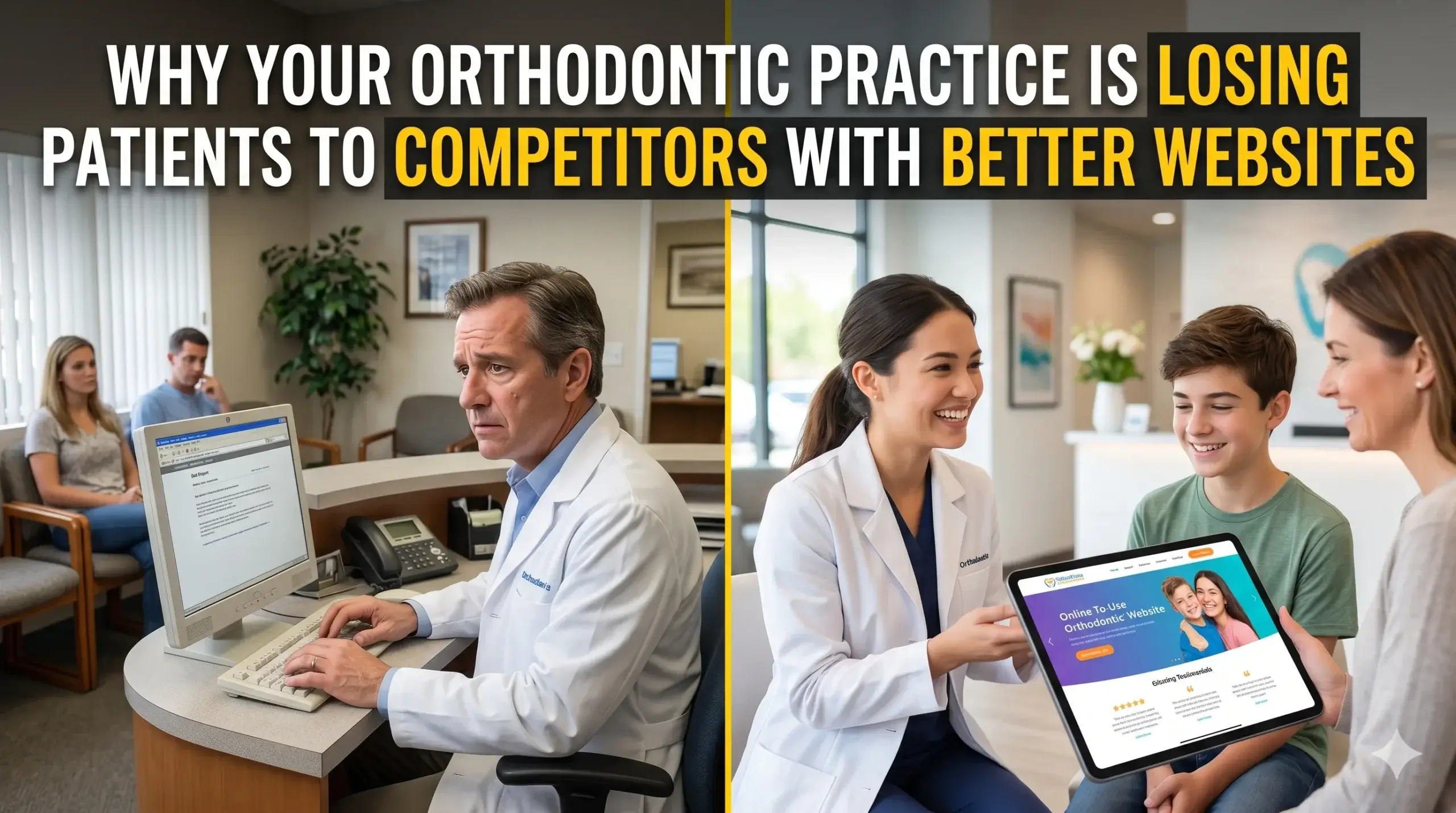
    Why Your Orthodontic Practice Is Losing Patients to Competitors With Better Websites

    You’re a skilled orthodontist. Your results speak for themselves. Patients who walk through your door leave with straighter teeth and bigger smiles โ€” so why isn’t your phone ringing the way it should be?

    Here’s what most orthodontists don’t realize: the moment a potential patient searches “orthodontist near me,” they’re already comparing you to every other practice in their area. Before they’ve read a single review, before they’ve called anyone โ€” they’ve already formed an opinion based entirely on your website. If that site looks outdated, loads slowly, or doesn’t make it obvious how to book a consultation, they’re gone. And they’re booking with your competitor down the street.

    This isn’t about having a “pretty” website. It’s about having orthodontic website design that actually works โ€” one that turns curious visitors into booked consultations. This article breaks down exactly where practices like yours are losing patients online, and what the best orthodontic websites do differently.


    Your Website Is Your Front Desk โ€” And Right Now, It’s Turning People Away

    Think about what happens when someone calls your practice and gets a busy signal five times in a row. They hang up and call the next orthodontist on the list. That’s precisely what a slow, confusing, or outdated website does โ€” except it happens silently, dozens of times a day, without you ever knowing.

    Most patients searching for an orthodontist will decide within seconds whether to stay on your site or go back and click on a competitor. If your homepage takes more than three seconds to load, a significant portion of those visitors leave before they’ve even seen your phone number.

    The technical term is “page speed,” but the business reality is simpler: slow sites cost you patients. Every. Single. Day.

    What Digital Trace does instead: Every orthodontist website design we build is engineered for speed from the ground up โ€” not as an afterthought. That means faster load times on phones, tablets, and desktops, so the first impression patients get is a practice that feels modern and trustworthy.


    Most Orthodontic Websites Are Built for the Doctor, Not the Patient

    This is the mistake almost every practice makes. The website talks about the doctor’s credentials, their certifications, their awards. And while those things matter, they’re not the first thing a worried parent wants to see at 9pm when their teenager just had a wire pop loose.

    Patients searching for orthodontic care are asking a handful of very specific questions:

    • Do you treat kids and adults, or just one?
    • What does Invisalign cost, roughly?
    • How do I book my first appointment?
    • Are you taking new patients?

    If a visitor has to hunt around your site to find any of those answers, you’ve already lost them. The best orthodontic websites answer those questions immediately โ€” above the fold, on the homepage, without making anyone click three times to find a phone number.

    The fix: Great web design for orthodontists starts with understanding the patient journey, not just the practice’s story. Your site should guide a first-time visitor from “I’m curious” to “I’m booking” in as few steps as possible.


    Your Website Is Invisible on Google โ€” and You Don’t Know It

    Here’s a scenario that plays out constantly: an orthodontist invests in a beautiful website, pays a designer a few thousand dollars, and then… nothing changes. The phone doesn’t ring any more than before. The site looks great. So what went wrong?

    Looking good and ranking on Google are two completely different things. A site can be visually stunning and still be completely invisible to search engines.

    Google looks at dozens of factors when deciding which orthodontist to show in search results. Among the most important:

    • Whether your site is optimized for mobile โ€” over 70% of searches happen on phones, and Google ranks mobile-first
    • Whether Google understands what your practice offers โ€” there’s a layer of behind-the-scenes information that tells Google you’re an orthodontist in a specific city, not just a generic healthcare website
    • Whether other reputable sites link back to yours โ€” this tells Google your practice is established and trustworthy

    Without these pieces in place, your site is like a beautiful office with no sign outside and no address listed anywhere. Patients can’t find you even when they’re actively looking.


    ๐Ÿ’ก Pro Tip: The “Invisible Practice” Problem

    One of the most common and costly issues we see on orthodontic websites is missing local business schema โ€” a small piece of code that tells Google exactly who you are, where you’re located, what you offer, and how to reach you. Without it, Google has to guess. And when Google guesses wrong (or not at all), your practice doesn’t show up in the local results map, even for patients searching in your own zip code. This isn’t a huge technical project โ€” it’s a relatively simple fix that can make a significant difference in how often your practice appears in local searches.


    The “Braces Before and After” Problem: Your Content Isn’t Doing Enough

    Many orthodontists rely almost entirely on before-and-after photos to sell their services. And while transformation photos are powerful, they’re not enough on their own. Prospective patients also want to understand the process โ€” what it’s like to be a patient at your specific practice.

    When your website has thin, vague content โ€” generic paragraphs that could describe any orthodontist anywhere โ€” Google treats your site as interchangeable with every other practice. There’s no reason to rank you above someone else.

    The practices with the best orthodontic websites go deeper. They have individual pages for Invisalign, traditional braces, retainers, and early treatment for kids. Each page speaks to a specific patient concern. That structure tells Google: this practice is an authority. Show them first.


    Real Results: What Happens When You Fix the Foundation

    Consider a two-doctor orthodontic group in the Southeast. They had a website built six years ago by a generalist designer who did nice work โ€” but it wasn’t built for patient acquisition. The site was slow on mobile, had no local schema, and lumped all their services onto a single page. They were showing up on page two and three of Google for their most important search terms, while a newer solo-practice competitor had jumped to the top of local results.

    After working with Digital Trace on a full orthodontic website redesign, they saw mobile load times drop by more than half. Individual service pages were built for each treatment type. Local schema was implemented correctly. Within four months, they moved from page two to top-five rankings for their core local searches โ€” and the number of new patient consultation requests coming through the website more than doubled compared to the prior quarter.

    No ad spend increased. No big marketing campaigns. Just a website that finally worked the way it was supposed to.


    Not sure if your website has these issues? Get a free website audit โ€” no obligation, just a clear picture of what’s costing you leads.


    What the Best Orthodontic Websites Actually Have in Common

    After building and auditing websites for orthodontic practices across the US, the pattern is consistent. The practices generating the most new patient inquiries online share these traits:

    • A clear, prominent call-to-action on every page โ€” “Book a Free Consultation” isn’t buried at the bottom; it’s visible immediately
    • Mobile-first design โ€” the site looks and works perfectly on a phone screen, not just a desktop
    • Dedicated pages for each treatment โ€” Invisalign, traditional braces, pediatric ortho, adult ortho, and retainers all have their own pages
    • Fast load times across all devices โ€” under two seconds is the target
    • Real patient testimonials and photos โ€” not just stock images and generic praise
    • A simple, friction-free contact experience โ€” short form, visible phone number, and if possible, online scheduling

    None of these are revolutionary. But getting all of them right at the same time, optimized for both patients and search engines, is where most practices fall short.


    Your Path to More Patients Online

    If you’re reading this and recognizing your own practice in what’s described above, here’s a practical path forward:

    Step 1: Audit what you have. Don’t assume your current site is fine just because it looks okay to you. Test your mobile load speed (Google’s PageSpeed Insights is free). Open your site on your own phone and try to book an appointment as if you’d never been there before.

    Step 2: Identify the gaps. Are your services broken out into individual pages? Does your site show up when you search your city + “orthodontist”? Is your phone number visible without scrolling?

    Step 3: Fix the technical foundation first. Speed, mobile performance, and local SEO signals need to be correct before anything else you do will work properly.

    Step 4: Build content that answers patient questions. Detailed, specific pages about each treatment type will outperform a single generic “Services” page every time.

    Step 5: Get a professional review from someone who specializes in orthodontic clinic website design. A generalist agency may build you a beautiful site that does nothing for your rankings or lead flow. An agency that understands your industry will know what orthodontic patients are actually searching for โ€” and build toward those results.


    Frequently Asked Questions

    Why am I not getting calls from my website even though it looks good?

    A good-looking website and a high-performing website are two different things. If your site isn’t optimized for search engines, doesn’t load quickly on mobile, or doesn’t have clear calls-to-action, visitors may land on it and leave before they ever pick up the phone. Design is what patients see โ€” performance is what brings them there and keeps them engaged.

    How do I know if my orthodontic website is actually working?

    If you’re not tracking where your new patient inquiries are coming from, you genuinely don’t know. A working website will show up in local Google search results, load quickly on phones, and generate consistent consultation requests through your contact form or direct calls. If you can’t say for certain that your site is doing those three things, a free website audit will tell you exactly where you stand.

    How long does it take to see results from a new orthodontic website?

    It depends on what’s being fixed and how competitive your local market is. Technical fixes like speed improvements can show results quickly. SEO improvements โ€” better rankings, more organic traffic โ€” typically take three to six months to build meaningfully. The practices that see the fastest results are the ones that address design, speed, and SEO together rather than treating them as separate projects.

    What makes an orthodontic website different from a regular business website?

    Orthodontic patients have very specific concerns and a longer decision cycle than most consumers. They’re comparing multiple practices, looking at before-and-after results, trying to understand costs and financing, and often making the decision for their child, not just themselves. A website built for orthodontists needs to address those specific trust factors, present treatment options clearly, and make the path to booking a consultation as easy as possible โ€” none of which a generic template site does well.

    Do I really need a fast website if most of my patients are local?

    Yes โ€” especially because most of your patients are local. The majority of local searches happen on mobile phones, often while people are on the go. Google actively ranks faster sites higher in local search results, which means a slow site hurts both your user experience and your visibility to the exact patients you’re trying to reach.

    I’ve worked with agencies before and didn’t see results. Why would this be different?

    That’s the most common frustration we hear. Most agencies that offer “website design” are generalists โ€” they build sites for restaurants, law firms, and orthodontists alike using the same template approach. The difference with orthodontist-specific design is that the structure, content, and SEO strategy are built around what orthodontic patients actually search for and what motivates them to book. If you’ve been burned before, start with a free audit โ€” no pitch, just an honest look at what your current site is doing and what it isn’t.


    Ready to Find Out What Your Website Is Really Costing You?

    Most orthodontic practices have no idea how many patients they’re losing online every week โ€” not because they’re failing at their craft, but because their website isn’t built to compete. The practices pulling in consistent new patient inquiries from Google aren’t doing anything extraordinary. They have websites that work: fast, clear, mobile-optimized, and visible in local search.

    Digital Trace specializes in orthodontic website design for practices across the US. We find what’s broken, fix what’s costing you leads, and build sites that actually convert visitors into consultations.

    Get your free website audit today โ€” no obligation, no pressure. Just a straight answer about where your website stands and what it would take to make it work harder for your practice.

  • 10 Best Orthodontic Websites and Why They Convert So Many Patients

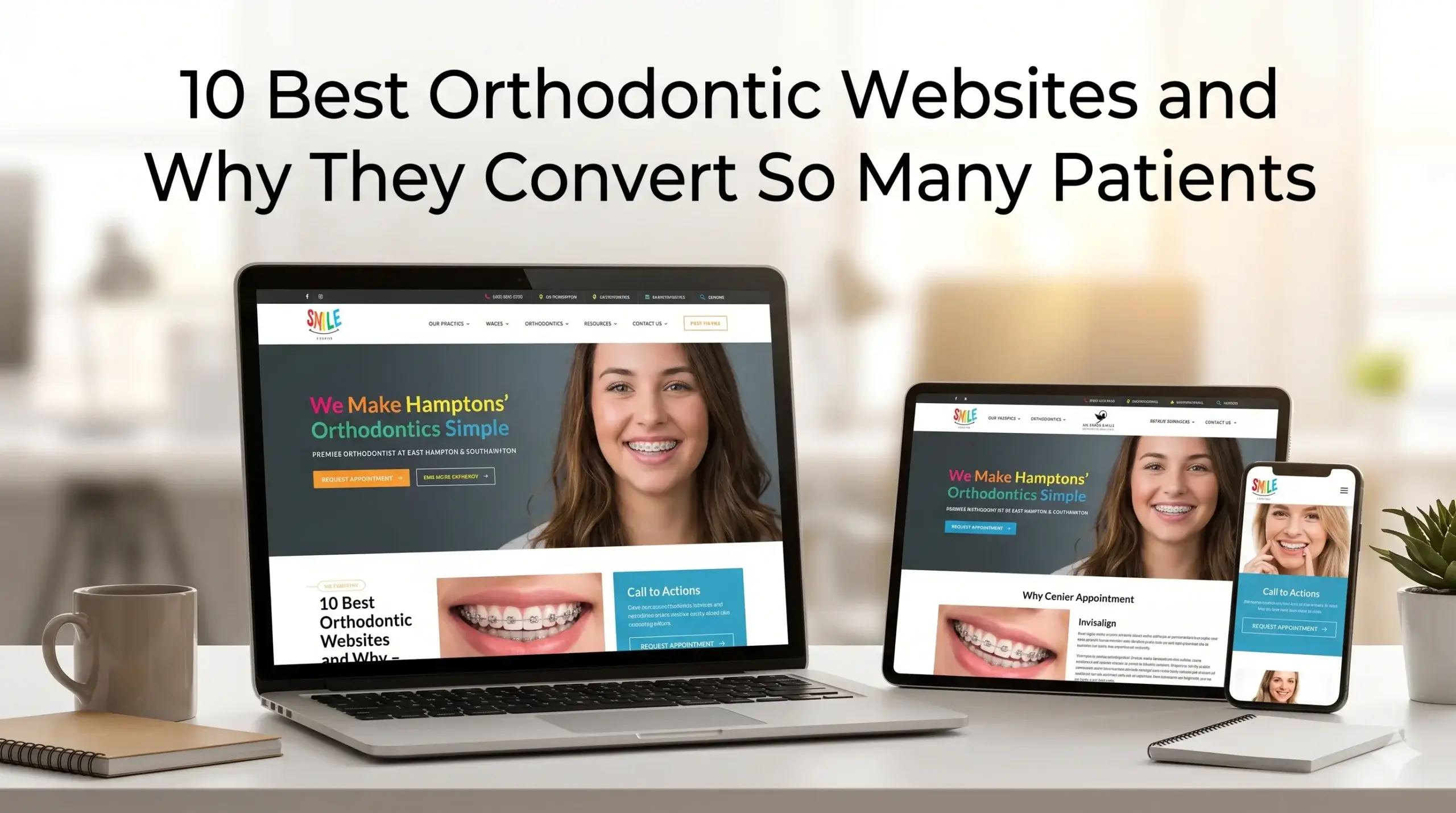
    10 Best Orthodontic Websites and Why They Convert So Many Patients

    Your waiting room is full on Tuesdays, but empty on Fridays. Your front desk tells you calls have been slow. You’ve spent money on a website โ€” maybe even redesigned it in the last few years โ€” but you still can’t tell if it’s actually bringing in new patients or just sitting there looking nice.

    Most orthodontists assume their website is “fine.” The truth is, a site that looks fine and a site that actively books consultations are two completely different things. The gap between them is costing you real patients every single month.

    This article breaks down what the best orthodontic websites actually do differently โ€” and more importantly, what your site might be doing wrong that’s quietly draining your new-patient pipeline.


    What Separates a Great Orthodontic Website From One That Just Exists

    Think of your website like your front desk receptionist. A great one greets every visitor with confidence, answers their questions before they even ask, and walks them toward booking. A mediocre one just stares at them blankly until they leave.

    Most orthodontic websites are the mediocre receptionist.

    Here’s what the best ones do instead:

    • They load fast โ€” before the visitor’s patience runs out (usually within 3 seconds)
    • They speak directly to the patient’s concern, not just the practice’s credentials
    • They make the next step โ€” booking, calling, requesting info โ€” completely obvious
    • They look and feel trustworthy on a phone screen, where most patients are browsing

    The best orthodontic website design isn’t about flashy animations or trendy fonts. It’s about removing every possible obstacle between a nervous first-time visitor and a booked consultation.


    The 10 Website Elements Top Orthodontic Practices Get Right

    1. A Clear, Patient-Focused Headline Above the Fold

    Most orthodontic websites open with something like “Welcome to Smith Orthodontics โ€” Serving Families Since 2003.” That’s not what a nervous parent searching “braces for my teen” needs to see.

    The best sites open with something that speaks directly to the patient: “Straighter Smiles, Faster Than You Think โ€” Book a Free Consultation Today.” It tells the visitor they’re in the right place and what to do next โ€” in one line.

    What to check: Can a first-time visitor understand what you do, who you help, and what to do next within 5 seconds of landing on your page? If not, they’re leaving.


    2. Mobile Design That Actually Works

    More than 60% of people searching for an orthodontist are doing it from their phone. Yet most orthodontic websites are built for a desktop and then squeezed onto mobile as an afterthought.

    The result: tiny buttons, text that runs off the screen, and a phone number that isn’t clickable. Every one of those friction points is a lost call.

    The top orthodontic websites treat mobile as the primary experience โ€” big tap targets, click-to-call buttons front and center, and forms that don’t require a stylus to fill out.


    3. Speed That Doesn’t Test a Parent’s Patience

    Your site loads too slowly โ€” and most people leave in the first 3 seconds before they even see your phone number. This isn’t an exaggeration. Google’s own data consistently shows that conversion rates drop sharply with every additional second of load time.

    Slow sites are usually caused by uncompressed images, cheap hosting, or outdated page builders. These are fixable. But most practices don’t realize it’s happening because the site loads fine on their office desktop โ€” connected to fast Wi-Fi.

    Test your site on a mobile connection. If it takes more than 3 seconds, you’re losing patients before they’ve read a single word.


    4. Before-and-After Photo Galleries Done Right

    Orthodontics is a visual specialty. Parents and teens want to see results. The best orthodontic websites feature real, high-quality before-and-after photos organized by treatment type โ€” Invisalign, metal braces, ceramic braces.

    What most practices do instead: a tiny gallery buried three clicks deep, or stock photos that don’t show real patient outcomes.

    Your results are your best sales tool. If visitors have to hunt for them, they’ll go to a competitor whose results are front and center.


    5. Offers That Reduce the Risk of Saying Yes

    One of the biggest barriers a new patient faces is the fear of commitment. Orthodontic treatment is a significant investment. The best websites acknowledge this directly by leading with a low-risk first step: a free consultation, a complimentary records review, or a same-week exam.

    Practices that bury their offer โ€” or don’t have one at all โ€” ask visitors to make a big decision with very little reassurance. The best orthodontic sites remove that hesitation with a clear, low-pressure invite.


    6. Reviews and Social Proof Where Patients Can Actually See Them

    Google reviews matter โ€” but only if people see them. The best orthodontic websites don’t just hope patients will check Google before calling. They pull real reviews directly onto the homepage, near the booking button.

    A nervous parent reading “My daughter loved her Invisalign experience โ€” the team was so patient with her” right before clicking “Book Now” is far more likely to follow through than one who has to go searching for reassurance.

    Pro tip: Don’t just show a star rating. Show the actual review text, with a real first name. Specificity builds trust.


    7. Clear, Specific Service Pages for Each Treatment

    When someone searches “Invisalign provider near me,” they don’t want to land on your generic “Services” page and hunt around. They want a dedicated Invisalign page that tells them: how it works, how long it takes, how much it costs (even a range), and what to do next.

    The best orthodontic websites have individual, detailed pages for every major treatment. These pages rank better on Google, answer patient questions faster, and convert at a much higher rate than a catch-all services page.


    8. A Booking System That Works at 11 PM

    A busy mom doesn’t have time to call during office hours. She’s researching orthodontists after her kids are in bed. If your website doesn’t let her request an appointment online โ€” or at least submit a form โ€” you lose her to the practice that does.

    The top orthodontic websites integrate with scheduling tools or offer a simple, fast contact form with same-day follow-up promises. The best ones confirm the request instantly with an automated response so she knows her inquiry was received.


    9. Local SEO Signals Baked Into the Site

    Google doesn’t know enough about your orthodontic practice to show it confidently in local search results โ€” there’s a simple fix for that. It’s called structured data (or schema markup), and it tells Google exactly who you are, where you are, what you offer, and what your patients say about you.

    Without it, your site is speaking to Google in a foreign language. With it, Google can surface your practice for “orthodontist near me” and specific treatment searches in your area with much more confidence.

    This is one of the most consistently overlooked elements in orthodontic website design โ€” and one of the highest-impact fixes available.


    10. A Team Page That Shows Real People

    Orthodontic care is personal. Patients โ€” especially teens โ€” want to know who’s going to be working on their teeth. The practices with the best-converting websites don’t hide their team behind stock photography or a generic paragraph.

    They show real photos, real names, short bios that include personality, and sometimes a video introduction. It sounds simple. It works.


    ๐Ÿ’ก Pro Tip: The One Page Most Orthodontic Websites Get Wrong

    Nearly every orthodontic website has a homepage, a services page, and a contact page. Almost none of them have a well-optimized page for each specific treatment targeting their local area โ€” like “Invisalign in [City]” or “Teen Braces [City].”

    These local treatment pages are some of the highest-converting pages an orthodontic website can have, because they match exactly what a patient is searching for. Building them isn’t complicated, but it does require knowing how to structure them so Google reads them correctly and ranks them. This is a core part of how Digital Trace builds websites for orthodontic practices.


    A Real-World Before-and-After: What a Better Website Actually Changes

    Consider a two-doctor orthodontic practice in the Midwest โ€” established for over a decade, strong word-of-mouth, but struggling to grow through digital channels. They had a website that had been built about six years prior. It looked acceptable on desktop, loaded slowly on mobile, had no online booking, and their team page featured photos that were nearly a decade old.

    Their front desk was answering calls, but the practice owner noticed that new-patient call volume had plateaued despite more people in the area searching for orthodontists. They weren’t showing up in local searches for “Invisalign near me” or “braces for teens” โ€” their two highest-margin services.

    After a full redesign focused on speed, mobile experience, local treatment pages, and integrated scheduling:

    • Mobile load time dropped from 8.4 seconds to under 2 seconds
    • Online appointment requests went from near-zero to 20โ€“30 per month within the first quarter
    • Calls from new patients increased noticeably within 60 days of launch
    • Their Invisalign page began ranking on the first page of Google for local searches within 90 days

    The practice didn’t change their pricing, their team, or their marketing spend. They changed their website โ€” and it started doing the work their old site never did.


    Not sure if your orthodontic website has these issues? Get a free website audit โ€” no obligation, just a clear picture of what’s costing you new patients.


    Your Path to More New Patients: 5 Practical Steps

    You don’t need to overhaul everything at once. Here’s where to start:

    1. Test your site on your phone, on mobile data. Not your office Wi-Fi. If it’s slow or hard to use, your patients are experiencing the same thing.
    2. Check if you can book online. If someone lands on your site at 10 PM on a Sunday, can they request an appointment? If the answer is no, you’re sending patients to whoever says yes.
    3. Find your reviews โ€” and put them front and center. Don’t rely on patients to go looking for reassurance. Bring it to them, on the page where they make the decision to call.
    4. Search your own treatments locally. Type “Invisalign [your city]” and “braces [your city]” into Google. If your practice isn’t showing up, your site likely doesn’t have the pages or the signals Google needs to rank you.
    5. Talk to a web team that knows your industry. Orthodontic website design isn’t the same as building a restaurant site or a law firm site. The questions patients ask, the barriers they face, and the conversion paths that work are specific to your specialty.

    Frequently Asked Questions

    Why am I not getting calls even though I have a website?

    Having a website and having a website that works are different things. Most orthodontic sites are built to look good โ€” not to guide a visitor toward booking. If your site loads slowly, doesn’t work well on mobile, or doesn’t make the next step obvious, visitors leave without calling. A free audit can show you exactly where the drop-off is happening.

    How do I know if my orthodontic website is actually bringing in patients?

    If you can’t tell โ€” that’s already a problem. Your website should be trackable. You should know how many people visit, where they come from, which pages they view, and how many contact you. If you’re not looking at this data monthly, you’re flying blind on one of your biggest marketing assets.

    How long does it take to see results from a new orthodontic website?

    Most practices start seeing improvements in inquiry volume within 60โ€“90 days of launching a properly built site. Local SEO results โ€” ranking for searches in your area โ€” typically build over 3โ€“6 months. The important thing is that every month you delay, you’re losing patients to practices whose sites are already doing this right.

    What makes an orthodontic website different from a regular business website?

    Orthodontic patients have specific concerns: cost, time commitment, how treatment will look, whether their teen will cooperate. A great orthodontic website addresses these directly, with treatment-specific pages, real before-and-after results, financing information, and a booking process that reduces friction. A generic website template doesn’t do any of this well.

    Do I really need a fast website if most of my patients are local?

    Yes โ€” especially because they’re local. Local searches on Google heavily favor sites that load fast and work well on mobile. Google’s ranking algorithm penalizes slow sites. And local patients browsing on their phones will leave just as fast as anyone else if your site takes 8 seconds to load. Speed isn’t a luxury; it’s a ranking and conversion factor.

    How do I get started if I’m not sure what my site needs?

    The easiest first step is a free audit. Book a free website audit with Digital Trace โ€” it takes just a few minutes to request, and you’ll get a clear picture of what’s working, what isn’t, and what’s actually costing you new patients. No sales pressure, no obligation.


    Ready to Find Out What Your Website Is Costing You?

    Every week your orthodontic website underperforms is a week you’re handing new patients to competitors whose sites do the job yours doesn’t.

    Digital Trace specializes in orthodontist website design โ€” not generic web design, not sites built from templates that could belong to any practice in any city. We build fast, conversion-focused websites specifically for orthodontic practices across the US, backed by local SEO strategy that actually gets you found.

    The first step is free, and it’s specific to your practice.

    Get your free website audit โ†’

    No obligation. No jargon. Just a clear, honest look at what your site is doing โ€” and what it’s leaving on the table.

  • How Much Does Orthodontist Website Design Cost in 2026? (Complete Pricing Guide)

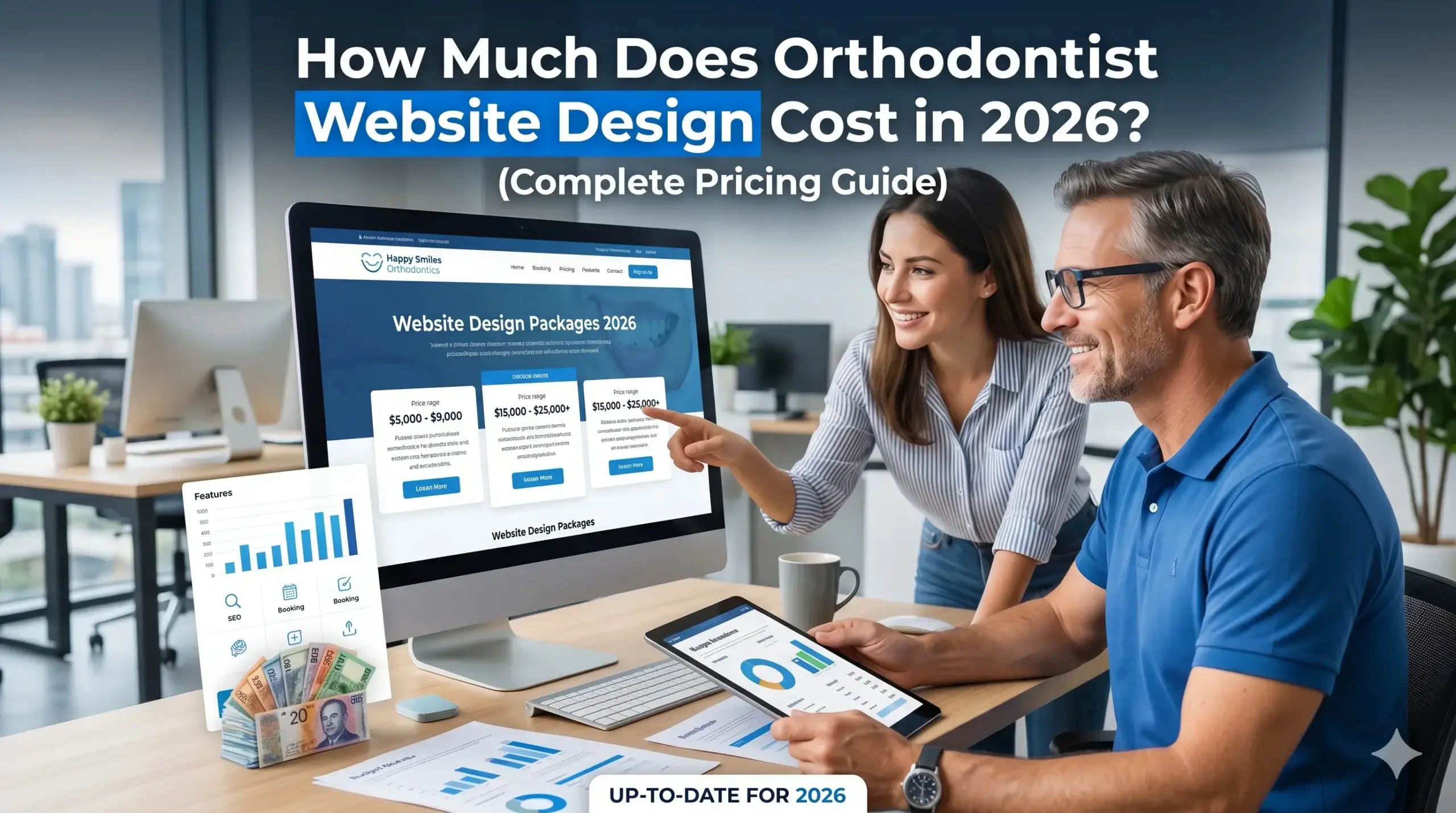
    How Much Does Orthodontist Website Design Cost in 2026? (Complete Pricing Guide)

    You invested years in your training, built a practice you’re proud of, and put up a website โ€” and yet the phone isn’t ringing the way it should. Patients are out there searching for an orthodontist, but they’re booking with someone else.

    Most orthodontists assume this is a budget problem. “We just need to run more ads.” But in the majority of cases, the problem is the website itself โ€” not traffic, not marketing spend, not word-of-mouth. The website is either invisible to Google, confusing to visitors, or too slow to hold anyone’s attention long enough to call.

    This guide breaks down exactly what orthodontic website design costs in 2026, what separates a site that generates patients from one that just exists, and how to know which category yours falls into. By the end, you’ll know what to spend, what to expect, and what questions to ask before hiring anyone.


    Why Most Orthodontist Websites Don’t Actually Work

    Think of your website the way you think about a patient’s first consultation. If the consult room is hard to find, the front desk seems confused, and the patient can’t figure out next steps โ€” they leave. They don’t book. They go somewhere else.

    Your website is that consultation experience, happening silently, 24/7, without you in the room.

    A website that “doesn’t work” isn’t always one that looks bad. It’s one where:

    • It takes more than 3 seconds to load on a phone (most patients are on mobile)
    • The homepage doesn’t immediately answer “Do you treat adults/kids/teens?” and “How do I get started?”
    • Google can’t confidently determine what you offer, where you are, or who you serve
    • There’s no clear path from “landing on the page” to “booking a consultation”

    The result? Visitors leave. Google stops ranking you. Your competitor โ€” who may be a less experienced orthodontist โ€” gets the call instead.


    What Orthodontist Website Design Actually Costs in 2026

    Pricing in this space ranges enormously, from a few hundred dollars to $20,000+. Here’s what those tiers actually deliver.

    Tier 1: $500โ€“$2,500 โ€” Template Sites and DIY Builders

    This is the Wix, Squarespace, or freelancer-on-a-budget range. You get a site that looks presentable on a desktop but typically:

    • Loads slowly on mobile (where 70%+ of your patients are searching)
    • Uses a generic template that looks identical to dozens of other practices
    • Has no SEO strategy, no local optimization, no conversion structure
    • Offers no ongoing support when something breaks or needs updating

    For a practice doing $500K+ per year, this is the equivalent of printing your braces ad on napkins. It exists, technically.

    Tier 2: $2,500โ€“$7,500 โ€” Mid-Range Custom or Semi-Custom Design

    This is the most common range for small and mid-size orthodontic practices. At this level, you should expect:

    • A custom design built around your brand and patient demographics
    • Mobile-first build (designed for phones, not retrofitted)
    • Basic local SEO setup โ€” Google Business integration, location pages, correct contact structure
    • Clear calls-to-action: “Book a Consultation,” “See Financing Options,” “Invisalign vs. Braces” comparison pages
    • Integration with your scheduling platform

    Quality varies significantly at this tier. The difference between a $3,000 site and a $7,000 site is often the depth of conversion strategy and the SEO architecture built in from day one โ€” not just how it looks.

    Tier 3: $8,000โ€“$20,000+ โ€” Fully Custom, Performance-Optimized Orthodontic Sites

    At the top end, you’re investing in a site that’s engineered to generate patients, not just describe your practice.

    This includes:

    • Custom development with performance optimization (sub-2-second load times)
    • Full local SEO buildout across all service areas
    • Schema markup so Google understands and confidently displays your practice
    • Content strategy targeting the specific searches your patients use (“affordable braces near me,” “Invisalign for adults,” “orthodontist that accepts Medicaid”)
    • Conversion-focused design with A/B tested layouts
    • Ongoing optimization, not a one-time handoff

    Practices in competitive metro areas โ€” Dallas, Chicago, Phoenix, Miami โ€” often need this tier to rank and convert reliably.


    The Real Difference Between a “Pretty” Site and One That Books Patients

    Here’s a question worth sitting with: Is your website designed to impress other dentists, or to book patients?

    Most orthodontic websites are built to look professional in a portfolio. The agency takes a screenshot, posts it to their Instagram, and moves on. Whether the site actually converts patients is rarely measured.

    A site built to book patients works differently:

    Speed first. If your site takes more than 3 seconds to load on a phone, more than half your visitors are already gone โ€” before they’ve seen your name. This isn’t theoretical; it’s what Google’s own data shows repeatedly. Fast sites rank better and convert better.

    Trust signals, immediately. New patients are anxious. They want to know: Do you treat kids? Do you offer payment plans? Are you taking new patients? Are you near me? These answers should appear above the fold โ€” within the first screenful โ€” without requiring anyone to scroll or click.

    One clear next step. A confused visitor does nothing. Every page of your site should have one obvious action: “Book Your Free Consultation.” Not three options. Not a contact form buried in the footer. One button, one purpose.

    See how Digital Trace builds websites built for orthodontist businesses โ†’


    What Most Orthodontic Website Agencies Don’t Tell You

    Here’s where orthodontists commonly get burned.

    You paid for design. You didn’t pay for results.

    Many agencies deliver a beautiful website, hand over the keys, and disappear. The site may look excellent in a browser on a 27-inch monitor. But if it wasn’t built with SEO structure, mobile performance, and conversion logic from the start โ€” it’s a brochure, not a patient-generation machine.

    A design agency’s job ends at launch. A results-focused orthodontic web agency’s job starts there.

    Your old site is costing you money right now.

    A slow, poorly structured, or non-mobile-optimized website doesn’t just fail to bring in new patients โ€” it actively costs you patients who found you and then left. If your site has a 70% bounce rate (most do), that means 7 out of 10 visitors are leaving without calling. On even 300 visitors a month, that’s 210 potential patients walking out the door each month.

    Google needs to understand your practice before it will rank it.

    There’s a common technical gap on most orthodontic websites called schema markup โ€” essentially a set of invisible labels that tell Google what your business is, what it offers, where it’s located, and what hours it keeps. Without it, Google makes its best guess. With it, you appear with rich results: star ratings, hours, address โ€” the kind of search result that gets clicked.


    ๐Ÿ’ก Pro Tip: The #1 Mistake Orthodontists Make with Their Websites

    Most orthodontists have one location page โ€” if that. But patients search the way they think: “orthodontist in [neighborhood],” “braces near [zip code],” “Invisalign in [suburb].” If your website only targets your city name, you’re invisible to patients three miles away searching in their specific area. The fix is building dedicated location or neighborhood pages targeting the specific communities your practice serves. It’s one of the fastest ways to expand your local search footprint without spending more on ads.


    Real-World Scenario: What a Better Site Actually Changes

    Dr. Martinez runs a two-location orthodontic practice in the suburbs of Atlanta. Her practice had been open for eight years โ€” great reputation, strong word-of-mouth, good reviews โ€” but her website was built in 2019 and hadn’t been touched since.

    The problems weren’t obvious from the outside. The site looked fine. But it loaded in 6.8 seconds on mobile, had no separate pages for her Marietta and Smyrna locations, and her Invisalign page was a single paragraph with no keyword structure.

    After a redesign focused on performance, local SEO, and conversion:

    • Mobile load time dropped to under 2 seconds
    • Two location-specific pages were built targeting each service area
    • Organic search traffic from “orthodontist Marietta” and “Invisalign Smyrna” moved from page 3 to page 1 within 4 months
    • New patient consultation requests from the website increased from roughly 8 per month to 31 per month

    The practice didn’t change. The word-of-mouth didn’t change. The ad spend didn’t change. The website did.


    Not sure if your site has these issues? Get a free website audit โ€” no obligation, just a clear picture of what’s costing you leads.


    Your Path to More Patients: 5 Steps That Actually Work

    Step 1: Audit what you have. Before spending anything, understand what’s broken. Speed, mobile experience, SEO structure, and conversion flow should all be evaluated. (This is exactly what the free audit covers.)

    Step 2: Prioritize mobile performance. If your site loads in more than 3 seconds on a phone, that’s the first fix. Everything else is secondary.

    Step 3: Build your local SEO foundation. Make sure Google knows exactly what you offer, where you are, and who you serve. This means properly structured location pages, accurate schema markup, and a Google Business profile that’s connected and optimized.

    Step 4: Design around the patient decision โ€” not the practice profile. Your homepage should answer the four questions every new patient has before they’ll call: What do you offer? Do you serve people like me? How do I get started? Can I afford this?

    Step 5: Choose an agency that measures outcomes. Ask any agency you’re considering: “How will you measure whether this site is generating more patients?” If the answer involves traffic reports and rankings only โ€” not consultation bookings โ€” that’s a red flag. Results mean patients in chairs.

    Learn more about how Digital Trace builds websites for orthodontist practices โ†’


    Frequently Asked Questions

    Why am I not getting calls from my website even though it looks good?

    Looking good and performing well are two different things. Most underperforming orthodontic websites have the same three problems: they load too slowly on phones (killing the user experience before it starts), they don’t clearly guide visitors to take action, and Google doesn’t rank them well because the SEO structure is missing or weak. A visual redesign without fixing these underlying issues won’t change your results.

    How do I know if my orthodontist website is actually working?

    If you don’t know how many consultation requests came from your website last month, your website isn’t being treated as a business tool โ€” it’s being treated as wallpaper. A working site has measurable outcomes: form submissions, phone call tracking, and lead attribution. If your current agency can’t tell you those numbers, that’s a problem worth solving. A free website audit can show you exactly where patients are dropping off.

    How long does it take to see results from a new orthodontic website?

    Conversion improvements โ€” more people calling from the same traffic โ€” can happen within days of a better site launching. SEO results, meaning more people finding your site through Google, typically take 60โ€“120 days to show meaningful movement, and 4โ€“6 months to solidify rankings for competitive terms. Practices that combine a performance-optimized site with a strong local SEO strategy consistently see significant gains within the first two quarters.

    What makes an orthodontist website different from a regular business website?

    Orthodontic patients have specific anxieties: cost, treatment time, pain, whether their insurance is accepted, and whether the orthodontist specializes in their situation (kids vs. adults vs. complex cases). A website built specifically for orthodontic practices addresses these concerns directly โ€” through treatment comparison pages, financing information, before/after galleries, and patient journey content โ€” in a way a generic template never would. The conversion flow for an orthodontic practice is also different, because the goal is always a consultation booking, not an immediate purchase.

    Do I really need a fast website if most of my patients are local and referred by word-of-mouth?

    Yes โ€” because even referred patients Google you before they call. A referral is not a guarantee. If someone’s friend recommends you and they pull up your website on their phone and it’s slow, cluttered, or hard to navigate, a meaningful percentage of them will quietly look at another practice instead. A slow website is a trust problem, not just a technical one.

    What should I ask a web design agency before hiring them for my orthodontic site?

    Ask three things: “Can you show me orthodontic websites you’ve built that rank on page one for local searches?” “How do you measure success after the site launches?” and “What happens when I need updates or something breaks โ€” am I on my own?” Agencies that can’t answer these confidently have built sites, not results. The right partner treats your website as an ongoing asset, not a one-time project.


    Ready to See What Your Website Is Costing You?

    Your website is running right now โ€” either working for you or working against you, around the clock. Most orthodontists are surprised to discover just how many leads their current site is quietly losing each month.

    A free website audit from Digital Trace takes a clear-eyed look at your speed, local SEO, mobile experience, and conversion structure โ€” and shows you exactly where the gaps are. No jargon, no sales pitch. Just a concrete picture of what’s holding your practice back online.

    Get your free orthodontist website audit โ†’

    There’s no cost, no obligation, and no commitment. Just real answers about what your website is โ€” and isn’t โ€” doing for your practice.