Category: Logistics

  • Logistics Website Design vs. a Generic Business Site: The Hidden Cost of Getting It Wrong

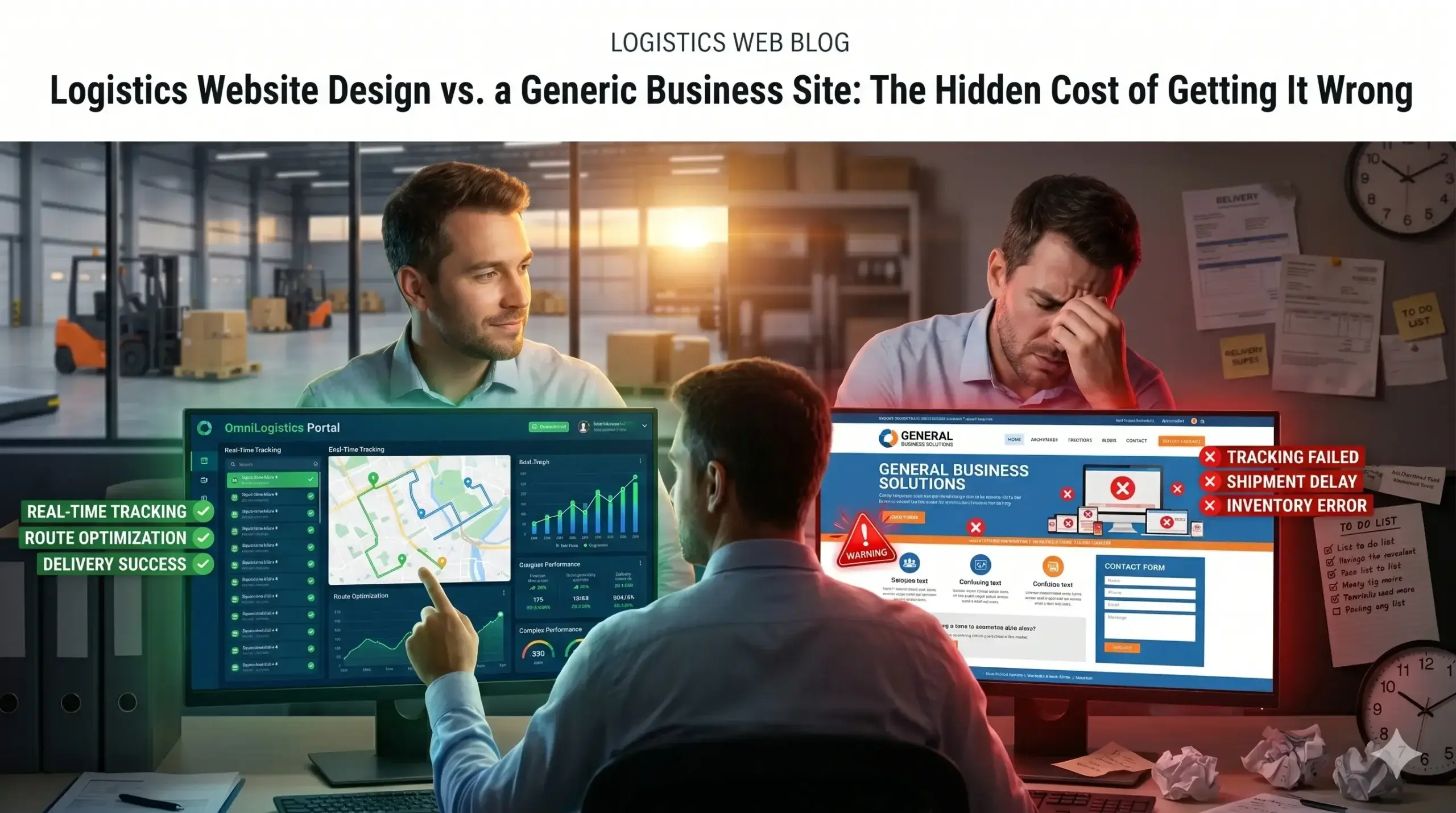
    Logistics Website Design vs. a Generic Business Site: The Hidden Cost of Getting It Wrong

    You paid for a website. Maybe a few thousand dollars, maybe more. It looks decent, loads okay, and has your phone number on it. So why isn’t it bringing in new business?

    Most logistics business owners assume their website “just needs more traffic.” But traffic isn’t the problem. The problem is that a generic website — the kind built for any business in any industry — is quietly costing you customers every single day. And you’d never know it from looking at the site.

    There’s a significant difference between a website that sits there and one that actively works to bring you freight contracts, fleet clients, and logistics partnerships. By the end of this article, you’ll know exactly what that difference looks like — and how to tell which one you have.


    Your Website Looks Professional, But Shippers Are Still Calling Your Competitor

    Here’s the frustrating reality: a logistics business can have a clean, modern-looking website and still rank nowhere near the top when a shipper searches “freight carrier [city]” or “third-party logistics provider near me.”

    Generic websites aren’t built around how buyers in the logistics space actually search. A manufacturer looking for a reliable carrier isn’t typing “business services.” They’re searching specific terms — lane coverage, freight types, capacity availability. If your site doesn’t speak that language, Google won’t show it to the right people.

    The technical reason is straightforward: Google ranks pages based on relevance to specific search intent. A logistics company website design built around your actual services, service areas, and freight specialties signals relevance in a way a one-size-fits-all template never will.

    What this costs you: Every week your site sits invisible in search results is another week your competitor picks up the RFQ you never heard about.


    A Slow Website Is Like a Truck That Won’t Start — Nobody Waits Around

    Picture this: a procurement manager needs a carrier quote before end of day. They click your website link, and it takes six seconds to load. They’re gone before your logo even appears.

    Page speed isn’t a nice-to-have. It’s the first impression. Studies consistently show that most users abandon a website if it doesn’t load within three seconds — and in logistics, where decisions are time-sensitive, that window is even shorter.

    Generic websites built on bloated templates are loaded with unnecessary code, unoptimized images, and third-party scripts that slow everything down. A purpose-built logistics company website design is engineered lean from the start — fast on desktop, fast on mobile, fast for the dispatcher checking your site from a truck stop.

    What this costs you: Slow load times mean fewer people ever see your services, your credibility, or your contact form. You’re losing leads before a single word is read.


    Google Doesn’t Know Enough About Your Logistics Business to Rank It

    Think of Google as a freight broker. It needs enough information to match the right carrier (your website) to the right shipper (the person searching). If your site doesn’t clearly communicate what freight you handle, where you operate, and who you serve — Google hedges its bets and shows someone else instead.

    The technical side of this is called structured data and on-page signals. It’s how Google reads your site to understand: Is this a full truckload carrier or an LTL broker? Do they service the Midwest? Do they handle temperature-controlled freight?

    A generic business template doesn’t provide those answers. A logistics website built by Digital Trace is structured so that Google can confidently match your business to the people actively searching for your specific capabilities.

    What this costs you: Without clear signals, your site competes against thousands of irrelevant results instead of ranking where it should — directly in front of shippers and fleet managers looking for exactly what you offer.


    💡 Pro Tip: One of the most common mistakes logistics companies make is listing their services in vague, broad terms like “transportation solutions” or “supply chain management.” These phrases mean everything and nothing. Your website should name your actual freight types, lanes, and equipment — dry van, reefer, flatbed, LTL, FTL, intermodal. The more specific your language, the more Google trusts that you’re the right answer for specific searches. This applies to your page titles, service descriptions, and even your image labels.


    Visitors Land on Your Site and Leave Without Calling — Here’s Why

    Getting someone to your site is only half the job. Once they arrive, your website has about 10 seconds to convince them to stay, trust you, and take action.

    Generic websites fail this test constantly. They’re designed to look good in a portfolio screenshot — not to move a skeptical logistics buyer toward picking up the phone. They bury the contact information, lead with company history instead of customer problems, and offer no clear reason to choose you over the carrier down the road.

    A high-converting logistics website does three things immediately:

    • States clearly who you serve and what you handle (not “we provide transportation solutions” — but “FTL and LTL carrier serving the Southeast, specializing in automotive and industrial freight”)
    • Shows proof fast — real lanes, real equipment, real capacity, real testimonials from actual clients
    • Makes it frictionless to act — a visible phone number, a simple quote request form, a clear next step

    What this costs you: A visitor who lands on your site and leaves without calling is a real opportunity lost. Multiply that by dozens of visitors per month, and you’re watching revenue walk out a door you didn’t know was open.


    What Happens When a Logistics Website Actually Does Its Job: A Real Scenario

    Consider a mid-sized regional carrier operating out of the Midwest — 18 trucks, solid reputation with existing clients, but struggling to land new accounts outside of referrals. Their website was five years old, built by a general web agency, and hadn’t been touched since. It ranked for their company name and nothing else.

    Before: Their site averaged around 200 monthly visitors, almost entirely existing contacts. Inbound leads from the website: near zero. Every new client came through a sales call or word of mouth.

    After rebuilding with a logistics-focused approach: The new site was structured around their actual freight specialties (refrigerated and flatbed), their primary lanes (IL to TX, OH to GA), and their target customers (food manufacturers and building suppliers). Load times dropped from 7 seconds to under 2. Local and regional search terms started ranking within 90 days.

    Within six months: monthly organic visitors grew to over 900, inbound quote requests averaged 8–12 per month, and they closed three new contract accounts worth over $280,000 in annual revenue — none of which came from outbound sales activity.

    The site didn’t just look better. It worked.


    Not sure if your logistics website has these same problems? Get a free website audit — no obligation, just a clear picture of what’s costing you leads.


    Your Path to More Leads from Your Logistics Website

    If you want your website to actually generate business, here’s what that path looks like:

    1. Audit what you have. Understand your current traffic, rankings, and load speed before changing anything. You need a baseline to measure against.
    2. Get specific about who you serve. Your website should name your freight types, lanes, equipment, and ideal customer — not offer vague descriptions that fit everyone and attract no one.
    3. Fix your speed. If your site takes more than 3 seconds to load on a phone, you’re losing leads before the page even appears. This is fixable.
    4. Build for the buyer’s journey. The first page a shipper sees should answer: Can you handle my freight? Where do you operate? Why should I trust you? How do I contact you? In that order.
    5. Track what’s working. A logistics website that’s actually performing will show you increasing organic traffic, lower bounce rates, and real inbound inquiries. If you can’t measure it, you can’t improve it.

    Digital Trace handles all of this — from the technical foundation to the content strategy — specifically for logistics businesses. No guesswork, no generic templates.


    Frequently Asked Questions

    Why am I not getting any calls from my website?

    The most common reasons are that your site isn’t ranking for the searches your customers actually use, or it’s ranking but not convincing visitors to act. A site can look polished and still fail on both counts. A quick audit usually reveals the exact gap within minutes — you can get one here for free.

    How do I know if my logistics website is actually working?

    If you can’t tell where your inbound leads come from, that’s your answer. A working logistics website drives measurable organic traffic, produces inbound quote requests, and ranks for freight and carrier searches in your service area — not just your company name.

    What makes a logistics website different from a regular business website?

    Logistics buyers search differently, evaluate differently, and decide differently than retail consumers. They need to see lane coverage, freight types, equipment lists, and capacity information — not a homepage hero image and a vague tagline. A logistics-specific website is built around that buying process from the ground up.

    How long does it take to see results from a new website?

    Most logistics businesses start seeing meaningful movement in organic traffic within 60–90 days of launching a properly built, optimized site. Significant ranking gains and consistent inbound leads typically follow within four to six months. The timeline depends on your market, competition, and how targeted the build is.

    Do I really need a fast website if my clients aren’t looking for carriers on their phone?

    Yes — because Google uses mobile performance to rank your site for everyone, including desktop users. A slow mobile site tanks your search rankings across the board, which means shippers searching on their desktop still may never find you. Speed is a ranking factor, not just a user experience issue.

    I’ve worked with web agencies before and didn’t see results. Why would this be different?

    Most general agencies build websites that look great in a presentation and produce no business results. The difference is industry focus. Digital Trace builds specifically for logistics companies — the content strategy, the technical setup, and the conversion structure are all built around how freight buyers actually search, evaluate, and decide.


    Stop Letting Your Website Cost You Freight Contracts

    Every week a logistics business runs on a generic, underperforming website is another week of inbound leads going to a competitor with a better-built site. The good news: the problems are fixable, and they’re usually faster to address than most business owners expect.

    Digital Trace specializes in logistics company website design — websites that rank, load fast, speak the language of your buyers, and convert visitors into quote requests and new accounts.

    Book your free website audit today — we’ll show you exactly what your current site is costing you and what it would take to fix it. No pitch, no pressure. Just a clear, honest look at where you stand.
  • Logistics Company Website SEO: How to Rank #1 When Shippers Search for Carriers in Your Area

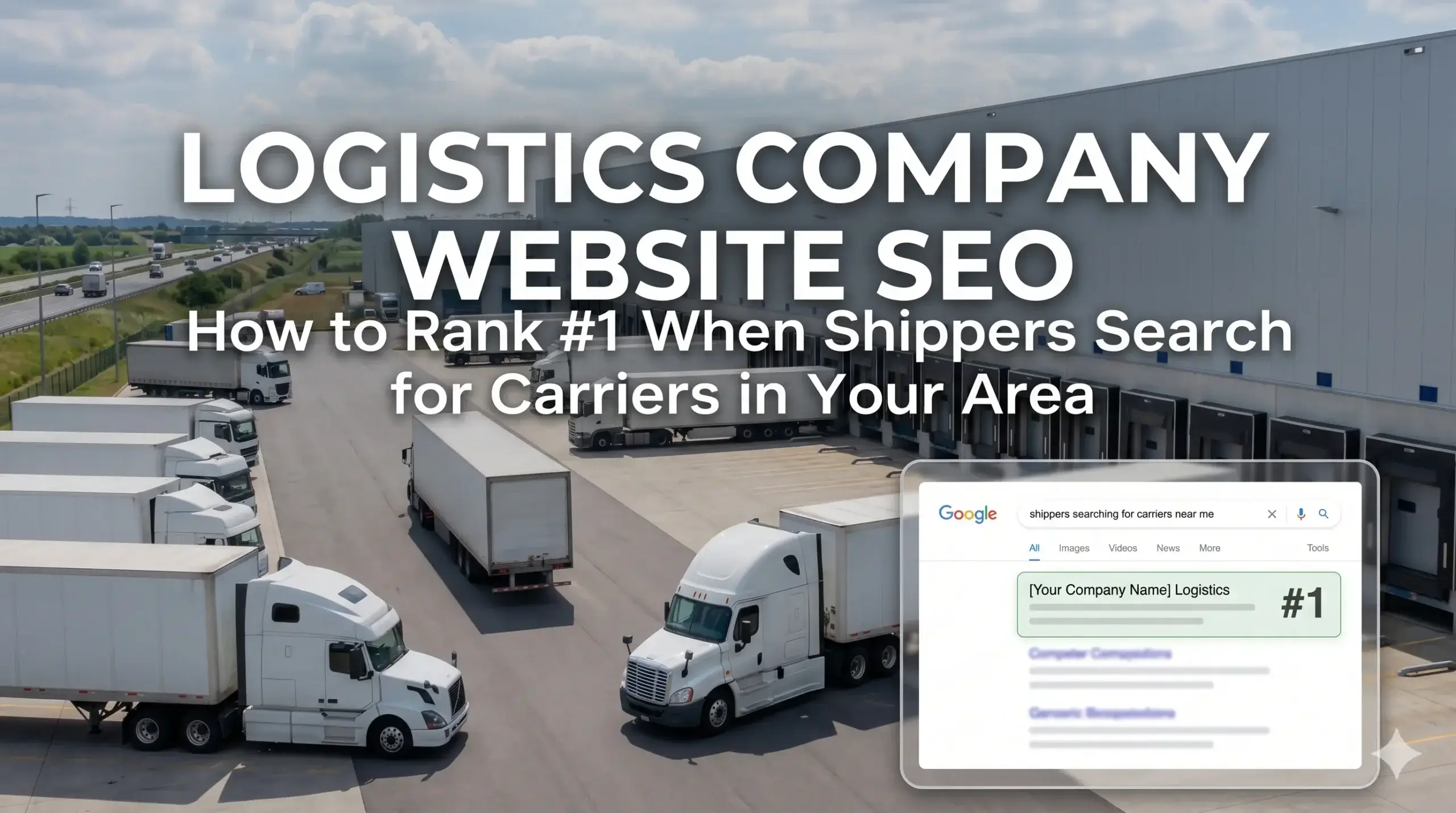
    Logistics Company Website SEO: How to Rank #1 When Shippers Search for Carriers in Your Area

    You’ve built a real business. You’ve got trucks on the road, drivers you trust, and routes you run every week. But when a shipper in your area goes to Google and types “freight carrier near me” or “local trucking company,” your name isn’t showing up — and someone else is getting that call.

    That’s not a marketing problem. It’s a website problem — and it’s more fixable than you think.

    Most logistics business owners assume they’re not ranking because they “need more SEO.” What’s actually happening is more specific: their website is missing the signals Google needs to trust it, and it’s missing the experience that makes a shipper want to pick up the phone. The good news is that once you know what’s broken, fixing it produces measurable results — more calls, more quote requests, more contracts.

    This article walks you through exactly what’s costing you visibility and leads, and what a properly built logistics company website design actually looks like.


    Your Website Is Like a Truck with No Markings Running a Route Nobody Knows About

    Think about it this way: if your truck had no company name, no DOT number, and no contact info on the side, shippers couldn’t identify you on the road — and dispatchers couldn’t vouch for you. Your website works the same way.

    Google is the dispatcher. It needs to know who you are, where you operate, what you haul, and whether you’re a credible carrier before it sends business your way. A generic, poorly structured site gives Google almost none of that information — so Google sends shippers to someone else.

    The fix isn’t just “add more content.” It’s about building your site so it speaks Google’s language while speaking your customer’s language at the same time.


    Why Shippers Can’t Find You (Even When You’re Right in Their Area)

    Your Site Doesn’t Tell Google Where You Actually Operate

    Most logistics websites have a Contact page with a city and state. That’s not enough. Google needs to see your service areas, your lanes, and your location tied to your business in multiple places — your homepage, your service pages, your footer, and in structured data that Google reads in the background.

    When that information is missing or scattered, Google can’t confidently show your business to shippers in your area. You may be the best carrier in three states, but if your site doesn’t make that clear, you’re invisible.

    The fix: Your site needs dedicated service area content, consistent NAP (name, address, phone) data, and what’s called “local schema markup” — a few lines of code that tell Google exactly what you do and where. How Digital Trace builds logistics websites includes all of this from day one.

    Your Homepage Talks About You — Not What the Shipper Needs

    Walk through your current homepage and count how many times it says “we” versus how many times it addresses the shipper’s actual problem. Most logistics sites lead with company history, fleet size, or mission statements. Shippers don’t care about your founding year. They want to know: Can you move my freight reliably, on time, to the right place?

    When your site doesn’t answer that question in the first five seconds, the shipper hits the back button — and goes to your competitor.

    The fix: Lead with what you solve, not who you are. Your homepage should immediately communicate your lanes, your reliability, and how to get a quote. Keep the “about us” story — but put it after the value.

    Your Website Loads Too Slowly to Compete

    Most shippers searching for carriers are on the go — a phone call away from making a decision. If your website takes more than three seconds to load on a mobile device, a significant portion of visitors will leave before they ever see your phone number.

    Slow load times don’t just cost you visitors. Google actively penalizes slow sites in search rankings. So you’re losing on two fronts: fewer people find you, and the ones who do leave before calling.

    The fix: Image compression, proper hosting, and technical cleanup can dramatically improve load times. It’s not glamorous work — but it’s often the single fastest way to improve both rankings and conversions.


    The Hidden Problem: Google Doesn’t Know Enough to Trust Your Site

    Missing Signals That Tell Google You’re Legitimate

    Google ranks businesses it trusts. Trust, in Google’s world, comes from signals: reviews, citations, backlinks from relevant sources, consistent business information across the web, and a website that’s technically sound.

    Logistics businesses often have strong reputations offline but weak digital footprints. If your business isn’t listed consistently on freight directories, trucking associations, and local business profiles — or if your website has broken links, duplicate content, or outdated pages — Google sees you as a lower-confidence result.

    That means shippers searching in your exact service area see your competitors first, even if you’ve been in business longer and have a better track record.

    Your Competitors Have Done the Work — You Can Catch Up

    Here’s something worth knowing: in most local logistics markets, the top-ranked carriers aren’t necessarily the biggest or the best. They’re the ones whose websites are built correctly. That means a mid-sized regional carrier with a well-structured, fast, keyword-relevant site will consistently outrank a large operation with a neglected website.

    This is actually good news. You don’t need a massive marketing budget. You need a site that’s built right.


    💡 Pro Tip

    The most common mistake logistics companies make: using one generic page for every service.

    If you offer LTL freight, FTL loads, and regional delivery, each of those should have its own dedicated page — not a single “Services” page that mentions all three in a paragraph. Google needs specific pages to rank for specific searches. A shipper searching “LTL freight carrier Ohio” won’t find you if that keyword only appears once buried on a general services page. Build out individual pages for each service and each primary service area. It’s one of the fastest ways to expand your ranking footprint.


    Real-World Example: What Changes When a Logistics Site Is Built Right

    Before: A regional flatbed carrier based in the Midwest had been in business for 11 years. They had a website built around 2018 that hadn’t been updated since. It loaded slowly, had no service area pages, and ranked on page 4 for their primary search terms. The owner was getting most new business through referrals and a few broker relationships — but wanted to grow direct shipper relationships. He figured the website “was fine” since it had all his contact info.

    After: A full rebuild was done with proper service area pages for each state they operated in, individual pages for flatbed and step-deck loads, fast mobile load times, and a homepage that led with shipper pain points rather than company history. Within four months, the site was ranking on page 1 for six target searches in their primary lanes. Direct quote requests through the website went from near zero to a consistent 8–12 per month. One of those turned into a dedicated lane contract worth over $180,000 annually.

    The site didn’t change the business. It made the business findable.


    Not sure if your logistics website has these issues? Get a free website audit — no obligation, just a clear picture of what’s costing you leads.


    Your Path to More Leads: 5 Steps to a Logistics Website That Actually Works

    1. Audit what you have. Before changing anything, understand what’s broken. A proper audit looks at load speed, keyword rankings, content gaps, and technical errors — and prioritizes what will move the needle fastest.
    2. Build service area and service-specific pages. Each lane you run and each service you offer deserves its own page with specific, relevant content. This is how you get found for searches that are actually worth money.
    3. Clean up your business listings. Make sure your name, address, and phone number are identical across Google Business Profile, freight directories, and your website. Inconsistencies hurt rankings more than most people realize.
    4. Make it fast and mobile-ready. Most of your potential customers are checking their phones between loads. Your site needs to load in under three seconds and be easy to navigate on a small screen.
    5. Add clear calls to action. Every page should make it obvious what the shipper should do next — call you, request a quote, or fill out a form. Don’t make them hunt for your contact information.

    Frequently Asked Questions

    Why am I not getting calls from my website even though it looks decent?

    Looking good and performing well are two different things. A site can have professional photos and a clean layout but still fail to rank because it’s missing the technical signals Google needs — proper page structure, service area content, schema markup, and page speed. If shippers can’t find your site in search, it doesn’t matter how good it looks.

    How do I actually know if my logistics website is working?

    The clearest sign is whether you’re getting inbound quote requests or calls from people who found you online. If all your new business comes from referrals or brokers, your website isn’t working as a lead source. A proper audit will show you exactly where visitors are dropping off and what searches you’re missing. Start with a free website audit here.

    How long does it take to see results from a rebuilt logistics website?

    Most logistics businesses start seeing ranking improvements within 60 to 90 days of a properly built site going live. Conversions — actual calls and quote requests — often improve faster than that, because a better site converts the traffic you already have. Full ranking momentum typically builds over four to six months as Google indexes and validates the new content.

    What makes a logistics website different from a regular business website?

    The structure, the content, and the intent behind every page are different. A logistics site needs to speak to shippers’ specific concerns — reliability, coverage area, load types, insurance, and response time. It also needs to be structured around the lanes and services you actually run, not generic “we move stuff” messaging. Generic web designers don’t know how shippers think. That’s why websites built for logistics businesses perform better than off-the-shelf designs.

    Do I really need a fast website if most of my customers are local businesses?

    Yes — especially if they’re local. Local searches happen on mobile devices all the time, often mid-route or between pickups. If your site takes five seconds to load on a phone, most visitors will leave and call whoever loads faster. Speed also directly affects your Google rankings, which determines whether local shippers find you at all.

    I’ve been burned by marketing agencies before. How is this different?

    That’s fair — and it’s the right question to ask. The difference is accountability and specificity. A website audit gives you concrete, documented findings before you commit to anything. You’ll see exactly what’s broken and what it’s costing you. There’s no guesswork, no vague promises about “increasing your digital presence.” If the numbers don’t support moving forward, you’ll know that too.


    Stop Losing Business to a Website That Isn’t Working for You

    Every week your site sits in its current state, shippers in your service area are finding your competitors and signing contracts you should have won. The freight is moving — it’s just not moving through you.

    A proper logistics company website design doesn’t just look better. It ranks higher, loads faster, and converts more of the shippers who are already searching for what you offer.

    Get your free website audit — we’ll show you exactly where your site is losing you leads, with no obligation and no sales pressure. Just a clear, specific picture of what’s costing you business, and what it would take to fix it.

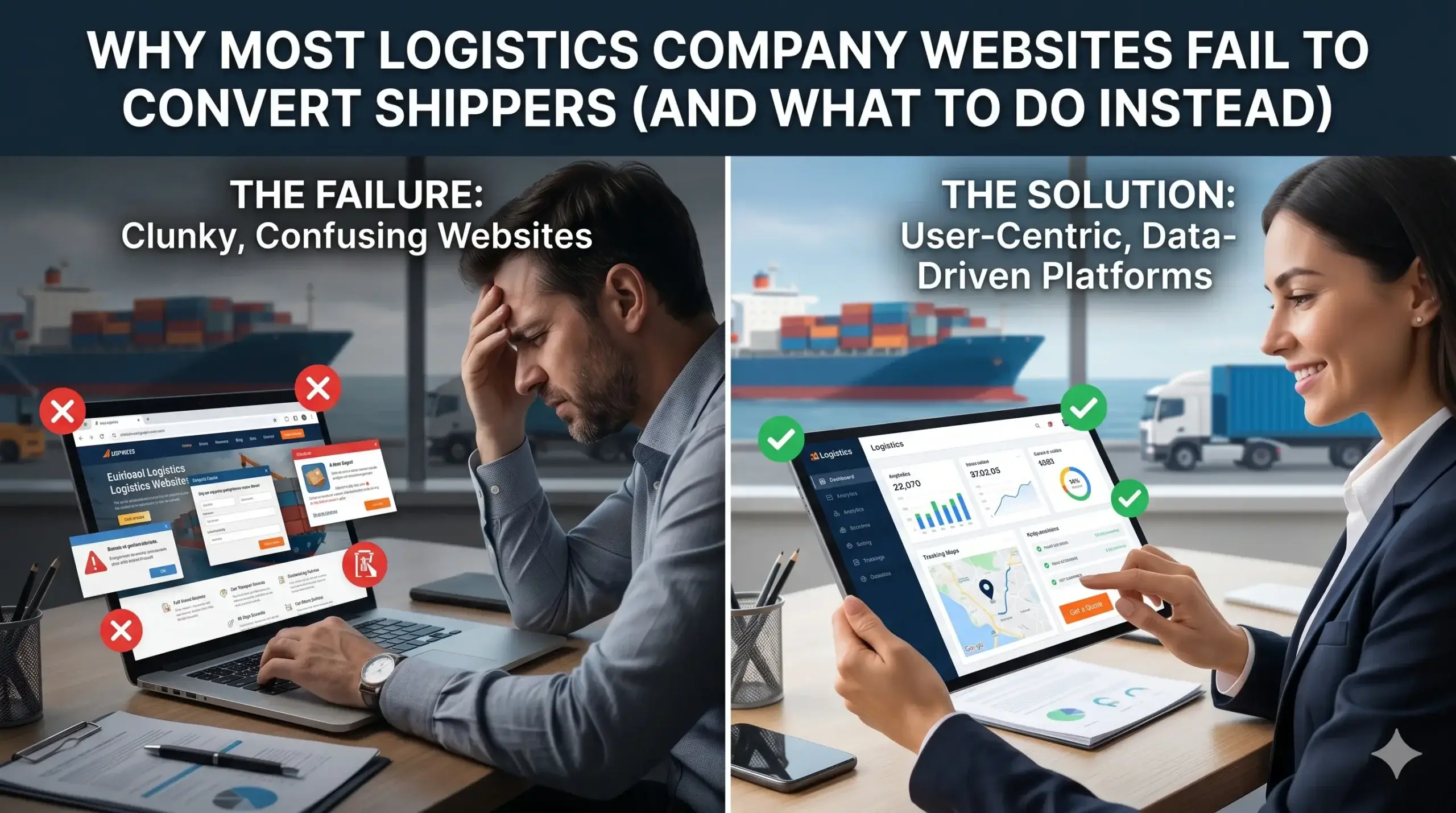
  • Why Most Logistics Company Websites Fail to Convert Shippers (And What to Do Instead)

    Why Most Logistics Company Websites Fail to Convert Shippers (And What to Do Instead)

    You’ve got trucks moving freight, drivers on the road, and dispatch working the phones — but your website? It’s sitting there quietly, doing nothing. No quote requests coming in. No new shipper inquiries. Just a page your cousin built five years ago that you’d rather not think about.

    Here’s what most logistics company owners assume: “My website just needs more traffic.” So they talk to an SEO guy, maybe run some Google Ads, and wonder why the phone still doesn’t ring.

    The traffic isn’t always the problem. The website itself is.

    Shippers searching for freight partners are making fast decisions. If your site doesn’t immediately answer their questions, earn their trust, and give them a clear next step — they’re gone. In the time it took you to read this paragraph, a potential customer just clicked over to your competitor.

    This post breaks down exactly why most logistics websites lose business before they even have a chance — and what a properly built site actually looks like.


    Your Website Loads Slowly — And Shippers Are Already Gone

    Think of your website like a freight terminal. If a shipper pulls up to drop off a load and stands around for 10 minutes before anyone acknowledges them, they’re leaving and calling someone else. That’s exactly what a slow website does.

    Most logistics websites are bloated with heavy images, outdated code, and hosting plans that weren’t designed for business performance. The result: your site takes 5, 6, sometimes 8 seconds to load.

    Studies consistently show that most visitors leave within the first 3 seconds if a page hasn’t loaded. That’s not just a bounce — that’s a shipper who needed a freight partner, landed on your site, and left before they even saw your phone number.

    The fix isn’t complicated, but it does require intentional website design for logistics companies — not a generic template off the shelf.

    What Digital Trace does instead: Every site we build is optimized for speed from the ground up. Compressed images, lean code, enterprise-grade hosting. Your site loads fast on a phone, on a desktop, on any connection — because shippers aren’t always at a desk.


    Your Homepage Talks About You — Not About What Shippers Need

    Here’s the trap most logistics companies fall into: the homepage opens with “Welcome to [Company Name]. We are a family-owned freight brokerage serving the continental US since 2003.”

    The shipper doesn’t care yet. They’re not looking for your company story. They’re looking for the answer to one question: Can these people solve my problem?

    If your homepage doesn’t answer that in the first 5 seconds, your visitor leaves. It’s that simple.

    Your website needs to lead with the shipper’s pain, not your credentials. What lanes do you cover? What freight types do you handle? What does working with you actually look like? Get to that immediately.

    What Digital Trace does instead: We structure logistics websites with the shipper’s decision process in mind. Your most critical information — service areas, freight types, contact options — is front and center, before anyone has to scroll. Your story gets told, but at the right moment, after trust is already building.


    There’s No Clear Next Step — So Visitors Do Nothing

    Imagine a shipper lands on your site, reads through your services, thinks “okay, this looks solid” — and then has no idea what to do next. Is there a form? Should they call? Email? Do they need to create an account?

    Confusion kills conversions. When a visitor isn’t sure what action to take, they default to the easiest one: they leave.

    This is one of the most common problems in logistics website design, and it’s completely fixable. Every page on your site should have one clear, obvious call to action. Not five options competing for attention. One.

    What Digital Trace does instead: We design every page with deliberate conversion paths. A shipper lands, they get the information they need, and the next step — whether that’s requesting a quote, filling out a contact form, or calling your dispatch line — is unmissable. No second-guessing required.


    Google Doesn’t Know Enough About Your Business to Show It

    You might have a decent-looking website but still be invisible in search results. Here’s why: Google doesn’t just scan your site — it looks for specific signals to understand what your business does, where it operates, and whether it’s trustworthy enough to show to searchers.

    If those signals aren’t there, Google hedges. Your competitor who has them shows up. You don’t.

    This isn’t about stuffing keywords everywhere. It’s about structure — the technical signals behind your pages that tell Google exactly what freight services you offer, what regions you cover, and that your business is legitimate and established.

    💡 Pro Tip: One of the most overlooked fixes in logistics website development is adding structured data (also called schema markup) to your site. Without it, Google treats your site like an unlabeled freight shipment — it may know it exists, but it’s not confident enough to put it front and center. Adding proper business and service schema is a straightforward fix that helps search engines confidently match your site to the right shipper searches.

    What Digital Trace does instead: We build every logistics site with proper technical foundations — structured data, clean site architecture, and on-page optimization that tells Google exactly who you are and where you serve. The result is a site that earns visibility without you needing to become an SEO expert.


    Your Site Doesn’t Work on a Phone — And That’s Where Shippers Are

    Logistics is a mobile industry. Shippers are checking options from a job site. Fleet managers are researching freight partners from a tablet. Decisions get made on phones, not just desktops.

    If your website isn’t built to work smoothly on mobile — small text, buttons that don’t tap right, forms that are impossible to fill out with your thumbs — you’re turning away a massive portion of potential business.

    A site that’s hard to navigate on a phone isn’t just annoying. It signals to the visitor (consciously or not) that your operation might not be up to date either.

    What Digital Trace does instead: Every logistics website we build is designed mobile-first. That means the phone experience is engineered first, and the desktop version grows from there. Click-to-call buttons, easy quote request forms, fast load times on cellular — all of it.


    Real-World Example: A Mid-Size Freight Broker in the Midwest

    A regional freight brokerage — running 12 lanes across the Midwest with a solid book of shipper accounts — came to us because their inbound leads had flatlined. They were doing fine on referrals but wanted to grow. Their website was five years old, built on an outdated template, and hadn’t been touched since launch.

    The problems we found:

    • Site loaded in 6.8 seconds on mobile
    • Homepage led with a company history paragraph
    • No quote request form — just a general contact email buried in the footer
    • Zero structured data; Google had no clear picture of their service area or freight types
    • Not one clear call to action on any page

    What changed: We rebuilt the site from scratch — fast-loading, mobile-optimized, with a homepage structured around shipper needs. We added a prominent “Request a Quote” form above the fold, clear lane and freight-type information, and full structured data implementation.

    The result: Within 90 days of launch, inbound quote requests increased from near-zero to an average of 18 per month. Organic search impressions tripled. The owner told us the site now “works harder than our best salesperson.”

    Not sure if your logistics website has these same issues? Get a free website audit — no obligation, just a clear picture of what’s costing you leads.


    Your Path to More Leads: 5 Steps That Actually Work

    You don’t need to become a web developer to fix your site. You just need to know what needs fixing and work with people who know the logistics space.

    1. Start with an honest look at your current site. Pull it up on your phone and pretend you’re a shipper who’s never heard of your company. Is the value clear in the first 5 seconds? If not, that’s your biggest problem.
    2. Fix your speed. A slow site is actively costing you business right now. Speed optimization alone can make a measurable difference in how long visitors stay and whether they take action.
    3. Rewrite your homepage around your shipper’s needs. Lead with what you do, who you serve, and what lanes or freight types you cover. Move your company story to the About page.
    4. Add one strong call to action to every page. A quote request form, a phone number, a scheduling link — pick one and make it obvious. Don’t make shippers hunt for it.
    5. Work with someone who understands logistics, not just websites. Generic web agencies build generic websites. A logistics website needs to speak the language of shippers — and be structured to convert them.

    Frequently Asked Questions

    Why am I not getting calls from my logistics website?

    The most common reason is a mismatch between what shippers are looking for and what your site shows them. If your homepage doesn’t quickly communicate what freight services you offer and what to do next, most visitors leave without acting. Speed, mobile usability, and a clear call to action are the three things we look at first.

    How do I know if my logistics website is actually working?

    If you’re not tracking where your calls and quote requests are coming from, you genuinely don’t know. A working website produces a consistent, measurable stream of inbound inquiries. If you haven’t gotten a lead from your site in the last 30 days, it’s not working. Book a free website audit and we’ll show you exactly where the gaps are.

    How long does it take to see results from a new logistics website?

    Realistic timelines vary, but most clients see meaningful improvement in inbound traffic and lead quality within 60–90 days of a new site launch — especially when SEO foundations are built in from day one. A redesign isn’t a magic switch; it’s a business asset that compounds over time.

    What makes a logistics website different from a regular business website?

    Shippers have very specific decision criteria: what freight types you handle, what lanes you cover, your capacity and reliability, and how easy it is to get a quote. A generic business website doesn’t address any of that. A logistics-specific website is structured around those exact questions — so shippers find answers fast and trust you enough to reach out.

    Do I need a new website, or can my current one just be fixed?

    It depends on the foundation. Some sites can be significantly improved with targeted fixes — speed optimization, new content, better calls to action. Others are built on outdated platforms that make meaningful improvement nearly impossible. The audit process is how we figure out which situation you’re in before recommending anything.

    I’ve paid for web design before and didn’t see results. Why would this be different?

    That’s the most common thing we hear — and it’s a fair question. Most agencies build sites that look good but aren’t designed to convert. They optimize for aesthetics, not for the specific behavior of shippers who are comparing freight partners. The difference is in the strategy behind the build, not just the design itself.


    Stop Leaving Money on the Table

    Your competitors are showing up in search results. Shippers are landing on their sites, getting their questions answered, and sending quote requests. Meanwhile, your website sits there looking like a parked truck with no driver.

    The good news: this is a solvable problem, and solving it doesn’t require months of guesswork.

    Digital Trace specializes in website design and development for logistics companies — built to rank in search, load fast, and turn shipper visits into actual business conversations.

    Get your free website audit →

    We’ll take a close look at your site, identify what’s costing you leads right now, and give you a clear picture of what a higher-performing site would look like — with no obligation and no sales pressure. Just real answers about your real website.

  • 7 Things the Best Logistics Website Designs Have in Common (And How to Get Them)

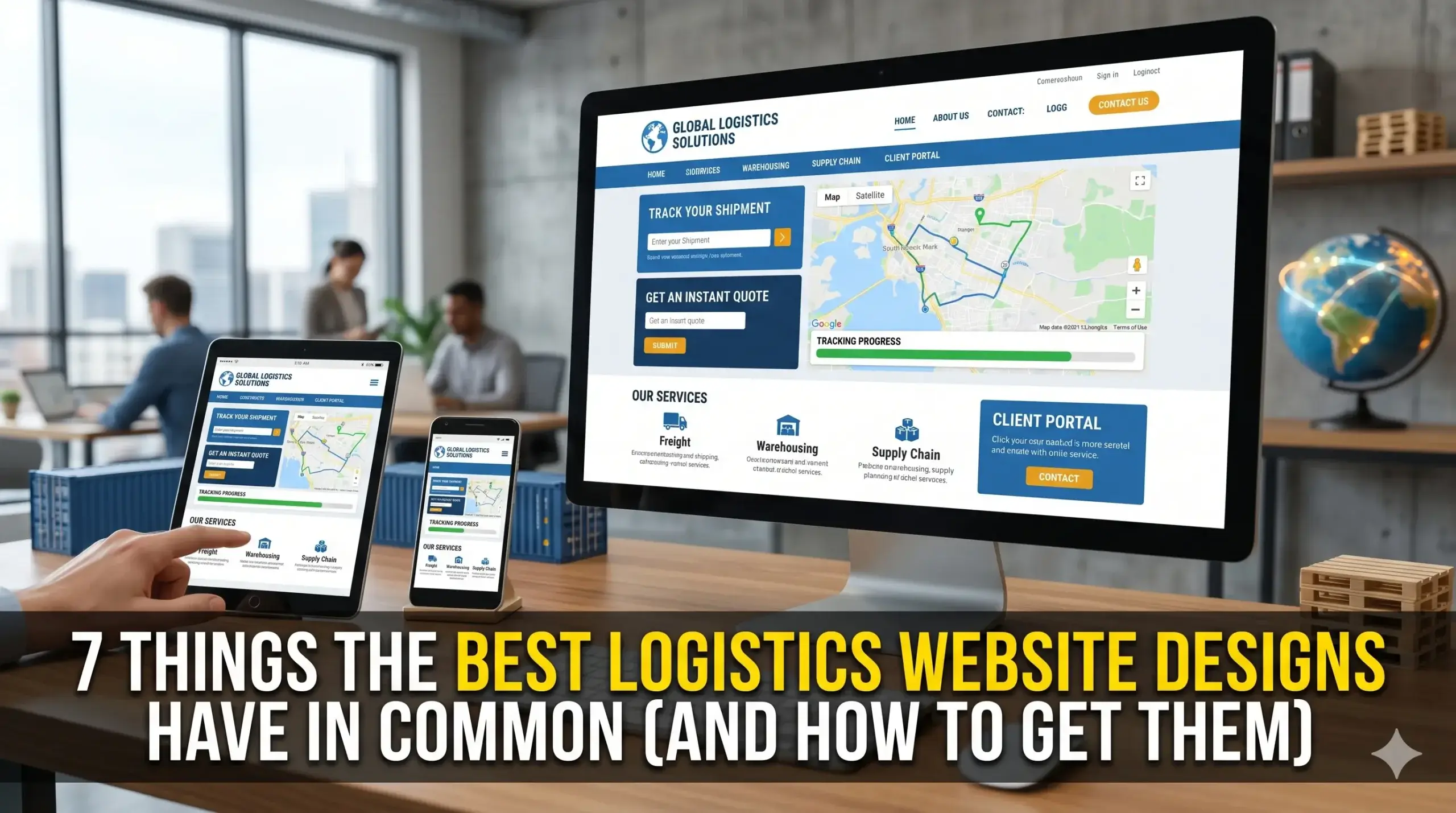
    7 Things the Best Logistics Website Designs Have in Common (And How to Get Them)

    You’ve got the trucks, the team, and the track record. But your phone isn’t ringing the way it should — and you’re watching competitors pick up jobs that should be yours.

    Most logistics business owners assume the problem is their pricing, or that they just need more reviews. Rarely do they look at the real culprit: their website. Not just how it looks, but how it works — or doesn’t.

    Here’s the truth: a logistics company’s website isn’t a digital business card. It’s a 24/7 sales rep. And if it’s slow, unclear, or hard to use, it’s quietly costing you freight contracts, fleet inquiries, and warehouse clients every single week.

    This guide breaks down the seven things that separate high-performing logistics company website designs from the ones that just sit there collecting digital dust — and shows you exactly what to do about each one.


    1. They Load Fast — Because Slow Sites Kill Deals Before They Start

    Think about how your customers find you. They’re a procurement manager or operations director under deadline pressure. They pull up three tabs at once, comparing logistics providers. If your site takes more than three seconds to load, they’re already reading your competitor’s page.

    Speed isn’t a “nice to have.” Studies consistently show that over half of all web visitors leave a page that takes longer than three seconds to load — and in a B2B context, that’s a qualified lead walking out the door before you even knew they were there.

    The technical reason is usually fixable: uncompressed images, bloated code, cheap hosting, or a theme loaded with features nobody uses. The business impact is immediate and ongoing.

    What the best logistics websites do: They’re built lean and fast — optimized images, clean code, and hosting matched to the site’s actual traffic needs. At Digital Trace, every site we build for logistics companies is performance-tested before it goes live.


    2. They Make It Obvious What You Do — Within Five Seconds

    Your homepage has one job before anything else: tell a visitor exactly what you do, who you serve, and why they should care. Not in three paragraphs. In a headline and a supporting line.

    Most logistics websites fail this test badly. They lead with vague language like “Your trusted logistics partner” or a stock photo of a highway at sunset — and leave the visitor doing detective work to figure out if you actually handle their type of freight, their geography, or their volume.

    A confused visitor doesn’t call. They leave.

    What works instead: A clear headline that names the service and the customer. Something like: “Nationwide LTL Freight Solutions for Mid-Size Manufacturers.” That sentence alone tells a shipper whether they’re in the right place — and if they are, they keep reading.


    3. They’re Built for the Phone — Not Just the Desktop

    More than 60% of B2B buyers now research vendors on mobile devices. That includes the warehouse manager comparing 3PL quotes from their phone while walking the floor. If your site isn’t built for mobile from the ground up, you’re invisible to a huge slice of your potential clients.

    “Mobile-friendly” isn’t the same as “mobile-optimized.” Friendly means it technically works on a phone. Optimized means it’s easy to navigate, fast to load, and designed so that tapping “Call Now” or “Request a Quote” feels effortless — not like solving a puzzle.

    The test: Pull up your own site on your phone right now. Can you find your phone number in under five seconds? Is the quote form easy to fill in with your thumbs? If not, you already know the problem.


    4. They Build Trust Before Asking for Anything

    Here’s the psychology of a logistics buyer: they’ve been burned before. A carrier missed a pickup. A 3PL lost track of a pallet. They’re not going to hand their supply chain to a company they just found on Google unless they trust you.

    The best logistics websites understand this and front-load proof: years in business, industries served, geographic coverage, certifications, equipment lists, and real client results. They don’t hide this in an “About” page buried in the navigation. It’s visible on the homepage and every service page.

    What trust signals actually matter for logistics:

    • Specific industries or freight types served (not just “all cargo”)
    • Coverage map or service area
    • Carrier ratings or compliance certifications (FMCSA, ISO, etc.)
    • Named clients or recognizable logos (where permitted)
    • Photos of your actual fleet, facility, or team — not stock imagery

    Generic claims like “industry-leading service” do nothing. Specifics do everything.


    5. They Have One Clear Next Step on Every Page

    Walk through the average logistics company website and count how many different things it asks you to do. Call us. Email us. Get a quote. Fill out this form. Follow us on LinkedIn. Subscribe to our newsletter. Read our blog.

    That’s decision paralysis in action. When visitors have too many options, they pick none.

    The best logistics websites choose one primary action per page — and make that action impossible to miss. For most logistics companies, that action is “Request a Quote” or “Get a Free Consultation.” Everything on the page is designed to move the visitor toward that one click.

    💡 Pro Tip: The single most common mistake logistics companies make is putting their contact form only on the Contact page. By the time a visitor navigates there, most have already left. Put a short, 3-field quote request form directly on your homepage — Name, Company, What They Need. That alone can double your inquiry rate from the same traffic.


    6. They Use Language Their Customers Actually Use

    This one sounds obvious, but most logistics websites are written the way the owner thinks about their business — not the way their customers search for it.

    A shipper looking for help doesn’t type “integrated supply chain solutions provider.” They type “freight broker for automotive parts” or “cold chain logistics Florida.” If your website doesn’t use the words your customers use, Google won’t show you to them — and the ones who do land on your site won’t recognize themselves in what you’ve written.

    What this means in practice:

    • Use the actual names of freight types, industries, and routes you serve
    • Write service pages that speak to the customer’s specific pain point, not your internal terminology
    • Match your language to how your target customer describes their own problem

    Web design for logistics companies done right means the copy, structure, and keywords all work together — not just the visuals.


    7. They’re Structured So Google Understands Them

    Your site could check every box above and still be invisible on Google if it’s not structured correctly on the technical side. This doesn’t mean stuffing in keywords. It means giving Google the information it needs to confidently match your business to the right search query.

    Think of it this way: Google is a massive freight matching platform. It’s trying to connect a shipper (someone searching) with the right carrier (your website). If your “load details” are incomplete — no location signals, no service descriptions, no clear page hierarchy — Google puts you at the back of the queue.

    The technical fixes are straightforward: proper page titles, structured data that tells Google your business type and location, internal linking between your service pages, and a clean site map. None of this requires you to understand code. It does require someone who knows what they’re doing.


    What This Looks Like in the Real World

    A regional flatbed carrier in the Midwest was generating solid revenue from existing clients but struggling to win new ones online. Their website was five years old, built on a template, and loading in over six seconds on mobile. Their homepage said “Quality Service, On Time, Every Time” — which told a visitor exactly nothing.

    After a full rebuild — faster hosting, mobile-first design, homepage copy that named their freight type and service area, and service pages optimized for the searches their buyers were actually running — the results shifted within 90 days. Organic inquiries more than doubled. Their average monthly quote requests went from 4–5 to over 20. More importantly, the quality of leads improved: callers were already sold on what the company did before they picked up the phone.

    That’s what happens when a website does its job.


    Not sure if your logistics website has these issues? Get a free website audit — no obligation, just a clear picture of what’s costing you leads.


    Your Path to More Leads: 5 Steps That Actually Work

    You don’t need to overhaul everything overnight. Here’s a clear sequence:

    1. Test your site speed. Use Google’s free PageSpeed Insights tool. If your mobile score is under 70, you have a problem worth fixing immediately.
    2. Read your homepage like a stranger would. Cover your logo and ask: does this tell me what the company does, who they help, and why I should care — in under 10 seconds?
    3. Check your mobile experience. Open your site on your own phone. If finding your phone number or filling out a form is frustrating, it’s frustrating for your leads too.
    4. Audit your trust signals. Is there specific proof on your homepage — industries, certifications, real numbers — or just generic claims?
    5. Get a professional review. A 15-minute audit with someone who builds logistics websites for a living will tell you more than hours of guessing on your own.

    Frequently Asked Questions

    Why am I not getting calls from my website even though I get some traffic?

    Traffic and leads are two different things. You can have hundreds of visitors a month and get zero calls if your site doesn’t load fast, make your value clear, or have an obvious next step. Most logistics websites have at least two or three of these problems working against them at once. A free audit will show you exactly where visitors are dropping off and why.

    How do I know if my logistics website is actually working?

    If you can’t answer these three questions, your site probably isn’t working: How many quote requests did you get last month from your website? Where do those visitors come from? Which pages are they landing on? If you don’t have Google Analytics or Search Console set up, you’re flying blind — and fixing that is the first step.

    How long does it take to see results from a new logistics website?

    For most logistics companies, you’ll see meaningful changes within 60–90 days of a properly built and optimized site going live. Early wins are often faster loading times and improved local visibility. Organic search rankings for competitive terms take longer — typically 3–6 months — but the compounding effect over time is where the real value is.

    What makes a logistics website different from a regular business website?

    Logistics buyers are skeptical, detail-oriented, and often making large financial decisions. They need to see proof of capability before they’ll trust you with their freight or supply chain. A generic website template doesn’t accommodate service-specific pages, coverage maps, freight type breakdowns, or the trust signals that actually move a logistics buyer to pick up the phone. The structure, copy, and conversion flow all need to be tailored to how logistics buyers think and search.

    Do I really need a fast website if most of my clients come from referrals?

    Referrals are great — until they slow down. And even referred prospects check your website before they call. A slow, outdated, or confusing site can lose you a referral-sourced deal before you ever get a chance to pitch. More importantly, a fast and well-structured site opens up organic search as a second revenue channel — one that works while you’re running operations, not just when someone happens to recommend you.

    What does “website design for logistics companies” actually include?

    Done right, it includes strategy (what the site needs to accomplish and for whom), copywriting in logistics-specific language, performance optimization, mobile design, SEO structure, and conversion elements like quote forms and clear calls to action. It’s not just making something that looks professional — it’s building something that generates qualified inquiries consistently.


    Ready to See What Your Website Is Actually Costing You?

    Every week your current site stays as-is, it’s quietly turning away qualified freight clients, fleet inquiries, and warehouse contracts who found you — and then left.

    The fix doesn’t start with a big commitment. It starts with clarity.

    Get your free website audit — we’ll review your logistics website, show you exactly what’s working against you, and give you a clear picture of what’s possible. No sales pressure. No jargon. Just answers.

    Claim Your Free Audit →

  • Does Your Logistics Company Website Design Drive Leads — or Drive Clients Away?

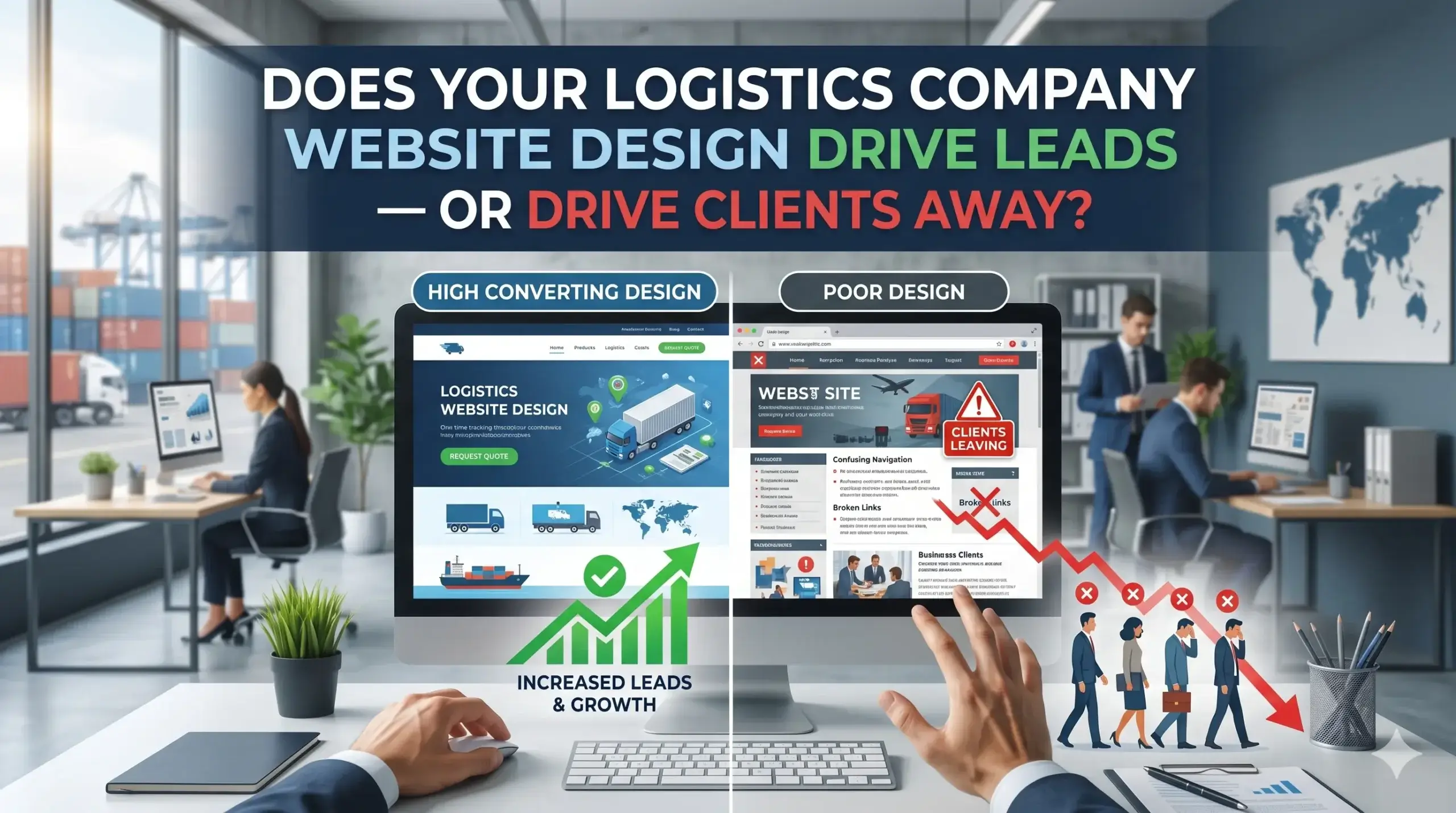
    Does Your Logistics Company Website Design Drive Leads — or Drive Clients Away?

    You built a solid logistics operation. You deliver on time, your drivers are reliable, and your clients trust you. But when a new shipper or supply chain manager searches for a freight partner online — they land on your website, spend about eight seconds looking around, and call your competitor instead.

    That’s not bad luck. That’s a website working against you.

    Most logistics business owners assume their website just needs to “look professional.” But a professional-looking website and a lead-generating website are two completely different things. One sits there. The other works like a 24/7 sales rep — qualifying prospects, building trust, and getting your phone to ring.

    This post breaks down exactly why most logistics company websites lose leads before they even get a chance to compete — and what the ones that actually convert look like.


    Your Website Is Loading Too Slowly — and Losing Clients Before They See Your Phone Number

    Picture this: a procurement manager at a mid-size manufacturer needs to find a new LTL carrier. She Googles, clicks your site, and nothing happens for four seconds. She hits the back button and calls your competitor.

    That’s not hypothetical — it happens dozens of times a week on slow logistics websites.

    Why it happens: Most logistics websites are built on bloated templates with uncompressed images, too many plugins, and no performance optimization. Every extra second of load time isn’t just annoying — it’s a conversion killer.

    The real cost: Studies consistently show that a site taking more than three seconds to load loses more than half its visitors. In logistics, where clients are comparing multiple vendors in a single session, you don’t get a second chance.

    What to do instead: Your site needs to be technically optimized from the ground up — compressed images, clean code, fast hosting, and a build that prioritizes speed on mobile and desktop alike. Websites built for logistics businesses by Digital Trace are engineered for speed first, because that’s where most operators are silently bleeding leads.


    You’re Not Showing Up When Local Shippers Search for You

    Your competitor down the road runs a scrappier operation than you. Their trucks are older, their rates aren’t lower — but they’re showing up on the first page of Google when shippers search for freight carriers, and you’re not. How?

    Their website is doing the work yours isn’t.

    Why it happens: Google needs clear signals to understand what your business does, where you operate, what lanes you cover, and who you serve. If your website has a generic homepage, vague service descriptions, and no location-specific content, Google doesn’t have enough to go on — so it doesn’t rank you with confidence.

    The real cost: Think about how many shippers search for “logistics company [your city]” or “freight carrier [your state]” every month. Every one of those searches you don’t show up for is a potential client that never knew you existed.

    What to do instead: Your site needs dedicated service pages built around the specific lanes, regions, and freight types you handle — written in a way Google understands and shippers trust. This isn’t about stuffing keywords. It’s about being clear about what you do and who you serve.


    Your Website Looks Like It Was Built for Someone Else’s Business

    Here’s a quick test: remove your logo from your homepage. Could it belong to any other logistics company in America?

    If the answer is yes, that’s a problem.

    Why it happens: Most logistics websites are built from generic templates with stock photos of semi-trucks and warehouses that no one in the industry finds interesting. There’s no personality, no proof of expertise, and nothing that separates you from 10,000 other operators.

    The real cost: When a shipper can’t tell what makes you different in the first few seconds, they default to whoever they’ve heard of — or whoever they find first. Generic = forgettable. Forgettable = calls your competitor.

    What to do instead: Your website should reflect exactly what kind of logistics company you are. Are you specialized in cold chain? Oversized freight? Last-mile retail delivery? That needs to be front and center — not buried in a “Services” page no one scrolls to. Think of your website like your dispatch board: every piece of information should be where it belongs, visible at a glance, and serving a purpose.


    Visitors Don’t Know What to Do Next — So They Leave

    This is one of the most common and most expensive mistakes on logistics websites. A potential client lands on your site, reads a bit, and then… nothing. No clear way to get a quote. No reason to call. No obvious next step.

    Why it happens: Most logistics websites were designed to inform, not to convert. There’s an “About Us” page, a list of services, maybe a contact form buried at the bottom. But there’s no clear path from “I’m interested” to “I’m ready to talk.”

    The real cost: Every visitor who leaves without contacting you is a lead you paid for — through SEO, word of mouth, or your reputation — and lost for free.

    What to do instead: Every page on your site should have one clear call to action. For logistics companies, that usually means making it dead simple to request a quote, get a rate, or schedule a call. The friction between “I’m interested” and “I reached out” should be as close to zero as possible.


    💡 Pro Tip: One of the biggest hidden mistakes on logistics websites is having a contact form that goes to a general email inbox — and then takes 48+ hours to get a response (or never gets one at all). That’s not a design problem — it’s a follow-up problem that kills conversions. A fast, well-designed website still fails if no one responds quickly. The best logistics websites route leads directly to whoever responds fastest and include an auto-reply so prospects know their request was received.


    Real-World Results: From Invisible to In-Demand

    The situation: A regional dry van carrier based in the Midwest had been in business for 11 years. Their website was built in 2017, hadn’t been touched since, and was loading in over six seconds on mobile. They were getting traffic — but almost none of it was converting. They were losing to newer carriers with slicker websites, even on lanes they’d covered reliably for years.

    What changed: Digital Trace rebuilt their site from scratch with a focus on three things: mobile speed (down to under two seconds), clear service pages for each of their primary lanes, and a prominent, easy-to-use quote request form on every page.

    The result: Within 90 days, their inbound quote requests increased by over 60%. Their Google visibility for freight-related searches in their region improved substantially, and they landed two new shipper accounts — both of which mentioned finding them online as the reason they called.

    Their operation didn’t change. Their website finally started working for them.


    Not sure if your logistics website has these issues? Get a free website audit — no obligation, just a clear picture of what’s costing you leads.


    Your Path to More Leads: A Simple 5-Step Roadmap

    You don’t need a marketing degree to fix this. Here’s how the process works:

    1. Audit your current site — Find out where you’re losing visitors, how fast your site loads, and whether Google can actually understand what you do. A free audit from Digital Trace gives you this in plain English.
    2. Fix your speed and mobile experience — If your site takes more than three seconds to load on a phone, that’s your first fix. Most shippers are searching from mobile at some point in their buying process.
    3. Create pages that match how shippers search — Build dedicated pages for your lanes, freight types, and service areas. Generic service pages don’t rank. Specific ones do.
    4. Make your next step obvious — Every page should make it easy for a prospect to request a quote or pick up the phone. Remove every barrier between interest and action.
    5. Track what’s working — Know which pages are driving calls, which aren’t, and why. The best logistics websites get better over time because they’re monitored and adjusted — not just built and forgotten.

    Frequently Asked Questions

    Why am I not getting any calls from my website?

    The most common reasons are slow load speed, weak visibility on Google, or no clear call to action on your pages. Visitors might be finding your site — but something is stopping them from picking up the phone. A free audit will show you exactly which of these is happening on your site.

    How do I know if my logistics website is actually working?

    If you can’t answer “how many leads did my website generate this month,” your site probably isn’t being tracked properly — or isn’t generating any. A working logistics website has measurable inbound activity: form submissions, calls traced to the site, or quote requests. If you’re not seeing any of that, something is wrong.

    What makes a logistics website different from a regular business website?

    Shippers and supply chain managers evaluate vendors differently than most consumers. They want to know your lanes, your capacity, your reliability track record, and how fast they can get a quote. A logistics website needs to answer those specific questions fast — before the visitor bounces and calls someone else. See how Digital Trace builds logistics websites differently.

    How long does it take to see results from a new website?

    For technical fixes — speed improvements, better mobile experience, cleaner design — you can see an immediate improvement in how long visitors stay and whether they take action. For SEO improvements like Google rankings, expect meaningful movement within 60–120 days depending on your competition and region.

    Do I really need a fast website if most of my clients come from referrals?

    Yes — because referrals still check your website before they call. Even a warm referral will Google your company name to look at your site before deciding whether to reach out. If what they find looks outdated, slow, or confusing, it creates doubt. Your website is either confirming the referral’s decision or giving them a reason to hesitate.

    How much does a logistics company website cost to build?

    It varies based on the size of your operation and what you need. What’s more useful to think about is what a broken website is costing you. If your site is losing even two or three shipper accounts per year that would have converted otherwise, the cost of a new site pays for itself quickly. Start with a free audit to understand your current gap before making any decisions.


    Stop Letting Your Website Cost You Clients

    Your website is either your best sales tool or your quietest liability. For most logistics companies operating in the US right now, it’s the latter — and the owners don’t even know it.

    The good news: the problems are fixable. And most of them don’t require a complete overhaul — just the right diagnosis and the right team to act on it.

    Digital Trace specializes in website design and development for logistics companies — built for speed, search visibility, and converting the right kind of clients. Not pretty-for-pretty’s-sake. Built to perform.

    Find out exactly what your logistics website is costing you — claim your free website audit here. No obligation. No sales pitch. Just a clear, honest look at what’s working and what isn’t — so you can decide what to do next.