Category: Lawn Care

  • How TruGreen and Top Lawn Care Companies Use Their Websites to Dominate Local Markets

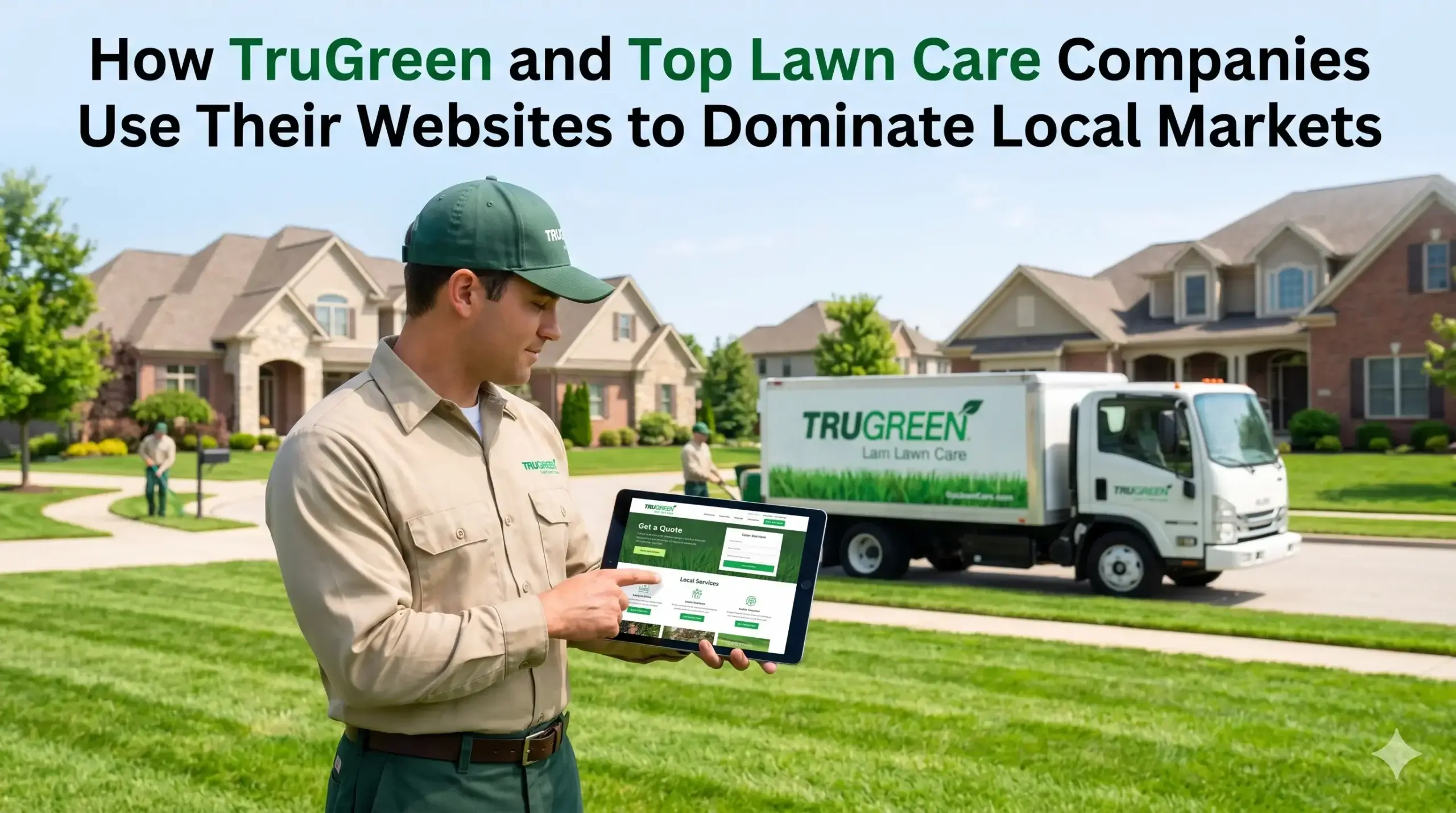
    How TruGreen and Top Lawn Care Companies Use Their Websites to Dominate Local Markets

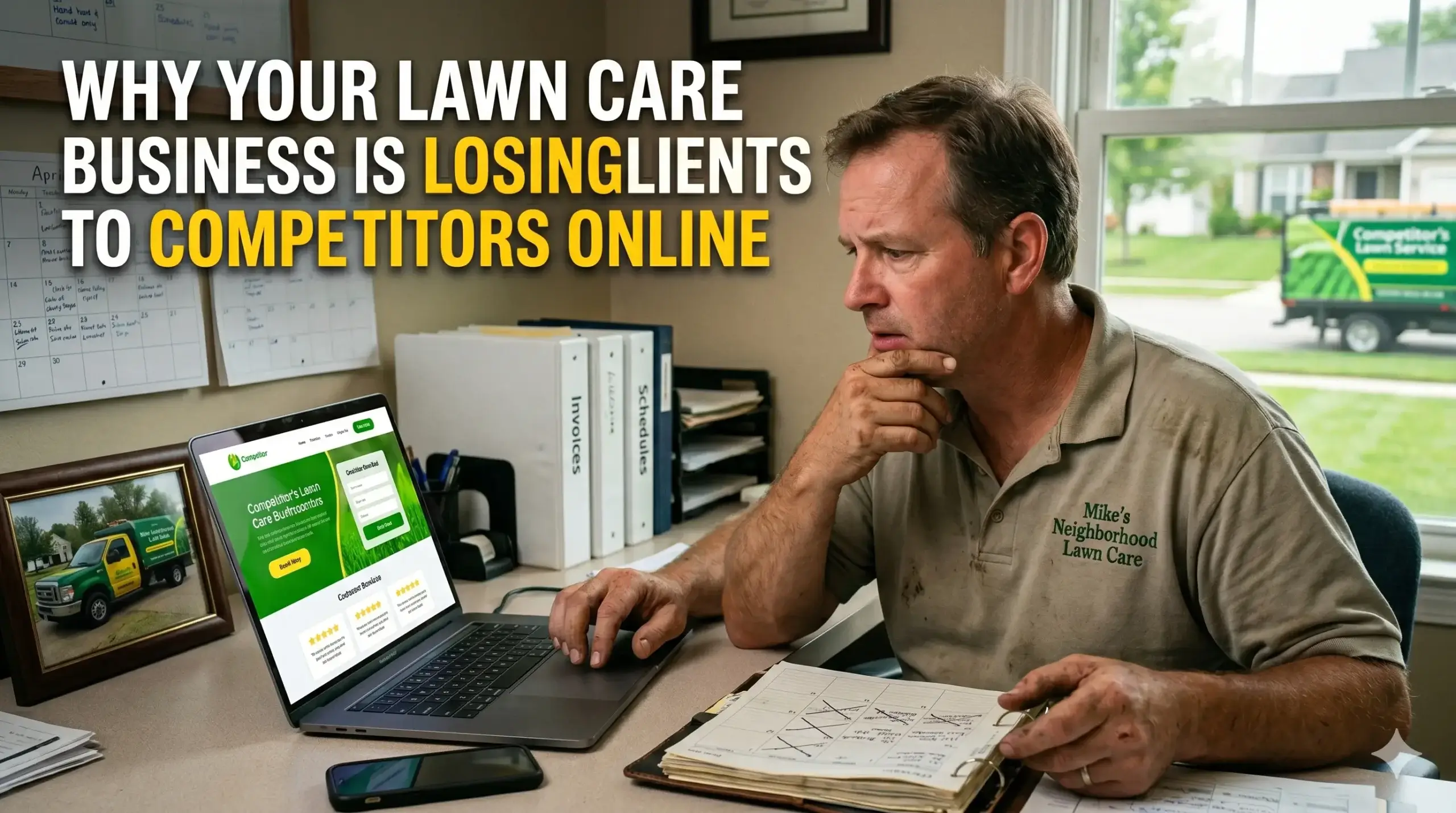
    You mow a perfect lawn, show up on time, and do better work than the guy down the street. But when a homeowner nearby searches for lawn care and hits “call,” they’re calling him — not you.

    The difference isn’t skill. It’s not even price. It’s the website.

    Most lawn care business owners assume a website is just a place to put their phone number. But TruGreen, Sunday, and the fast-growing regional operators in your market treat their websites like a sales machine running 24/7 — one that qualifies leads, builds trust before the first call, and converts visitors into booked jobs while you’re out in the field.

    This post breaks down exactly what separates the websites that generate steady work from the ones that sit there doing nothing — and what you can do to close that gap.


    Your Website Is Like Your Equipment — If It’s Broken, Nothing Gets Done

    Think about it this way: you wouldn’t show up to a job with a mower that stalls every 30 seconds. Your clients would notice, and they’d call someone else next time.

    A slow, outdated, or confusing website does the same damage — except you never see it happening. Visitors land on your site, it takes too long to load, or they can’t figure out what you offer or where you serve, and they leave without ever calling.

    Most people decide whether to stay on a website within the first few seconds. If your site doesn’t load fast and clearly answer “do you serve my area?” and “what do I do next?” — they’re gone.

    The fix isn’t a flashy redesign. It’s making sure your site loads fast, shows up in the right searches, and makes it dead-simple to request a quote.


    Why Your Competitor’s Phone Is Ringing and Yours Isn’t

    Here’s something most lawn care owners don’t realize: Google doesn’t just rank websites — it ranks websites that look trustworthy and useful to local customers.

    When someone searches “lawn care near me” or “lawn mowing service in [your city],” Google is deciding which business to show at the top. It factors in things like:

    • Whether your site clearly lists the areas you serve
    • Whether you have real customer reviews (and whether they’re connected to your site)
    • Whether your site loads properly on a phone
    • Whether your business information is consistent across the web

    If your site is missing any of these, Google plays it safe and shows your competitor instead. It’s not personal — it’s just that their website gave Google more confidence.

    The lawn care companies dominating local markets have all of these dialed in. And the good news is, most of them aren’t hard to fix.


    What the Best Lawn Care Websites Actually Do Differently

    Spend five minutes on TruGreen’s website or a top regional lawn care operator’s site and you’ll notice something: everything is built to get you to take action.

    The best lawn care company websites share a few things in common:

    • They load in under 3 seconds — especially on mobile, where most local searches happen
    • They lead with a clear offer — not a wall of text about the company’s history
    • They make it easy to get a quote — one click, visible immediately, without scrolling
    • They answer the questions customers actually have — service areas, what’s included, pricing ranges
    • They show proof — reviews, photos of real work, before/after results

    Compare that to the typical small lawn care website: a logo at the top, a stock photo of grass, a paragraph about “passion for lawn care,” and a phone number buried at the bottom. That site loses business every single day.


    The Hidden Problem: Google Doesn’t Know Enough About Your Business

    This one trips up a lot of lawn care owners. You’ve got a website, you’ve got a Google Business Profile — shouldn’t that be enough?

    Not quite. Google looks for specific signals to decide how confident it is putting your business in front of a customer. One of the biggest is something called structured data — basically, a set of details about your business baked into your website code that tells Google exactly what you do, where you do it, and how customers can reach you.

    Without it, Google has to guess. And when Google guesses, it’s more conservative about showing your business.

    Think of it like this: if a new customer asked a mutual friend about your business, you’d want that friend to be able to say “They do lawn mowing and fertilization, they cover the west side of town, they’re licensed and insured, and you can book online.” That’s what structured data does for Google.

    Most small lawn care websites are missing this entirely. It’s one of the first things Digital Trace fixes when building websites for lawn care businesses.


    💡 Pro Tip: Your Homepage Is Not Your Sales Page — But It Should Work Like One

    A common mistake: lawn care businesses put everything on the homepage — services, about us, service areas, testimonials, contact form — all on one page with no clear direction for the visitor.

    The fix is simpler than it sounds. Every page on your site should have one primary job. Your homepage’s job is to get the visitor to take the next step — whether that’s requesting a quote, calling, or learning about a specific service. Remove the clutter, lead with your strongest offer, and make the call-to-action impossible to miss. One clear page with one goal converts far better than a cluttered page trying to do everything at once.


    Real-World Results: What Happens When a Lawn Care Website Actually Works

    Before: A residential lawn care operator based in the Midwest had been in business for six years, building steady work through referrals and door hangers. Their website was built by a friend — it looked okay but hadn’t been touched in four years. It wasn’t showing up on Google for any local searches, loaded slowly on phones, and had no way for visitors to request a quote online. Most new customers still found them by word of mouth.

    After: After a full website overhaul — faster loading, mobile-first design, local SEO structure, a clear service area page, and an easy online quote form — the results came in within 90 days. Organic search traffic jumped significantly. More importantly, the number of quote requests coming in through the website went from near zero to 15–20 per month, without spending a dollar more on ads. The owner stopped relying entirely on referrals and started building a predictable pipeline of new customers.

    The difference wasn’t magic. It was a website that finally did its job.


    Not sure if your lawn care website has these issues? Get a free website audit — no obligation, just a clear picture of what’s costing you leads.


    Your Path to More Leads: What to Fix First

    You don’t need to overhaul everything at once. Most lawn care websites have a few core problems that, once fixed, make a noticeable difference quickly. Here’s where to focus:

    1. Make sure your site loads fast on a phone. Most of your potential customers will find you on their phone. If your site takes more than 3 seconds to load, a large chunk of them are already gone.

    2. Add a real, easy-to-find quote request form. “Call us” is not enough. Many customers want to request a quote without having to talk to anyone first. Give them that option and you’ll capture leads you’re currently losing.

    3. Create a clear service area page. Google needs to know exactly where you work. A page that lists your service cities and neighborhoods — written in plain language — helps Google send the right local customers to your site.

    4. Get your Google Business Profile connected and consistent. Your name, address, and phone number should match exactly between your website and your Google Business Profile. Inconsistencies quietly hurt your local rankings.

    5. Show proof that you’re good. Real photos of your work, actual customer reviews, and a before/after image or two do more to build trust than any amount of copywriting. Make sure they’re front and center.


    Frequently Asked Questions

    Why am I not getting calls from my website?

    The most common reasons: your site isn’t showing up in local searches, it loads too slowly on phones, or it doesn’t make it obvious what to do next. Most lawn care websites have at least two of these three problems. A quick audit will tell you which ones are hurting you most.

    How do I know if my lawn care website is actually working?

    If your site is working, you should be able to point to real leads — calls, contact form submissions, or quote requests — that came directly from it. If you can’t, it’s not working. A properly set-up website with basic tracking will show you exactly where visitors are coming from and what they’re doing when they arrive.

    How long does it take to see results from a new website?

    For local SEO, most lawn care businesses start seeing meaningful movement within 60–90 days of launching an optimized site. Some improvements — like fixing your page speed or adding a quote form — can produce results almost immediately. The key is not waiting. Every month with a broken website is another month of missed leads.

    What makes a lawn care website different from a regular business website?

    Lawn care is hyper-local, seasonal, and highly competitive in most markets. A website built for your industry needs to rank for the specific neighborhoods and cities you serve, speak to the specific concerns homeowners have (consistency, licensing, damage liability), and make it easy to schedule or request a quote fast. Generic website templates built for “any business” miss all of that. Websites built specifically for lawn care businesses are structured around how lawn care customers actually search and decide.

    Do I really need a fast website if my customers are local?

    Yes — especially because they’re local. Local customers searching on their phones are often comparison-shopping two or three businesses at once. A slow site gets closed and the next one gets the call. Google also factors page speed into local rankings, so a slow site hurts you twice: fewer visitors find it, and more of the ones who do leave before they contact you.

    How do I know if Digital Trace is right for my lawn care business?

    The fastest way to find out is to get a free website audit. There’s no pitch, no pressure — just an honest look at what your current site is doing well and where it’s costing you leads. If we can help, we’ll tell you how. If we can’t, we’ll tell you that too.


    Stop Leaving Jobs on the Table

    TruGreen didn’t dominate local markets by accident, and it wasn’t just their marketing budget. It was a website built to work — fast, clear, and set up to show up when local customers are searching.

    The lawn care businesses growing fastest right now all have one thing in common: their website is doing the selling while they’re out doing the work.

    If you’ve been running your business on referrals and word of mouth, you already know how to do the job. The only missing piece is a website that brings the customers to you.

    Get your free website audit today — no cost, no obligation. Find out exactly what’s costing you leads, and what it would take to fix it.

  • Lawn Care Business Website: Everything You Need to Launch and Get Leads

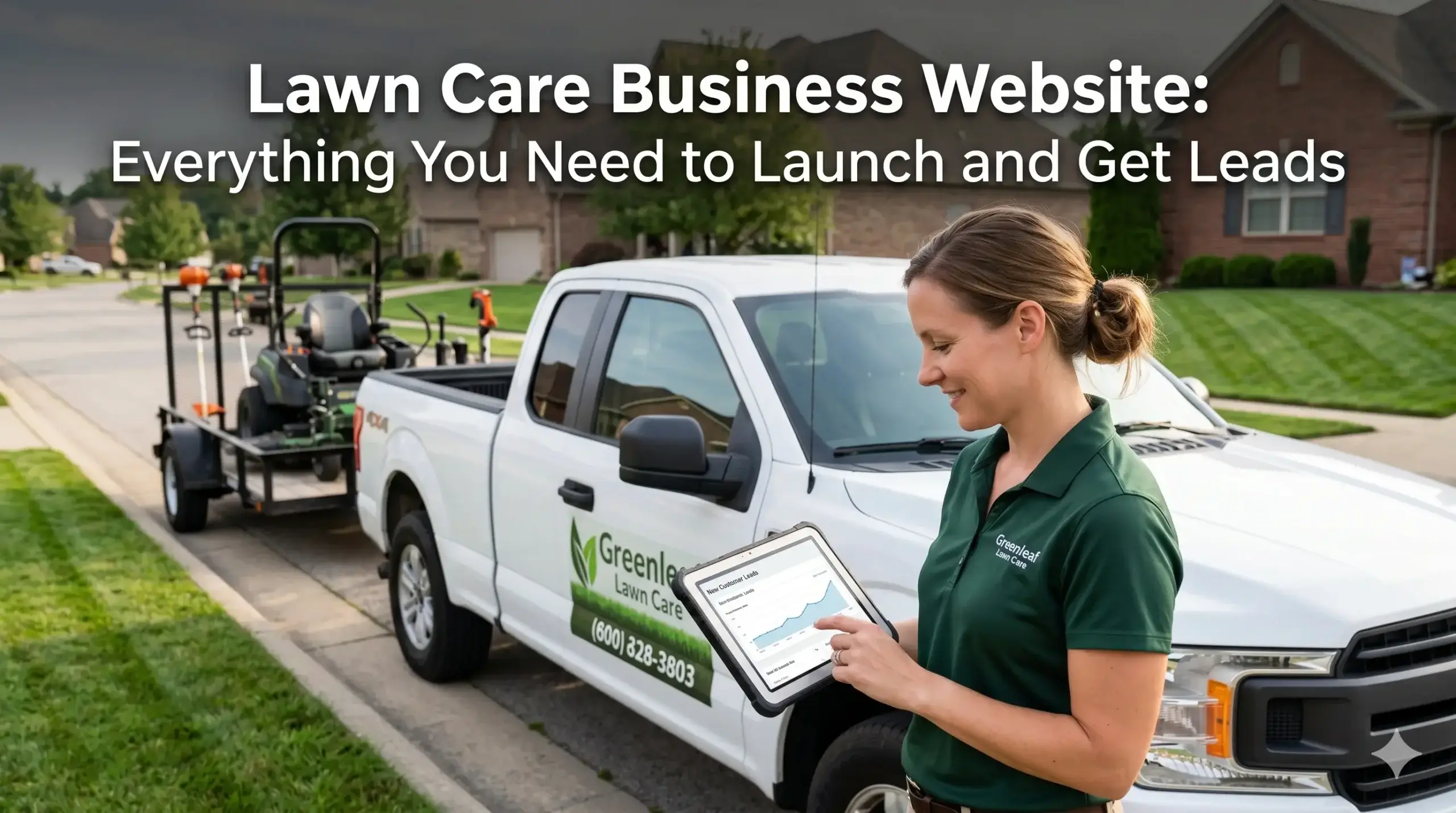
    Lawn Care Business Website: Everything You Need to Launch and Get Leads

    You’ve got a lawn care business that does great work. Your customers are happy. Referrals trickle in. But your phone doesn’t ring nearly as much as it should — and your website just kind of… sits there.

    Most lawn care business owners assume the problem is that they need “more SEO” or need to “run some ads.” But the real issue is usually simpler and more expensive than that: your website wasn’t built to convert. It was built to exist.

    Lawn care web design isn’t just about putting your logo on a page and listing your services. It’s about building something that works like your best salesperson — answering questions, building trust, and turning strangers into booked jobs, even while you’re out on a property.

    This guide breaks down exactly what a high-performing lawn care website needs, what most businesses get wrong, and how to fix it without wasting money on the wrong things.


    Your Website Is Losing Calls — Here’s Why

    Think of your website like a lawn estimate you hand to a homeowner. If it’s vague, hard to read, or doesn’t answer the obvious questions — they’re going to call your competitor instead.

    Most lawn care company websites make the same mistakes:

    • No clear service area. Visitors don’t know if you even work in their neighborhood.
    • No pricing signal. People won’t call to ask — they’ll just leave.
    • No trust signals. No reviews, no photos of real work, no “why us” that actually says something.
    • One phone number buried at the bottom. On mobile, where most of your visitors are, that’s basically invisible.

    The result? Someone lands on your site, doesn’t quickly find what they need, and bounces to the next result. That bounce cost you a potential customer — and you never even knew they were there.


    Speed Kills (Slowly and Quietly)

    Here’s a number that matters more than almost anything else in lawn care web design: 3 seconds.

    That’s roughly how long a visitor waits for your site to load before they leave. Not 10 seconds. Not 5. Three.

    If your website is slow — and most small business sites are — you’re losing a chunk of your traffic before they even see your phone number. On a hot summer day when someone needs their lawn mowed fast, they’re not waiting around.

    A slow site doesn’t just frustrate visitors. Google sees it too. Their algorithm actively penalizes slow pages in search rankings, which means you’re harder to find AND harder to keep once found.

    What causes slow sites? Usually it’s a combination of bloated page builders, uncompressed images, cheap hosting, and code that was never optimized. None of this is your fault — it’s just what happens when a site is built quickly without performance in mind.

    Digital Trace builds lawn care websites that load fast by default — not as an afterthought.


    Google Doesn’t Know Enough About You to Show You

    When someone in your area searches “lawn care near me” or “lawn mowing service [city],” Google has to decide whose website to show. It picks the ones it trusts most.

    Trust, in Google’s eyes, comes from signals — clear location information, specific service pages, consistent contact details, and structured data that tells Google exactly what your business does and where.

    Most lawn care websites are missing most of these. They have a single page with a generic list of services and no location-specific content. Google sees that and essentially shrugs.

    What actually helps you rank:

    • A separate page for each core service (mowing, fertilization, aeration, etc.)
    • Location-specific landing pages if you serve multiple towns or neighborhoods
    • Google Business Profile linked and consistent with your website
    • Structured data (think of it as a label on your website that helps Google read it properly)

    None of this requires a technical background to understand. It just requires a website built by someone who knows what they’re doing.


    💡 Pro Tip

    The #1 mistake lawn care websites make with their homepage: They lead with the company name and a photo of a lawnmower. That’s not what your customer cares about when they land on your site.

    Your homepage headline should answer the question a visitor is silently asking: “Can you help me, in my area, with what I need?”

    Something like: “Professional Lawn Care in [City] — Mowing, Fertilization & More. Get a Free Quote Today.”

    That one change — leading with their need instead of your name — can meaningfully increase the number of people who call.

    The technical side of this is called “above-the-fold optimization,” but you don’t need to remember that. Just remember: the first thing someone sees when they land on your site should make them feel like they’re in the right place.


    What a High-Converting Lawn Care Website Actually Looks Like

    The best lawn care business websites have a few things in common — and none of them are complicated.

    On every page:

    • Your phone number at the top, clickable on mobile
    • A clear, specific headline (not “Welcome to Green Grass Lawn Care”)
    • One prominent call-to-action: “Get a Free Quote” or “Book Your Lawn Service”

    On your homepage:

    • Brief, plain-English description of your services and service area
    • Real photos of your work (not stock photos of someone else’s lawn)
    • 3–5 genuine customer reviews, not buried — featured
    • A simple contact form that takes 60 seconds to fill out

    On your service pages:

    • One page per service, optimized for how people actually search
    • Answers to the questions customers always ask (“Do you do one-time cuts?” “Are you licensed and insured?”)
    • A clear next step at the bottom of every page

    This isn’t a wish list. These are the elements that separate a lawn care website that generates leads from one that just takes up space on the internet.


    Before & After: How One Lawn Care Company Turned Its Website Into Its Best Sales Tool

    A two-person lawn care operation in suburban Ohio had been in business for six years. They had solid word-of-mouth and a loyal customer base — but growth had stalled. They had a website, built by a family friend years ago, that listed their services and had a contact form that almost nobody used.

    The problems:

    • The site took 8+ seconds to load on mobile
    • There were no individual service pages — just one page with a bulleted list
    • No customer reviews were visible on the site
    • Their phone number wasn’t clickable on mobile
    • They had no location-specific content, despite serving five different towns

    What changed: The site was rebuilt from scratch with performance as the priority. Each service got its own dedicated page with clear descriptions and FAQs. Customer reviews were pulled in from Google and featured prominently. The contact form was replaced with a streamlined quote request that took under a minute to complete. Location pages were built for each town they served.

    The result: Within 90 days of the new site launching, inbound quote requests from the website increased from roughly 1–2 per month to 12–15 per month. The owner described it simply: “The phone actually rings now.”

    That’s what good lawn care web design actually does. Not magic — just a site built the right way.


    Not sure if your lawn care website has these issues? Get a free website audit — no obligation, just a clear picture of what’s costing you leads.


    Your Path to More Leads: 5 Steps That Actually Move the Needle

    If you’re ready to stop leaving leads on the table, here’s where to start:

    1. Audit what you have. Before spending money on anything new, understand what’s broken. A free audit from a specialist will show you exactly where visitors are dropping off and why calls aren’t coming in.
    2. Fix your mobile experience. More than half of your website visitors are on their phones. If your site is hard to navigate, slow to load, or doesn’t have a clickable phone number, you’re losing jobs every day.
    3. Build out your service pages. One page per service, written in plain language, optimized for how customers search. This is one of the highest-leverage things you can do for your rankings.
    4. Put your reviews to work. Don’t let your Google reviews just sit on your Google profile. Feature them on your website where visitors can see them without having to go looking.
    5. Make it easy to contact you. A simple quote form, a clickable phone number, and a clear next step on every page. If someone has to work to reach you, many won’t bother.

    FAQ: Real Questions from Lawn Care Business Owners

    Why am I not getting calls from my website even though I get some traffic?

    Traffic without calls almost always means one of two things: the wrong people are finding you, or the right people are finding you but leaving before they act. Common causes include slow load times, unclear calls to action, no visible pricing signal, and contact forms that are too long or too complicated. Getting calls isn’t just about visitors — it’s about making it easy and obvious for the right visitors to reach out.

    How do I actually know if my lawn care website is working?

    If you don’t know how many people visited your site last month, how long they stayed, or how many filled out a form or clicked your phone number — your website isn’t working for you, it’s just existing. A proper analytics setup shows you exactly where people come from, what they do on your site, and where they leave. That data tells you what to fix.

    How long does it take to see results from a new lawn care website?

    For organic search (free Google traffic), most businesses start seeing meaningful movement within 60–90 days, with stronger results at the 6-month mark. That said, some fixes — like a faster site and a clearer homepage — can produce results almost immediately by improving how well you convert the traffic you already have. Book a free review to get a realistic timeline based on your specific situation.

    What makes a lawn care website different from a regular business website?

    Lawn care is local and seasonal, which means your website needs to work harder in specific ways. It needs to rank in your actual service area — not just your city, but the neighborhoods and zip codes where your ideal customers live. It needs to convert mobile visitors, who are often searching on the go. And it needs to build trust fast, because lawn care is a recurring service and people want to feel comfortable before they hand over access to their yard.

    Do I really need a fast website if my customers are mostly local and older?

    Yes — and this surprises a lot of lawn care business owners. Even older homeowners who aren’t “tech-savvy” expect websites to load quickly. More importantly, Google uses page speed as a ranking factor regardless of your audience. A slow site means you rank lower, which means fewer people find you at all. Speed isn’t a luxury — it’s a baseline requirement.

    I’ve had bad experiences with marketing agencies before. How is this different?

    That’s fair — the agency space has a lot of people who overpromise and underdeliver. The difference with websites built for lawn care businesses specifically is that the focus is on measurable outcomes: quote requests, calls, booked jobs. Not vanity metrics like impressions or reach. If a change doesn’t move those numbers, it doesn’t make the cut.


    Stop Losing Jobs to a Website That Isn’t Working

    Every week your current site stays the way it is, you’re handing potential customers to your competitors. Not because they’re better at lawn care — but because their website makes it easier to say yes.

    The good news: this is fixable. And you don’t need to guess at what’s wrong.

    Get your free website audit from Digital Trace — it takes a few minutes to request, costs nothing, and gives you a clear picture of exactly what your site is costing you in missed leads. No jargon, no pressure, just a straight answer.

    Your lawn care business does great work. Your website should show it — and sell it.

  • The Best Lawn Care Websites in 2026 (And What Makes Them Work)

    The Best Lawn Care Websites in 2026 (And What Makes Them Work)

    You mow lawns for a living. Your work is visible, measurable, and easy to judge — a bad cut shows. But when a homeowner searches “lawn care near me” at 7pm on a Tuesday and your name never comes up, you’ll never know the work you lost.

    That’s the problem most lawn care businesses are sitting with right now. They’ve got a website — maybe one a nephew built, or a template from some marketing company three years ago — and they assume it’s working because it exists. It’s not working. And every week it stays broken, it’s handing calls to your competitors.

    This post breaks down what the best lawn care websites in 2026 actually do, why most lawn care sites fail at the one job they have, and what you can do about it — starting today.


    Your Website Has One Job. Most Lawn Care Sites Fail It.

    A lawn care website isn’t a brochure. Think of it less like a sign on your truck and more like your best sales rep — someone who’s up at midnight when a homeowner is researching companies, who knows exactly what to say, and who never drops the ball. When your website is slow, confusing, or missing key information, that rep is fumbling the handoff every single time.

    The best lawn care company websites in 2026 are built around one simple goal: get the visitor to call or submit a quote request. Every design decision, every word, every button placement is in service of that goal. If your site isn’t doing that, it’s not a website — it’s a missed opportunity with a domain name.


    Why Your Lawn Care Phone Isn’t Ringing (Even If You Show Up on Google)

    Here’s something that surprises a lot of lawn care business owners: ranking on Google and actually getting calls are two different things.

    You can appear on the first page and still lose the lead. How? Because the moment someone lands on your site, the clock starts. Most visitors decide within a few seconds whether to stay or leave — and if your site loads slowly, looks outdated, or doesn’t immediately answer “can you help me?”, they’re gone.

    The technical term is “bounce rate.” The real-world term is “lost revenue.”

    The most common culprits on lawn care websites:

    • Slow load times. If your site takes more than 3 seconds to load on a phone, a significant portion of visitors leave before they ever see your phone number. Most homeowners are searching from their driveway or kitchen table — on mobile, on a spotty connection.
    • No clear call to action. Visitors shouldn’t have to hunt for how to contact you. If your phone number isn’t visible without scrolling, you’re losing people.
    • Generic photos and copy. Stock photos of someone else’s crew and vague phrases like “quality service at affordable prices” don’t build trust. They look like every other lawn care website online.

    💡 Pro Tip

    The #1 mistake lawn care websites make: burying the quote button.

    Most lawn care business owners put their contact form at the very bottom of their homepage — after the long company history, after the service list, after the testimonials. By the time a visitor scrolls that far, most have already left.

    The fix is simple: put a prominent “Get a Free Quote” button at the top of every page, above the fold, visible without any scrolling. On mobile, it should be large enough to tap easily with a thumb. This single change — moving the CTA to the top — regularly increases contact form submissions on lawn care sites without changing anything else. If your current site doesn’t have this, it’s likely costing you leads every single week.


    What the Best Lawn Care Websites Actually Have in 2026

    The top-performing lawn care company websites aren’t flashy — they’re fast, clear, and built to convert. Here’s what separates them from the average lawn mowing website:

    1. Mobile-first design Over 70% of local service searches happen on a phone. The best lawn care websites load fast, have large tap targets, and put the most important information — your service area, your phone number, your quote button — front and center on a small screen.

    2. Local SEO baked in Google needs signals to know your lawn care business is the right result for someone in your city. That means your service pages mention your coverage area, your Google Business Profile is linked and consistent, and your site has the right technical signals (called schema markup) that help Google confidently show you in local results. Without this, you’re invisible to people searching two miles away.

    3. Real photos, real reviews Homeowners are trusting you with their property. Actual before/after photos of lawns you’ve treated — taken with a phone — convert better than stock imagery every time. Pair that with genuine Google reviews embedded or referenced on your site, and you’ve built credibility before a single word is read.

    4. Clear, specific service pages A single “Services” page listing everything you offer isn’t enough. The best lawn care websites have individual pages for lawn mowing, fertilization, aeration, weed control — each one targeting specific searches, each one giving visitors a reason to choose you for that specific service.

    5. Speed. Full stop. A fast website isn’t just a nice-to-have — Google uses page speed as a ranking factor. Slow sites rank lower and convert worse. The best lawn care web design in 2026 prioritizes performance: compressed images, minimal bloat, and hosting that doesn’t cut corners.


    What Happens When You Get This Right: A Real-World Example

    Take a fictional but realistic scenario: Green Edge Lawn Care, a two-person operation in suburban Ohio. They’d been in business for six years, had a website their original customer’s son built in 2019, and were getting maybe two or three website inquiries a week — half of which were from the wrong zip code.

    The problems weren’t unusual. The site loaded in over six seconds on mobile. There was no clear quote button. Their homepage mentioned “serving the greater area” without naming a single city. Google had no way to tell if they serviced Westerville or downtown Columbus.

    After a rebuild focused on lawn care website design done right — fast loading, service-area landing pages for each suburb they covered, prominent CTAs, and real crew photos — the results shifted within 60 days. Inquiries from the website went from 2–3 per week to 12–15. More importantly, those leads were qualified: right service, right zip code, ready to book.

    Their phone started ringing from people who had already read their site, seen their reviews, and decided they wanted Green Edge specifically — not whoever else they might also call.


    Not sure if your lawn care website has these same issues? Get a free website audit — no obligation, just a clear picture of what’s costing you leads.


    Why Most “Cheap” Lawn Care Website Designs Cost You More in the Long Run

    It’s tempting to go with the $500 template site or the marketing company that promises a website in 48 hours. The sticker price is real. The hidden cost is bigger.

    A lawn care website that doesn’t rank, doesn’t load fast, and doesn’t convert visitors into leads isn’t a $500 investment — it’s a $500 expense with no return. Meanwhile, your competitor’s site, built with local SEO and conversion in mind, is collecting the calls you should be getting.

    The websites Digital Trace builds for lawn care businesses are engineered for one outcome: more leads. That means fast performance, local SEO built into the structure, and design decisions made around what actually gets homeowners to call — not what looks nice in a portfolio screenshot.

    The difference between a website that exists and a website that works is the difference between hoping the phone rings and knowing it will.


    Your Path to More Leads: Where to Start

    You don’t need to overhaul everything at once. Here’s how to move from a website that’s costing you leads to one that’s generating them:

    1. Check your mobile experience first. Pull up your own site on your phone. Does it load fast? Is your phone number visible without scrolling? Can you tap the contact button easily? If you hesitate on any of those, that’s where you’re losing people.
    2. Get specific about your service area. Your website should name every city, suburb, and zip code you serve — ideally on dedicated pages. “Serving the tri-county area” doesn’t rank for anything.
    3. Add real photos. Before/after lawn photos taken with your phone beat stock imagery in both trust and conversion. Spend 10 minutes after your next job getting shots and put them on your site.
    4. Make your CTA impossible to miss. Every page should have a clear, specific button — “Get a Free Lawn Care Quote” — near the top, visible before any scrolling.
    5. Get a professional audit. The issues costing you the most leads are often invisible to the naked eye — slow load times, missing local signals, technical SEO gaps. A free audit surfaces exactly what’s broken and what to fix first.

    FAQ: Real Questions from Lawn Care Business Owners

    Why am I not getting calls from my website?

    The most common reasons are slow load speed, no clear call-to-action, and poor local SEO — meaning Google doesn’t know enough about your service area to show your site to nearby homeowners. Most lawn care websites have at least one of these problems, and many have all three. A free website audit can tell you exactly which issues are costing you leads.

    How do I know if my lawn care website is actually working?

    If your website is working, you should be able to trace specific inquiries back to it — people who found you on Google, clicked your site, and called or submitted a form. If you can’t name at least 5–10 website-sourced leads in the past month, your site likely isn’t pulling its weight. Check your Google Analytics (or ask your web person) for how many people visit and what percentage contact you.

    How long does it take to see results from a new lawn care website?

    Local SEO improvements typically start showing traction within 60–90 days as Google re-indexes your pages and the new signals build authority. Conversion improvements — more people calling from the visitors you already get — can be nearly immediate once the right changes are made. Don’t let any agency promise you overnight ranking results for competitive terms; but you shouldn’t be waiting six months to see any improvement either.

    What makes a lawn care website different from a regular business website?

    Lawn care is a hyper-local, high-trust, seasonal business — and your website needs to reflect all three. That means location-specific landing pages (not one generic site for a whole region), strong before/after visuals that show real results, and a structure that converts people who are ready to book right now — not people who are casually browsing. A generic business website template doesn’t account for any of that.

    Do I really need a fast website if my customers are local and don’t use the internet much?

    Yes — and more than you might think. Local searches are now predominantly done on mobile, often by homeowners who are standing in their backyard looking at overgrown grass. Google also uses page speed as a ranking factor, which means a slow site doesn’t just frustrate visitors — it actively lowers where you appear in search results. Speed affects both who finds you and whether they stay.

    I’ve paid for websites before and seen no results. How is this different?

    That’s a fair concern, and it’s the most common thing we hear. Most lawn care websites fail because they’re built by designers who don’t understand local SEO, or by SEO people who don’t understand conversion. The result looks fine but doesn’t perform. Digital Trace builds lawn care websites from the ground up with both in mind — design that earns trust, structure that ranks, and CTAs that convert. And the results are measurable: inquiries, calls, booked jobs.


    Ready to See What Your Website Is Costing You?

    Most lawn care business owners are surprised when they see a full audit of their website — not because it’s in terrible shape, but because small, fixable issues are quietly draining their leads every single day.

    A free audit from Digital Trace will show you exactly where your lawn care website is losing leads, what it would take to fix it, and what that could mean for your inquiry volume going forward. No obligation, no jargon, no pressure — just a clear look at the numbers.

    Get your free website audit →

    You’ve built a real business. Your website should be working as hard as you do.

  • Why Your Lawn Care Business Is Losing Clients to Competitors Online

    Why Your Lawn Care Business Is Losing Clients to Competitors Online

    You do great work. Your crews show up on time, your lawns look clean, and your customers are happy — at least, the ones you have. But somewhere between a homeowner typing “lawn care near me” and actually picking up the phone, you’re losing them to a competitor. And that competitor might not even do better work than you.

    The difference isn’t skill. It’s their website.

    Most lawn care business owners assume that if they have a website, they’re covered. But having a website and having one that actually wins you clients are two completely different things. This article breaks down exactly where that gap is — and what you can do about it before another busy season slips by.


    Your Website Loads Too Slowly — And Most Visitors Leave Before Your Phone Number Even Appears

    Picture this: a homeowner pulls out their phone while their neighbor’s lawn is being mowed. They Google “lawn care service” and tap the first result. If your site takes more than three seconds to load, they’ve already hit the back button before they’ve read a single word.

    That’s not an exaggeration. Most mobile users won’t wait. They’ll just go to the next result — which is often your competitor.

    The technical reason is usually oversized images, bloated code, or cheap web hosting that can’t handle traffic spikes. None of that is obvious to you when you’re looking at your own site. But Google sees it, and more importantly, your potential customers feel it.

    What this costs you: If your site is slow and you’re getting even modest traffic, you’re likely losing multiple leads every single week without ever knowing those people existed.

    Websites built for lawn care businesses are engineered to load fast from the first tap — especially on the phones that most of your customers are using.


    Google Doesn’t Trust Your Site Enough to Show It

    Think of Google like a new homeowner in your area asking a neighbor for a lawn care recommendation. If your name barely rings a bell — no reviews, no details, no presence — they’re going to recommend someone else. Someone Google knows and trusts.

    Your website needs to give Google the information it needs to confidently recommend you. That means clear signals: what services you offer, what areas you serve, how to contact you, and proof that real customers have worked with you.

    When those signals are missing or muddled, Google hedges. It might show you for one search and not another. It might rank you on page two for searches where you should be on page one.

    The fix isn’t complicated, but it’s specific. It involves making sure your service pages are written clearly for both Google and homeowners, that your location information is consistent everywhere online, and that your site’s structure tells Google exactly who you are and what you do.


    Your Site Looks Fine to You — But It’s Losing Visitors in the First Few Seconds

    Here’s an uncomfortable truth: you’ve seen your website so many times that you can’t see it the way a stranger does. A first-time visitor to your site makes a judgment in about five seconds. If the design looks dated, the photos are blurry, or it’s hard to find how to get a quote — they leave.

    This isn’t about having a flashy website. It’s about trust. A homeowner is about to let you onto their property, around their kids, their dogs, their landscaping. They want to feel confident before they call. Your website either gives them that confidence or it doesn’t.

    Ask yourself honestly:

    • Does my homepage make it obvious, within five seconds, what I do and where I serve?
    • Is there a clear, easy way to request a quote or call — visible without scrolling?
    • Do I have real photos of my actual work, or just stock images anyone could have?
    • Are there reviews or testimonials on the site?

    If you answered “no” to any of these, you’re losing clients who would have hired you if the first impression had been better.


    💡 Pro Tip

    One of the most common mistakes lawn care websites make: burying the phone number or “Get a Quote” button at the bottom of the page or in a tiny font at the top corner.

    Your phone number should be impossible to miss — ideally in a large, tappable format at the top of every page, especially on mobile. When someone’s ready to call, make it effortless. Every extra second they spend looking for your number is a second they might just close the tab instead.


    You’re Invisible for the Searches That Actually Matter

    Ranking for “lawn care” is nearly impossible — it’s too broad and too competitive. But ranking for “lawn mowing service in [your city]” or “lawn care company near [your neighborhood]”? That’s a real, winnable opportunity that many small lawn care businesses are leaving on the table.

    Most lawn care websites have one page that says “we provide lawn care services” and calls it a day. That’s like having a yard sign with no phone number. You’re present, but you’re not useful.

    Google wants to match searches with pages that actually answer the question. If someone searches “lawn fertilization service in Dallas,” they want a page about fertilization services in Dallas — not your general homepage.

    What works instead:

    • Dedicated pages for each core service (mowing, fertilization, aeration, overseeding, etc.)
    • Pages that mention the specific cities and neighborhoods you serve
    • Content that answers the questions your customers actually ask

    This is how how Digital Trace builds lawn care websites — with a structure designed to rank for the specific, local searches your customers are already making.


    Real Results: What Happens When a Lawn Care Website Actually Works

    Before: A mid-sized lawn care company operating across three suburbs had a website they’d built themselves five years ago. It looked okay on a desktop but was nearly unusable on a phone. Their contact form was buried two clicks deep, their Google Business profile pointed to an old address, and they had no dedicated pages for any specific service. They were getting maybe two or three web leads per month and couldn’t figure out why referrals were their only real source of new business.

    After: After rebuilding with a mobile-first design, fast load times, separate service pages for each offering, and a prominent click-to-call button on every page, the results changed significantly. Within four months, web leads increased to 15–20 per month. Their Google ranking for local lawn care searches moved from page three to page one for multiple service terms. The owner reported that they stopped relying almost entirely on referrals and started being selective about which new clients they took on.

    The work didn’t change. The crews were the same. The only thing that changed was what happened when a stranger searched for lawn care and landed on their website.


    Not sure if your lawn care website has these issues? Get a free website audit — no obligation, just a clear picture of what’s costing you leads.


    Your Path to More Leads: Where to Start

    Getting more leads from your website doesn’t require a massive overhaul overnight. Here’s what actually moves the needle:

    1. Fix your mobile experience first. Pull out your phone and visit your own website. Is the phone number easy to tap? Can you find a quote button without scrolling? If not, that’s the first thing to fix.
    2. Speed up your site. Run your site through Google PageSpeed Insights (free tool). If it scores below 70 on mobile, your slow load time is actively costing you leads.
    3. Create pages for each service you offer. If you do mowing, fertilization, aeration, and cleanups — each one deserves its own page, not a single paragraph on your homepage.
    4. Make sure your contact info is consistent everywhere. Your name, address, and phone number should be identical on your website, Google Business Profile, Yelp, and any directory listings. Inconsistencies quietly hurt your rankings.
    5. Add real photos and real reviews. Actual before/after shots of your work and genuine customer testimonials build the kind of trust that makes someone pick up the phone.

    Frequently Asked Questions

    Why am I not getting calls from my website?

    Usually, it’s one of three things: your site isn’t showing up in the searches your customers are making, it loads too slowly for people to stick around, or it doesn’t make it easy enough to take the next step. All three are fixable — but you need to know which one is actually happening before you can fix it.

    How do I know if my lawn care website is actually working?

    If you don’t know how many people visit your site each month, how long they stay, or how many fill out a form or call from it — you’re flying blind. A basic setup with Google Analytics takes about 30 minutes and gives you real data on what’s working. If your site has no tracking at all, that’s a gap worth closing immediately.

    What makes a lawn care website different from a regular business website?

    Lawn care is a hyper-local, high-trust service. People want to see your actual work, confirm you serve their neighborhood, and be able to reach you in one tap. A generic website template doesn’t account for any of that. A well-built lawn care site is structured around local service areas, specific services, and a frictionless path to contact — not just a nice design.

    Do I really need a fast website if my customers are local?

    Yes — more so, actually. Most local service searches happen on mobile phones, often in the middle of something else. A homeowner who just noticed their lawn needs attention is not going to wait five seconds for your page to load. They’ll go to the next result. Speed matters more for mobile, local searches than almost any other category.

    How long does it take to see results from a new website?

    A faster, better-structured site can start converting more visitors immediately. Ranking improvements from SEO changes typically take two to four months to fully show. That said, most lawn care businesses see a meaningful uptick in leads within the first season after a proper rebuild — especially if the previous site had significant problems.

    What if I’ve worked with agencies before and been burned?

    That’s fair — and common. The difference is accountability. Before working with anyone, ask them to show you actual examples of lawn care websites they’ve built and what results those businesses saw. Ask how they’ll measure success and what you’ll actually be able to track. A free audit is a good starting point — it shows you exactly what’s wrong with your current site before you commit to anything.


    Stop Losing Leads You’ve Already Paid For

    Every person who searches for lawn care in your area and lands on your website is a warm lead. You didn’t have to knock on a door or run an ad to get them there — they came looking for exactly what you offer. Losing them because of a slow load time, a missing service page, or a hard-to-find phone number is one of the most expensive and invisible problems in this business.

    You don’t need to guess whether your website is costing you clients. A free audit will show you exactly where the problems are — no jargon, no sales pressure, just a clear look at what’s working and what isn’t.

    Find out what your lawn care website is costing you — get your free audit today.

  • How to Get More Lawn Care Clients With a Professional Website

    How to Get More Lawn Care Clients With a Professional Website

    You show up on time. Your cuts are clean. Your customers love you. But your phone isn’t ringing the way it should — and you’re not sure why.

    Here’s what most lawn care business owners don’t realize: the problem usually isn’t your service. It’s your website. Or more accurately, it’s what your website isn’t doing. A weak site doesn’t just sit there doing nothing — it’s actively sending potential customers to your competitors, every single day.

    This isn’t about having a “pretty” website. It’s about having one that works like your best salesperson — answering questions, building trust, and making it effortless for someone to call or book while they’re still thinking about their lawn.

    By the end of this article, you’ll know exactly what separates a lawn care website that gets leads from one that bleeds them — and what you can do about it.


    Your Website Loads Slowly — And Customers Are Already Gone

    Picture this: someone finishes mowing their lawn for the last time before they give up and hire someone. They pull out their phone, search for a lawn care company, and click your link. They wait. And wait. And then they hit the back button and call your competitor.

    Most people will leave a website if it takes more than three seconds to load. On a phone, with average mobile internet, that happens more than you’d think — especially if your site is loaded with large images, old code, or a cheap hosting plan.

    The business cost is real. That person who bounced? They found someone else. And they probably left a Google review for that someone else, not you.

    A fast-loading site requires optimized images, clean code, and reliable hosting — things that don’t happen by accident. When Digital Trace builds websites for lawn care businesses, speed is baked into the foundation, not bolted on as an afterthought.


    Google Doesn’t Know Enough About Your Business to Show It

    You might have a website. But if Google isn’t sure who you are, where you operate, and what you do, it won’t recommend you — plain and simple.

    Think of it like this: Google is like the world’s most cautious referee. Before it blows the whistle and sends a customer your way, it needs to be confident you’re the right call. If your site is missing key signals — your service area, your services listed clearly, your business name and address consistent across the web — Google hedges its bets and picks someone else.

    The fix involves a combination of local SEO basics: making sure your Google Business Profile is complete and connected to your site, having separate pages for each service you offer (lawn mowing, fertilization, aeration, etc.), and adding structured data that tells Google exactly what kind of business you run and where. None of this is rocket science, but it has to be done right.


    Your Site Looks Fine to You — But Confuses Everyone Else

    You know your business inside and out. So when you look at your website, you fill in the gaps automatically. Visitors don’t have that luxury.

    If someone lands on your site and can’t answer three questions within five seconds — What do you do? Where do you do it? How do I contact you? — they leave. Not because they’re impatient. Because they’re busy, they have options, and you didn’t make it easy enough.

    The best lawn care websites pass what we call the “driveway test”: a homeowner pulls up the site from their car, in under a minute, while their kid is yelling in the backseat — and they still know how to reach you and why you’re worth calling. That means:

    • Your phone number is at the top of every page
    • Your service area is stated clearly (not buried in the footer)
    • There’s a simple, obvious way to request a quote or book a call
    • Your services are listed in plain language, not industry shorthand

    If your site doesn’t pass the driveway test right now, it’s costing you leads.


    You’re Invisible on Mobile — Where 70% of Your Customers Are Looking

    When a homeowner notices their grass is getting out of hand, they don’t sit down at a desktop computer. They grab their phone. If your site isn’t built to work perfectly on mobile — easy to read, fast to load, with a phone number that’s one tap to call — you’ve already lost them.

    A mobile-friendly site isn’t just about making things “fit” on a small screen. It means buttons that are big enough to tap, text that doesn’t require zooming, and a layout that makes the important stuff obvious without scrolling three times.

    Google also ranks mobile performance separately. A site that’s clunky on phones gets penalized in mobile search results — meaning fewer people even find you in the first place.


    💡 Pro Tip: One of the most common mistakes lawn care businesses make is using a generic website template with stock photos of lawns that look nothing like their actual work. Visitors notice this — even if they can’t explain why it feels “off.” Real photos of your team, your equipment, and lawns you’ve actually serviced build more trust than any stock library. Even a few decent smartphone photos make a significant difference in how professional and credible your site feels.


    Your Competitors Are Showing Up — Here’s Why

    You’ve probably searched for your own business and noticed a competitor ranking above you, even though you know you do better work. It’s frustrating. But it’s usually not random.

    The lawn care companies that dominate local search results have typically invested in a few things: a well-structured website with pages for each service, consistent reviews on Google, content that answers the questions people are actually asking (“how often should I fertilize my lawn in Georgia?”), and a site that Google trusts because it’s been built with search in mind from the start.

    This is the difference between a website that was built to look good for a business owner and a website that was built to attract customers. The lawn care website design work Digital Trace does is focused entirely on the second category — because that’s the one that pays.


    Before & After: What a Better Website Actually Changes

    The Scenario: A three-person lawn care operation in suburban Ohio — let’s call them Greenway Lawn Services. They’d been in business for six years, mostly running on word-of-mouth and a few yard signs. Their website was built by a family friend years ago, ran on slow shared hosting, and hadn’t been touched since. It had no Google Business Profile connection, no service-specific pages, and wasn’t usable on mobile.

    The Problem: Despite being well-reviewed by existing customers, they were invisible in local search. When someone in their area searched “lawn mowing service near me,” they didn’t appear. Meanwhile, a newer competitor with a better-built site was ranking in the top three results.

    What Changed: The site was rebuilt from scratch with mobile performance as the priority. Individual pages were created for each service — mowing, dethatching, fertilization, and seasonal cleanups. The Google Business Profile was properly connected and optimized. Real photos of their crew and their work replaced the stock images. A simple quote request form replaced a generic contact page.

    The Result: Within three months, Greenway was appearing in the local map pack for their top three service keywords. Quote requests through the website went from near-zero to roughly 15–20 per month. By the following spring (their peak season), they’d added a fourth crew member to handle the volume.


    Not sure if your lawn care website has these issues? Get a free website audit — no obligation, just a clear picture of what’s costing you leads.


    Your Path to More Leads: What to Do Next

    Getting your website working properly doesn’t have to be complicated. Here’s what the process looks like:

    1. Find out what’s broken first. Before spending money on anything, get a clear picture of what your current site is actually doing. A proper audit will show you your load speed, how you appear in local search, what’s missing, and what’s working.
    2. Fix the foundation. Speed, mobile performance, and basic local SEO signals need to be right before anything else matters. These aren’t optional extras — they’re table stakes.
    3. Make it easy to contact you. Every page should have your phone number visible, a clear call-to-action, and a simple way to request a quote. Remove any friction between “interested visitor” and “customer who called.”
    4. Build out your service pages. Each service you offer deserves its own page — not just a bullet point on a list. This helps Google, and it helps potential clients understand exactly what you do.
    5. Add proof. Real photos, genuine Google reviews pulled onto your site, and a simple before/after gallery do more for conversion than any fancy design element.

    Frequently Asked Questions

    Why am I not getting calls from my website?

    The most common reasons are: the site loads too slowly and people leave, it’s hard to navigate on a phone, or your business simply isn’t showing up in local search results because Google doesn’t have enough signals to recommend you. Often it’s a combination of all three. A website audit is the fastest way to identify which problem is biggest for your specific site.

    How do I know if my lawn care website is actually working?

    If you can’t remember the last time a new customer said “I found you online,” your site probably isn’t working. Beyond that, you’d look at traffic (how many people visit), contact form submissions, and click-to-call events. If you want a quick answer without setting up analytics, request a free audit here and get a clear breakdown of what your site is and isn’t doing.

    How long does it take to see results from a new website?

    A rebuilt site that’s properly optimized for local SEO typically starts showing movement in search rankings within 4–8 weeks. You may see faster results if you’re in a less competitive market. The contact form conversions and usability improvements often show results even sooner — sometimes within days of launch — because visitors simply have a better experience and are more likely to reach out.

    What makes a lawn care website different from a regular business website?

    Lawn care is a local, seasonal, and highly visual business — and a good site should reflect all three. That means strong local SEO targeting your specific service area (not just the whole state), seasonal messaging that adjusts to what homeowners actually need right now, and real photography that shows your actual work. Generic business website templates aren’t built with any of that in mind, which is why they tend to underperform for service-based trades.

    Do I really need a fast website if my customers are mostly local?

    Yes — especially because they’re local. Local customers are searching on their phones, often outside, often in a hurry. A slow site on mobile isn’t just annoying; Google actually uses mobile load speed as a ranking factor for local search results. If your site is slow, you’re being ranked lower in the results your customers are actually using. Speed matters more for local businesses, not less.

    I’ve worked with agencies before and it didn’t help. Why would this be different?

    That’s a fair concern. The agencies that don’t deliver are usually either too focused on generic tactics that don’t move the needle for service businesses, or they lock clients into long contracts without real accountability. The starting point here is a free, no-obligation audit — you get to see exactly what’s wrong before deciding anything. There’s no pitch, no pressure, and no contract to sign just to understand where you stand.


    Ready to See What Your Website Is Actually Costing You?

    Every week your site underperforms is another week of calls that go to someone else — someone who showed up on Google, looked credible, and made it easy to reach out.

    A free website audit from Digital Trace will show you exactly where your lawn care website is losing leads, how your local search presence stacks up against competitors in your area, and what the path forward looks like — with no jargon, no pressure, and no obligation.

    Book your free website audit now and find out what’s been quietly costing your lawn care business new clients.