Category: Flooring

  • 5 Flooring Websites That Convert Visitors Into Customers (And What You Can Learn From Them)

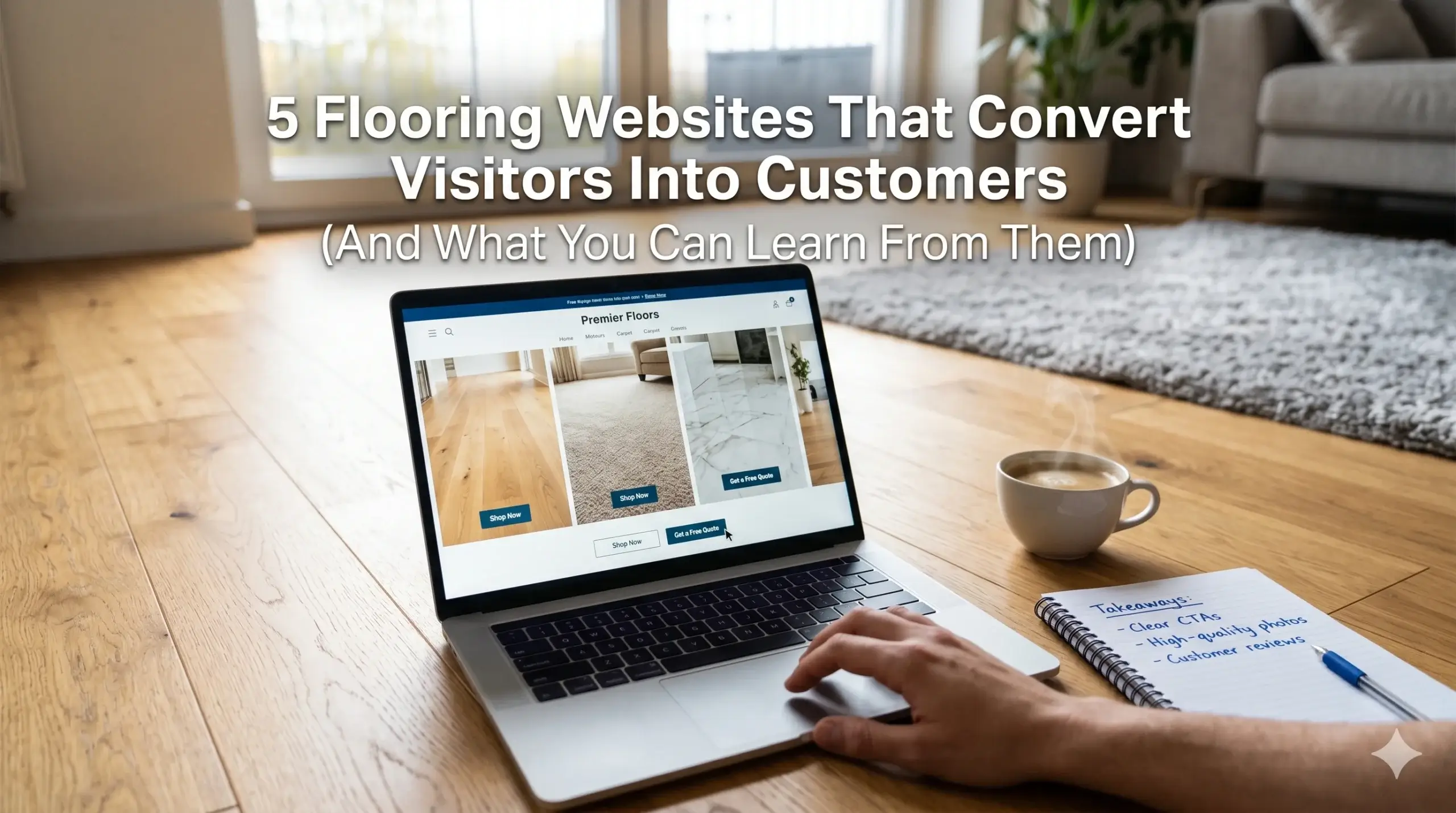
    5 Flooring Websites That Convert Visitors Into Customers (And What You Can Learn From Them)

    You’ve got years of experience laying hardwood, tile, and luxury vinyl. Your work speaks for itself — referrals roll in, and customers love the finished product. But your website? It’s sitting there quietly, doing almost nothing.

    You’re not alone. Most flooring business owners assume their site “works” because it exists. The truth is, a flooring website that doesn’t convert is like a showroom with no samples, no pricing, and a locked front door. People pull up, glance in, and keep driving.

    This post breaks down five flooring websites that actually convert — pulling in calls, form fills, and booked estimates. More importantly, it explains why they work, so you can apply the same thinking to your own site. Whether you’re looking to rebuild from scratch or fix what’s already there, these examples show exactly what separates a website that costs you money from one that makes you money.


    1. The “Instant Trust” Homepage

    Think about how a homeowner finds a flooring contractor. They Google something like “hardwood floor installation near me,” click on the first few results, and spend about eight seconds on each site before deciding whether to stay or leave.

    Eight seconds.

    The flooring websites that win that moment do one thing immediately: they make the visitor feel like they’ve found the right place. That means a clear headline that says what you do and where you do it, a photo of real finished work (not stock imagery), and a phone number that’s impossible to miss.

    Here’s what most flooring sites get wrong: they lead with the company name and a vague tagline like “Quality You Can Trust.” That tells a nervous homeowner absolutely nothing. They don’t know if you serve their area, what types of flooring you install, or whether you’re a real local business.

    What the best flooring websites do instead:

    • Lead with a benefit-first headline: “Expert Hardwood & Tile Installation in [City] — Free Estimates”
    • Show real project photos within the first scroll
    • Make the phone number clickable and visible above the fold
    • Use a single, clear call to action — not four different buttons

    The moment someone lands and immediately thinks “yes, this is who I’m looking for,” you’ve won half the battle. Digital Trace builds websites built for flooring businesses that pass this eight-second test every time.


    2. The Mobile-First Layout That Doesn’t Lose Customers on Their Phones

    Here’s a frustration that costs flooring businesses calls every single day: a homeowner is standing in their kitchen, looking at the floor they hate, and they pull out their phone to search for a contractor. They find your site. It loads slowly. The text is tiny. The “Call Now” button is buried. They pinch and zoom, get frustrated, and click the back button.

    You just lost a warm lead — someone who was ready to call — because your site wasn’t built for a phone.

    More than 60% of local searches happen on mobile devices. If your flooring website isn’t fast and easy to use on a phone, you’re invisible to the majority of people looking for you right now.

    What a mobile-first flooring website actually looks like:

    • Loads in under 3 seconds on a phone connection
    • Has a large, tappable “Call Now” button visible without scrolling
    • Shows your service area and top services without requiring the user to hunt
    • Contact forms with minimal fields — name, phone, and what they need

    Think of it this way: your website on mobile is like your company van pulling up to a job. If it looks beaten up and nothing works, the homeowner is already second-guessing their decision. A clean, fast mobile experience says “this company has it together.”


    3. The Gallery That Actually Sells Work (Not Just Shows It)

    Every flooring contractor has a gallery. Almost none of them use it correctly.

    Most galleries are just a grid of photos with no context. A homeowner scrolling through can’t tell what type of flooring it is, what room it’s in, how long it took, or what it cost. They’re looking at pretty pictures with zero information to help them make a decision.

    The flooring websites that convert use their gallery as a selling tool. Each project includes the flooring type, the space it was installed in, and ideally a brief note about the challenge or the outcome. “Engineered hardwood in a high-traffic open-plan kitchen — completed in two days” tells a homeowner so much more than a photo alone.

    What a conversion-ready flooring gallery includes:

    • Project tags by flooring type (hardwood, LVP, tile, carpet)
    • Room labels so homeowners can find relevant inspiration
    • Short project notes or before/after comparisons
    • A CTA inside or directly below the gallery — “Love what you see? Get a free estimate”

    A gallery that educates and inspires is one that converts. A gallery that’s just pretty pictures is one that gets scrolled past.


    4. The Reviews Section That Builds Real Trust

    Social proof is the closest thing to a word-of-mouth recommendation your website can deliver. But most flooring companies either hide their reviews or display them in a way that looks fake.

    A block of five-star ratings with no photos, no full names, and no specifics? Homeowners have been burned enough times to be skeptical. Reviews that say “Great work! Highly recommend!” do almost nothing.

    The flooring websites that convert feature reviews that feel real — because they are. They include the customer’s first and last name, a photo when possible, the type of project, and a specific detail about the experience.

    💡 Pro Tip: Don’t just paste your Google reviews into your site and call it done. Your review section is one of the first places a skeptical homeowner looks to decide if they can trust you. Feature three to five of your most detailed, specific reviews prominently on your homepage and your service pages. If a review mentions a specific flooring type (like “LVP installation”) or a specific situation (“we needed it done before the holidays”), that specificity does more selling than any marketing copy you could write. If you don’t have detailed reviews yet, start asking happy customers to mention the project type and outcome in their review — it changes everything.


    5. The Service Pages That Rank on Google and Turn Readers Into Callers

    This is where most flooring companies leave the most money on the table.

    If your entire website is one page — or you have a single “Services” page that lists hardwood, tile, LVP, and carpet in a bullet list — Google has almost no idea what to rank you for. And even if someone does land on that page, there’s nothing specific enough to make them pick up the phone.

    The flooring websites that rank and convert have dedicated pages for each major service: one for hardwood floor installation, one for LVP, one for tile, one for refinishing. Each page talks about that specific service in depth — what it involves, how long it takes, what it costs (even a range helps), and who it’s right for.

    Here’s the business impact of getting this wrong: your competitor who has a dedicated “hardwood floor installation in [city]” page shows up when a homeowner searches exactly that. You don’t. They get the call. You don’t.

    What a converting service page includes:

    • A clear H1 that matches what people actually search for
    • A description of the process in plain language
    • Answers to the questions customers always ask (How long? How much disruption? How much does it cost?)
    • Real photos from that type of job
    • A prominent, easy-to-use quote request form

    This is exactly what how Digital Trace builds flooring websites — individual, optimized service pages that rank for real local searches and give visitors a clear reason to call.


    Before & After: What a Better Flooring Website Actually Does

    A flooring contractor in the Midwest — three-person crew, eight years in business, solid reputation locally — was getting maybe four or five website leads a month. Most of their work came from word of mouth. The owner knew the website was “probably outdated” but assumed it wasn’t costing them much.

    Their site was slow (took over six seconds to load on mobile), had no dedicated service pages, and the only call to action was a contact form buried in the footer. Reviews weren’t featured anywhere.

    After a full rebuild — fast mobile-first design, dedicated pages for hardwood, LVP, tile refinishing, and commercial work, a visible phone number and “Get a Free Estimate” button on every page, and a featured reviews section — website leads went from four or five a month to twenty-plus. The owner stopped wondering where the next job was coming from.

    The site wasn’t just prettier. It was doing a job.

    Not sure if your flooring website has these issues? Get a free website audit — no obligation, just a clear picture of what’s costing you leads.


    Your Path to More Leads: 5 Steps That Actually Move the Needle

    You don’t need to do everything at once. Start here:

    1. Test your site on your phone right now. Pull it up on your personal cell phone on mobile data (not WiFi). Does it load fast? Is the phone number easy to tap? That’s your reality check.
    2. Add a visible phone number and “Get a Free Estimate” button to the top of every page. Don’t make people hunt.
    3. Create a separate page for each major service you offer. One page for hardwood, one for tile, one for LVP — not a single “Services” page.
    4. Feature three to five detailed customer reviews on your homepage. Specific, named, real. Not generic five-star blurbs.
    5. Make sure your gallery has context. Label photos by flooring type and room. Add a brief project note. Put a CTA right below it.

    If you’re not sure where to start — or you want someone to tell you exactly what’s wrong and how to fix it — get a free website audit from Digital Trace.


    FAQ: Real Questions Flooring Business Owners Ask Before Hiring a Web Agency

    Why am I not getting calls from my website even though I show up on Google?

    Showing up on Google and converting visitors into callers are two completely different things. You might rank on page one and still lose every visitor because your site is slow, hard to navigate on a phone, or doesn’t have a clear call to action. Traffic without conversion is just wasted visibility.

    How do I know if my flooring website is actually working?

    If you can’t name how many calls or form fills your site generated last month, it’s not working hard enough for you. A website that’s doing its job gives you a steady, trackable stream of leads — not just “people probably found us somehow.”

    How long does it take to see results from a new flooring website?

    With a properly built site optimized for local search, most flooring businesses start seeing measurable improvement in leads within 60 to 90 days. The timeline depends on how competitive your local market is and how much content the site has. The sooner you start, the sooner the clock starts running.

    What makes a flooring website different from a regular business website?

    A flooring website needs to work for a very specific buyer at a very specific moment — usually someone standing in a room they hate, searching on their phone, ready to make a decision. That means it has to load fast, show real work immediately, feature local trust signals, and make it dead simple to call or request a quote. Generic website templates aren’t built for that buyer journey.

    Do I really need a fast website if my customers are local?

    Especially if your customers are local. Local searchers are almost always on mobile, often deciding between two or three contractors in seconds. A site that takes five or six seconds to load will lose that race every time — Google’s own data shows that most mobile visitors leave before a slow site finishes loading. Speed isn’t a “nice to have” for local businesses. It’s table stakes.

    How do I know if Digital Trace is the right fit for my flooring business?

    Start with a free website audit. You’ll get a clear look at what’s working, what’s not, and what it would take to fix it — with no obligation to move forward. If the audit shows your site is solid, we’ll tell you that too.


    Stop Letting Your Website Cost You Jobs

    Every week your flooring website isn’t converting is a week of estimates going to a competitor who figured this out before you did. The good news: this isn’t complicated to fix when you know what to look for.

    Digital Trace specializes in building websites for flooring businesses that rank locally and turn visitors into paying customers. No guesswork. No generic templates. Just a site built around how your customers actually search, think, and decide.

    Find out exactly what’s costing you leads — get your free website audit today.
  • How Much Does a Flooring Company Website Cost in 2026?

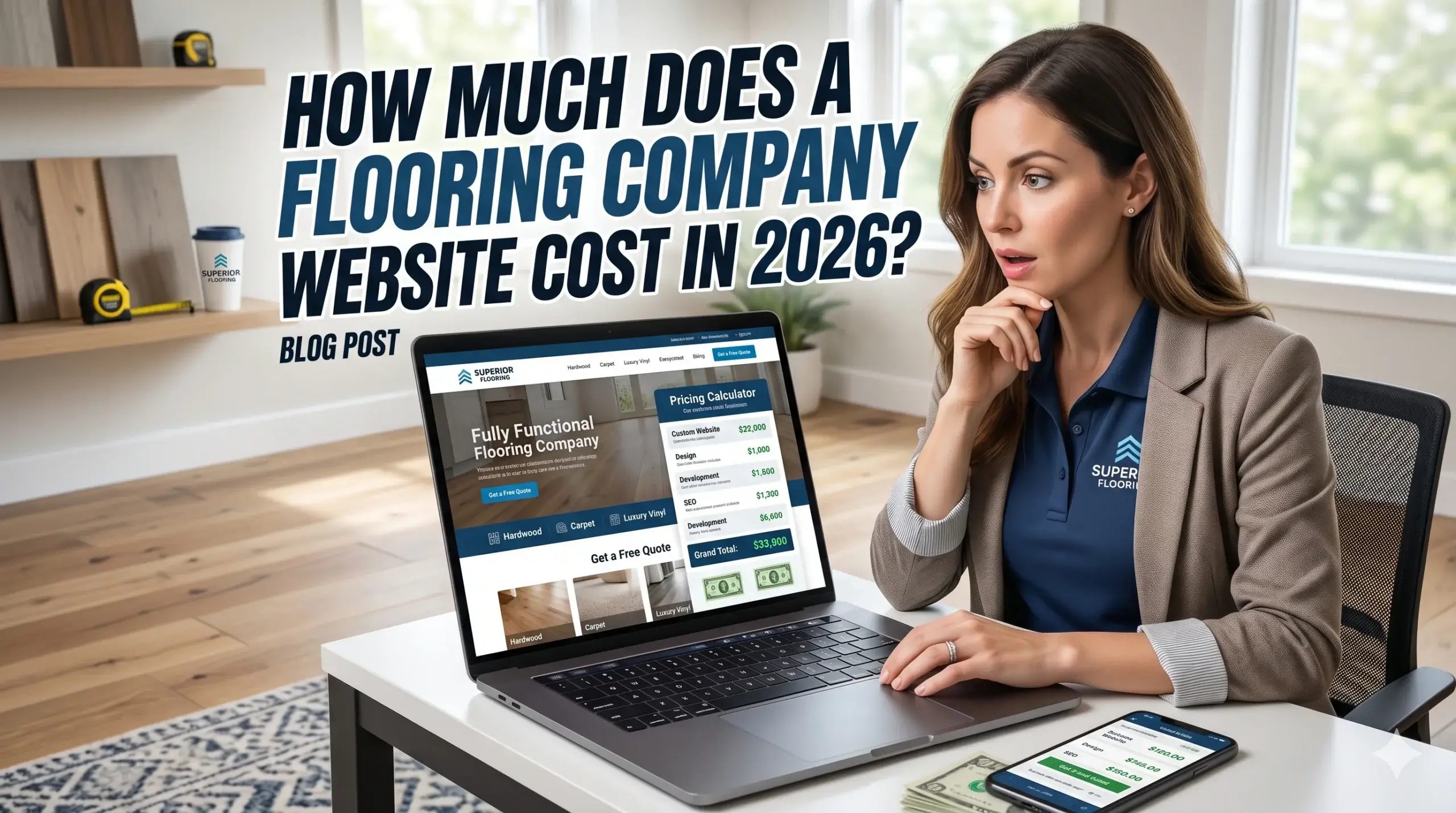
    How Much Does a Flooring Company Website Cost in 2026?

    You’ve got the crews, the showroom samples, and years of happy customers — but your phone still isn’t ringing the way it should. Meanwhile, another flooring company down the street seems to be everywhere online, landing jobs you should be getting.

    Here’s the uncomfortable truth most flooring business owners don’t hear until it’s too late: your website might be working against you. Not because it’s ugly. Not because you made a bad choice when you built it. But because most websites built for flooring businesses are designed to look good in a sales demo — not to win you customers on a Tuesday afternoon when someone’s dog just ruined their hardwood floors and they need a quote now.

    This guide breaks down what a flooring company website actually costs in 2026, what separates a site that generates calls from one that just sits there, and how to know which one you have.


    The Real Question Isn’t “How Much?” — It’s “What Am I Actually Buying?”

    Most flooring business owners get quoted anywhere from $500 to $15,000+ for a website. That range is nearly useless without context. A $500 template site and a $8,000 custom-built site can look almost identical in a screenshot. The difference shows up in your call log.

    Here’s what actually determines whether a flooring website generates leads:

    • Speed — Does it load in under 3 seconds on a phone?
    • Local visibility — Does Google know exactly where you work and what you install?
    • Trust signals — Does a first-time visitor immediately feel confident calling you?
    • Clear next step — Is it obvious what to do the moment someone lands on your page?

    Think of your website like a showroom floor. If a customer walks in and the samples are hard to find, nobody greets them, and the lighting makes everything look dull — they leave. It doesn’t matter how good your product is. Your website works the same way.


    Why Most Flooring Websites Don’t Generate Calls

    The Site Looks Fine, But It Loads Too Slowly

    Most homeowners searching for flooring are on their phones, often in the middle of a project or a panic. If your website takes more than 3 seconds to load, a large percentage of those visitors leave before they even see your phone number — and go straight to your competitor.

    This isn’t a design problem. It’s a technical one. Images that aren’t compressed, hosting that can’t handle traffic, and outdated code all slow a site down. Most website builders and cheap agencies don’t address this because it’s harder to fix than it looks.

    The real cost: You’re paying for a website, but you’re losing potential customers before they ever read a single word.

    Google Doesn’t Know Enough About Your Business to Show It

    Here’s something that surprises a lot of flooring business owners: Google is cautious. It only promotes businesses it feels confident about. If your website doesn’t clearly tell Google what services you offer, what cities you cover, and what kind of flooring you specialize in — Google hedges its bets and shows someone else instead.

    There’s a technical layer to this called structured data, but the plain-English version is simple: your website needs to speak Google’s language, not just your customers’. Most flooring websites don’t do this.

    The real cost: You’re invisible to the exact people searching “hardwood floor installation near me” or “LVP flooring contractor in [your city].”

    Your Website Looks the Same as Every Competitor’s

    Homeowners comparing flooring companies are clicking through 4–6 websites before making a call. If yours looks identical to the next guy’s — same stock photos, same generic headline, same “contact us for a free quote” button — there’s no reason to choose you.

    What actually makes someone pick up the phone? Seeing real photos of your work, reading reviews from people in their area, and getting a sense that you know flooring better than anyone else.

    The real cost: You lose the trust battle before the conversation even starts.


    What You’re Actually Paying For: Breaking Down Flooring Website Costs

    Here’s a realistic breakdown of what different price points get you in 2026:

    $500–$1,500 — Template/DIY builds

    • Generic layout, minimal customization
    • Slow load times by default
    • No local SEO setup
    • You’re responsible for updates and maintenance
    • Looks professional at a glance, performs poorly in search

    $2,000–$5,000 — Mid-tier agency or freelancer

    • More customization, but often still template-based
    • Varies widely in quality — some great, some mediocre
    • SEO may or may not be included (always ask)
    • Results depend heavily on who you’re working with

    $5,000–$12,000+ — Purpose-built, conversion-focused

    • Designed specifically for lead generation, not just looks
    • Fast load times built in from the start
    • Local SEO structure included
    • Ongoing support and performance tracking
    • Built for how flooring customers actually shop

    The question to ask any agency isn’t just “what does it cost?” — it’s “how many calls do flooring businesses you’ve built for actually get?” If they can’t answer that, that tells you something.


    💡 Pro Tip

    One of the most common — and costly — mistakes flooring businesses make is putting their phone number only in the header of their website. When someone visits on mobile and scrolls down even a little, that number disappears. They have to scroll back up to find it, and most don’t bother. The fix is simple: a sticky click-to-call button that stays visible no matter how far someone scrolls. It takes an hour to add and can meaningfully increase how many calls you get — especially from mobile visitors, who now make up the majority of local search traffic.


    What Changed for One Flooring Business — A Real-World Example

    The situation: A mid-sized flooring company in the Midwest — residential installs, hardwood and LVP focus — had a website built three years ago for around $1,200. It looked clean. The owner was proud of it. But calls from the website were inconsistent at best, and the majority came from referrals or repeat customers.

    The problem: Their site loaded in 6+ seconds on mobile, had no location-specific pages, and their Google Business Profile wasn’t connected to their website properly. They were ranking on page 2 for their core search terms — which is basically invisible.

    What changed: A new site was built with fast hosting, compressed images, and dedicated service pages for each city they covered. Their Google Business Profile was integrated properly, and a sticky call button was added for mobile users.

    The result: Within 90 days, they were ranking on page 1 for three of their target search terms. Inbound calls from the website increased substantially, and for the first time, they could actually track where leads were coming from.

    None of this required a massive budget. It required building the site correctly from the start.


    Not sure if your flooring website has these issues? Get a free website audit — no obligation, just a clear picture of what’s costing you leads.


    Your Path to More Leads: What to Do Next

    If you’re not getting the calls your business deserves, here’s a simple way to think about what needs to happen:

    1. Check your mobile load speed. Pull up your website on your phone and time how long it takes. If it’s over 3 seconds, you’re losing visitors.
    2. Look at your homepage like a stranger. Can someone tell in 5 seconds what you do, where you work, and how to reach you? If not, your bounce rate is hurting you.
    3. Make sure Google knows your service area. You need location-specific content — not just a city in your footer, but actual pages or sections that speak to the areas you serve.
    4. Add real proof. Photos of your own work, real reviews, and a name/face behind the business convert better than any stock image or generic headline.
    5. Work with someone who’s done this for flooring businesses before. Industry-specific experience matters. Websites built for flooring businesses are structured differently than generic small business sites — the service pages, the local SEO setup, the trust signals all need to reflect how flooring customers think and shop.

    Frequently Asked Questions

    Why am I not getting calls from my website even though people visit it?

    Traffic without calls usually means one of three things: visitors aren’t immediately clear on what to do, your site isn’t loading fast enough on mobile, or the people visiting aren’t actually in your service area. Getting traffic is only half the equation — the site has to earn the call once someone lands on it.

    How do I know if my flooring website is actually working?

    If you can’t answer “how many calls came from my website last month,” your site isn’t set up to be measured — and anything that can’t be measured can’t be improved. A properly built flooring website tracks calls, form submissions, and where visitors come from. Request a free audit and you’ll get a clear answer on where your site stands right now.

    How long does it take to see results from a new website?

    Most flooring businesses start seeing measurable changes within 60–90 days of launching a properly optimized site — not because the internet magically changes, but because Google takes time to re-index and re-rank updated content. Businesses that were previously on page 2 or below often see significant movement within that window.

    What makes a flooring website different from a regular business website?

    Flooring customers shop visually and locally. They want to see real work — not stock photography. They’re often comparing 4–6 contractors before calling anyone. And they’re almost always searching from their phones while standing in a room they want renovated. A flooring website needs to be fast on mobile, show real project photos, target the right neighborhoods or cities, and make it dead simple to call or request a quote.

    Do I really need a fast website if my customers are local?

    Yes — actually more so. Local customers searching on mobile are the most impatient audience there is. They’re looking for a flooring contractor right now, and if your site takes 5 seconds to load, they’re already on your competitor’s page. Speed isn’t a tech luxury; it’s the difference between getting the call and not.

    I’ve hired web agencies before and didn’t see results. Why would this be different?

    That’s a fair concern, and it’s one worth asking directly. The difference usually comes down to whether an agency builds websites to look good in a portfolio or to generate calls for your specific business. Ask to see results from other flooring clients. Ask how they track leads. Ask what happens after the site launches. If they can’t answer those questions clearly, keep looking. A good agency will welcome those questions.


    Ready to Find Out What Your Website Is Actually Costing You?

    Every week your flooring website underperforms is a week of leads that went to someone else. Not because you’re doing something wrong — but because the site isn’t set up to win.

    Digital Trace works specifically with flooring businesses to build fast, lead-generating websites that show up in search, earn trust on the first visit, and make it easy for homeowners to call you. No guesswork. No generic templates. No mystery about whether it’s working.

    Book your free website audit — takes less than 10 minutes, no strings attached. You’ll walk away knowing exactly what’s holding your site back and what it would take to fix it.

  • Local SEO for Flooring Companies: How to Rank #1 in Your City

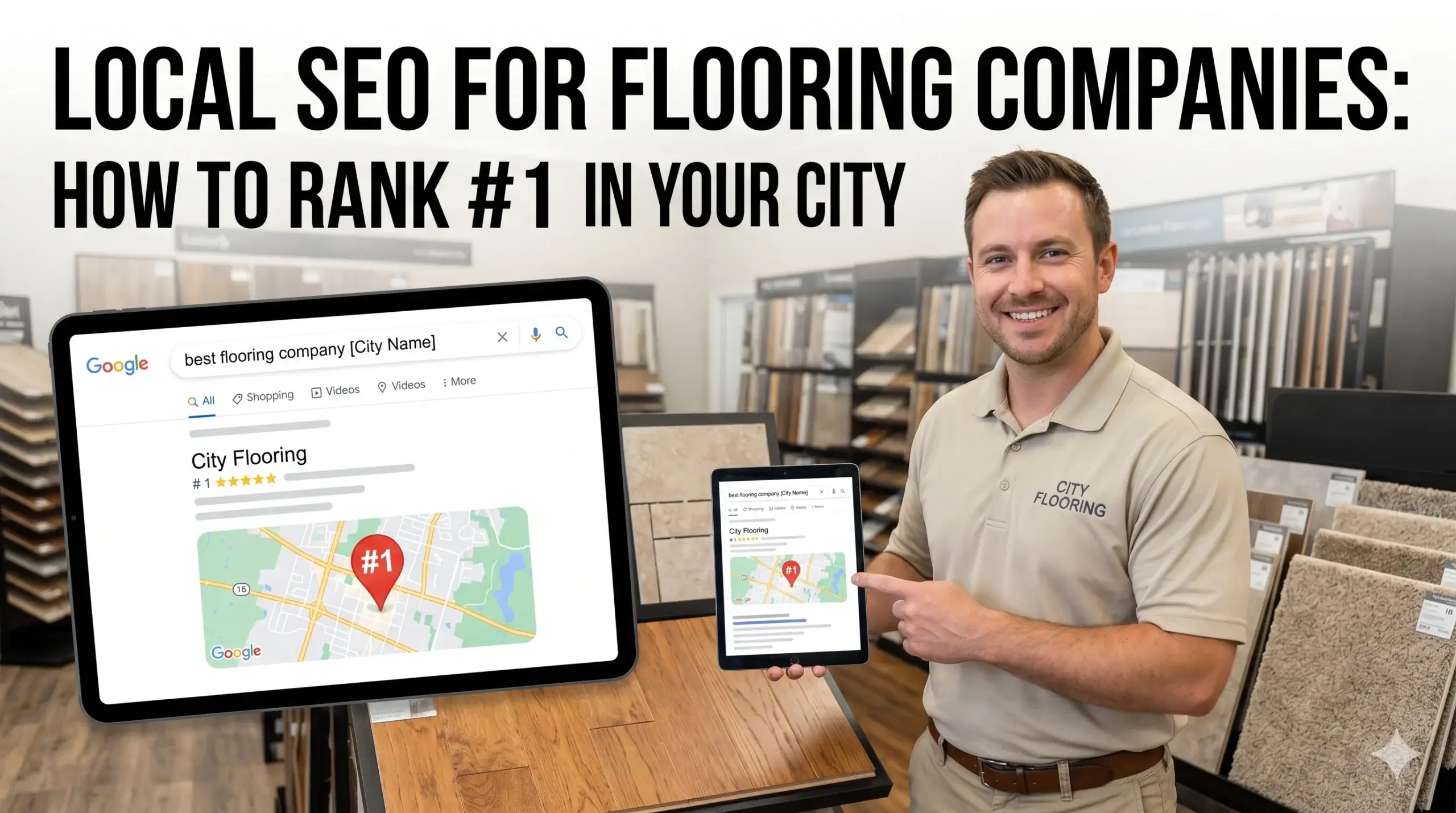
    Local SEO for Flooring Companies: How to Rank #1 in Your City

    You’ve been in the flooring business long enough to know good work sells itself — but lately, it feels like the phone isn’t ringing the way it used to. You’ve got years of installs under your belt, happy customers, and a website someone told you looked “professional.” So why is the competitor down the street showing up on Google and you’re not?

    The hard truth is that most flooring companies have a website that looks decent but doesn’t actually work. It doesn’t rank. It doesn’t convert visitors into callers. It just sits there. And every day it sits there, leads you should be getting are going somewhere else.

    This guide breaks down exactly why that happens — and what a real fix looks like. No jargon. No empty promises. Just the specific reasons flooring businesses lose leads online and what it takes to get your phone ringing again.


    Why Your Flooring Website Isn’t Showing Up When It Matters Most

    Here’s the scenario: A homeowner in your city just cracked a tile in their kitchen. They grab their phone, type “flooring company near me,” and three names pop up. Yours isn’t one of them.

    That’s not a coincidence — it’s a technical problem with a fixable solution.

    Google ranks local businesses based on three main signals: relevance (does your site say what you do and where?), proximity (are you geographically close to the searcher?), and authority (does Google trust your site?). Most flooring websites fail on at least two of those three.

    The fix starts with your flooring website design — specifically, how your site is built, what it communicates to Google, and how fast it loads. These aren’t cosmetic choices. They directly determine whether your business shows up when someone nearby is ready to spend money.


    Your Site Loads Too Slowly — And It’s Costing You Real Jobs

    Think of your website like a showroom. If someone walks up to your door, tries to open it, and it takes eight seconds to unlock — they’re gone. They walked next door.

    That’s what slow websites do. Most visitors leave within three seconds if a page doesn’t load. On a mobile phone (where most of your potential customers are searching), a sluggish site might as well not exist.

    The technical culprit is usually one of three things:

    • Unoptimized images that are 10x bigger than they need to be
    • Cheap, shared hosting that can’t handle traffic spikes
    • Bloated website templates loaded with features you’ll never use

    Every one of those is fixable. At Digital Trace, sites are built for speed from the ground up — not retrofitted after the fact. That means faster load times, better rankings, and more visitors who actually stick around long enough to call you.


    Google Doesn’t Know Enough About Your Business to Trust It

    This one surprises a lot of flooring business owners. You’ve been in business for years, you have reviews, you have a Google Business Profile — and you’re still not showing up. Why?

    Because Google needs to see consistent, specific signals across your website, your listings, and your online presence before it’ll confidently push you to the top.

    When your website doesn’t clearly state what you install (hardwood? LVP? carpet? tile?), where you serve (which cities, which counties?), and what makes you different — Google treats you as a generic, lower-priority result. It’s not that Google dislikes you. It just doesn’t know enough about you.

    The fix involves making sure your website and your Google Business Profile are speaking the same language — same business name, same address, same phone number, same service areas — and that your site content gives Google the context it needs to match you with the right searches.


    💡 Pro Tip: Your Business Name, Address, and Phone Number Are Probably Wrong Somewhere

    One of the most common and damaging mistakes flooring companies make is having inconsistent contact information scattered across the web. Your website says one phone number. Yelp has an old address. Google Business Profile has a slightly different business name. To Google, these look like three different businesses — and none of them rank well. Run a quick audit of every place your business is listed online and make sure the name, address, and phone number are exactly the same everywhere. This single fix can move the needle faster than almost anything else.


    Your Homepage Talks About You — But Customers Are Searching for Themselves

    Read your homepage right now. Does it start with something like “Family-owned flooring company with 20 years of experience”? That’s about you. Customers searching Google aren’t looking for your backstory — they’re looking for a solution to their problem.

    “My hardwood floors are scratched and I need someone to replace them this week.”

    “I’m renovating my basement and need LVP that can handle moisture.”

    “I want to know how much flooring installation costs before I call anyone.”

    Your website should answer those questions immediately and specifically. A homepage that leads with your services, your service area, and a clear way to contact you — not buried at the bottom — converts dramatically better than one that starts with a company history.

    This is where flooring website design done right makes a measurable difference. A well-structured site tells visitors exactly what you do, where you do it, and how to reach you — within seconds of landing on the page.


    A Real Example: What Happens When the Website Finally Works

    The Situation: A flooring contractor in suburban Ohio had been in business for 14 years. Mostly word-of-mouth, a few Houzz leads, and a website his nephew built in 2018. It looked fine on desktop, loaded slowly on mobile, had no location-specific pages, and his Google Business Profile was barely filled out. He was averaging maybe two to three web leads per month — and half of those were low-budget tire-kickers.

    What Changed: A new site was built with mobile-first design, fast loading, and dedicated service pages for each city in his area (Columbus, Westerville, Dublin, Grove City). His Google Business Profile was fully optimized — photos, services, FAQs, weekly posts. His name, address, and phone number were corrected and made consistent across 40+ directories.

    The Result: Within 90 days, he was ranking in the top three on Google Maps for “flooring installation Columbus” and two surrounding cities. Monthly web leads went from two to three per month to 18 to 22 per month. Better yet, those leads were qualified — homeowners with real projects, not price-shoppers. His close rate stayed the same, but his revenue for the year was up significantly simply because more of the right people were finding him first.


    Not sure if your flooring website has these issues? Get a free website audit — no obligation, just a clear picture of what’s costing you leads.


    Your Path to More Leads: 5 Steps That Actually Move the Needle

    You don’t need to become an SEO expert. You just need to make sure the right things are in place. Here’s what a working local presence actually looks like for a flooring company:

    1. A fast, mobile-first website — Most of your customers are on their phones. If your site doesn’t load cleanly and quickly on mobile, you’re invisible to the majority of your potential market.
    2. Service pages built around what people actually search — Not one page that says “Our Services,” but dedicated pages for hardwood installation, LVP, carpet, tile — and ideally, separate pages for your key service cities.
    3. A fully optimized Google Business Profile — Complete with photos of your work, accurate hours, all services listed, and consistent contact info that matches your website exactly.
    4. Consistent business information everywhere — Your name, address, and phone number should be identical on every directory, social platform, and listing site where your business appears.
    5. A clear way to contact you on every page — Phone number in the header. A contact form that’s easy to use. A call-to-action that tells visitors what to do next.

    None of these are complicated in isolation. The challenge is doing all of them correctly, consistently, and in a way that works together — which is exactly what Digital Trace does for flooring businesses across the US.


    FAQ: Questions Flooring Business Owners Actually Ask Before Hiring a Web Agency

    Why am I not getting calls from my website even though I get visitors?

    Traffic without calls usually means one of two things: the wrong people are finding your site, or the right people are finding it but leaving before they act. Common causes include slow load times, no visible phone number above the fold, confusing navigation, or pages that don’t answer the visitor’s actual question. An audit usually reveals the exact drop-off point within minutes.

    How do I know if my flooring website is actually working for me?

    If you can’t point to specific leads that came from your website in the last 30 days, it’s probably not working. A site that works shows up in Google for local searches, loads fast on phones, and has a measurable number of visitors who call or fill out a form. If you don’t have that data — or you do and it’s flat — something needs to change.

    How long does it take to see results from a new flooring website?

    For a brand-new site with proper SEO from day one, most flooring businesses start seeing meaningful movement in local rankings within 60 to 90 days. Some faster, depending on competition in your area. The key is that a well-built site compounds over time — results don’t plateau the way paid ads do.

    What makes a flooring website different from a regular business website?

    Flooring customers make high-consideration purchases — they want to see your work before they call. That means your site needs strong project photo galleries, clear service breakdowns (hardwood vs. LVP vs. tile vs. carpet), and specific coverage of your service area. A generic “small business website” template doesn’t account for any of that. Get a free audit to see how your current site stacks up.

    Do I really need a fast website if my customers are local anyway?

    Yes — more so, actually. Local searchers are almost always on mobile, often in the middle of a task (comparing contractors, getting quotes, planning a renovation). They have no patience for slow pages. Google also factors page speed into local rankings, which means a slow site doesn’t just lose visitors — it loses visibility before those visitors even find you.

    I’ve paid for a website before and didn’t see results. Why would this be different?

    The most common reason websites don’t perform is that they were designed to look good, not to rank or convert. Design and SEO are two different disciplines. A site that wins awards for looks but isn’t built with local search in mind will never rank. At Digital Trace, every flooring website is built with both in mind from the first line of code — not treated as an afterthought.


    Stop Losing Leads You Should Already Be Getting

    Every day your flooring website isn’t ranking, a homeowner in your service area is calling your competitor instead of you. That’s not a hypothetical — it’s what’s happening right now.

    The good news is that the fix is usually more straightforward than most flooring business owners expect. The problems are real but solvable. The leads are out there. You just need a website and a local presence that are actually built to capture them.

    Digital Trace specializes in websites and local SEO for flooring companies across the US. We find what’s costing you leads, fix it, and build a foundation that keeps working for years — not just until the next algorithm update.

    Get your free website audit — we’ll show you exactly what’s holding your site back, what it’s costing you in lost revenue, and what a realistic fix looks like. No sales pressure. No obligation. Just a clear, honest picture of where you stand.

    See how Digital Trace builds websites for flooring businesses →

  • Why Most Flooring Contractors Lose Leads Online (And How a Better Website Fixes It)

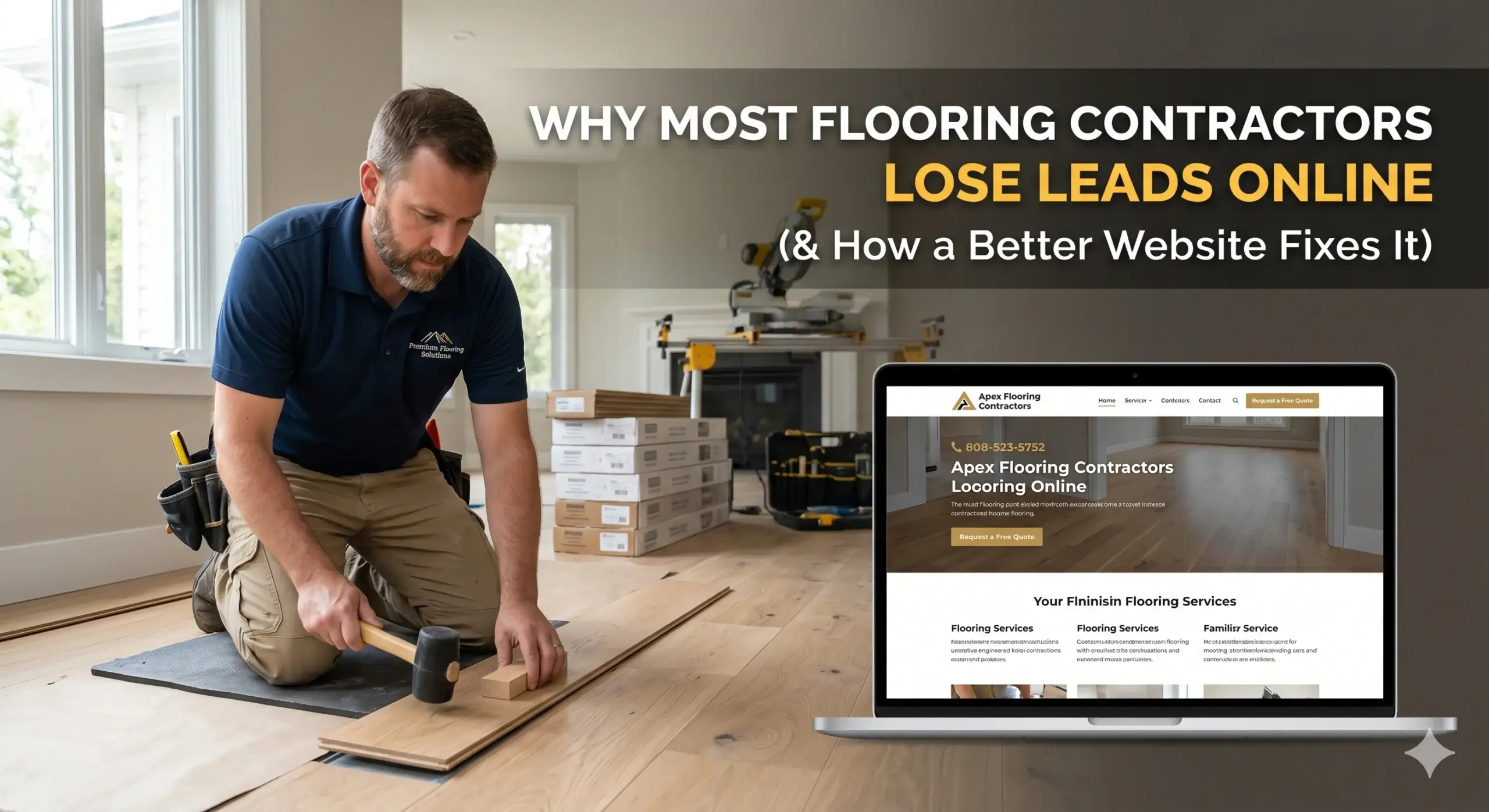
    Why Most Flooring Contractors Lose Leads Online (And How a Better Website Fixes It)

    You do great work. You show up on time, your installs look clean, and your customers are happy — yet your phone isn’t ringing the way it should be. Meanwhile, another flooring company in your market somehow keeps popping up everywhere online, landing jobs you should be getting.

    The frustrating part? It’s probably not your pricing, your reputation, or even your service area. For most flooring contractors, the real problem is hiding in plain sight: their website.

    Most flooring business owners think of their website as a digital business card — something to point customers to when they ask. But your competitors who are winning online treat their website like their best salesperson — one that works 24/7, answers questions, earns trust, and turns visitors into phone calls before they click to the next result.

    This post breaks down exactly why flooring websites fail to generate leads, what the hidden causes are (in plain English), and what a properly built flooring website design actually looks like when it’s built to convert.


    Your Website Loads Slowly — And Customers Leave Before They See Your Number

    Think about how a homeowner shops for flooring. They pull out their phone, type something like “hardwood flooring installer near me,” and tap through a few results. If your site takes more than three seconds to load, they’re already gone — back to Google, clicking your competitor.

    The average mobile user won’t wait for a slow site. They’ve got options, and they know it. What most contractors don’t realize is that site speed is one of the top factors Google uses to decide which websites rank high in the first place. A slow site gets pushed down before a customer even has the chance to leave.

    This happens because most flooring websites are built on generic templates crammed with oversized images, bloated code, and add-ons that drag load times down. The site looks fine when you’re sitting at a desktop — but on mobile, in the field, on a 4G connection? It’s a different story.

    What a better approach looks like:

    • Images compressed and optimized for mobile without losing quality
    • Streamlined code that loads the most important content — like your phone number and call-to-action — first
    • Speed scores that meet Google’s performance standards so your site ranks and loads fast

    Google Doesn’t Know Enough About Your Business to Show It

    You might have a website up. You might even have some photos of your work, a services list, and a contact form. But if Google can’t clearly understand what you do, where you do it, and who you serve — it won’t confidently show your business to people searching in your area.

    There’s a simple technical layer that helps Google understand your business. Without it, your site is speaking a language Google partially ignores. Competitors who have it set up correctly get preference in local search results — those map listings and top results that appear when someone types “flooring company near me.”

    For flooring businesses, this means making sure your website tells Google: what type of flooring you install, what cities and counties you serve, how long you’ve been in business, and how customers have rated you. When Google has that information in a format it can read clearly, it trusts your site enough to show it.


    Your Site Looks Fine — But It Doesn’t Do Anything

    Here’s a question worth asking: when someone lands on your flooring website for the first time, what are they supposed to do next?

    If the answer is “look around, I guess,” that’s a problem. Most flooring websites are built to inform — not to convert. There’s no clear reason for the visitor to call right now, no urgency, no path that naturally leads them toward picking up the phone or filling out a form.

    Think of it this way: a great showroom isn’t just organized — it guides customers through a specific experience. The lighting hits the samples just right, a salesperson is there to answer questions at the perfect moment, and by the time the customer is ready to buy, they already trust you. Your website should do the same thing online.

    A high-converting flooring website leads visitors through a deliberate journey:

    • A headline that immediately tells them they’re in the right place (“Hardwood & LVP Installation in [City] — Free Estimates”)
    • Social proof up front — reviews, years in business, number of installs completed
    • A single, clear next step: call, text, or fill out a quick form
    • Photos of your actual work — not stock images — that build trust fast

    When a site is built this way, visitors don’t have to figure out what to do. They’re already dialing.


    You’re Not Showing Up for the Right Searches

    Most flooring contractors think about SEO in broad terms: “I want to rank for flooring.” But the people who are actually ready to hire someone aren’t searching “flooring.” They’re searching:

    • “LVP installation cost [city]”
    • “hardwood floor refinishing near me”
    • “tile installer [neighborhood]”
    • “flooring company free estimate”

    These are high-intent searches — people with credit cards ready, measuring tape in hand. If your website doesn’t have pages that specifically address these searches, you’re invisible to exactly the customers most likely to hire you.

    A properly built flooring company website creates dedicated content for each service and each location you serve. That means a page for hardwood installation, a page for tile, a page for LVP — and ideally, versions of those for each city in your service area. It sounds like a lot, but this is how flooring businesses consistently show up when the right people are searching.


    💡 Pro Tip: Your Contact Form Might Be Killing Your Lead Flow

    Many flooring websites have a contact form — but it asks for too much information up front. Name, email, phone, project type, square footage, preferred install date… by the time a homeowner hits question four, they’ve moved on.

    The fix is simple: reduce your form to three fields maximum (name, phone, and a one-line project description). The goal of the form isn’t to gather all the information — it’s to get the conversation started. You can ask the rest on the call. Shorter forms consistently produce more submissions, and in the flooring business, more submissions mean more booked estimates.


    Before & After: What a Real Flooring Business Transformation Looks Like

    The situation: A family-owned flooring company operating in a mid-sized metro area had been in business for over a decade. Word of mouth was strong, but new leads from online were nearly nonexistent. Their website was five years old, loaded in over seven seconds on mobile, had no local SEO structure, and sent visitors to a homepage with no clear call-to-action.

    What changed: The site was rebuilt from the ground up with performance as a priority — load times dropped to under two seconds. Separate service pages were created for hardwood, LVP, tile, and carpet, each targeting specific search terms. A streamlined quote request form replaced the old contact page. Local SEO structure was added so Google could clearly identify the company’s service areas.

    The result: Within 90 days, organic search traffic more than doubled. Monthly quote requests went from 2–3 to 15–20. The owner reported booking out three weeks in advance for the first time in years — with zero additional ad spend.

    That’s what a properly built flooring web design can do when every element is working together.


    Not sure if your flooring website has these problems? Get a free website audit — no obligation, just a clear picture of what’s costing you leads.


    Your Path to More Leads: 5 Steps That Actually Move the Needle

    If you’re reading this and nodding at more than a couple of these problems, here’s where to start:

    1. Test your site speed on mobile. Pull out your phone, go to your website, and time how long it takes to fully load. If it’s more than three seconds, you’re losing leads every single day.
    2. Ask yourself: what do I want visitors to do? If your site doesn’t have one clear, obvious next step — a call button, a “Get My Free Estimate” button — that needs to change before anything else.
    3. Count your pages. If your website is basically a homepage, an about page, and a contact page, Google has almost nothing to show in search results. You need service-specific and location-specific pages.
    4. Look at your reviews. Are they visible on your website? Google review counts and ratings should be right on your homepage — not buried, not missing.
    5. Get a professional audit. Most flooring business owners don’t know what they don’t know when it comes to their website. A proper audit will surface the exact issues costing you leads, ranked by impact.

    Digital Trace builds websites built for flooring businesses that are fast, optimized for local search, and designed to turn visitors into calls. Every site we build is built around one goal: more leads for your business.


    Frequently Asked Questions

    Why am I not getting calls from my website?

    The most common reasons are slow load speed, no clear call-to-action, and missing local SEO structure. If your site loads slowly on mobile, visitors leave before they see your phone number. If there’s no obvious “call now” or “get a quote” button, people don’t know what to do next. And if Google can’t figure out exactly what you do and where you do it, it simply won’t show your site to the right people.

    How do I know if my flooring website is actually working?

    A working website produces leads consistently — not occasionally. If you’re not getting at least a few quote requests or calls per week purely from your website, something’s broken. You can also check Google Search Console for free to see if your site is showing up for any searches at all. If it’s not, the site isn’t working.

    How long does it take to see results from a new website?

    Most flooring businesses start seeing measurable improvements in lead volume within 60–90 days of launching a properly optimized site. SEO is not instant, but a faster, better-structured site starts earning better Google placement relatively quickly — especially in local search where competition is often less intense than you’d expect.

    What makes a flooring website different from a regular business website?

    Flooring customers are highly visual — they want to see your work before they call. A flooring website needs to showcase high-quality project photos, be organized by service type (hardwood, LVP, tile, carpet), and speak directly to the concerns homeowners have: cost, disruption, timeline, and reliability. A generic business website template doesn’t address any of that. It’s built for no one in particular, which means it converts no one in particular.

    Do I really need a fast website if my customers are local?

    Yes — especially because your customers are local. Most local searches happen on mobile, often while someone is in their car or standing in a home improvement store. Mobile connections are slower than Wi-Fi, which means a slow website hits local customers the hardest. Google also ranks faster sites higher in local search results, so your speed directly affects whether you appear before your competitors.

    How do I find out what’s actually wrong with my website?

    The fastest way is a professional audit that looks at your site’s speed, SEO structure, mobile performance, conversion elements, and local search visibility — all together. Book a free website audit with Digital Trace and we’ll show you exactly what’s costing you leads, with no pressure and no sales pitch attached.


    Ready to Find Out What Your Website Is Costing You?

    Every week your flooring website isn’t performing, you’re handing jobs to competitors. Not because they’re better at what they do — but because their website is doing a better job of convincing customers to call.

    A free audit from Digital Trace will show you exactly where your site is losing leads, what’s fixable fast, and what a properly built flooring website could mean for your business in real numbers.

    Get your free flooring website audit →

    No contracts. No pressure. Just a clear picture of where you stand and what’s possible.

  • Flooring Company Website Design: What Your Site Needs to Book More Clients

    Flooring Company Website Design: What Your Site Needs to Book More Clients

    You do great work. Your installs are clean, your customers are happy, and your referrals are solid. But your phone isn’t ringing the way it should — and you’re watching competitors you know aren’t better than you show up all over Google.

    The frustrating part? Most flooring business owners assume the problem is that they “need more marketing.” But the real issue is usually the website itself. Not because it looks bad — but because it’s quietly failing at its only job: turning visitors into booked clients.

    This post breaks down exactly what’s wrong with most flooring company websites, what it’s costing you in real dollars, and what a high-converting flooring website actually looks like. By the end, you’ll know whether your site is working for you — or against you.


    Your Website Loads Too Slowly — And Your Customers Already Left

    Here’s something most flooring business owners don’t realize: if your website takes more than three seconds to load, the majority of visitors are gone before they ever see your phone number.

    Think about it like this — you wouldn’t let a customer walk into your showroom and stand at the door for 30 seconds staring at a blank wall. But that’s exactly what a slow website does.

    The technical reason is usually oversized images (those beautiful floor photos you uploaded are often 5–10x too large), outdated hosting, or a website builder that was never built for speed. The business impact is real: slow sites lose leads every single day, silently, without you ever knowing someone was there.

    At Digital Trace, every flooring website is built and optimized specifically for speed — so the first thing a potential client sees is your work, not a loading spinner.


    Your Site Doesn’t Tell Visitors What to Do Next

    Most flooring websites have the same invisible problem: they show off the work, but they don’t guide the visitor anywhere. No clear “Get a Free Quote” button. No phone number visible above the fold. No simple next step.

    It’s like finishing a beautiful hardwood install and then leaving without handing the customer a business card. The work speaks for itself — but you still need to close.

    When a homeowner lands on your site after searching “flooring contractor near me,” they’re already interested. They just need a reason to call you instead of clicking back and calling someone else. That reason is a clear, confident call-to-action — and it needs to be front and center, not buried at the bottom of the page.

    A flooring website built to convert has:

    • A phone number visible at the top of every page
    • A primary button (“Get a Free Quote” or “Book a Consultation”) above the scroll line
    • A short, clear headline that speaks to what the customer actually wants — not just “Welcome to ABC Flooring”
    • A lead form that takes less than 60 seconds to fill out

    Google Doesn’t Know Enough About Your Business to Show It

    You might have heard the term “local SEO” thrown around. Forget the jargon. Here’s what it actually means for your flooring business:

    Google is constantly deciding which flooring companies to show when someone nearby searches. It makes that decision based on signals — how complete your website is, how clearly it describes your services, and whether your business information appears consistently across the web.

    If your website doesn’t clearly state which cities you serve, which flooring types you install, or what makes you different — Google hesitates. And when Google hesitates, it shows your competitor instead.

    There’s also a behind-the-scenes fix called structured data (sometimes called schema markup) that tells Google exactly what your business is, where you’re located, and what services you offer. Most flooring websites are missing it entirely — and it’s one of the fastest ways to improve how often you show up in local search results.

    💡 Pro Tip: One of the most common mistakes flooring businesses make is having one generic “Services” page instead of separate pages for each flooring type — hardwood, LVP, tile, carpet, etc. Google treats each page as a separate ranking opportunity. A single page covering everything is like putting all your best samples in one box and hiding them in the back. Separate service pages get you found for more searches, by more customers, more often.


    Your Website Looks Fine — But It Doesn’t Build Trust

    A homeowner hiring a flooring company is making a big decision. They’re letting strangers into their home, spending thousands of dollars, and living with the result for years. They’re not just looking for the lowest price — they’re looking for someone they can trust.

    Most flooring websites look clean enough, but they fail the trust test. No real photos (just stock images of floors with no one in them). No reviews on the actual site. No “About Us” that feels human. No licenses or certifications mentioned anywhere.

    When a visitor can’t quickly find evidence that you’re credible, they leave — not because they don’t need flooring, but because they’re not sure they can trust you yet.

    A high-converting flooring website includes:

    • Real project photos with brief descriptions (what was installed, what the customer needed)
    • Google reviews embedded or displayed directly on the site
    • An “About” section that tells your actual story — not corporate filler
    • Any relevant licenses, insurance, or certifications clearly stated

    The Real Cost: What a Broken Flooring Website Looks Like

    Here’s a realistic picture of what this looks like in practice.

    A flooring contractor in the Pacific Northwest — let’s call him Marcus — had been in business for 11 years. He had a website. It looked decent. But he was getting maybe one or two leads per month from it, relying almost entirely on referrals.

    The problems on his site were invisible to him: it took 7 seconds to load on mobile, there was no clear quote button, his service area wasn’t mentioned anywhere on the page, and he had no individual pages for hardwood, LVP, or carpet — just one generic “Services” page.

    After a full rebuild — optimized images, fast hosting, dedicated service pages, a clear quote form, and local SEO setup — his site started generating 8–12 qualified leads per month within 90 days. Same service area. Same quality of work. The only thing that changed was the website.

    That’s not a magic number. It’s what happens when a site is actually built to do its job.

    Not sure if your flooring website has these issues? Get a free website audit — no obligation, just a clear picture of what’s costing you leads.


    Your Path to More Leads: What Actually Needs to Change

    If you’ve been nodding along reading this, here’s what the fix actually looks like — in plain terms:

    Step 1: Audit what’s broken. Before changing anything, find out exactly what’s wrong with your current site. Speed, missing pages, trust signals, SEO gaps — most flooring business owners are surprised by how many small issues add up.

    Step 2: Fix the speed and mobile experience. More than half of your visitors are on their phones. If your site isn’t fast and easy to navigate on mobile, you’re losing them.

    Step 3: Create dedicated pages for each flooring type. Hardwood, LVP, carpet, tile — each one deserves its own page. This is one of the highest-impact changes you can make for local search visibility.

    Step 4: Make the next step obvious. Every page should have a clear CTA. Don’t make visitors hunt for your phone number or guess how to get a quote.

    Step 5: Add real proof. Photos of your actual work, real reviews, and a human “About” section do more than any marketing copy ever will. If a potential client can picture you in their home, they’ll call.

    If you want someone to handle all of this — from the audit to the build — Digital Trace builds websites specifically for flooring businesses that are designed to rank, load fast, and convert.


    FAQ: Real Questions From Flooring Business Owners

    Why am I not getting calls from my website?

    The most common reasons are a slow load time, no clear call-to-action, and poor local SEO — meaning Google isn’t confidently showing your site to people nearby. Usually it’s a combination of all three, not just one.

    How do I know if my flooring website is actually working?

    If you can’t tell where your leads are coming from, that’s already a red flag. A working website should be generating consistent, trackable leads — not just sitting there looking presentable. Get a free audit to find out exactly what your site is and isn’t doing.

    How long does it take to see results from a new website?

    For local flooring businesses, most see meaningful improvement in leads within 60–90 days of launching a properly built site. SEO builds over time, but design and conversion changes can show results within weeks.

    What makes a flooring website different from a regular business website?

    A flooring website needs to do a few specific things: showcase visual work in a way that loads fast, rank for location-specific searches, and convert homeowners who are comparison shopping. Generic website templates weren’t built for any of that.

    Do I really need a fast website if my customers are local?

    Yes — especially because your customers are local. They’re searching on their phones while standing in a home improvement store or sitting in their car. If your site takes more than three seconds to load, they’re already calling someone else.

    I’ve worked with agencies before and didn’t see results. Why would this be different?

    A lot of agencies build websites that look good in a demo and then disappear. What actually moves the needle for flooring businesses is a site built around how local customers search, decide, and book — not just a site that looks professional. The audit will show you specifically what’s missing, before you commit to anything.


    Ready to Find Out What Your Flooring Website Is Costing You?

    Every week your website isn’t converting, you’re handing jobs to competitors. Not because they’re better — because their site is doing its job and yours isn’t.

    The free website audit from Digital Trace is a no-pressure, no-obligation review of exactly what’s working, what isn’t, and what’s costing you leads right now. There’s nothing to lose — and a lot of booked jobs to gain.

    Claim your free flooring website audit →