Category: Dental Clinic

  • How to Rank #1 on Google: Local SEO Guide for Dental Clinic Websites

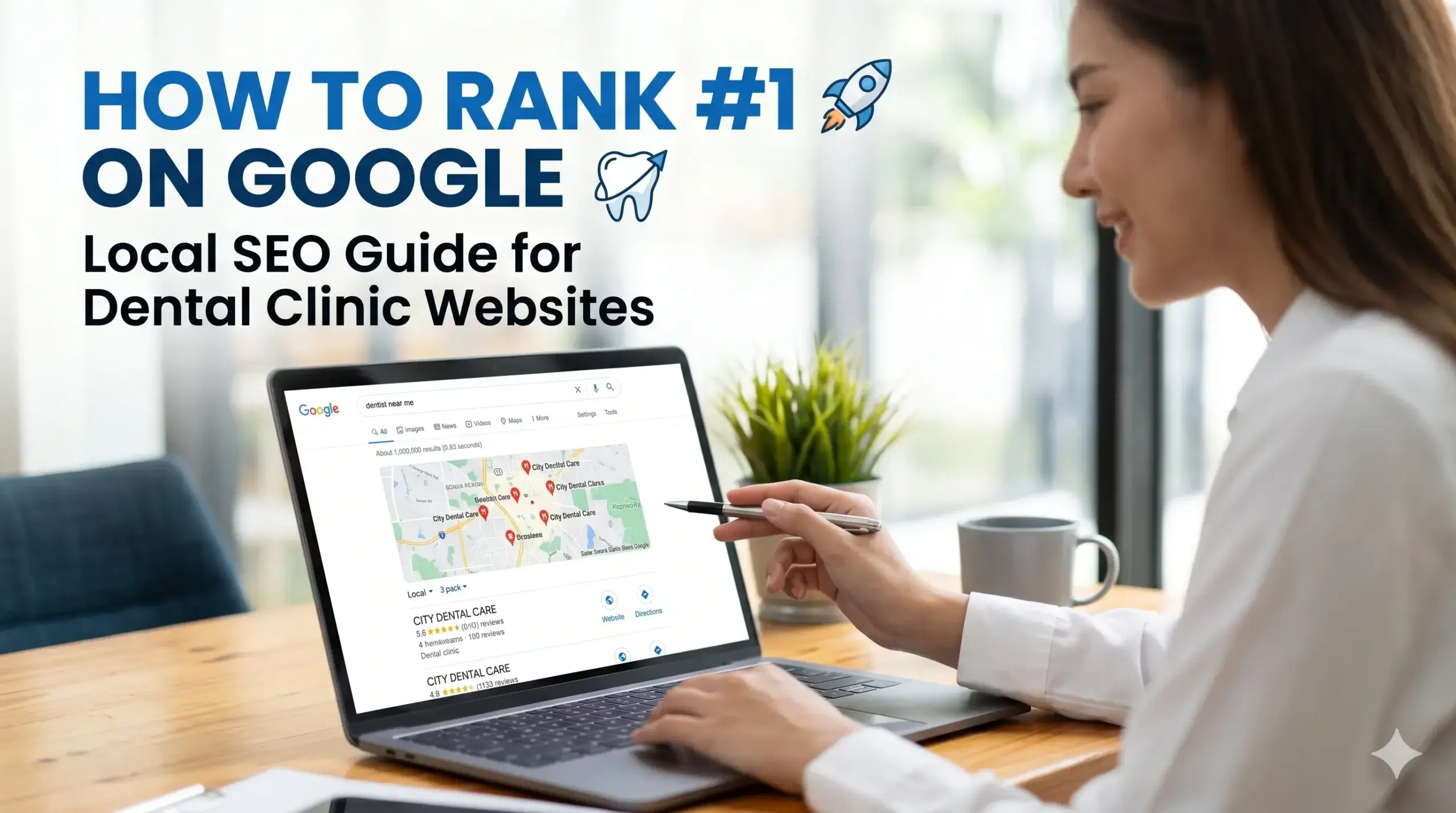
    How to Rank #1 on Google: Local SEO Guide for Dental Clinic Websites

    You built a great dental practice. You invested in equipment, trained your team, and earned five-star reviews from real patients. But when someone nearby types “dentist near me” into Google, your competitor shows up — and you don’t.

    That’s not a marketing problem. That’s a website problem.

    Most dental clinic owners assume their website is just a digital business card — something that exists so they can say they have one. But Google doesn’t rank business cards. It ranks websites that are fast, credible, and built to answer exactly what patients are searching for. If your site isn’t doing those three things, you’re handing new patients to the dentist down the street every single day.

    This guide breaks down exactly why dental clinic websites fail to rank — and what a properly built dental clinic website actually does differently. No jargon. No fluff. Just what’s costing you calls.


    Why Your Phone Isn’t Ringing (And It’s Not What You Think)

    Here’s the situation most dental clinic owners describe: “We have a website. I just don’t think it does much.”

    That instinct is usually right — but the reason is almost never what they guess. It’s not because SEO is complicated, or because Google is unpredictable, or because you need to spend a fortune on ads. It’s because your website was built to look good in a demo, not to rank in a real local search.

    Think of it this way: a great dental website works like a well-trained front desk coordinator. It greets every visitor with confidence, answers their most pressing questions immediately, and guides them toward booking an appointment. A bad website just hands them a brochure and hopes they call. Most don’t.

    The gap between those two experiences is where leads get lost — quietly, every single day.


    Problem #1: Google Can’t “Read” Your Practice the Way Patients Can

    What you experience: You search for your own practice and it barely shows up, even though you’ve been operating for years.

    Why it happens: Google needs structured signals to understand your business — things like your exact services, your service area, your business hours, and patient-facing content that matches what people actually search for. Most dental websites are built with generic templates that don’t send those signals clearly. Google sees a vague healthcare website, not a specific dental clinic serving a specific community.

    What it costs you: When Google isn’t confident about your relevance, it doesn’t surface you. That means patients who are actively looking for a dentist in your zip code are finding someone else — someone whose website is better optimized, even if their practice isn’t better.

    The fix: A properly built dentist website design includes structured local data (called schema markup) that tells Google precisely who you are, where you serve, what procedures you offer, and that you’re an established, trustworthy practice. It’s a technical layer that most template sites skip entirely.


    Problem #2: Your Website Loads Too Slowly — And Patients Leave in 3 Seconds

    What you experience: Someone clicks on your website from a Google search, and then… nothing. They bounce.

    Why it happens: Large image files, bloated page builders, and cheap hosting can make dental websites painfully slow to load — especially on mobile, which is where most patients are searching. Google tracks this behavior. When it sees that visitors consistently leave your site within seconds of arriving, it interprets that as a signal that your site isn’t helpful. Rankings drop accordingly.

    What it costs you: Speed isn’t just a technical issue — it’s a revenue issue. A site that takes five seconds to load can lose more than half its visitors before they even see your phone number. Those are real patients who chose a competitor, not because you’re worse, but because your website was slower.

    The fix: Fast-loading, dental office website design built on clean code, optimized images, and reliable hosting. Every second of load time you remove is money back in your practice.


    Problem #3: Your Website Talks About You — Not About What Patients Are Searching For

    What you experience: Your website has a nice “About Us” page, a services list, and some stock photos of smiling people. But new patient inquiries are flat.

    Why it happens: Most dental websites are written like a company brochure — credentials, mission statements, a list of services. But patients don’t search for “reputable dental clinic.” They search for “teeth whitening near me,” “emergency dentist open Saturday,” “affordable braces for kids,” and hundreds of other specific phrases. If your website doesn’t speak that language, it simply won’t appear.

    What it costs you: Every service you offer but don’t have a dedicated, well-written page for is a missed opportunity. A patient searching for “Invisalign provider in [your city]” will land on a competitor’s page that’s written specifically for that search — not your generic services page.

    The fix: Strategic content built around how patients actually search. That means dedicated pages for your core services, local landing pages for your service areas, and content written to answer the exact questions patients type into Google before they book. This is what separates good dental website design from websites that just look good.


    Problem #4: Your Website Isn’t Built for Mobile — And Most Patients Are on Their Phones

    What you experience: The website looks fine on your office computer. But on your own phone, the text is tiny, buttons are hard to tap, and the phone number isn’t clickable.

    Why it happens: Many dental websites were built years ago when desktop was the primary device — or they were “made mobile-friendly” as an afterthought. There’s a significant difference between a website that technically works on mobile and one that’s designed to convert mobile visitors into booked appointments.

    What it costs you: Google now ranks based primarily on the mobile version of your website. If your mobile experience is poor, your rankings suffer — even for patients searching on a desktop. Beyond rankings, a clunky mobile experience destroys trust before a patient ever picks up the phone.

    💡 Pro Tip — The “One Thumb Test” Open your dental website on your phone right now. Can you find your phone number and tap it within five seconds using just your thumb? If not, you’re losing mobile patients daily. A proper dental web design makes the phone number, booking button, and core services accessible within one thumb’s reach — no pinching, zooming, or hunting required. This alone can meaningfully increase how many visitors actually call.


    What Happens When You Get It Right: A Real-World Example

    The Practice: A general dental clinic in the Southwest US — established, well-reviewed, but invisible on Google outside of branded searches.

    The Problem: Their website was built by a general web agency several years prior. It had no location-specific content, slow load times on mobile, zero schema markup, and a single generic “Services” page covering everything from cleanings to implants. They were running Google Ads just to get any traffic at all.

    What Changed: Digital Trace rebuilt the site with proper dental clinic web design from the ground up — clean architecture, mobile-first layout, service-specific pages, and local schema that told Google exactly what the practice offered and where. Within the first three months, organic traffic tripled. Within six months, they reduced their ad spend by 60% because they no longer needed to pay for traffic their website should have been earning naturally.

    The Result: More than 40 new patient inquiries per month from organic search alone — patients who found them, trusted what they saw, and called without needing to be convinced by an ad.


    Not sure if your dental clinic website has these same issues? Get a free website audit — no obligation, just a clear picture of what’s costing you new patient leads.


    Your Path to More Leads: 5 Steps That Actually Move the Needle

    If your dental website isn’t generating consistent leads, here’s where to start:

    1. Fix your speed first. Run your site through Google’s PageSpeed tool. If you score below 70 on mobile, your rankings are being penalized before anything else matters.
    2. Create individual pages for your top services. Don’t bury implants, whitening, and Invisalign on one page. Each service deserves its own page written around how patients actually search for it.
    3. Claim and optimize your Google Business Profile. Make sure your hours, address, phone, and services are complete and match exactly what’s on your website. Inconsistencies confuse Google.
    4. Add location signals throughout your site. Your city and surrounding neighborhoods should appear naturally in your content, page titles, and metadata — not stuffed in awkwardly, but worked in the way a local business would naturally reference them.
    5. Have a professional audit what you can’t see. The most costly website problems — missing schema, crawl errors, slow server response, broken internal links — are invisible to the naked eye. A proper audit surfaces all of them.

    Frequently Asked Questions

    Why am I not getting calls from my website even though I show up on Google?

    Showing up and converting are two different things. Your site might rank for your practice name (branded traffic) without ranking for the searches that actually bring new patients — like “dentist accepting new patients near me” or “emergency dental [your city].” Beyond rankings, your site may be losing visitors due to slow load times, a confusing layout, or no clear call-to-action above the fold.

    How do I know if my dental website is actually working or just sitting there?

    If your website isn’t generating at least several new patient inquiries per month from organic search (not ads, not referrals), it’s not working. A properly built dental office web design should be your highest-ROI marketing asset — not something you have to support with constant ad spend just to get results.

    How long does it take to see results from a new dental website?

    Most practices see meaningful movement in organic rankings within 60 to 90 days of launching a properly optimized site. Full results — consistent first-page rankings for competitive service terms — typically build over 4 to 6 months. Unlike ads, these results compound over time rather than stopping the moment you stop paying.

    What makes a dental clinic website different from a regular business website?

    Dental websites need to address a unique patient mindset: people are often anxious, cost-conscious, and comparing multiple options at once. The design, content, and structure need to immediately communicate trust, competence, and accessibility. Generic website templates built for restaurants or law firms don’t account for that — which is why dental practice web design is a specific discipline, not a template swap.

    Do I really need a fast website if most of my patients are local and already know me?

    Your existing patients aren’t the issue — it’s the new ones you’re not getting. Local patients searching for a dentist they’ve never heard of will make a snap judgment about your practice based on your website in under 10 seconds. A slow, outdated site tells them everything they need to know — even if it’s not true. Speed and design directly affect whether a stranger trusts you enough to call.

    How do I know if Digital Trace is the right fit before committing to anything?

    Start with a free audit. Digital Trace will review your current website and show you exactly where it’s underperforming — no pitch, no pressure, just a clear breakdown of what’s costing you leads. Book your free website audit here and get a straight answer within days.


    Stop Losing Patients to a Website That Isn’t Working

    Every week your dental website sits underperforming, a neighboring practice is picking up the patients who should be calling you. Not because they’re better — because their website shows up, loads fast, and earns trust in the first ten seconds.

    That’s fixable. And it doesn’t require a massive budget or months of waiting — it requires a website built the right way, by a team that understands dental clinic web design specifically.

    Digital Trace builds dental websites that rank, load fast, and convert visitors into booked appointments — not just pretty pages that win awards no one sees.

    Get your free website audit now — we’ll show you exactly what’s costing you leads, what it would take to fix it, and what results look like for a practice like yours. No fluff. No obligation. Just clarity.


    Digital Trace specializes in dental clinic website design and local SEO for practices across the United States. Our work is built around one metric: new patient leads.


  • How Much Does Dental Clinic Website Design Cost in the US? (Full Breakdown)

    How Much Does Dental Clinic Website Design Cost in the US? (Full Breakdown)

    You have a website. Patients just aren’t finding it — or if they do, they’re not calling.

    That’s the quiet frustration most dental clinic owners live with. You’re not sure if the problem is your site, your marketing budget, or something else entirely. So before spending another dollar, you want a straight answer: what does a dental clinic website actually cost, and is it even worth it?

    This breakdown covers exactly that — real price ranges, what drives the cost up or down, and the difference between a website that looks good and one that actually fills your appointment book. By the end, you’ll know what to look for, what to avoid, and how to make sure every dollar you spend works as hard as you do.


    Why Most Dental Websites Cost More Than They Should — and Deliver Less

    Here’s a pattern that plays out constantly: a dental practice pays a web agency a few thousand dollars for a new site. The site looks clean. It has photos, a services page, a contact form. And then… nothing changes. The phone doesn’t ring more. New-patient appointments stay flat.

    The problem isn’t the design. It’s what wasn’t built into the design from the start.

    A website that doesn’t rank on Google when someone searches “dentist near me” in your ZIP code is essentially invisible. And a site that loads slowly on a phone — where most local searches happen — loses potential patients before they ever read your name.

    The upfront cost matters, but the right cost question is: what will this website actually earn you in new patients?


    Dental Clinic Web Design Cost: What You’re Actually Paying For

    Prices vary widely depending on who builds it and what they include. Here’s an honest breakdown of what’s in the market:

    Budget Templates: $500–$2,000

    These are pre-built website templates with your logo and photos dropped in. They’re cheap for a reason. They’re not built to rank for local dental searches, they’re not optimized for mobile booking, and they look like dozens of other dental sites Google has already seen.

    If you’re a brand-new practice with zero online presence, this might get you something. But it won’t get you a competitive edge.

    Mid-Range Custom Websites: $3,000–$8,000

    This is where most reputable dental web design companies operate. A good agency at this level will build a site tailored to your practice, your city, and your services. It should include:

    • Mobile-first design (because 70%+ of local searches happen on phones)
    • Fast load times so patients don’t click away before seeing your number
    • Local SEO foundations — so Google knows what you offer and where
    • Clear calls-to-action that guide visitors toward booking

    The difference between a $3,500 site and a $7,500 site often comes down to depth: how many service pages, how many locations, how much SEO groundwork is laid.

    High-End Custom Dental Websites: $8,000–$20,000+

    This tier covers large multi-location practices, orthodontic groups, or dental offices investing in a full digital strategy alongside their website — including content marketing, local SEO campaigns, and conversion tracking.

    At this level, the website isn’t just a website. It’s a patient acquisition system.


    The Hidden Costs That Catch Dental Owners Off Guard

    The build price is only part of the story. What gets dental practice owners in trouble is what happens after launch.

    Hosting and maintenance: Expect $50–$200/month depending on your provider. Cheaper hosting often means slower load speeds — which directly affects how many patients you reach.

    Ongoing SEO: A website that doesn’t stay updated with fresh content, optimized pages, and consistent local signals will gradually fall in rankings. Most dental offices that invest in a new site but skip ongoing SEO see their traffic plateau within 6–12 months.

    Reputation and review integration: If your site doesn’t connect to your Google Business Profile or display recent reviews, you’re losing trust signals that convert searchers into callers.

    The agencies that quote you a low build cost and then vanish are usually the same ones who leave these gaps open.


    💡 Pro Tip

    The biggest mistake dental clinics make: launching a new website without fixing the local SEO first.

    Your new site can look great and still be invisible. Google needs to understand exactly who you are, where you’re located, and what procedures you offer before it will show you in local results. This means your Google Business Profile, your site’s location pages, and the contact information across the web all need to match — perfectly. A mismatch as small as “Suite 101” vs “Ste 101” can quietly cost you rankings. Before you pay for a redesign, make sure the foundation is solid.


    What Makes Dental Website Design Different From a Regular Business Website

    Think of it this way: most businesses just need people to find them. Dental clinics need people to find them, trust them immediately, and take action — all before they ever walk through the door.

    A patient searching for a dentist at 9pm on their phone is making a high-stakes decision. They’re anxious, they’re comparing three or four practices, and they’re going to call whichever one feels the most credible in the first 15 seconds of landing on your site.

    That means websites built for dental clinic businesses need to do things a general template can’t:

    • Show real social proof immediately — patient reviews, years in practice, credentials visible above the fold
    • Make booking effortless — a phone number and “Book Now” button that work without scrolling
    • Signal authority to Google — structured data that tells search engines exactly what procedures you offer and what insurance you accept
    • Load in under 2.5 seconds on mobile — every second of delay costs you a portion of the people who would have called

    A dental website that checks all these boxes isn’t just a cost. It’s the most consistent new-patient source you can own.


    Before & After: What a Real Result Looks Like

    Practice: Sunrise Family Dental — a two-dentist general practice in a mid-size Midwest city, competing against three established practices within a two-mile radius.

    The Problem: Their existing website was built five years ago by a relative. It wasn’t mobile-friendly, had no local SEO setup, and took nearly 6 seconds to load on a phone. They were getting an average of 4–5 website-generated appointment requests per month. Their Google Business Profile existed but wasn’t connected properly to their site.

    What Changed: A full rebuild with a mobile-first design, properly structured service pages (general dentistry, cosmetic, emergency), integrated patient reviews, and a local SEO foundation targeting their city and surrounding suburbs. Their Google Business Profile was synced and optimized.

    The Result — 90 Days Later:

    • Website load time dropped from 5.8 seconds to 1.9 seconds
    • Organic traffic from local searches increased by over 200%
    • New-patient appointment requests through the website went from 4–5/month to 22–26/month
    • The front desk reported a noticeable shift — more first-time callers mentioning they found the practice “on Google”

    The website didn’t change what the dentists did. It changed whether patients could find them and trust them enough to call.


    Not sure if your dental website has these issues? Get a free website audit — no obligation, just a clear picture of what’s costing you leads.


    Your Path to More New Patients: 5 Steps That Actually Work

    Getting your dental clinic website to generate consistent leads doesn’t require a massive overhaul every year. It requires getting the foundation right — once — and then staying consistent.

    Step 1: Audit what you have. Before spending anything, find out what’s actually broken. Is it load speed? Local SEO gaps? A checkout flow that confuses patients? A free audit from a dental web design expert will show you exactly where leads are dropping off.

    Step 2: Fix the mobile experience first. If your site doesn’t work flawlessly on a phone, nothing else matters. Mobile optimization isn’t a nice-to-have for dental clinics — it’s where your future patients are searching right now.

    Step 3: Build location-specific pages. “Dentist in [City]” is how patients search. If your site doesn’t have pages built around your specific location and services, you’re invisible in the results that matter most.

    Step 4: Connect your online presence. Your website, Google Business Profile, and listings on directories like Healthgrades and Zocdoc all need to tell the same consistent story. Gaps here confuse search engines and erode patient trust.

    Step 5: Track what’s working. A website that doesn’t have conversion tracking set up is like running a reception desk with no appointment book. You need to know which pages are generating calls — so you can do more of what works.


    Frequently Asked Questions

    Why isn’t my dental website generating calls, even though I have one?

    Having a website and having a website that works are two different things. The most common culprits are slow load speed (patients leave before they see your contact info), missing local SEO (Google isn’t showing you for “dentist near me” searches), and weak calls-to-action (visitors aren’t sure what to do next). A quick audit usually reveals which issue is doing the most damage.

    How do I know if my dental website is actually performing?

    If you can’t answer “how many new-patient calls came from my website this month,” your site isn’t set up to be measured — which means it’s almost certainly underperforming. A properly built dental site tracks calls, form submissions, and what pages drove them. You should be able to see that data any time you want.

    How long does it take to see results from a new dental website?

    A well-built site with proper local SEO foundations typically starts showing measurable improvements in 60–90 days. Significant traffic and lead increases often come at the 3–6 month mark. Agencies that promise overnight results should raise a flag — sustainable local search growth takes consistent work.

    What makes a dental clinic website different from any other healthcare site?

    Dental patients are uniquely anxiety-driven and comparison-focused. Your site needs to reduce fear and build trust faster than almost any other healthcare website. That means specific trust signals (credentials, real photos, patient reviews) need to be front and center, and booking needs to be frictionless. A generic healthcare template won’t account for any of that.

    Do I really need a fast website if most of my patients are local?

    Especially if they’re local. Local patients are searching on their phones, often while they have a toothache or a dental emergency. Google itself uses page speed as a ranking factor for local searches. A site that loads in 4 seconds will consistently rank below a competitor that loads in 1.5 seconds — regardless of which practice is actually better. Speed isn’t optional for dental offices competing in local search.

    How much should I budget for a dental website that actually brings in patients?

    For a single-location dental practice, a properly built site from a dental-focused agency typically runs $4,000–$8,000. Add $300–$600/month if you want ongoing local SEO to keep rankings growing. If someone quotes you $800 for a “complete dental website,” they’re selling you a template that won’t compete. If you want to see exactly what your current site is missing before committing to anything, book a free website review — no strings attached.


    Your Dental Practice Deserves a Website That Works as Hard as You Do

    You didn’t build your practice by hoping patients would stumble in. You earned their trust one appointment at a time. Your website should do the same — earning trust from the first second someone lands on it and turning searchers into scheduled patients.

    The difference between a dental website that costs money and one that makes money comes down to the details: speed, local SEO, clear calls-to-action, and a design that patients actually trust on first visit.

    Digital Trace builds dental clinic websites that are engineered for exactly that — not just to look professional, but to rank, convert, and grow your practice.

    Ready to find out what your current website is costing you in missed appointments?

    Get your free website audit — we’ll show you exactly what’s holding your site back and what it would take to fix it. No pressure, no jargon, just a clear picture of what’s possible.

  • Custom Dental Website vs Template: Which One Grows Your Practice Faster?

    Custom Dental Website vs Template: Which One Grows Your Practice Faster?

    You paid someone to build your dental practice a website. It looks fine. Maybe even pretty good. But the phone isn’t ringing the way it should — and deep down, you’re not sure if the site is actually doing anything.

    Here’s the thing: most dental websites look like websites. Very few of them work like websites. There’s a difference between a site that exists and a site that actively sends you new patients every week — and that difference almost always comes down to whether it was built for your practice or built from a template someone recycled for a hundred other businesses.

    This guide breaks down exactly what separates a custom dental clinic web design from a template — not in tech terms, but in terms of calls, booked appointments, and real revenue. By the end, you’ll know which type of site you actually have, what it’s costing you, and what to do about it.


    Your Website Looks Fine — So Why Isn’t the Phone Ringing?

    Most dental practice owners assume that if the site is live and looks clean, it’s working. That’s like assuming a dental chair is comfortable because it’s white and has armrests.

    A website doesn’t generate leads by existing. It generates leads by loading fast, ranking for the right searches in your area, and converting visitors into booked appointments before they bounce. Template sites almost never do all three.

    The three things that kill your lead flow:

    • Your site loads too slowly — most visitors leave within 3 seconds, before they even see your phone number
    • Google can’t figure out what services you offer or where you’re located, so it shows competitors instead
    • The site doesn’t answer the questions patients are actually asking before they book

    Templates are designed to look good in a browser preview. They’re not designed around how your patients search, what makes them pick one dentist over another, or how Google decides who shows up first.


    The Template Trap: What You Got vs. What You Needed

    Template websites feel like a smart, affordable move — until you realize they were built for someone else’s business, not yours.

    Think of it this way: a template dental website is like buying a pre-written treatment plan and handing it to every new patient who walks through your door. It covers the basics. But it was never designed for them.

    Here’s what template sites typically miss:

    • Your actual service mix. Do you do implants, Invisalign, cosmetic work, emergency care? A template has generic “Services” pages that don’t rank for any of those specific searches.
    • Your location signals. Google needs specific, consistent signals to show your practice to searchers in your city. Templates rarely have this baked in.
    • Your conversion flow. Patients need to see trust signals — before/after photos, doctor bios, reviews — before they’ll call. Templates bury these or skip them entirely.
    • Mobile performance. Over 70% of dental searches happen on phones. Most templates weren’t built mobile-first — they were desktop sites squeezed into a smaller screen.

    The result? A site that looks passable but quietly loses dozens of potential patients every month to the practice down the road with a faster, better-optimized site.


    What Custom Dental Clinic Web Design Actually Does Differently

    “Custom” doesn’t just mean it looks unique. It means it was engineered — from the ground up — to rank for the searches your patients are making and turn those visitors into calls.

    Here’s what that looks like in practice when Digital Trace builds dental clinic websites:

    Speed built in from day one. Google measures how fast your site loads and uses it as a ranking factor. More importantly, a slow site costs you patients — someone searching “dentist near me” at 9 PM won’t wait four seconds for your homepage to load. Custom sites are built lean and fast, not loaded down with template bloat.

    Local SEO wired into the structure. Every page, heading, image tag, and URL is configured to tell Google exactly what you do and exactly where you do it. Your practice’s name, address, and service area aren’t just on the contact page — they’re signaled throughout the entire site architecture.

    Conversion-first layout. The phone number is always visible. Reviews are front and center. Your most-searched services have their own dedicated pages. The path from “I found this site” to “I’m calling to book” is as short as possible.

    Content that answers real patient questions. Patients Google things like “does getting a crown hurt” or “how much does Invisalign cost in [city].” A custom site has content built around those searches. A template doesn’t.


    💡 Pro Tip

    One of the most common mistakes dental practices make: having a single “Services” page that lists everything from cleanings to dental implants in one place. This tanks your Google rankings for every individual service.

    Google wants to rank specific, focused pages. If someone searches “dental implants [your city],” a page dedicated entirely to implants — with its own content, FAQ, and location signals — will outrank a generic services list almost every time. The fix: give each major service its own page. It’s one of the highest-ROI changes a dental practice can make to its website.


    Real-World Before/After: A Practice That Was Invisible Online

    The situation: A family dental practice in suburban Ohio had been open for 11 years. Good reputation in the community, strong word-of-mouth — but their website was a five-year-old template that hadn’t been touched since launch. They were getting maybe 8–10 new patient inquiries per month from their website. Most new patients still came from referrals.

    The problem: Their site took over 6 seconds to load on mobile. They had no individual service pages — everything was crammed onto one page. They weren’t appearing in local map results. And their biggest revenue services (implants and cosmetic work) had no dedicated content at all.

    What changed: A full custom rebuild — fast-loading, mobile-first, with individual pages for implants, Invisalign, cosmetic dentistry, and emergency dental care. Local SEO was built into every page. A proper Google Business Profile was aligned with the new site structure. Patient reviews were prominently featured.

    The result: Within 90 days of launch, web-driven inquiries climbed from 8–10 per month to 35–40. Within six months, the practice had hired a second front desk staff member specifically to handle the increase in new patient calls. Their implant and cosmetic pages now rank on the first page in their metro area for multiple high-value searches.


    Not sure if your dental practice website has these issues? Get a free website audit — no obligation, just a clear picture of what’s costing you new patients every month.


    Your Path to More Leads: What the Next Steps Actually Look Like

    This doesn’t have to be complicated. Here’s how dental practices go from “my website exists” to “my website is my best marketing channel”:

    Step 1: Find out what’s broken. Before spending money on anything, get a clear diagnosis. A proper audit will show you how fast your site loads, where you rank (and don’t), what your competitors are doing better, and how many leads you’re likely losing. This is where you start.

    Step 2: Prioritize speed and mobile first. If your site takes more than 3 seconds to load on a phone, fix that before anything else. It affects both your Google rankings and how many visitors actually stay to call you.

    Step 3: Build dedicated pages for your highest-value services. Implants, cosmetic dentistry, Invisalign, emergency care — each of these deserves its own page targeting the specific searches patients are making. This is where most practices recover the most lost revenue.

    Step 4: Align your website with your Google Business Profile. Your name, address, phone number, and service descriptions need to match exactly between your site and your Google listing. Inconsistencies quietly hurt your local rankings.

    Step 5: Make sure it’s built to convert, not just look good. Phone number visible at all times. Reviews where visitors can see them immediately. A clear path to book — whether that’s a call, a contact form, or an online booking link. Every page should have a purpose beyond existing.

    The dental website design and marketing team at Digital Trace handles all of this — and does it specifically for dental practices, not as a side service.


    FAQ: Questions Dental Practice Owners Actually Ask Before Hiring a Web Agency

    Why am I not getting calls from my website even though I’m getting some traffic?

    Traffic without calls usually means one of two things: the wrong people are finding your site, or the right people are landing on it and leaving before they take action. Either your content isn’t aligned with what local patients are searching, or your site’s layout makes it too hard to find your phone number, see your reviews, or understand why they should choose you over the next result they’re going to click.

    How do I know if my dental website is actually working or just sitting there?

    A working dental website consistently generates inbound inquiries — calls, form fills, or online booking requests — from people who found you through Google. If you can’t point to a clear number of website-generated leads each month, your site isn’t working. A free audit can tell you exactly what’s happening and where the gaps are.

    How long does it take to see results after rebuilding a dental website?

    Most practices see meaningful improvement in the first 60–90 days — particularly in site speed, user experience, and how the site looks in local search results. Ranking improvements for competitive terms like “dental implants [city]” typically take 3–6 months of consistent effort. The practices that see the fastest results are the ones that also align their Google Business Profile and local citations at the same time.

    What makes a dental website different from a regular business website?

    Dental patients make decisions differently. They’re often anxious, price-sensitive, and looking for trust signals before they’ll call a new provider — things like doctor bios with real photos, before/after galleries, patient reviews, and clear explanations of what to expect. A dental website also needs to rank for very specific local searches that generic business sites aren’t built around. The structure, content, and conversion flow all need to be built specifically for how a patient decides to book their first appointment.

    Do I really need a fast website if most of my patients are local and found me through word-of-mouth?

    Referrals are great — until your referred patient Googles you before calling and your site takes 7 seconds to load, looks outdated, or doesn’t show up at all. Patients validate their decision to call you by looking at your website first. A slow or poorly built site loses a percentage of those warm leads before they ever pick up the phone. And for patients who don’t have a personal referral, you simply don’t exist if you’re not showing up in local search.

    How do I know if a web agency actually understands dental practices — or is just taking my money?

    Ask them to show you dental practices they’ve built sites for, and ask for specific results — not just design screenshots, but metrics. Inquiries per month before vs. after. Rankings for specific local service terms. If they can’t answer that, they’re treating your practice like any other client. At Digital Trace, dental clinic web design is a focused specialty — you can request a free audit here to see exactly how we’d approach your practice specifically before committing to anything.


    Your Practice Is Losing Patients Right Now — Here’s How to Find Out How Many

    Every week your current website underperforms, you’re losing new patient inquiries to practices that invested in the right dental clinic web design. Not because they’re better dentists — because they’re easier to find and easier to trust online.

    The first step costs you nothing. Get your free dental website audit from Digital Trace — we’ll show you exactly how your site is performing, where the gaps are, and what fixing them would likely mean for your new patient numbers. No pressure, no obligation, just a clear picture of what’s actually happening.

    Your chair doesn’t fill itself. Let’s make sure your website is doing its job.

    → Get My Free Website Audit

  • Why Your Dental Practice Is Losing Patients to Competitors Online

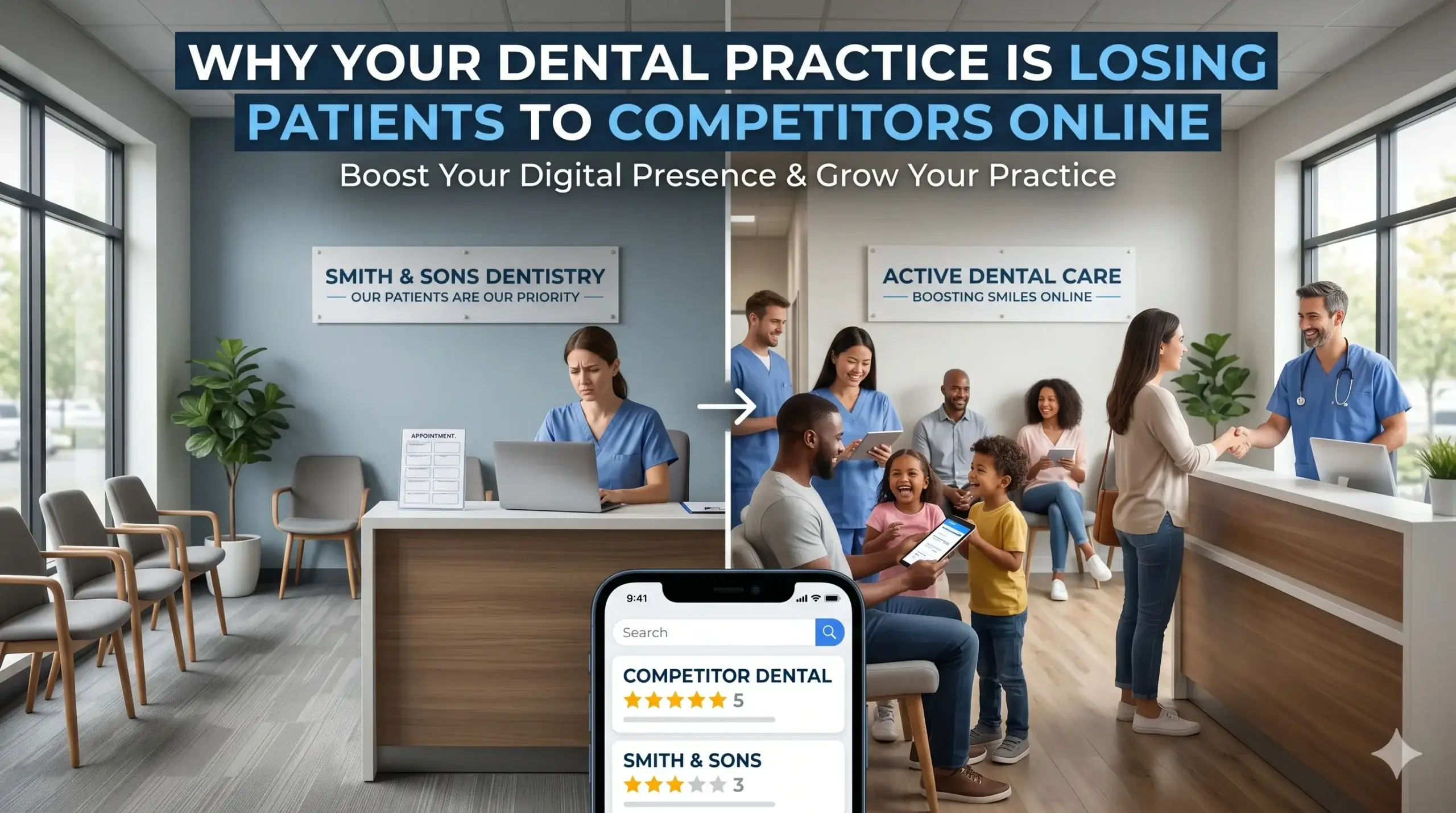
    Why Your Dental Practice Is Losing Patients to Competitors Online

    You spent years building a great practice. Your patients love you, your reviews are solid, and your team is trained. But when someone new moves into the neighborhood and searches for a dentist — they’re booking with someone else.

    It’s not because your competitor is a better dentist. It’s because their website does something yours doesn’t: it shows up, loads fast, and makes booking feel easy enough to do in 60 seconds from a phone.

    Most dental practice owners assume their website is “fine.” It loads. It has their phone number. It lists their services. But “fine” isn’t what wins patients in 2025 — and this article will show you exactly where the gap is, and what to do about it.


    Your Website Is Like Your Reception Area — And Right Now, It’s Sending Patients Away

    Think about what happens when a new patient walks into your office. If the waiting room is dim, the signage is confusing, and no one greets them within 30 seconds, they’re already second-guessing their choice.

    Your website is that first impression for every patient who finds you online — before they ever step through your door.

    The difference is: a patient who feels awkward in your waiting room will usually stay. A patient who lands on a slow, cluttered, or confusing website will leave in under 10 seconds — and book with whoever came up next in the search results.

    The problem isn’t that you have a website. It’s that your dental web page design may be quietly turning away the patients you worked hard to attract.


    Reason #1: You’re Not Showing Up When It Matters Most

    A potential patient types “dentist near me” or “family dentist in [your city]” into Google. Your practice doesn’t appear — or it shows up on page two, which almost nobody reaches.

    This isn’t random. Google uses dozens of signals to decide which dental practices to show first. One of the biggest? How well your website is structured and how clearly it signals to Google what you do and where you do it.

    Many dental websites were built years ago by a general web designer who had no understanding of how Google evaluates dental clinic web design. The result: a site that looks fine to humans, but is essentially invisible to search engines.

    What this costs you: Every day you’re not ranking, you’re handing 5, 10, or 20 potential appointment requests to the practice down the street.

    What Digital Trace does instead: every dental clinic website design we build is structured from day one to send Google exactly the right signals — your location, your services, your specialties — so you show up when high-intent patients are searching.


    Reason #2: Your Site Loads Too Slowly — And Patients Don’t Wait

    Here’s something worth knowing: most people browsing for a dentist are doing it on their phone, probably between meetings or while sitting in their car. If your website takes more than three seconds to load, a large portion of those visitors leave before they’ve seen a single word.

    The technical term is “page load speed.” The business reality is simpler: slow website = empty appointment slots.

    This happens because dental websites often use oversized images, outdated plugins, or cheap hosting that wasn’t designed for performance. No one told the original developer that speed is now a Google ranking factor and a patient conversion factor.

    💡 Pro Tip: The single biggest speed killer on most dental websites isn’t the design — it’s uncompressed images. A single hero photo of your practice, left at its original file size, can add 3–5 seconds to your load time. Compress every image before it goes on your site, or use a developer who handles this automatically. Your patients (and Google) will notice the difference.

    What Digital Trace does instead: every website we build is optimized for speed at the code level — not just visually. Compressed images, clean hosting, and performance testing before launch are standard, not add-ons.


    Reason #3: Visitors Land on Your Site — But Don’t Know What to Do Next

    Getting someone to your website is only half the battle. Once they’re there, your site has one job: make it effortless to book an appointment.

    Most dental websites fail here. The phone number is buried in a header. The “Book Now” button is missing from mobile. The services page talks about treatments in clinical language that means nothing to a nervous first-time patient.

    Think of it this way: a good dental web design works like a well-trained front desk coordinator. It anticipates what a new patient needs, answers their biggest worry (“will this hurt? do you take my insurance?”), and removes every reason they might hesitate before booking.

    A website that doesn’t do this isn’t neutral — it’s actively costing you revenue.

    Common conversion killers on dental websites:

    • No visible phone number or booking button on mobile
    • Service pages that use clinical terminology instead of patient-friendly language
    • No trust signals (reviews, credentials, before/after photos) above the fold
    • Contact forms that ask for too much information upfront
    • No clear answer to “do you accept new patients?”

    Reason #4: Google Doesn’t Know Enough About Your Practice to Trust It

    There’s a simple piece of code that most dental websites are missing — something called structured data (or schema markup). Without it, Google has to guess what kind of business you are, what services you offer, and whether you’re actually local to the patient searching.

    With it, Google gets a clear, confident signal: “This is a dental practice in [city], they offer these services, here’s their phone number and hours.”

    The result? Your practice is more likely to appear in the map pack — the three local results that show up with a map at the top of the search page. That map pack gets a significant share of all clicks for local searches.

    Most general web designers don’t implement this. Most dental website design companies that built your site five years ago didn’t prioritize it. And most dental practice owners have never heard of it — until they wonder why their competitor always shows up and they don’t.


    Real-World Example: From Invisible to Fully Booked

    Consider a general dentistry practice in suburban Ohio — three dentists, solid reviews, established for over a decade. Their website was built in 2018. It looked professional enough, but it was loading in over six seconds on mobile, had no local schema markup, and their main services page had no booking button.

    They were getting traffic — but almost none of it was converting into calls.

    After a full rebuild focused on dental practice web design — speed optimization, mobile-first layout, structured data, and conversion-focused service pages — the results were measurable within 90 days:

    • Mobile load time dropped from 6.4 seconds to under 1.5 seconds
    • Organic search visibility for local keywords increased substantially
    • Online appointment requests more than doubled compared to the same period the prior year
    • The front desk reported a noticeable drop in “how did you hear about us?” answers involving word of mouth — new patients were increasingly coming from Google

    The practice hadn’t changed. Their team, their services, their reputation — all the same. What changed was that their website finally reflected the quality of the practice behind it.


    Not sure if your website has these issues? Get a free website audit — no obligation, just a clear picture of what’s costing you leads.


    Your Path to More Patients: 5 Steps That Actually Move the Needle

    You don’t need to understand web development to fix this. Here’s the path forward in plain terms:

    1. Find out where you stand. Start with an honest look at your current website. How fast does it load on a phone? Does it appear in the local map pack for your key services? Is the booking process simple? A free audit answers all of this in minutes.

    2. Fix your speed first. Page speed affects both your Google ranking and whether visitors stay long enough to book. This is often the fastest win — and it doesn’t require redesigning your whole site.

    3. Make your site work for patients on mobile. More than half of dental searches happen on smartphones. If your website isn’t built mobile-first, you’re losing patients to competitors whose sites are.

    4. Add clear, low-friction calls to action. Every page of your website should make it obvious how to book, call, or ask a question. If a visitor has to search for your phone number, you’ve already lost them.

    5. Work with a dental-specific web design team. A general web designer can build a good-looking site. A team that specializes in custom dental websites understands patient psychology, local SEO, and the conversion triggers specific to dental practices — and builds all of that in from the start.


    Frequently Asked Questions

    Why am I not getting calls from my website even though I have one?

    Having a website and having a website that generates calls are two completely different things. Most dental websites were built to look good, not to rank on Google or convert visitors into booked appointments. If your site loads slowly, isn’t optimized for local search, or makes it hard to book on a phone, you’ll get traffic but no calls.

    How do I know if my dental website is actually working for my practice?

    The easiest test: call your own office number from Google Maps, then look at how many appointment requests you’re getting through your website compared to that foot traffic. If the gap is large, your site isn’t converting. A free website audit will give you a specific breakdown of what’s broken and what to fix first.

    How long does it take to see results after a new dental website launches?

    Most practices start seeing measurable improvements in local search visibility within 60–90 days of launching a properly built site. Speed and conversion improvements are often immediate — patients who were leaving without calling will start booking once the friction is removed.

    What makes a dental website different from a regular business website?

    Patients choosing a dentist are making a trust-sensitive decision — they’re anxious, they’re comparing options, and they need specific reassurance before they’ll book. Good dental web page design addresses that psychology directly: it shows credentials, answers common patient fears, highlights insurance acceptance, and makes booking feel simple and safe. A generic business website template doesn’t account for any of that.

    Do I really need a fast website if my patients are mostly local anyway?

    Yes — and this is one of the most common misconceptions. Google uses page speed as a ranking factor for local search specifically. A slow site can drop you out of the local map pack entirely, meaning local patients searching right now may never even see you. Speed isn’t a luxury feature; it’s table stakes for local dental SEO.

    I’ve been burned by a web agency before. How is this different?

    That’s a fair concern, and it’s common in this industry. The difference comes down to specialization and transparency. Digital Trace builds websites specifically for dental practices — not restaurants, law firms, and everyone else. Before any work starts, a free audit gives you a clear, honest picture of exactly what’s wrong with your current site — no vague promises, no hidden upsells.


    Stop Letting Your Website Cost You Patients

    Every week your website sits the way it is, it’s not neutral — it’s actively sending potential patients to your competitors. The good news is these problems are fixable, and the fixes are measurable.

    If you’re a dental practice owner in the US wondering why your phone isn’t ringing the way it should be, the answer is almost certainly in your website.

    Get your free website audit today — we’ll look at your site, show you exactly what’s costing you leads, and give you a clear picture of what a better-performing dental web page design could do for your practice. No risk. No obligation. Just answers.

  • Top 10 Features Every Dental Office Website Must Have in 2026

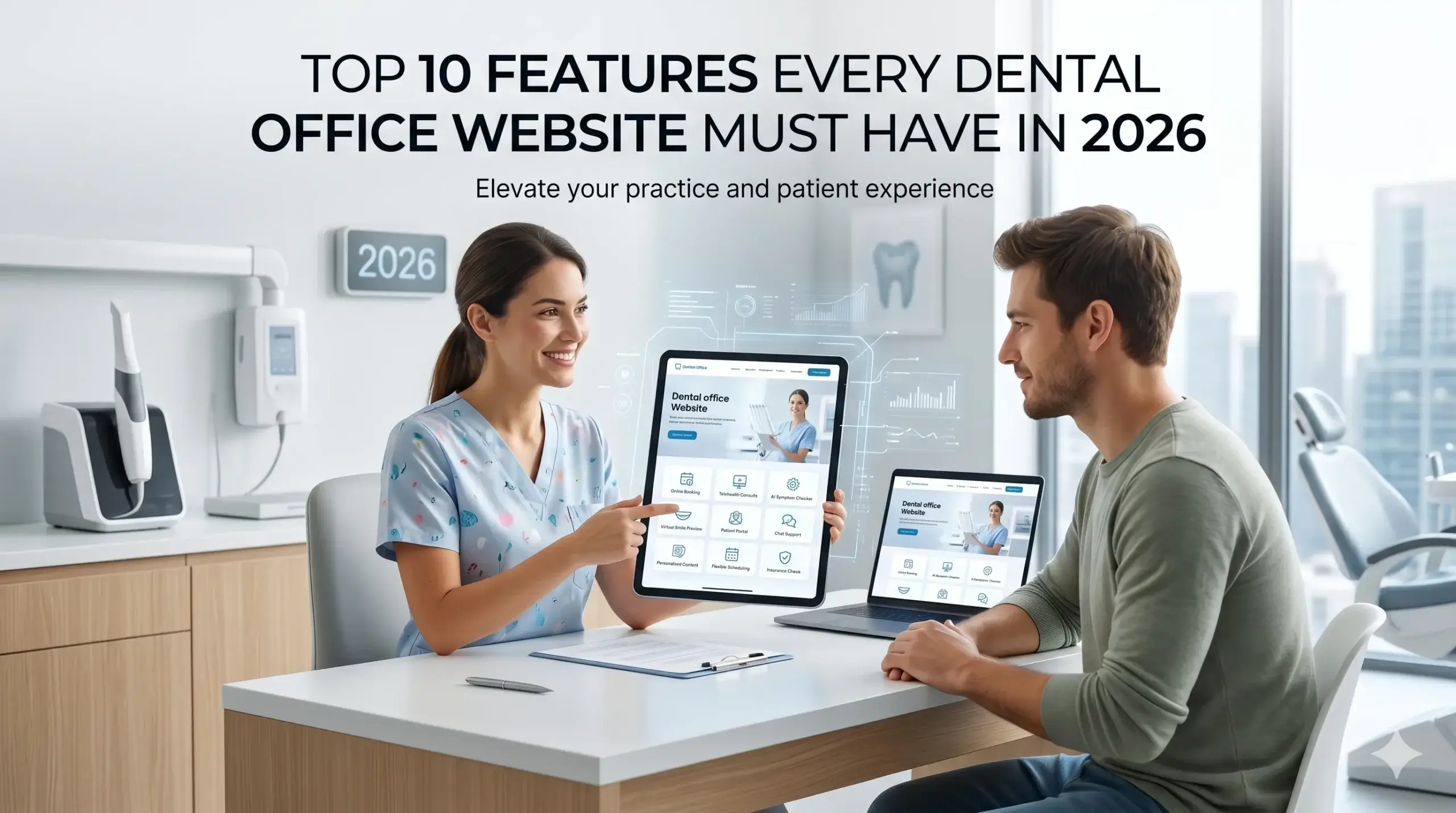
    Top 10 Features Every Dental Office Website Must Have in 2026

    You just spent thousands of dollars on a new website. It looks clean, has your logo, lists your services, and shows smiling patients. So why isn’t the phone ringing?

    Most dental practice owners assume a website that looks good is working. It isn’t — not if it’s missing the right features. Patients searching for a dentist in your area right now are landing on your site, not finding what they need in the first few seconds, and clicking straight to your competitor down the street.

    Good dental web design isn’t about aesthetics. It’s about turning website visitors into booked appointments. This guide breaks down the 10 features that separate a dental website that actually drives revenue from one that just takes up space. By the time you finish reading, you’ll know exactly where your site is leaking patients — and what to do about it.


    1. A “Book Now” Button Patients Can Actually Find

    The problem: Your phone number is buried in the footer, or your “Contact Us” page requires filling out a five-field form before anything happens. Patients decide within seconds whether to stay or leave.

    Why it matters: People searching for a dentist are often in pain, anxious, or juggling a packed schedule. They want to book fast. If your call-to-action isn’t visible the moment the page loads — on every page, on every device — they’re gone.

    The fix: Every page on your dental website should have a clickable phone number and a visible “Book Appointment” button above the fold (the part of the screen patients see without scrolling). On mobile, that number should tap to call instantly.


    2. A Website That Loads in Under 3 Seconds

    The problem: Your site loads in 6 seconds. That’s not a technical statistic — that’s the sound of a patient clicking “back” before they ever see your phone number.

    Why it happens: Oversized images, bloated code, cheap hosting. Most templated dental websites are stuffed with visual extras that look nice in previews but drag performance down in real use.

    The real cost: Search engines factor speed into how they rank your site. A slow website gets pushed further down in results, and the patients who do land on it leave before converting. It’s a double loss.

    At Digital Trace, every website built for dental clinic businesses is performance-optimized from the start — not patched afterward.


    3. Mobile-First Design (Not Just “Mobile Friendly”)

    The problem: Your site looks decent on a desktop. But over 60% of local dental searches happen on a phone, and on a 6-inch screen, your site turns into a confusing mess of tiny text and overlapping buttons.

    “Mobile friendly” vs. mobile-first: A mobile-friendly site is a desktop site that’s been squeezed down. A mobile-first site is designed specifically for the way patients actually browse — with thumbs, on small screens, in waiting rooms and parking lots.

    What to check: Pull up your site on your phone right now. Can you read the text without zooming? Can you tap the phone number without hitting the wrong link? Is the navigation simple enough to use with one hand? If the answer to any of those is “no,” you’re losing patients every day.


    4. Local SEO Built Into the Site — Not Added as an Afterthought

    The problem: You’ve got a great practice, but when someone nearby Googles “dentist near me,” your name doesn’t show up. Your competitor three blocks away does.

    Why Google can’t find you: Your website doesn’t clearly communicate your location, services, and practice details in a way search engines can read and trust. There’s no technical backbone telling Google, “This is a dental office at this address, serving these patients, offering these treatments.”

    The plain-English fix: Your site needs proper local signals — your city name in the right places, your Google Business Profile connected, and structured data (a behind-the-scenes code tag) that tells Google exactly what your practice offers and where you’re located. This is standard in dental practice web design done right.


    5. Patient Testimonials and Reviews — Displayed Prominently

    The problem: You have 80 five-star Google reviews. They’re not on your website. A patient lands on your site for the first time and has no social proof that you’re trustworthy.

    Think of it this way: Choosing a dentist is like choosing a surgeon — patients are putting their health (and often their fear) in your hands. They need to see that other real people trusted you and had a good experience before they pick up the phone. Your website is your front desk. If it’s cold and gives nothing away, patients walk out.

    What works: Real patient quotes with first names, star ratings pulled from Google or other platforms, and before/after photos (with consent). The more specific and human the testimonials, the more they convert.


    💡 Pro Tip

    The most common mistake dental websites make: Listing services without explaining them in patient language.

    Writing “endodontics” instead of “root canal treatment” — or “restorative dentistry” instead of “fillings and crowns” — means patients searching for what they actually need can’t find you. Google matches what people type. If your site uses clinical terms your patients don’t search for, you’re invisible to them. Audit every service page and rewrite it the way a nervous, first-time patient would describe the problem to a friend.


    6. An Online Booking System That Actually Works

    The problem: Your website says “call us to book.” Patients in 2026 don’t want to call during business hours and wait on hold. They want to book at 10 PM from their couch.

    The opportunity: Practices that offer real-time online booking consistently see more appointment requests outside business hours — often 30–40% of their weekly bookings. That’s revenue that would have gone to competitors with a book-now button.

    What to look for: Integrate a booking tool that connects directly to your schedule, sends automated confirmations, and allows patients to select their preferred provider, service, and time — all without anyone picking up the phone.


    7. A Dedicated Page for Each Core Service

    The problem: All your services — cleanings, Invisalign, implants, whitening — are crammed onto one “Services” page. No patient can find what they’re looking for, and Google can’t rank you for any of it.

    Why this kills your search rankings: If a patient searches “dental implants [your city],” Google needs a full page dedicated to that topic to feel confident ranking your site for it. One paragraph on a catch-all services page isn’t enough.

    The fix: Create individual, detailed pages for every major treatment. Each page should explain the procedure in plain language, answer common patient questions, include before/after results where possible, and have a clear call-to-action to book.


    8. HIPAA-Compliant Contact and Intake Forms

    The problem: Your contact form uses a generic plugin that stores patient submissions on unencrypted servers. You might not even know this is happening — but if a patient submits their name, date of birth, or insurance information through an unsecured form, you’ve got a compliance problem.

    Why it matters beyond legality: Patients who trust you enough to fill out a form online deserve to have that trust protected. A secure, HIPAA-compliant form is also a trust signal — it shows you take patient privacy seriously.

    The fix: Work with a dental website design company that knows HIPAA requirements and builds forms that encrypt submissions and don’t store sensitive data in third-party platforms without proper agreements in place.


    9. Clear, Human “About Us” and Team Pages

    The problem: Your team page has stock photos and two sentences per doctor. Patients click away without feeling any connection.

    The truth about dental marketing: People choose their dentist based almost entirely on trust and comfort. Your website is the first handshake. If it feels impersonal or corporate, patients will keep looking until they find a practice that feels human.

    What converts: Real photos of your team (not stock). Doctor bios that mention why they got into dentistry, not just their credentials. A practice story that answers “why should I trust you with my family’s teeth?” A short welcome video from the dentist is worth more than a thousand words of polished copy.


    10. Analytics and Tracking So You Know What’s Working

    The problem: You have no idea how many people visit your site each month, where they come from, which pages they read, or how many of them pick up the phone after.

    Why this is costing you money: If you don’t know what’s working, you can’t improve what isn’t. Most dental practices are paying for marketing with no visibility into whether it’s converting. That’s not a marketing strategy — it’s guesswork.

    What to set up: At minimum, Google Analytics and call tracking. At best, a dashboard that shows you every month how many leads came from your website, which services they were looking for, and where they dropped off. Good dental web design includes tracking from day one — not bolted on later.


    Real-World Result: How One Dental Practice Turned Its Website Into a Lead Machine

    Sunrise Family Dental, a mid-sized practice in suburban Ohio, had a website that looked professional but wasn’t generating new patients. They were getting traffic — around 900 visitors per month — but the phone calls weren’t following. Front desk staff reported that many new patients said they’d found the practice online but almost didn’t call because “the website looked old.”

    After a full redesign focused on mobile performance, local SEO, individual service pages, and a real online booking system, the results shifted significantly:

    • Website load time dropped from 7.2 seconds to 1.8 seconds
    • Monthly appointment requests from the website increased by 68% in 90 days
    • Google search ranking for “family dentist [city]” moved from page 3 to top 5 of page 1
    • Online bookings now account for 44% of all new patient appointments

    The practice hadn’t changed anything about the quality of their care. They just stopped making it hard for new patients to find them, trust them, and book.


    Not sure if your dental website has these same issues? Get a free website audit — no obligation, just a clear picture of what’s costing you new patients right now.


    Your Path to More Leads: 5 Steps to Take Right Now

    You don’t need to overhaul everything overnight. Here’s a practical sequence that works:

    1. Pull up your site on your phone. If you struggle to find the phone number or book button in 10 seconds, your patients do too.
    2. Google your practice name + your city. Check how your listing looks, whether your hours are correct, and whether reviews are showing.
    3. Check your page speed. Use Google’s free PageSpeed Insights tool and note your score. Under 50 on mobile is a red flag.
    4. Count your service pages. If you have one catch-all services page, you’re likely invisible for most of your high-value treatments.
    5. Get a professional audit. Have an expert review the full picture — technical performance, local SEO, conversion paths, and patient experience — in one sitting.

    Frequently Asked Questions

    Why am I not getting calls from my website even though I get visitors?

    Traffic without calls usually means one of three things: patients can’t find your contact info fast enough, the site doesn’t feel trustworthy enough for them to act, or you’re attracting the wrong visitors because your content isn’t specific to the services you want to book. An audit will pinpoint exactly where the disconnect is.

    How do I know if my dental website is actually working?

    If you don’t have call tracking and Google Analytics set up, you genuinely don’t know — and most dental practice owners don’t. A working dental website should show you monthly new visitor counts, where they came from, which pages they viewed, and how many called or booked. Book a free audit and we’ll show you what your site’s data looks like right now.

    How long does it take to see results from a new dental website?

    Local SEO improvements typically start showing measurable changes within 60–90 days of launch. Conversion improvements (more calls per visitor) can happen immediately after a redesign. A realistic timeline for meaningful new patient growth from a properly built site is 3–6 months, with steady gains after that.

    What makes a dental clinic website different from a regular business website?

    A dental website has to do several things a standard business site doesn’t: communicate trust on a deeply personal level, comply with healthcare privacy standards, rank for hyper-local and treatment-specific searches, and convert anxious patients who are on the fence. General web designers often miss these nuances. Dental-specific design considers all of them from the start.

    Do I really need a fast website if my patients are local?

    Yes — especially because they’re local. Local searchers are often on mobile, searching in the moment, and comparing multiple practices in minutes. A slow site means they bounce before they see your value. Speed also directly impacts how high you rank in local Google results, so it affects whether patients even land on your site in the first place.

    Can’t I just use a cheap template website from a dental marketing company?

    Template sites get you online fast, but they’re built for one goal: selling templates. They’re rarely optimized for your specific location, service mix, or conversion goals. Many also load slowly, have duplicate content across hundreds of similar sites, and give Google no reason to rank yours above the next practice using the same template. Custom dental websites built around your actual patients and market consistently outperform them.


    Ready to Find Out What Your Website Is Costing You?

    Every week your dental website sits with these problems unfixed, patients who found you online are booking somewhere else. It’s not dramatic — it’s just math.

    Digital Trace specializes in building high-converting dental clinic websites for practices across the US. We combine fast, custom design with local SEO, patient-first copywriting, and the technical foundations that turn website visitors into booked appointments.

    Get your free website audit now →

    No hard sell. No obligation. Just a clear, honest look at what your current site is doing — and what it should be doing instead.

  • How to Get More Patients with a Better Dental Clinic Website Design

    How to Get More Patients with a Better Dental Clinic Website Design

    You spent real money on your dental clinic. The chairs, the equipment, the staff — it all adds up. But when someone in your city searches “dentist near me” tonight and lands on your website, do they stay and book? Or do they leave in seconds and call your competitor?

    Most dental clinic owners assume their website is “fine.” It loads, it has their phone number, it mentions their services. But “fine” doesn’t fill your schedule — and the gap between a website that exists and one that actually converts patients is costing practices thousands of dollars in lost appointments every month.

    This article breaks down exactly what separates a high-performing dentist website design from a digital waiting room no one sits in — and what you can do about it.


    Your Website Has 3 Seconds. Most Dental Sites Waste All of Them.

    Think about the last time you looked up a dentist. If the site took forever to load, you hit the back button. You didn’t wait around. Your potential patients do the exact same thing.

    Here’s the problem: most dental websites are bloated. Oversized images, outdated code, cheap hosting — all of it adds seconds to your load time. And every extra second cuts your chance of keeping that visitor roughly in half.

    This isn’t a minor detail. A slow website is like having your front desk phone ring 10 times before anyone picks up. Patients don’t leave a voicemail — they call the next dentist on the list.

    What good dental web design looks like instead: Pages that load in under 2 seconds, images optimized without losing quality, and hosting that doesn’t drag. At Digital Trace, every dental website is built for speed from the ground up — because speed is the first thing that keeps patients on your page.


    If Your Site Doesn’t Work on a Phone, You’re Losing Half Your Patients

    More than half of dental searches happen on a smartphone. Someone’s at work, their tooth hurts, they pull out their phone and search. If your website is hard to read, requires pinching and zooming, or has a phone number that can’t be tapped — that patient is gone.

    This is called mobile responsiveness, but ignore the term. What it really means: does your site look and work great on a phone, the same way it does on a desktop? For most older dental websites, the honest answer is no.

    A non-mobile-friendly site doesn’t just frustrate visitors — Google actually ranks you lower in search results because of it. So you’re invisible to the patient AND hard to use if they somehow find you.

    What to look for: Pull up your own website on your phone right now. Can you tap the phone number with one thumb? Is the text readable without zooming? Is there a clear “Book Appointment” button above the scroll? If not, that’s a problem worth fixing today.


    Google Doesn’t Know Enough About Your Practice to Trust It

    Here’s something most dental website companies never tell you: Google isn’t just looking at your website — it’s trying to understand your business. Is this a real dental practice? Where exactly is it located? What services does it actually offer? Does it serve pediatric patients, or is it strictly cosmetic?

    When Google can’t answer those questions confidently from your site, it won’t rank you confidently in search results.

    There’s a behind-the-scenes layer of code — called structured data — that tells search engines exactly who you are, where you are, what you do, and how patients can reach you. Most dental websites don’t have it. That means you’re relying on Google to guess, and Google doesn’t guess in your favor when there’s a competitor whose site makes it easy.

    The real-world result: Your practice might be excellent, but if Google isn’t sure you’re relevant to “family dentist in [city],” your competitor — who might be less experienced — shows up first. Structured data is one of the fastest wins in dental web development, and it’s something Digital Trace builds into every site.


    💡 Pro Tip: Your Homepage Headline Is Costing You Patients

    Walk through any dental clinic website and you’ll likely see a headline that says something like: “Quality Dental Care for the Whole Family.”

    That line tells a patient nothing they couldn’t assume about any dentist. It doesn’t mention your city, your specialty, your unique offer, or why they should pick up the phone right now.

    Your homepage headline is the first thing a visitor reads — and it’s your one shot to make them feel like they found the right place. A strong headline for dental clinic web design might look like: “Accepting New Patients in [City] — Same-Week Appointments Available.” That’s specific. That’s reassuring. That’s a reason to stay and scroll.

    The fix isn’t design — it’s messaging. Work with a team that understands what dental patients are actually thinking when they land on your site.


    No Clear Path to Book = No Booking

    Imagine walking into a dental office and nobody at the front desk acknowledges you. You stand there, looking around, unsure if you’re in the right place. Eventually, you leave.

    That’s what happens on a dental website with no clear call-to-action. Visitors land on the page, look around, and if they can’t immediately find a way to book or call — they leave. No call. No appointment. No revenue.

    Common mistakes on dental clinic websites:

    • The phone number is only in the footer, not at the top of every page
    • There’s no “Book Now” or “Request Appointment” button visible without scrolling
    • The contact form is buried three clicks deep
    • Online booking isn’t offered at all, even though patients now expect it

    Every page of a dental website should have one clear job: get the visitor to take an action. Book. Call. Fill out a form. If your pages aren’t structured around that goal, they’re just information — and information alone doesn’t book appointments.

    What a custom dental website from Digital Trace looks like: Every page is built with a conversion path — a clear, natural flow that moves the visitor from “I found this dentist” to “I just booked an appointment.”


    What Happened When a Dental Practice in Texas Fixed These Problems

    Consider a general dental practice in the Dallas suburbs. They’d been in business for 11 years. Their website was built in 2018 by a local freelancer — it had a nice logo, a photo of the waiting room, and a contact form somewhere at the bottom.

    New patient calls were averaging around 12–15 per month from the website. Their Google Business Profile was active, but their organic website traffic was low. They were running a small Google Ads budget with inconsistent results.

    They came to Digital Trace with one question: “Why isn’t our website bringing in more patients?”

    After a full website audit, the issues were clear:

    • Pages loaded in 6–8 seconds on mobile
    • The site had no structured data for local dental services
    • The homepage headline hadn’t been updated in four years
    • There was no online booking option — just a form with a 48-hour response time
    • The site was technically not mobile-friendly on newer devices

    After rebuilding the site with a focus on speed, mobile performance, clear CTAs, and proper local SEO structure, monthly new patient inquiries from the website rose to 40–55 per month within 90 days. The practice added same-day and next-day booking, which alone reduced the number of patients who left the form without submitting.

    Not sure if your dental website has these same issues? Get a free website audit — no obligation, just a clear picture of what’s costing you leads.


    Your Path to More Patients: 5 Steps That Actually Work

    You don’t need to overhaul everything overnight. Here’s a clear starting point:

    1. Test your site on your own phone. Open it like a new patient would. Is it fast? Can you tap the phone number? Is there a visible “Book” button? If the answer to any of those is no, that’s your first fix.
    2. Check your homepage headline. Does it mention your city and what kind of dentist you are? Does it give someone a reason to stay on the page? If it’s generic, rewrite it.
    3. Put your phone number everywhere. Top of every page. Clickable on mobile. Not just in the footer.
    4. Add online booking or a fast-response form. Patients expect to book at 10pm. If you don’t offer that, some of them will find a practice that does.
    5. Get a professional audit. You may not be able to see every issue on your own site — especially the technical ones that hurt your Google rankings. A free audit from Digital Trace gives you a full picture of what’s working, what isn’t, and what to fix first.

    Frequently Asked Questions

    Why am I not getting calls from my website even though I’m on Google?

    Being on Google and converting visitors into callers are two different things. Your site might be getting traffic but losing those visitors because of slow load times, unclear calls to action, or a design that doesn’t build trust quickly enough. Getting found is step one — but your website has to close the deal once someone lands on it.

    How do I know if my dental clinic website is actually working?

    If you don’t know your website’s monthly visitor count, how long people stay, and how many contact form submissions or calls come from the site — you have no way to answer that question. A basic analytics setup (which every site should have) tells you exactly what’s working. If you’ve never looked at this data, start there — or book a free website audit and we’ll walk you through what we find.

    How long does it take to see results from a new dental website?

    Speed improvements and conversion fixes — like better CTAs, mobile layout, and page load time — can show results within the first 30 days. SEO improvements typically take 60–120 days to reflect in search rankings, depending on your market. A well-built site compounds over time: better rankings, more traffic, more patients.

    What makes a dental website different from a regular small business website?

    Patients are making health decisions, not purchasing decisions. That changes everything about how a site should be structured. Trust signals matter more — credentials, photos of real staff, reviews, and clear information about what to expect at the first visit. The booking path needs to feel easy and private. And local SEO for dental practices has specific requirements around structured data, service pages, and Google Business alignment that most generic web designers don’t know.

    Do I really need a fast website if most of my patients come from referrals?

    Referrals are valuable, but they still Google you before they call. A slow or outdated website can undermine a referral — if someone’s friend recommended you, but your website looks like it hasn’t been touched since 2015, that doubt plants itself. A strong site validates the referral. It also means you’re not exclusively dependent on word of mouth to grow.

    What does a dentist website design agency actually do differently than a freelancer?

    A freelancer can build you a site that looks good. An agency that specializes in dental website design and marketing builds a site that performs — meaning it loads fast, converts visitors, ranks in local search, and gives you data to make decisions. Digital Trace focuses specifically on healthcare and local service businesses, which means we’re not learning your industry on your budget.


    Ready to See What Your Website Is Really Costing You?

    Most dental clinics are leaving 20–40 new patient inquiries on the table every month — not because of their service, their team, or their location, but because of a website that quietly fails the people who were ready to book.

    There’s no risk in finding out. Digital Trace offers a free, no-pressure website audit for dental practices across the US. We’ll look at your site the way a new patient and Google both see it — and show you exactly what’s costing you leads right now.

    Claim your free website audit →

    No sales pitch. No commitment. Just a clear, honest look at what’s working and what needs to change.