Category: Construction

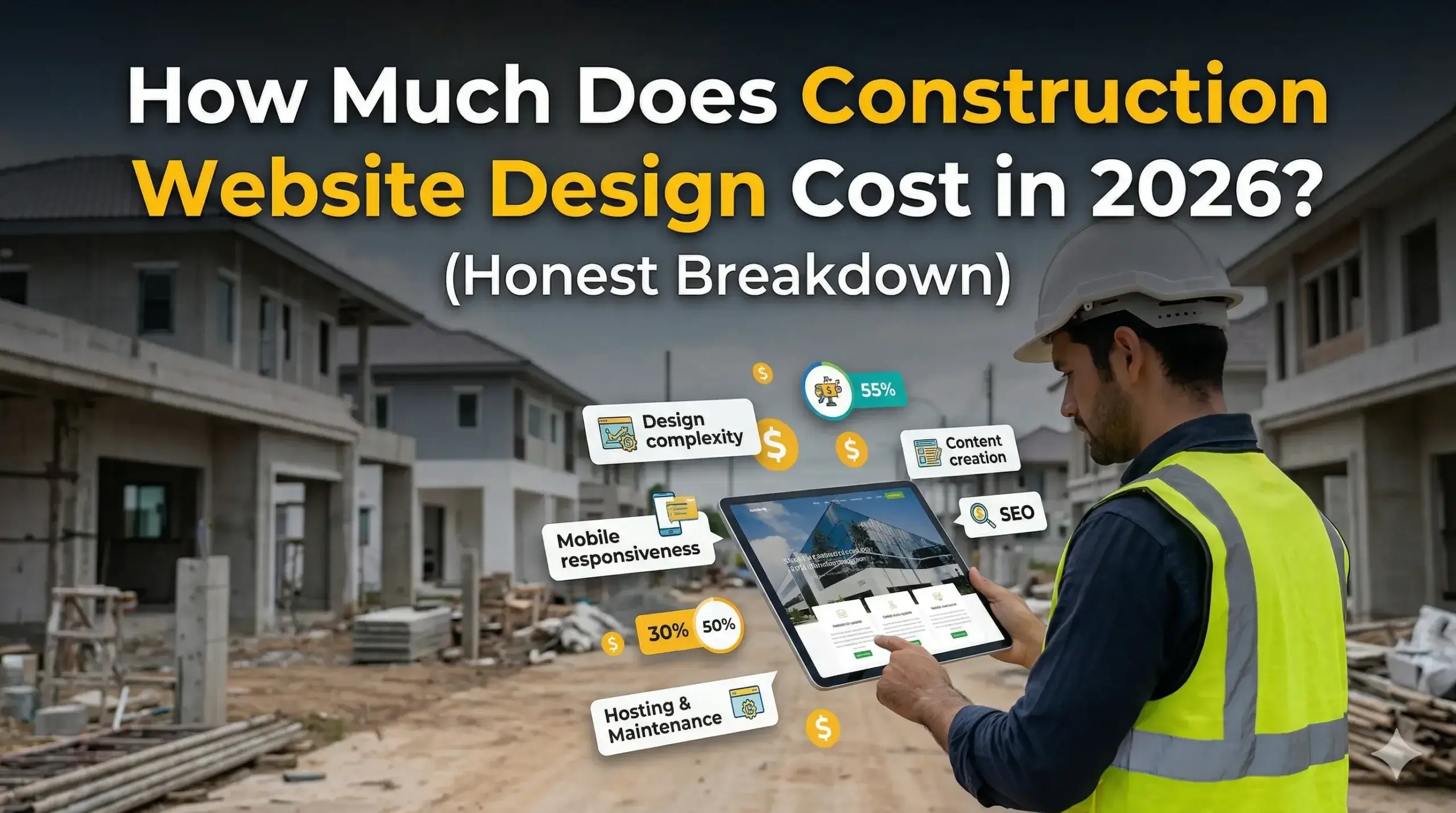
  • How Much Does Construction Website Design Cost in 2026? (Honest Breakdown)

    How Much Does Construction Website Design Cost in 2026? (Honest Breakdown)

    You’ve probably Googled your own company name at some point and felt that quiet frustration โ€” a competitor you know does worse work than you shows up at the top, and your site is either buried or looks like it was built in 2014. You’re getting referrals, but the phone isn’t ringing from people who don’t already know you. And when someone does visit your site, they leave without calling.

    That’s not a coincidence. That’s a website doing its job poorly.

    This guide breaks down exactly what web design for a construction company costs in 2026, why the price varies so much, and โ€” more importantly โ€” what separates a site that generates leads from one that just sits there looking like a digital brochure.


    Why Most Construction Websites Don’t Bring in Work

    Think of your website like a job site foreman. If he doesn’t know the plan, can’t communicate with the crew, and gives visitors no direction โ€” nothing gets done. That’s most construction websites in a nutshell.

    The problem isn’t always that the site looks bad. It’s that it’s not built to convert. No clear service areas, no strong call to action above the fold, no reason for a homeowner or project manager to pick up the phone over the next result they see.

    Here’s what that costs you in real terms:

    • A visitor lands on your site from Google
    • They don’t immediately see what you do, where you work, or how to contact you
    • They hit the back button and call your competitor instead

    That’s a lost lead you never knew you had. It happens dozens of times a month on sites that look “fine.”


    What Construction Website Design Actually Costs in 2026

    Prices range widely โ€” and for good reason. Here’s an honest breakdown by tier.

    Tier 1: Budget Options ($500โ€“$2,500)

    This is the territory of template builders, Fiverr freelancers, and “my nephew does websites.” You’ll get something that technically exists online, but it won’t be built for your industry, your market, or lead generation.

    Common issues at this tier:

    • No local SEO foundation (Google won’t know where you operate)
    • Slow load times on mobile (where most of your visitors are coming from)
    • Generic copy that could apply to any contractor in the country
    • No conversion strategy โ€” just pages of information with no clear next step

    If you’re a solo operator just starting out, this might bridge a gap. For any established construction business trying to grow, it’s usually money spent twice.

    Tier 2: Mid-Range ($3,000โ€“$8,000)

    This is where you start getting a site built with some strategy behind it. A competent agency or experienced freelancer will spend time understanding your services, service area, and ideal clients.

    What you should expect at this level:

    • Custom design (not a recycled template)
    • Mobile-first build with fast load times
    • Basic on-page SEO โ€” title tags, meta descriptions, heading structure
    • A clear path for visitors to contact you
    • Integration with Google Business Profile

    This tier works well for small-to-mid-sized construction firms that need a professional presence and a solid local SEO foundation.

    Tier 3: Performance-Focused ($8,000โ€“$20,000+)

    This is where the ROI conversation shifts. A high-performance construction website design at this level is built to rank, convert, and grow with your business.

    What separates this tier:

    • In-depth competitor and keyword research specific to your market
    • Service-area pages built to rank in every city or county you work in
    • Conversion-optimized layouts (the right message in the right place at the right time)
    • Page speed engineered to pass Google’s Core Web Vitals
    • Schema markup so Google understands exactly what your business does and shows it confidently in search results
    • Ongoing optimization, not a one-time build and abandon

    For a construction company doing $1M+ in revenue, a site in this tier often pays for itself within the first few months of ranking.


    The Hidden Cost Nobody Talks About: A Bad Website

    The most expensive website isn’t the one that costs $15,000. It’s the $2,000 site that’s been quietly losing you leads for three years.

    Do the math: if your average job is worth $8,000 and your site is costing you just two leads per month, that’s $192,000 in missed revenue every year. The website “saved” you $13,000 upfront and cost you six figures in the background.

    A slow, unclear, or invisible website isn’t free โ€” it’s just costing you in a way that doesn’t show up on an invoice.


    ๐Ÿ’ก Pro Tip: Your Mobile Site Is Probably Your Biggest Problem

    Most construction business owners check their website on a desktop. Most of their potential customers visit on a phone. These are two completely different experiences โ€” and they don’t always match.

    A site that looks great on a laptop can be nearly unusable on a phone: tiny text, broken layouts, buttons that are impossible to tap, and a phone number that isn’t clickable. If a visitor has to pinch and zoom to find your number, they won’t call you โ€” they’ll call someone else.

    The fix isn’t complicated, but it requires your site to be built mobile-first, not mobile-as-an-afterthought. Ask any agency you’re evaluating to show you a live construction site they’ve built on a phone before you sign anything.


    Before & After: What a Real Construction Website Overhaul Looks Like

    The situation: A mid-sized general contractor in the Midwest โ€” residential renovations and light commercial builds, 12 employees, solid reputation locally but almost no online presence. Their site was five years old, built by a local print shop that had “started doing websites.” It loaded in over 7 seconds on mobile, had no service-area pages, and buried the contact form on a third-level menu page.

    The problem in plain terms: They were ranking on page three for searches in their own city. Competitors who did smaller, lower-quality work were showing up first. The owner knew something was wrong but couldn’t pinpoint it.

    What changed: A full rebuild โ€” new architecture, service and location-specific pages, a contact form above the fold on every page, Core Web Vitals passing green, and a Google Business Profile fully optimized and connected.

    The result: Within 90 days, they were ranking in the top three for their primary service terms in four neighboring cities. Monthly contact form submissions went from an average of 2โ€“3 to 18โ€“22. One of those leads turned into a $340,000 commercial contract.

    The site cost them $11,500. The ROI in the first quarter alone made the conversation irrelevant.


    Not sure if your construction website has these issues? Get a free website audit โ€” no obligation, just a clear picture of what’s costing you leads right now.


    What Makes a Construction Website Different From a Regular Business Website

    A plumber and a general contractor both need websites. But what ranks and converts for a plumber won’t necessarily work for a construction firm โ€” and a generic agency that doesn’t understand the difference will build you something in between.

    Construction projects are high-ticket and high-consideration. A homeowner doesn’t hire a contractor the same way they order pizza. They research, compare, look at photos, read reviews, and evaluate trust signals over days or weeks. Your website needs to support that decision-making process at every stage.

    That means:

    • Portfolio photography matters more โ€” project galleries with real photos (not stock images) build credibility in a way no amount of copy can match
    • Licensing and insurance need to be visible โ€” not buried in a footer, but front and center where cautious buyers will look
    • Service-specific pages outperform generic “what we do” pages โ€” someone searching “commercial concrete contractor in Denver” needs a page that speaks directly to that, not a general services list
    • Testimonials and reviews need to be on-site, not just on Google โ€” syndicated reviews on your own pages help conversion and SEO simultaneously

    Websites built for construction businesses account for all of this. A generic template or a generalist agency usually doesn’t.


    Your Path to More Leads: 5 Steps to Take Right Now

    You don’t need to overhaul everything at once. Here’s a practical sequence that moves the needle:

    1. Test your site on your phone โ€” pull it up on mobile right now. Can you find your phone number in under five seconds? Can you tap it to call directly? If not, that’s your first fix.
    2. Google your own services โ€” search “[your service] + [your city]” and see where you land. If you’re not on page one, you’re invisible to most of your potential clients.
    3. Check your load speed โ€” go to PageSpeed Insights (free tool from Google) and run your URL. Anything under 50 on mobile is hurting you. Anything under 30 is actively costing you leads.
    4. Count your contact paths โ€” how many ways can someone reach you from your homepage? Phone, form, and chat are the minimum. If your only contact option is a “Contact Us” page three clicks deep, you’re making it too hard.
    5. Audit your competitors โ€” visit the top three sites ranking above you. What are they doing that you’re not? This is usually the fastest way to identify the gaps.

    Once you know what’s broken, fixing it gets a lot simpler.


    FAQ: What Construction Business Owners Actually Ask Before Hiring a Web Agency

    Why am I not getting calls from my website?

    The most common reasons are that your site doesn’t rank (so people aren’t finding it), loads too slowly on mobile (so people leave before they see your number), or doesn’t give visitors a clear reason to call. Usually it’s a combination of all three. A proper audit will tell you exactly which one is doing the most damage.

    How do I know if my construction website is actually working?

    If you can’t answer “how many leads did my website generate last month?” โ€” it’s not working hard enough. A functioning lead-generation site has Google Analytics or equivalent tracking set up, and you should be able to see contact form submissions, phone call clicks, and traffic sources at a glance. If none of that is in place, you’re flying blind.

    How long does it take to see results from a new website?

    For a properly built site with solid SEO, you can typically see meaningful movement in rankings within 60โ€“90 days. Full competitive positioning in a mid-sized market usually takes 4โ€“6 months. That said, conversion improvements โ€” more calls from the same traffic โ€” can happen immediately after launch if the site is built right.

    What makes a construction website different from a regular business website?

    Construction clients take longer to decide, spend more money, and rely heavily on trust signals like portfolio work, licensing, reviews, and project photos. A construction website needs to support that research process โ€” not just look good. It also needs location-specific pages to rank in the cities and counties where you actually work, which most generic web designers overlook entirely.

    Do I really need a fast website if my customers are local?

    Yes โ€” especially because your customers are local. Local Google searches happen almost entirely on mobile devices, and Google’s ranking algorithm heavily weights page speed and mobile usability. A slow site doesn’t just lose visitors; it ranks lower in the first place, meaning fewer people find you at all. Speed isn’t a technical vanity metric โ€” it’s a direct driver of how many calls you get.

    How do I know if I need a new website or just some fixes?

    Sometimes a full rebuild is the right move; sometimes targeted improvements get you 80% of the way there for a fraction of the cost. The only way to know is an honest assessment of your current site’s structure, speed, SEO foundation, and conversion setup. Get a free website audit and you’ll have a clear answer โ€” no guesswork, no sales pressure.


    Stop Letting Your Website Cost You Work

    If you’ve read this far, you already know something about your current site isn’t working the way it should. The question isn’t whether to fix it โ€” it’s how much longer you’re willing to let it bleed leads in the background.

    Digital Trace builds high-performance websites specifically for construction businesses across the US โ€” sites that rank in your market, load fast on every device, and turn visitors into phone calls and form submissions.

    Book your free website audit today โ€” we’ll show you exactly what’s costing you leads, what it would take to fix it, and what a realistic improvement looks like for your business. No obligation, no sales pitch, no generic report. Just a clear, honest picture of where you stand.

    Your competitors are already investing in this. The only question is whether you move first.
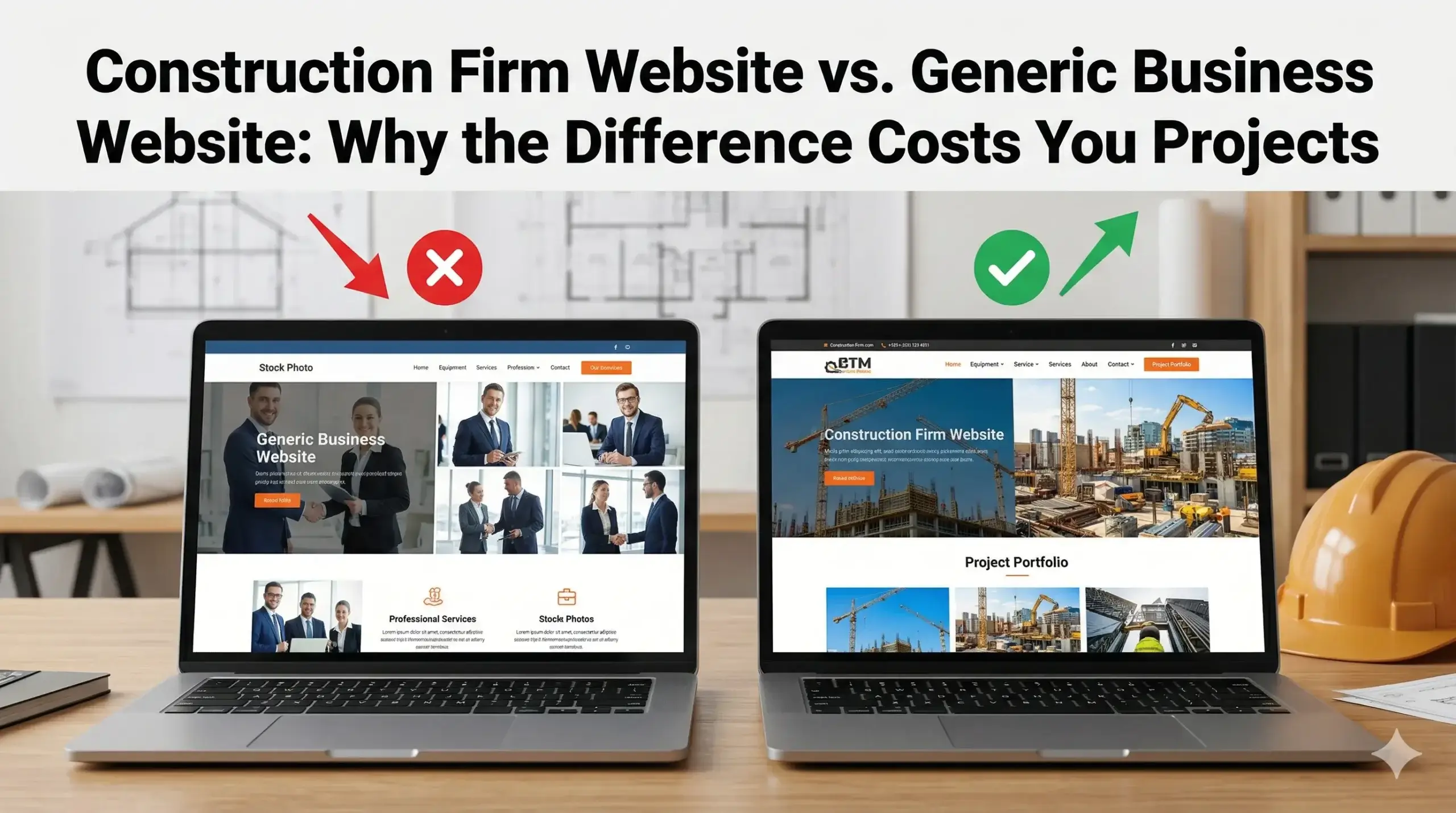
  • Construction Firm Website vs. Generic Business Website: Why the Difference Costs You Projects

    Construction Firm Website vs. Generic Business Website: Why the Difference Costs You Projects

    You built your construction business with skilled labor, good work, and word of mouth. Now you’ve got a website โ€” and you’re still not getting the calls you expected. Meanwhile, a competitor across town (who you know does the same work, maybe worse) keeps showing up in Google and landing jobs.

    The frustrating truth? It probably isn’t your reputation, your pricing, or your portfolio. It’s your website โ€” specifically, what kind of website it is.

    Most construction firms are running on generic websites built for businesses-in-general. These sites look fine enough. They have your logo, your phone number, maybe some photos. But they’re not built for the way people search for construction companies, evaluate contractors, or decide who to call when a project is on the line.

    This article breaks down exactly what a construction firm website needs to do differently โ€” and why the gap between “a website” and the right website is where your projects are being lost.


    Your Website Is Competing in a High-Stakes Market โ€” and It Doesn’t Know It

    Think about what happens when a property manager, general contractor, or homeowner needs a construction firm. They don’t flip through a binder. They go to Google, type in something like “commercial construction company near me” or “foundation contractor [city],” scan the first few results, click one or two, and make a judgment call inside of 30 seconds.

    That 30-second window is where your business is won or lost โ€” and a generic website is built to fail it.

    Here’s what a generic site does during those 30 seconds:

    • Loads slowly, causing the visitor to click away before your phone number even appears
    • Shows vague language like “quality service” and “customer satisfaction” โ€” the same words every other site uses
    • Offers no clear reason why your firm is the right choice for this specific type of project
    • Has no visible trust signals โ€” no licenses, no certifications, no completed project photos with context

    A construction firm website built correctly does the opposite. It loads fast, immediately communicates what kind of work you do, shows proof, and makes it dead simple to call or request a quote.


    The “Cheap Blueprint” Problem: Why Generic Websites Don’t Convert Construction Leads

    Here’s a useful way to think about it. Imagine showing up to bid a complex commercial job with a generic proposal template you pulled off the internet โ€” one that wasn’t adjusted for the project scope, the client’s industry, or the local code requirements. You’d probably lose that bid to someone who showed up with specifics.

    That’s exactly what a generic website does for your construction business every single day.

    Generic website templates are designed to work for anyone โ€” a bakery, a law firm, a plumber. That flexibility is exactly why they fail for construction. The way people search for and evaluate a construction firm is completely different from how they choose a restaurant or a retail store.

    A few things generic sites consistently get wrong for construction businesses:

    • No project-type targeting. When someone searches “tilt-up warehouse contractor” or “historical renovation firm,” a generic site has no content that matches that intent. Google doesn’t show it. The visitor doesn’t find you.
    • No trust-building structure. Construction clients are making big financial decisions. They need to see licenses, insurance info, project timelines, and real completed work โ€” not stock photos and boilerplate copy.
    • No local signal strength. Google ranks local contractors based on specific signals. A generic site often skips the geographic markers that tell Google where you work and what you do there.

    This is what websites built for construction businesses are designed to fix at every level โ€” not just visually, but structurally and technically.


    Speed Is a Sales Problem, Not a Tech Problem

    Here’s a number worth knowing: most people decide whether to stay on a website or leave within the first three seconds. On mobile, it’s even less forgiving.

    When a potential client clicks your site and it takes five or six seconds to load โ€” which is common with poorly optimized generic templates โ€” most of them are already gone. They’ve hit the back button and clicked your competitor.

    This isn’t a technology problem. It’s a revenue problem.

    Construction clients are often busy people โ€” project managers, property owners, GCs โ€” who are doing quick research between meetings or on the job site from their phones. A slow, bloated website tells them nothing good about your operation.

    What causes this? Usually a combination of oversized images, unoptimized code, and cheap hosting. The fix isn’t glamorous, but it’s straightforward when someone who knows what they’re doing handles it.

    A properly built construction firm website loads fast on mobile, looks clean on any screen size, and gets the visitor to your phone number or contact form before they have time to second-guess clicking away.


    ๐Ÿ’ก Pro Tip: Your Homepage Is Probably Talking to the Wrong Person

    One of the most common mistakes in construction websites is writing homepage copy that describes the company instead of speaking to the client’s problem.

    Most homepages start with something like: “We are a full-service construction firm with 20 years of experience serving the greater [City] area.”

    That’s all about you. The visitor’s first thought is: “Okay, but can you solve my problem?”

    The fix is to lead with what the client needs. Something like: “Need a reliable contractor for your commercial build-out? We deliver on schedule, on spec, and on budget โ€” every time.”

    This small shift in framing changes how visitors respond. It also helps with SEO, because search engines reward content that directly addresses what searchers are looking for.


    Why Your Competitor Shows Up on Google and You Don’t

    Local search rankings for construction companies aren’t random. Google uses specific signals to decide which firms to show and in what order.

    Generic websites often miss several of these signals entirely:

    • No location-specific content. If your site doesn’t mention the cities and regions you serve throughout the content, Google won’t confidently connect you to searches in those areas.
    • Missing structured data. Google uses behind-the-scenes code tags to understand what your business does, where you’re located, and what kind of services you offer. Most generic templates don’t include these, which means Google has to guess โ€” and often guesses wrong.
    • Weak or nonexistent service pages. A single “Services” page with a bulleted list is not enough. Contractors who rank well typically have dedicated pages for each service type โ€” commercial construction, tenant improvements, ground-up builds, etc.

    The result is a site that exists but isn’t found. Your firm is invisible to the people actively searching for exactly what you offer.

    Seeing how Digital Trace builds construction websites makes it clear how differently this can be approached โ€” structuring each page to target specific search terms while building in all the trust signals that convert visits into calls.


    Real-World Example: Regain Construction, Denver, CO

    A realistic before/after scenario based on common construction firm challenges.

    Regain Commercial Builders had been in business for 14 years, doing mostly light commercial and industrial work in the Denver metro. They had a website โ€” built by a cousin about five years earlier using a generic small business template. It had their logo, a few project photos, and a contact form.

    The problem: they were getting almost no inbound leads from their site. Every new job came from referrals. When they asked existing clients to check them out online, most reported the site looked outdated and didn’t load well on phones.

    Here’s what was wrong:

    • The site took 8+ seconds to load on mobile
    • There were no dedicated pages for their core services (tenant improvements, warehouse builds, ground-up commercial)
    • The homepage copy was generic, with no mention of the specific industries they served
    • Google couldn’t confirm their service area or specialties

    After a full rebuild โ€” fast-loading, mobile-first, with dedicated service and location pages and proper structured data โ€” results shifted measurably within 90 days:

    • Organic search traffic increased by roughly 3x
    • Inbound calls from the website went from near-zero to 8โ€“12 per month
    • Two of those calls converted to project contracts within the first 90 days

    The work didn’t change. The team didn’t change. The website changed.


    Not sure if your construction website has these issues? Get a free website audit โ€” no obligation, just a clear picture of what’s costing you leads.


    Your Path to More Leads: 5 Steps to a Construction Website That Actually Works

    Getting more calls from your website isn’t complicated โ€” but it does require the right structure. Here’s what the path looks like:

    1. Audit what you have. Before anything else, understand where your current site is falling short. Speed, content gaps, missing trust signals, and local SEO issues are the most common culprits.
    2. Identify your highest-value services and build pages around them. Each major service you offer โ€” new construction, renovations, tenant improvements, specialty work โ€” deserves its own page with specific language and search targeting.
    3. Make mobile performance non-negotiable. Most of your potential clients are checking you out on their phones. If your site doesn’t load fast and look clean on mobile, you’re losing them before you even get a chance.
    4. Build in trust from the first scroll. Licenses, insurance, project photos with context, client types served, and years in business should all be visible without digging. Clients need to feel confident before they call.
    5. Turn your site into a lead capture machine. Phone numbers should be clickable. Contact forms should be simple. Every page should have a clear next step. Don’t make visitors work to reach you.

    FAQ: Real Questions from Construction Business Owners

    Why am I not getting calls from my website?

    The most common reasons are slow load times, no visibility in local search, or a site that doesn’t answer the questions prospects have when they land on it. Visitors decide in seconds whether to stay or leave โ€” if your site doesn’t immediately communicate who you serve and why you’re the right choice, most people leave without calling. A proper free website audit can identify exactly where your site is losing people.

    How do I know if my construction website is actually working?

    If your website is working, you’ll know โ€” because you’ll be getting regular inbound calls and form submissions from people who found you through Google. If every job still comes from referrals and your website hasn’t produced a qualified lead in months, it’s not working. The site might look fine, but looking fine and performing are two different things.

    What makes a construction website different from a regular business website?

    Construction clients evaluate contractors very differently from how people choose a restaurant or service shop. They’re making large financial decisions and need to see proof โ€” project photos with context, licensing info, service-area specifics, and relevant experience. A generic business template isn’t structured for that decision-making process. A construction firm website is built to match how construction clients actually think and search.

    Do I really need a fast website if my customers are local?

    Yes โ€” probably more so. Local clients are often searching on their phones while on the job site or between meetings. Google also factors site speed directly into local search rankings. A slow site hurts you twice: visitors leave before they see your number, and Google ranks you lower because of it.

    How long does it take to see results from a new website?

    Realistically, meaningful improvements in search visibility and inbound leads typically show up within 60โ€“90 days of launching a properly built site. The speed and lead conversion improvements are often immediate โ€” from the moment the new site goes live. SEO results build over time as Google recognizes the improved signals and begins ranking you for the terms your clients are searching.

    I’ve been burned by marketing agencies before โ€” how is this different?

    That’s a fair concern, and it’s worth asking directly. The difference is in what’s being built and why. Generic web agencies build websites. Construction-focused web work is about building something that gets you projects โ€” designed around how construction clients search, evaluate, and decide. The results should be measurable: more calls, more quote requests, more jobs. If an agency can’t tell you how they’ll measure success, that’s a warning sign.


    Stop Leaving Projects on the Table

    Every month your construction firm runs a generic website is a month competitors with better-built sites are picking up the calls that should be going to you.

    The fix isn’t complicated or expensive โ€” but it does require someone who understands how construction clients search, how Google ranks local contractors, and how to turn website visits into phone calls.

    Get a free website audit from Digital Trace โ€” no pitch, no pressure, just a clear breakdown of what your current site is costing you in leads, and what it would take to fix it. For construction firms serious about growing through better online visibility, it’s the fastest way to know exactly where to start.

  • Construction Website Design: How to Get More Local Leads From Google in 2026

    Construction Website Design: How to Get More Local Leads From Google in 2026

    You’re busy running a construction business โ€” managing crews, juggling bids, keeping projects on schedule. The last thing you have time to worry about is your website. But here’s the problem: your website is out there right now, either sending you leads or turning them away. And most construction company websites are doing the latter.

    The frustrating part? The owners don’t even know it.

    Most contractors assume a website just needs to exist โ€” a few photos, a phone number, maybe a list of services. But that’s not how it works in 2026. When a homeowner or general contractor searches “roofing contractor near me” or “commercial builder in [city],” Google decides in milliseconds which businesses to show. And the companies showing up aren’t just the ones with the best crews โ€” they’re the ones with websites built to earn Google’s trust and convert visitors into calls.

    This guide breaks down exactly why your construction website might be silently costing you jobs, and what a well-built construction website actually looks like when it’s working hard for your business.


    Why Your Construction Phone Isn’t Ringing (And Your Website Is the Reason)

    Picture this: you hand a potential client a business card that’s bent, has a typo on it, and directs them to a voicemail that’s full. That’s essentially what a slow, outdated, or poorly structured construction website does every single day.

    When someone lands on your site and it takes more than three seconds to load, most people leave โ€” without ever seeing your services, your photos, or your phone number. They don’t call. They don’t come back. They go straight to your competitor.

    The technical term is “page load speed,” but the business impact is simple: every second of delay costs you real inquiries. A site built for construction needs fast hosting, optimized images, and lean code โ€” things most generic website builders don’t prioritize.


    Your Site Looks Fine on a Desktop โ€” But Your Customers Are on Their Phones

    Here’s something worth checking right now: pull up your website on your phone. Is the text tiny? Do you have to zoom in to find the phone number? Is the “Request a Quote” button buried at the bottom?

    Nearly 70% of people searching for local contractors do it on their phone. If your site doesn’t load cleanly, display your phone number prominently, and let someone tap-to-call in under five seconds โ€” you’re losing leads on every single mobile visit.

    This isn’t just a design preference. Google penalizes sites that don’t perform well on mobile. That means a poor mobile experience doesn’t just frustrate visitors โ€” it also pushes you lower in search results, making it harder for anyone to find you in the first place.

    The fix isn’t just making your text bigger. A properly built construction company website is designed mobile-first, meaning the phone experience is the priority, not an afterthought.


    Google Doesn’t Know Enough About Your Business to Trust It

    Think of Google like a new subcontractor you’re vetting before a big project. You want references, proof of work, credentials, and a clear scope of what they do. If the information is vague or missing, you move on to someone else.

    That’s exactly how Google treats your website. If your site doesn’t clearly tell Google:

    • Where you operate (specific cities and service areas)
    • What you do (general contracting, commercial builds, residential remodels โ€” all clearly stated)
    • Who you are (your business name, address, phone number โ€” consistent everywhere online)
    • What others say about you (reviews, trust signals, certifications)

    …then Google won’t feel confident showing your business to searchers. There’s a technical layer here called structured data (or schema markup) โ€” basically a way of labeling your website’s content so Google can read it clearly. Without it, your construction firm website is speaking a language Google only half-understands.

    The result? You rank lower than competitors who have the same quality of work but a better-structured website.


    ๐Ÿ’ก Pro Tip: Your “Services” Page Is Probably Hurting You

    One of the most common mistakes construction company websites make is cramming every service onto a single page โ€” roofing, siding, decks, additions, commercial work โ€” all in one long list.

    Here’s the problem: if a homeowner searches “deck builder in [city]” and lands on a page that also talks about commercial roofing and foundation work, Google doesn’t see a focused, relevant match. It sees a general page that sort of applies.

    The fix is straightforward: create a dedicated page for each core service, written specifically for that service and that type of customer. A deck page for deck customers. A commercial page for commercial clients. Each one gives Google a clear, confident signal โ€” and gives your visitor exactly what they came for. This single change often produces a meaningful lift in both rankings and conversions.


    What Happens When Everything Goes Wrong: A Before-and-After

    The situation: A mid-sized general contracting company in the Southeast โ€” six full-time employees, strong reputation locally, good reviews on Google, and a website that had been built by a cousin seven years ago. The owner was running paid ads and getting some calls, but the cost per lead was high and organic search was essentially zero.

    The problems: The site took over eight seconds to load on mobile. The homepage mentioned the company name and city once, buried in the footer. There were no individual service pages โ€” just a general “What We Do” section. The Google Business Profile had different contact info than the website. And there was no clear call-to-action above the fold on any page.

    What changed: A full rebuild focused on construction web design that matched how local customers actually search. Service-specific pages for residential renovations, commercial build-outs, and custom additions. Mobile load times cut to under two seconds. Consistent NAP (name, address, phone) data across the site, Google Business Profile, and key directories. A clear “Get a Free Estimate” button visible the moment someone lands on any page.

    The result: Within 90 days, the site was generating consistent organic inquiries without paid ads. The owner estimated they recovered at least three to five jobs per month that had previously been going to competitors โ€” jobs that were there for the taking, just not visible.


    Not sure if your construction website has these problems? Get a free website audit โ€” no pressure, just a clear, honest picture of what’s costing you leads right now.


    What a High-Converting Construction Website Actually Has

    A website built specifically for construction isn’t the same as a generic small business site with a hard-hat photo slapped on the banner. Here’s what separates a site that generates leads from one that just takes up space online:

    • Speed under two seconds on mobile โ€” because that’s when most people decide to stay or leave
    • A tap-to-call phone number visible without scrolling โ€” no one should have to search for how to reach you
    • Dedicated service pages โ€” one page per core service, written for the customer searching for that specific thing
    • Real photos of your work โ€” stock photos kill trust; your actual projects build it
    • Clear geographic signals โ€” your city, your service areas, stated plainly and repeatedly
    • A simple, low-friction lead form โ€” asking for name, phone, and project type is enough; a 10-field form gets abandoned
    • Social proof above the fold โ€” star rating, number of reviews, or a short testimonial from a real client

    This is what Digital Trace builds for construction businesses โ€” websites designed around the specific way people search for and hire contractors.


    Your Path to More Leads: 5 Steps That Actually Move the Needle

    You don’t need to become a digital marketing expert. You just need a clear picture of where the gaps are and someone who knows how to close them.

    Step 1: Audit what you have. Before changing anything, understand what’s working and what isn’t. Page speed, mobile experience, keyword visibility, and conversion paths โ€” these all need to be assessed before you build or rebuild.

    Step 2: Fix your mobile experience. If your site is hard to use on a phone, everything else is secondary. This is where most construction websites lose the most leads โ€” silently, every day.

    Step 3: Build service-specific pages. Stop sending every visitor to one generic page. Each core service deserves its own page, written for the specific customer who’s searching for it.

    Step 4: Make your local presence clear. Your city and service areas should be stated clearly across your site โ€” in headings, in your content, and in your page metadata. Google needs to see it. So do your customers.

    Step 5: Make it easy to contact you. A visible phone number, a simple form, and a single strong call-to-action on every page. Remove every barrier between a visitor and a conversation with your business.


    FAQ: What Construction Business Owners Actually Ask Before Hiring a Web Agency

    Why am I not getting calls from my website?

    Usually it comes down to three things: people can’t find your site (you’re not ranking), people visit but leave before they call (bad mobile experience or slow load times), or people don’t trust what they see (weak social proof, no clear service focus). Most construction websites have at least two of these problems at once.

    How do I know if my construction website is actually working?

    If your site isn’t generating at least a few genuine inquiries per month from organic search โ€” without paid ads โ€” it probably isn’t pulling its weight. A good place to start is checking how many calls or form fills are coming from your website directly, not from your Google Business Profile or referrals. A free website audit can show you exactly where visitors are dropping off and what’s fixable.

    How long does it take to see results from a new website?

    A rebuilt site that’s properly optimized typically starts showing traction within 60 to 90 days โ€” sometimes faster if the previous site was severely underperforming. You won’t dominate every keyword overnight, but consistent improvement in organic visibility and lead quality is realistic within the first quarter.

    What makes a construction website different from a regular business website?

    Construction customers search very differently from retail or service customers. They’re often looking for specific work types, in specific cities, sometimes on a tight timeline. A construction company website needs to match those search patterns precisely โ€” with service-specific content, strong local signals, and a design that builds immediate trust (portfolio, reviews, credentials) since the jobs involved are high-stakes purchases.

    Do I really need a fast website if my customers are local?

    Yes โ€” especially because your customers are local. When someone searches for a contractor in your city and your site loads slowly, Google notices that people leave and factors it into where you rank. Local competition is often intense, and a one-second advantage in load time can be the difference between showing on page one or page two. Most people never scroll to page two.

    I’ve hired agencies before and seen nothing. Why would this be different?

    That’s a fair and common frustration. The difference usually comes down to whether the agency builds a generic website or one built specifically for how your industry and your customers work. Construction web design isn’t a template job โ€” it requires understanding how contractors get hired, what local search actually looks like for your services, and how to turn a website visit into an estimate request. Results should be measurable, and a good agency will show you exactly what’s changing and why.


    Ready to See What Your Website Is Actually Costing You?

    Most construction business owners are surprised to learn how much revenue their current website is leaving behind โ€” not because their work isn’t good, but because their site isn’t built to compete.

    There’s no obligation and no sales pitch. Digital Trace will take a clear look at your website, show you exactly what’s working against you, and give you a straight answer about what it would take to fix it.

    Get your free website audit โ†’

    If your competitors are showing up on Google and you’re not, the gap almost always starts with the website. Let’s find out what’s behind it โ€” and close it.

  • How to Choose the Right Construction Web Design Agency (Without Getting Burned)

    How to Choose the Right Construction Web Design Agency (Without Getting Burned)

    You’ve spent years building a reputation in construction โ€” delivering projects on time, keeping crews accountable, and earning referrals the hard way. Then you hired a web agency, paid a few thousand dollars, and… nothing changed. The phone didn’t ring more. The website looked fine but produced nothing.

    That’s not bad luck. That’s what happens when a general web agency builds a site without understanding how construction customers actually search, think, and decide who to call.

    Most construction business owners assume their website problem is about design. It’s usually not. The real problem is that your site was built to look good โ€” not to rank on Google, load fast on a job-site phone signal, or convert a skeptical homeowner or project manager into a call.

    This guide breaks down exactly what to look for when choosing a construction web design agency โ€” and what warning signs mean you’re about to get burned again.


    Your Website Is Like Your Work Truck โ€” If It Can’t Perform, It’s Costing You Money

    Think of your website the way you think about your work truck. Nobody hires a contractor who shows up in a rusted-out, unreliable vehicle with no lettering on the side. First impressions matter. But more than looks, the truck has to actually run โ€” it has to show up on time, carry the load, and get you to the job.

    A construction website works the same way. It has to show up (rank on Google), load fast (even on a phone with two bars of LTE), and carry a potential customer all the way from “I found this company” to “I’m calling them right now.”

    Most agencies build you a nice-looking truck that breaks down in the driveway.

    Here’s what actually matters โ€” and how to tell the difference before you sign a contract.


    Red Flag #1: They’ve Never Built a Site for a Construction Company

    Generic web agencies build websites. That’s it. They’ll take your logo, write some copy about “quality craftsmanship and customer satisfaction,” throw in a stock photo of a hard hat, and call it done.

    The problem is they don’t know how construction customers actually find contractors. They don’t know that someone searching “commercial concrete contractor near me” is ready to hire โ€” right now โ€” while someone searching “what does a foundation repair cost” is still in research mode. Those two visitors need completely different pages.

    They don’t know that most of your traffic will come from mobile, often from someone standing in a parking lot or on a job site. They don’t know that your service area matters as much as your services. And they almost certainly don’t know how Google evaluates a construction business’s website differently than a restaurant or a law firm.

    Before you sign with any agency, ask them: Can you show me construction websites you’ve built? What happened to their leads after launch? If they fumble that answer, keep walking.


    Red Flag #2: They’re Selling You a Website โ€” Not a Lead System

    A website that doesn’t generate calls is just an expensive business card.

    The agencies that get construction businesses real results understand that a website is a system, not a project. It has moving parts that all have to work together:

    • Speed: If your site takes more than 3 seconds to load, more than half your visitors leave before they see a single word. Not because they don’t need a contractor โ€” because they moved on to the next result.
    • Mobile experience: Most people searching for a contractor are on their phone. If your site is hard to navigate on a phone screen, you’re losing those leads.
    • Clear calls to action: Every page needs to answer the question “what do I do next?” โ€” with a phone number, a contact form, or a request-a-quote button that’s easy to find.
    • Local SEO: Google needs to understand exactly where you work and what you do. Without the right setup, your site might rank for your company name but not for “roofing contractor in [your city]” โ€” which is what your customers are actually searching.

    A good construction web design agency builds all of this in from day one, not as add-ons you pay for later.


    Red Flag #3: Your Site Is Invisible on Google โ€” and No One Told You

    Here’s a problem that’s more common than most construction owners realize: your website exists, but Google isn’t showing it to anyone who actually needs your services.

    Why does this happen? A few reasons.

    First, your pages may not be targeting the right phrases. There’s a big difference between having a page that mentions “we do roofing” and having a page built to rank for “metal roofing contractor [city].” Google reads your pages like a blueprint โ€” if the blueprint isn’t specific, it doesn’t know what to build.

    Second, Google may not have enough information about your business to trust it. There’s a technical setup (called schema markup) that tells Google: “This is a licensed general contractor. They serve these zip codes. Here’s their phone number. Here’s what they specialize in.” Without it, Google treats your site like an unmarked truck โ€” it doesn’t confidently recommend you.

    Third, if your site loads slowly or isn’t mobile-friendly, Google quietly pushes it down in rankings. You’ll never get a notification. You just stop showing up.


    ๐Ÿ’ก Pro Tip: Check How Your Site Loads on a Phone Before Anything Else

    Most construction business owners check their website on a desktop computer in the office. Their customers are checking it on a phone, standing in a parking lot, often on a weak signal.

    Pull out your phone right now and open your website on cellular data (turn off Wi-Fi). Time how long it takes to load. Then ask yourself: is your phone number visible without scrolling? Can someone tap to call you in under 10 seconds?

    If the answer to either question is no, you’re losing real leads every single day. A good web design agency will fix this before anything else โ€” because no amount of design work matters if people leave before the page finishes loading.


    What a Real Before/After Looks Like

    Garcia & Sons Concrete โ€” Dallas, TX

    Garcia & Sons had been in business for 11 years. Solid reputation, strong referral base, real project photos. Their website had been built by a local graphic designer five years earlier and hadn’t been touched since.

    The problem: they were getting fewer than 10 website visitors a week and almost no inbound calls from people who didn’t already know them. They were invisible on Google for nearly every search that mattered โ€” “commercial concrete contractor Dallas,” “flatwork and slab installation,” “concrete driveway replacement near me.”

    The site also loaded in over 7 seconds on mobile, had no Google Business Profile integration, and was missing basic local SEO signals entirely.

    After rebuilding the site with construction-specific SEO, fast mobile performance, dedicated service area pages, and clear lead capture on every page, results shifted significantly within 90 days:

    • Organic website traffic increased by over 300%
    • Inbound calls from the website went from near-zero to 18โ€“24 per month
    • The contact form was generating 6โ€“10 qualified project inquiries per month

    None of their services changed. Their prices didn’t change. The only thing that changed was that the right people could finally find them โ€” and when they landed on the site, it was built to make them call.


    Not sure if your construction website has these issues? Get a free website audit โ€” no obligation, just a clear picture of what’s costing you leads.


    What to Actually Look for in a Construction Web Design Agency

    Now that you know what the wrong agency looks like, here’s what the right one does differently.

    They ask about your business before they talk about design. A good agency wants to know: What services make you the most money? What areas do you serve? Who are your best customers โ€” homeowners, property managers, general contractors? The website strategy flows from those answers.

    They show you the plan, not just the portfolio. Any agency can show you screenshots. The right agency explains how the site will rank, what pages they’ll build, how they’ll handle your service areas, and what the lead flow will look like after launch.

    They build for performance, not just aesthetics. Fast load times, clean mobile experience, click-to-call buttons, real photos from your projects, and content that matches how your customers actually search โ€” all of that has to be built in, not bolted on.

    They understand construction-specific SEO. Websites built for construction businesses need service-specific pages, location targeting, and Google Business Profile alignment. Without all three working together, you’ll rank for your company name and almost nothing else.


    Your Path to More Leads: 5 Steps That Actually Work

    Here’s a simple framework to go from invisible to consistently generating inbound construction leads:

    1. Audit what you have. Before spending money, know exactly what’s broken. Speed, mobile experience, SEO basics, and lead capture are the four areas that matter most.
    2. Build service-specific pages. Don’t put everything on one page. If you do residential roofing, commercial roofing, and storm damage repair โ€” those are three different pages targeting three different searches.
    3. Fix your mobile experience. Your phone number should be tap-to-call, visible at the top of every page, on every device. No exceptions.
    4. Target your actual service area. If you work in 8 cities, you need content built around each of those cities โ€” not just your headquarters location.
    5. Track what’s actually driving calls. A good agency sets up call tracking and form tracking from day one, so you’re not guessing whether the website is working.

    Frequently Asked Questions

    Why isn’t my construction website getting me any calls?

    Usually it’s one of three things: your site isn’t ranking for the searches your customers actually use, it loads too slowly on mobile so people leave before they see your number, or your pages don’t make it obvious what to do next. Most construction sites have all three problems at once. A quick audit will tell you exactly which one is costing you the most.

    How do I know if my construction website is actually working?

    If you can’t answer “how many calls came from the website this month?” โ€” your website isn’t being tracked properly. A working construction website should have call tracking, form submission tracking, and Google Search Console set up so you can see which searches are bringing people to your site and which pages they’re landing on.

    How long does it take to see results from a new construction website?

    For most construction businesses, well-built sites start seeing measurable organic traffic growth within 60โ€“90 days. Lead volume from the site typically builds over 3โ€“6 months. Paid advertising can drive leads faster while organic rankings build. Either way, the results compound โ€” the longer the site runs, the better it performs.

    What makes a construction website different from a regular business website?

    Construction customers search differently. They search by service type, location, and project type โ€” often from a phone, often in a hurry. They want to see real photos of real work, clear service explanations, and an easy way to get a quote fast. A generic website template doesn’t account for any of that. Construction web design has to be built around how contractors actually win jobs.

    Do I really need a fast website if my customers are local?

    Yes โ€” especially because they’re local. Local searches happen on phones. Someone searching for a contractor while standing at their property or sitting in their car needs your site to load fast and make it easy to call you immediately. A site that takes 6 seconds to load on mobile will lose that customer to the competitor who loads in 2 seconds, every single time.

    How do I know if an agency actually understands construction?

    Ask them: What service pages would you build for a general contractor? and How do you handle local SEO for businesses that serve multiple cities? If they can’t answer those specifically โ€” or if they give you a generic answer about “SEO best practices” โ€” they don’t have real experience in the construction industry. You want an agency that’s done this before and can show you the results. Get a free website audit to see exactly where your current site stands before talking to anyone.


    Stop Letting Your Website Cost You Jobs

    Every week your website isn’t ranking, loading fast, and converting visitors โ€” you’re handing jobs to competitors who figured this out before you did.

    The construction businesses winning online aren’t the biggest or the oldest. They’re the ones whose websites show up when someone searches, load fast when someone clicks, and make it easy to call when someone’s ready to hire.

    If you’re not sure where your site stands, the fastest way to find out is to have someone who knows construction websites actually look at it.

    Get a free website audit from Digital Trace โ€” no sales pitch, no pressure. Just an honest look at what’s working, what’s broken, and exactly what it would take to turn your website into a lead source you can count on.

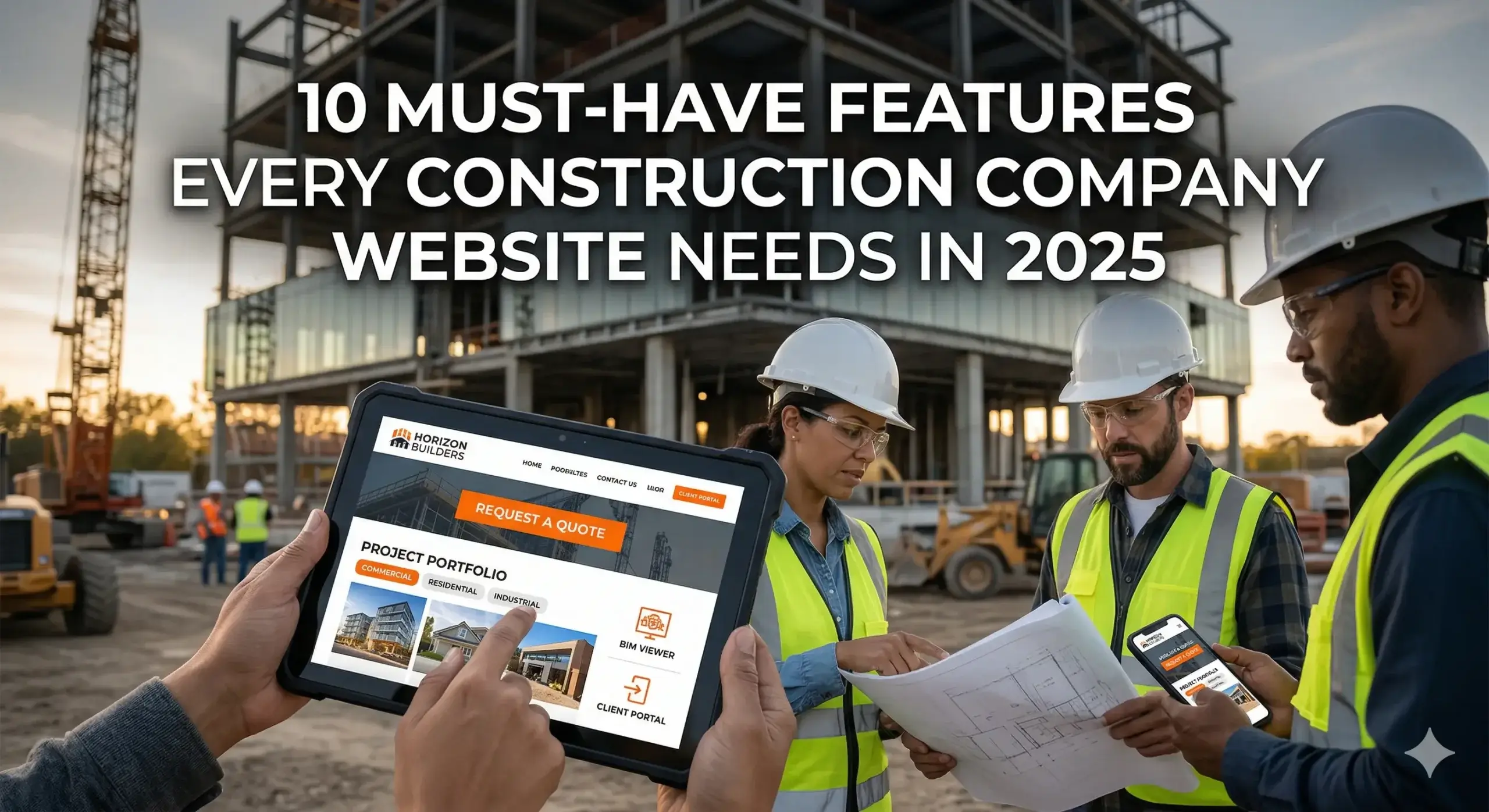
  • 10 Must-Have Features Every Construction Company Website Needs in 2025

    10 Must-Have Features Every Construction Company Website Needs in 2025

    Your crew shows up on time. Your bids are solid. Your past projects speak for themselves. But your phone isn’t ringing the way it should โ€” and if you’re honest, you already suspect your website might have something to do with it.

    Most construction company owners treat their website like a business card: something you print once, hand out, and forget about. The problem is, your website isn’t a business card. It’s your best salesperson โ€” or your worst one. It’s working 24 hours a day, either convincing potential clients to call you, or quietly sending them to your competitor down the road.

    The difference between a website that sits there and one that actually generates leads comes down to a handful of specific features. Not flashy gimmicks. Not expensive redesigns for redesign’s sake. Specific things that make a visitor trust you, understand what you do, and pick up the phone.

    Here are the 10 features every construction company website needs in 2026 โ€” and why missing even a few of them is costing you real jobs.


    1. A Load Speed That Doesn’t Drive Prospects Away

    Think about the last time you drove past a job site where the equipment was broken down and nothing was moving. That’s what a slow website feels like to a potential client. They pulled up, saw nothing happening, and left.

    If your construction firm website takes more than 3 seconds to load, most visitors are gone before they ever see your phone number. Google’s own research shows that mobile bounce rates spike dramatically as page load time increases โ€” and most people searching for a contractor are on their phone, probably standing in their driveway.

    Slow sites usually happen because of uncompressed images, outdated hosting, or code that wasn’t built with performance in mind. It’s invisible to you but very visible to every visitor.

    What it costs you: A contractor in Phoenix recently discovered his site was averaging 8-second load times on mobile. He was spending $600/month on Google Ads, but most of that traffic was bouncing before the page finished loading. Fixing the speed issue alone cut his bounce rate significantly and more than doubled his lead conversions.

    Websites built for construction businesses are built performance-first โ€” optimized images, fast hosting, lean code โ€” because a slow site is a lead-killing site.


    2. A Phone Number You Can See Immediately โ€” On Every Page

    This sounds obvious. You’d be surprised how many construction company websites bury the phone number at the bottom of a “Contact” page that requires three clicks to find.

    On mobile, your phone number should be tappable โ€” a click-to-call link at the very top of the screen, on every single page. If someone is searching for a roofer or a general contractor at 7pm after getting a water damage estimate, they’re ready to call. The moment they have to hunt for your number, you’ve already lost half of them.

    The fix is simple: your number goes in the header, in the footer, and on a sticky bar that follows the visitor as they scroll. Make it effortless. Make it impossible to miss.


    3. Project Photos That Actually Show What You Can Do

    A construction website without strong project photos is like a contractor who shows up to bid a job without a portfolio. You might be the best in the business โ€” but if you can’t show it, you’re just another name on a list.

    Real photos of your actual work build trust faster than any headline you could write. Before-and-after shots of remodels, structural builds in progress, finished commercial spaces โ€” these tell the story of what it’s like to hire you.

    Stock photos of hard hats and power tools do the opposite. Visitors can spot them instantly, and they signal that you don’t have enough confidence in your own work to show it.

    • Use real job site photography when possible
    • Include captions with project type, location, and scope
    • Organize by project category so visitors can find relevant work fast

    4. Local SEO Signals That Help Google Find You

    Here’s the plain-English version of something most agencies overcomplicate: Google needs to understand where you work and what you do before it shows your business to anyone searching for it.

    If your website doesn’t clearly name the cities and regions you serve โ€” in the content, in the page titles, in the site structure โ€” Google genuinely doesn’t know where to rank you. Your competitor who built their site with local SEO in mind will show up every time someone in your area searches “general contractor near me.” You won’t.

    This isn’t about stuffing city names into every paragraph. It’s about building your site the right way from the start โ€” with location-specific service pages, proper title tags, and a Google Business Profile that connects back to your site correctly.

    ๐Ÿ’ก Pro Tip: One of the most common mistakes construction businesses make is having only one generic “Services” page on their entire site. If you do roofing, framing, commercial fit-outs, and renovations, each of those should be its own page โ€” with its own content, targeting its own search terms. A single page trying to cover everything ends up ranking for nothing. Google rewards specificity, and so do clients who want to know you specialize in exactly what they need.


    5. Trust Signals That Do the Selling Before You Pick Up the Phone

    A homeowner or project manager evaluating contractors is asking themselves one question: “Can I trust this company with my money and my property?”

    Your website needs to answer that question before they ever have to ask. Trust signals are the elements that do the convincing while you’re out on a job site:

    • Google reviews โ€” displayed prominently, not hidden in a footer
    • Licenses and certifications โ€” BBB accreditation, contractor license numbers, insurance badges
    • Named testimonials โ€” real names, real projects, real results (not anonymous quotes)
    • Years in business โ€” if you’ve been around a long time, say it clearly
    • Any press, awards, or recognitions โ€” even local newspaper coverage counts

    The more a visitor can verify about you without having to ask, the more likely they are to call.


    6. A Clear, Specific “What We Do” Section

    Vague websites lose business. If someone lands on your homepage and can’t figure out within 10 seconds whether you do residential or commercial work, new construction or remodels, local or regional โ€” they leave.

    Your construction firm website needs to be specific about who you serve and what you do. Not in a long block of text. In clear, scannable sections that answer the visitor’s real question: “Is this the right contractor for my project?”

    Think of it this way: a general contractor’s website that clearly says “We specialize in commercial tenant improvements in the Dallas-Fort Worth metro” will get fewer total visitors than a generic site โ€” but the visitors it gets are the right ones, and the conversion rate will be dramatically higher.


    Proof: What Happens When You Fix These Things

    Before: A mid-size residential remodeling company in Atlanta had a website built in 2019. It looked fine on a desktop but was nearly unusable on mobile. Load times were slow, there were no project photos (just stock images), and the phone number was only on the contact page. The owner was getting maybe 2โ€“3 web leads per month, most of them low-quality inquiries.

    After: A rebuilt construction company website with mobile-first design, real project photography, a click-to-call header, and local SEO pages for each service category in their target suburbs. Within 90 days of launch, inbound web leads climbed to 12โ€“15 per month. More importantly, the quality improved โ€” visitors were arriving pre-sold on the company’s work and calling with specific, serious projects.

    The revenue difference: At an average job value of $18,000, going from 2 web leads to 12 per month โ€” even at the same close rate โ€” represents a significant business transformation.


    Not sure if your construction website has these issues? Get a free website audit โ€” no obligation, just a clear picture of what’s costing you leads.


    7. Mobile-First Design (Not “Mobile-Friendly” โ€” Mobile-First)

    There’s a difference between a site that technically works on mobile and one that was actually built for it. “Mobile-friendly” often means a desktop site that shrinks down โ€” menus get tiny, text runs together, buttons are too small to tap.

    Mobile-first means the entire experience was designed for the phone first, then expanded for desktop. That means large tap targets, readable fonts without zooming, fast-loading images, and a layout that guides a mobile visitor directly to calling you.

    More than 60% of local service searches happen on mobile devices. If your site wasn’t designed with that in mind, you’re delivering a frustrating experience to the majority of your potential clients.


    8. A Contact Form That Asks the Right Questions

    A generic “Name, Email, Message” form isn’t enough for a construction business. It invites tire-kickers and leaves you with vague inquiries that waste your time.

    A well-designed contact form for a construction website should pre-qualify the lead a little:

    • What type of project are you looking to complete?
    • What’s your approximate timeline?
    • What’s the address or city of the project?
    • How did you find us?

    These questions don’t scare away serious buyers โ€” they actually make serious buyers more confident that you’re a professional operation. And they save you from spending 30 minutes on a phone call with someone who has a $2,000 budget for a $40,000 project.


    9. An SSL Certificate and a Secure, Professional Domain

    This one is non-negotiable and surprisingly easy to overlook. If your website shows “Not Secure” in the browser bar, you’ve already lost a portion of visitors โ€” especially business owners and property managers who take cybersecurity seriously.

    An SSL certificate (the “https://” in your web address) is a basic trust signal. It’s also a Google ranking factor. Sites without it are actively penalized in search results.

    Beyond SSL, your domain matters too. A construction company still running on a free website builder subdomain (like yourcompany.wix.com) is signaling, whether you intend to or not, that you’re not fully established. A clean, professional domain tied to your business name costs almost nothing and makes a meaningful first impression.


    10. Google Analytics and Conversion Tracking (So You Know What’s Working)

    Most construction business owners have no idea how many people visit their website each month, where they came from, or whether any of those visitors called them. That’s like running job sites without tracking your labor hours or materials โ€” you have no idea what’s profitable and what isn’t.

    Google Analytics, combined with call tracking software, tells you:

    • How many people visited your site this month
    • What pages they looked at
    • Whether they came from Google search, Google Maps, a referral, or an ad
    • How many called you directly from the website

    This data lets you make decisions. It tells you which service pages are pulling in traffic and which ones need work. It shows you whether your SEO is improving month over month. And when you’re ready to run paid ads, it ensures you’re not flying blind.

    How Digital Trace builds construction websites includes conversion tracking set up from day one โ€” so you always know exactly what your site is doing for your business.


    Your Path to More Leads: 3 Steps to Start Today

    Step 1: Audit your current site honestly. Pull it up on your phone (not your desktop). Time how long it takes to load. Count how many clicks it takes to find your phone number. Look at it like a stranger would โ€” someone who found you on Google and knows nothing about your company.

    Step 2: Identify your top 2โ€“3 services and make sure each one has its own dedicated page with a clear description, a photo or two, and a call-to-action. If they don’t exist, that’s the first thing to build.

    Step 3: Get a professional set of eyes on it. A free audit from a team that builds construction websites specifically will find issues you can’t see yourself โ€” and prioritize what to fix first based on actual business impact, not technical checklists.


    Frequently Asked Questions

    Why am I not getting calls from my construction website?

    The most common reasons are a slow load time, poor mobile experience, no local SEO, or a lack of trust signals like reviews and project photos. Visitors are landing on your site but leaving before they decide to call. A free audit can pinpoint exactly which of these is happening on your specific site โ€” book one here at no cost.

    How do I know if my construction website is actually working?

    If you don’t have Google Analytics and call tracking set up, you genuinely don’t know. A working construction website should show you steady monthly traffic from local search terms, a low bounce rate (meaning visitors are staying and looking around), and a measurable number of inbound calls or form submissions tied directly to website visits.

    How long does it take to see results from a new website?

    A newly built site with proper local SEO in place typically starts seeing meaningful search traffic within 60โ€“90 days. Lead volume usually follows within the first 3โ€“4 months, assuming the site is built correctly from the start. Quick wins like Google Maps optimization can drive results even faster.

    What makes a construction website different from a regular business website?

    Construction buyers need to see proof before they commit โ€” project photos, licenses, reviews, and specific service descriptions. They’re also highly local, which means local SEO structure matters far more than it would for an e-commerce brand. A good construction firm website is built around trust, proof, and frictionless contact โ€” not generic templates designed for retail or services businesses.

    Do I really need a fast website if my customers are mostly local?

    Yes โ€” especially if your customers are local. Local buyers searching on mobile expect fast results. Google also uses page speed as a ranking factor for local search, meaning a slow site can push you down in results for searches in your own backyard. The contractor who shows up first and loads fast wins the click, even over the one with a better reputation.

    I’ve been burned by agencies before. How is this different?

    That’s a fair concern, and it’s exactly why Digital Trace offers a free audit with no strings attached. You get a clear, honest assessment of what’s actually costing you leads โ€” no pressure, no commitment. If you find it useful, great. If it’s not the right fit, you’ve lost nothing. Start with the free audit and judge from there.


    Ready to Find Out What Your Website Is Really Costing You?

    Every month your construction company website underperforms is a month your competitor answers the phone call you should have gotten. The jobs are out there. The searches are happening. The question is whether your website is capturing them or letting them walk.

    Digital Trace builds high-converting websites specifically for construction businesses across the US โ€” sites that load fast, rank locally, and turn visitors into real leads.

    Get your free website audit โ†’

    No obligation. No sales pitch. Just a clear, honest look at what’s working, what isn’t, and what it would take to start generating more leads from your website this year.